/pic4458123.jpg)
/pic7947338.png)
/pic4458123.jpg)
/pic8634453.jpg)
/pic4982682.jpg)

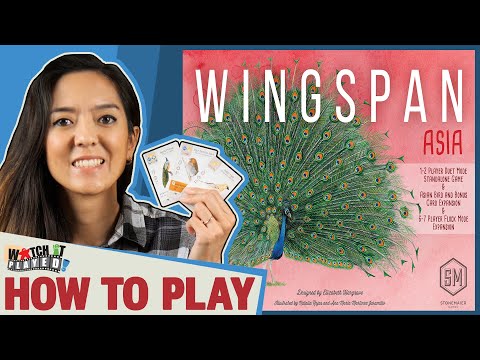


































Wingspan Deep Dive
What the Community Thinks About Wingspan
Wingspan has achieved rare consensus among board gamers: it is a beautiful, accessible game that delivers genuine strategic depth. Reviewers consistently praise the design by Elizabeth Hargrave and Stonemaier Games for creating something welcoming to new players yet engaging for experienced strategists. Paula Demi emphasizes that the game demands action economy thinking, since with only 26 total actions across four rounds, every move counts. Beyond Solitaire's Liz Davidson highlights how the solo experience with the automa system works seamlessly, while reviewers across platforms celebrate the gorgeous illustrations by Natalia Rojas and Ana Maria Martinez. The community recognizes Wingspan as both a gateway game and a game with surprising tactical nuance, ranked highly on BoardGameGeek and beloved by casual and serious players alike. The one consistent friction point centers on end-game egg-laying strategies, which some find repetitive in final rounds, a design choice critics view as limiting late-game variety.
Core Mechanics That Define Wingspan
Engine Building
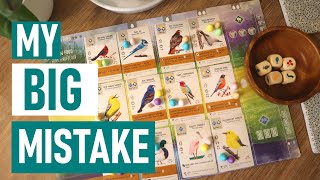
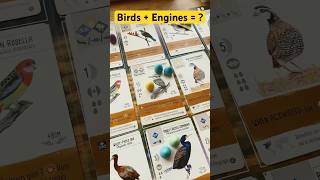
Wingspan's core appeal rests on building engines: habitat-by-habitat chains of birds that compound over the game's four rounds. Players invest early actions into inexpensive birds that kickstart production in habitats: one habitat generates eggs when activated, another produces food, a third draws cards. As reviewers explain, the satisfaction comes from watching these habitats grow more powerful. Paula Demi stresses that cheap early-game birds are crucial. Get a bird producing multiple resources for a single action, and the game opens up. The engine metaphor isn't perfect. Demi reframes it as "action economy," since players receive only a handful of actions each round. The real skill is choosing which birds to play, where to place them, and when to trigger habitats to maximize return on limited actions. Each bird card's abilities (whether laying eggs on activation, drawing cards, or tucking additional cards beneath them) create branching possibilities. This mechanism keeps players solving a strategic puzzle across the entire game: how to build habitats that work together rather than in isolation.
Tableau Building
Wingspan uses tableau building as the foundational structure: players construct three habitats (wetlands, grasslands, forest) by placing birds left to right. The physical layout matters because activating a habitat triggers all bird powers from right to left, with each bird's position determining when its ability resolves. Reviewers note this creates elegant cascades: play a bird that draws a card, then activate that habitat to reveal new options. Unlike other tableau builders, Wingspan's rows are separated by habitat type, and players must spend eggs or food to place birds in more advanced spaces. Beyond Solitaire's tutorial walk-through demonstrates this elegantly: placement on the board determines action efficiency. Early rows require no egg cost but generate modest powers; rightmost spaces demand eggs but unlock stronger bird abilities. Maple University's Taran emphasizes that the tableau building feels less about finding "broken combos" and more about logical progression, watching your personal ecosystem develop naturally as you add birds that complement each other's timing and effects.
The Wingspan Experience
Cozy and Serene
Reviewers consistently describe Wingspan as meditative and soothing. The Switch port review notes that the music is so calming the reviewer fell asleep mid-game, a compliment in disguise. The game's pacing accelerates naturally (fewer actions each round), preventing downtime bloat, yet the experience never feels rushed. Paula Demi's strategy guide brings levity to the teaching without undermining the game's peaceful core. Players spend their turns making thoughtful decisions about bird placement and habitat activation, with minimal player interaction creating a calm, puzzle-like atmosphere. The nature theme (attracting beautiful birds to wildlife preserves) reinforces this feeling of gentle stewardship. Wingspan succeeds at being a game you can play while relaxed, without sacrificing meaningful decisions. The component quality (the birdhouse-shaped dice tower feeder, the card illustrations) enhances this sensory experience, making the physical act of playing feel natural and unhurried.
Satisfying Engine Payoff
The moment an engine clicks, when a habitat activates and four birds fire in sequence generating food, eggs, and card draws, provides genuine satisfaction. Reviewers highlight this as Wingspan's strongest emotional payoff. Paula Demi advises players to build engines intentionally, noting how late-game activation of high-cost habitats with multiple birds creates explosive turns. Maple University's comparison to Worm Span underscores this: Wingspan offers the broadest range of combo possibilities because its card effects vary widely. When a player successfully builds an engine that chains bird abilities together, the game delivers visceral reward. Even the automa's predictable turns in the solo game generate this feeling as players watch both their engine and the opponent's efforts unfold. The visual and mechanical payoff (placing eggs, drawing cards, cascading abilities) makes late-round activation of well-constructed habitats one of board gaming's quiet triumphs.
What Makes Wingspan Stand Out
Breathtaking Bird Illustrations and Natural History
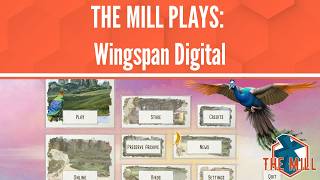
Every reviewer mentions the art first. The 180+ unique bird illustrations by Natalia Rojas and Ana Maria Martinez elevate Wingspan beyond mechanics to aesthetic experience. The Switch port video emphasizes how the port team animated each bird and included authentic bird calls. Selecting a Carolina Wren triggers its actual song, with a fact: "a single male Carolina Wren can sing nearly 3,000 times in a single day." Attackers praises the card quality, noting the artwork is both beautiful and sturdy. The game teaches through its components; players aren't just moving tokens, they're learning about real birds. Maple University references the attention to detail: birds are accurately placed in habitats, wingspan measurements matter mechanically, and ecological knowledge is woven into the game's fabric. This integration of natural history into gameplay means players who care about birds gain educational value, while players who don't can simply enjoy one of the most beautiful board games ever produced. The art is not decorative; it is central to why reviewers feel drawn to Wingspan.
Accessibility Without Sacrifice
Wingspan is a rare game that plays well from newcomers to experienced strategists without dumbing down for either. Paula Demi's rule explanation shows how the core loop (play a bird, gain food, lay eggs, draw cards) can be taught in minutes. The Switch port tutorial walks players through each action without overwhelming them. Yet Maple University's deep comparison of Wingspan to Worm Span and Finsspan confirms that Wingspan offers the most combo complexity of the three; experienced players find depth in how bird abilities interact. Reviewers note that the medium weight feels just right: heavier than casual family games, lighter than true euro games. The action economy creates meaningful constraint without analysis paralysis. New players can play intuitively (play birds, build habitats, score points) and enjoy the experience. Veterans hunt for synergies and exploit the card pool's hidden potential. This balance of accessible entry and rewarding mastery is why Wingspan climbed to BoardGameGeek's top 25 and became the number-one family game.
Potential Drawbacks
Final Round Egg-Laying Repetition
Several reviewers flag a design tension in Wingspan's final round: players with successful egg-laying engines simply lay eggs repeatedly, moving all remaining actions into that single habitat to maximize points. Maple University notes this as a criticism of Wingspan compared to its sister games. In the late game, optimal play sometimes means "just getting eggs," which feels repetitive mechanically. Paula Demi acknowledges this reality (each egg is one point) and frames it as strategy (late game should focus on high-point birds and egg production), but the criticism stands: if an engine is too good at producing eggs, the final round can devolve into executing the same action repeatedly. Finsspan addressed this by limiting egg capacity on fish, forcing players toward movement and school formation instead. Reviewers don't consider this a game-breaker, but it's a known edge case where dominant strategies can reduce tactical variety in the closing turns.
Limited Direct Player Interaction
Wingspan is somewhat of a "multi-player solitaire" game, with minimal direct interaction. Players take turns executing their own strategies with little blocking or competition for shared resources. Paula Demi warns against playing birds with pink powers (benefits to opponents) in early game, since opponents can avoid triggering them, but this is the extent of player blocking. Maple University's comparison highlights this: Finsspan and Worm Span have similar turn structure, but Wingspan offers the least interaction because no shared card market exists, so players draw blindly from the deck. Some reviewers prefer this, enjoying the puzzle-like solitude. Others find it limits the social dynamics of multiplayer games. The game succeeds despite low interaction because the solo experience (via automa rules) is genuinely strong and the engine-building puzzle is engaging enough to sustain 60-70 minutes of play. But for players who prioritize negotiation, blocking, or head-to-head tension, Wingspan delivers a more laid-back, individual experience than its companions in the Stonemaier portfolio.
If You Enjoy Wingspan
Wingspan's design spawned a family of related games. Worm Span offers a dragon-themed variant with tighter combo challenges and greater complexity. Maple University's Stella and Taran prefer Worm Span for its higher mechanical engagement, though they note it sacrifices some of Wingspan's accessibility. Finsspan brings the same engine-building DNA to an underwater setting with simplified resource costs and added spatial puzzles (fish must be placed by depth zone). Reviewers find Finsspan lighter and more family-friendly but less rewarding for combo hunters. For those seeking more Wingspan without the theme shift, Raiders of the North Sea was mentioned as a polished digital port with similar tableau-building appeal. Players drawn to Wingspan's beautiful production, accessible rules, and engine-building satisfaction should explore Worm Span if they crave deeper challenge, or Finsspan if they want a gentler entry point.
What Reviewers Are Saying
"The most important thing to remember when playing wingspan is that you need to think like a bird to win. Once you become the bird, you can watch the bird, and that's what wingspan is all about. The early bird may get the worm, but the late bird lays the eggs. Your early game strategy and your late game strategy should be different."
— Paula Demi
"The art in this game is phenomenal. They use the original card art from the board game, and from that design backgrounds and UI that complements the card art so well. The birds on the cards are animated themselves. This subtle animation brings a lot of life to the game. And whenever you select a card you can hear the chirp of that specific bird."
— Rolling Dice and Taking Names
"Wingspan is a theme that's easy to understand and easy to learn. You play a bird or activate a habitat to get food, place eggs, or draw cards. If that activated habitat has birds in play, then their abilities will trigger. These card abilities create combos that add depth to this game and provide a lot of replayability."
— Attackers