/pic4458123.jpg)
/pic7947338.png)
/pic8634453.jpg)
/pic4982682.jpg)




















Wingspan: Asia Deep Dive
What the Community Thinks About Wingspan: Asia
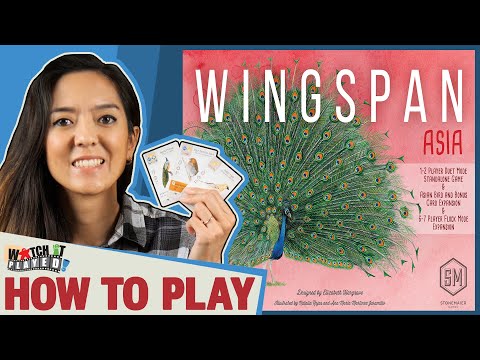
Wingspan: Asia stands as both a standalone game and an expansion that polarizes by design, though reviewers ultimately celebrate what it brings. The game divides into distinct experiences: the base Wingspan formula remains accessible and elegant, while the new duet mode and flock capabilities reimagine how players engage with the core engine. Watch It Played's comprehensive tutorial positions Asia as the third major standalone release, expanding a franchise that already satisfied millions of players seeking meditative bird collection gameplay. The Board Gaming Doctor ranked it ninth among 30 games from 2022, praising the new Asian bird cards but noting candidly that the duet mode "didn't add too much more to the game other than a small puzzle." That honesty reflects the expansion's real strength: it respects the original formula while creating genuinely new two-player experiences. Sir Thecos, a prolific Wingspan streamer, appreciated the duet board's "slick system" enough to dedicate hours of solo play explanation to it, while Meeple University observers noted the expansion satisfies players who simply want "more goodness that Wingspan provides" without fundamentally reinventing the wheel. For solo gamers, Board Games for One flagged a caveat: Asia's solo automation is "slightly more complex" than other games on their entry list, making it a step up for players already comfortable with the base system.
Core Mechanics That Define Wingspan: Asia
Tableau Building and Engine Assembly
At its heart, Wingspan: Asia remains faithful to Elizabeth Hargrave's original tableau building design. Players collect bird cards and play them into three habitats (forest, wetland, grassland), where each card placement triggers a cascade of abilities. Unlike many engine builders, Wingspan rewards diversity: the more birds you add to a habitat, the more powerful the actions available in that space become. Reviewers consistently noted the beauty of this progression. You're not just accumulating birds; you're building personal supply chains where early-game bird powers enable mid-game resource generation, which unlocks late-game ability bonuses. The push-your-luck dice mechanism Sir Thecos explains at length creates moments of genuine tension, do you roll again for food or bank your gains and risk ending your turn empty-handed? The new Asian bird cards introduce fresh abilities without overcomplicating play. Stonemaier Games' Jamey notes the expansion maintains accessibility while providing "more cards just offering more goodness," meaning veteran players get the depth they crave without overwhelming new entrants.
Token Placement and Spatial Dueling in Duet Mode
The signature innovation of Asia is the duet board, a shared arena where competitive magic happens. Whenever you play a bird, you place a token on a specific space of this map, but the space must match a characteristic of the bird you just played: its habitat, wingspan, nest type, beak direction, or the food you paid. Importantly, each space on the duet board hosts only one token, yours or your opponent's, turning placement into area control. The round's scoring goals transform this token distribution into points. One round might reward whoever placed the most tokens in the forest; another scores horizontal rows. Watch It Played's Monique guides players through the mechanics with surgical precision: the system is complex on paper but intuitive in practice once you've placed a few birds. Jamey describes it as players "trying to complete goals on this map," a simple framing that masks clever spatial reasoning. Sir Thecos devotes considerable airtime to explaining how the Automa opponent uses a deterministic algorithm to place its tokens, creating a puzzle-like solo experience that feels like genuine opposition. The duet mode doesn't just layer competition onto Wingspan; it forces players to think simultaneously about bird placement for engine building AND token positioning for map control, two intertwined optimizations that reward strategic depth.
The Wingspan: Asia Experience
Contemplative Solitude Meets Elegant Tension
Playing Wingspan: Asia solo or with one other player creates an oddly meditative yet tactical atmosphere. Sir Thecos's extended solo playthrough radiates focus punctuated by moments of "oh no, the Automa blocked my path again" frustration that never feels unfair. The game breathes in a way multiplayer Wingspan cannot: you move at your own pace, study your options, and feel the weight of each decision without downtime between turns. Board Games for One frames it as the right choice for solo gamers willing to engage with slightly more complex automation than lighter fare. Yet even with sophisticated Automa rules, the game never feels like you're fighting a malevolent system; you're playing chess against a logical opponent whose moves you can predict once you understand the algorithm. When playing head-to-head duet mode, Watch It Played notes that both players move simultaneously in the standard Wingspan action phase, only competing when it's time to score round goals or calculate the duet board majority. This design choice prevents the common problem of one player dictating the table's pace.
Accessible Depth for Casual and Competitive Alike
Wingspan: Asia's greatest achievement is feeling immediately welcoming while rewarding hundreds of hours of study. Meeple University observers remarked that the game's expansion nature means players already comfortable with Wingspan can sit down and start playing within minutes. The Asian bird cards themselves feature beautifully rendered artwork (noted by the Meeple University team as genuinely educational if you're interested in birdwatching), and the components, custom eggs, dual-sided dice, the duet board tokens, feel premium without excess. The experience scales: casual players enjoy bird collection and engine building without touching the duet board. Serious players layer on spatial puzzles and multi-round scoring arcs. Positively Board Gaming's coverage frames it as an ideal couples' game precisely because both players operate semi-independently (each builds their own tableau and plays their own birds) while competing on the shared duet board, creating natural table talk about strategy without the runaway leader problem that kills competitive fun.
What Makes Wingspan: Asia Stand Out
Beautiful Integration of Competition into a Solitaire-Friendly System
The duet board represents a masterclass in expansion design: it adds genuine competitive depth without removing the option to play cooperatively or solo. Jamey from Stonemaier Games, speaking from a designer's perspective, highlighted that this is the result of "a lot of time" spent on the mechanic, you can tell. The board serves as both a timer and a spatial puzzle. Your token placement race against your opponent creates urgency ("I need to secure this space before they do"), but the scoring incentives ensure you can't ignore your own bird engine. Sir Thecos's explanation of how round-end goals transform based on token distribution demonstrates elegant puzzle design: round one rewards whoever has more tokens in the forest; round two counts all tokens on the map; round three focuses on food icon spaces; round four seeks the longest horizontal row. This variety ensures that the duet board never feels like a static puzzle, each round recalibrates priorities and opens new strategic paths.
Flock Mode as Bridge to Higher Player Counts
For groups larger than two, Wingspan: Asia introduces flock mode, playable with 6 or 7 people simultaneously. Watch It Played's tutorial explains the downtime-reduction mechanism: two players from different sub-groups take simultaneous turns, preventing the common pitfall of everyone waiting for one person to decide. The Board Gaming Doctor noted he hasn't yet tried flock mode but suspects "it will still make this game feel like Wingspan", a fair prediction given the designers' restraint elsewhere. Stonemaier's Jamey mentions the mode in his head-to-head dueling games ranked list, indicating flock mode occupies a meaningful design space distinct from pure competitive play.
Potential Drawbacks
Duet Mode's Modest Mechanical Addition
Some reviewers expressed honest skepticism about how much the duet board genuinely transforms the experience. The Board Gaming Doctor was candid: it "didn't add too much more to the game other than a small puzzle to try to solve during gameplay." Meeple University went further, noting that "it doesn't feel tremendously different to original Wingspan" and that "the meat of this expansion definitely lies within the new cards" rather than the new mechanics. This is not a condemnation, in fact, both reviewers frame it as exactly what an expansion should do: add options without overwhelming. But players expecting radical innovation in two-player Wingspan should calibrate expectations. The duet board is clever, tactically interesting, and replayable, but it doesn't introduce the revolutionary shift that, say, Oceania's nectar system brings to the base game.
Solo Mode Complexity for New Players
Board Games for One explicitly warned that Asia's solo mode is "slightly more complex" than other games on their beginner list. The Automa deck system, with its round-specific trackers and the deterministic token-placement algorithm, requires more cognitive overhead than pushing toy cars in a lighter filler game. Sir Thecos spends nearly two hours explaining solo play, which tells you something about the learning curve. This isn't a flaw, it reflects the game's target audience (experienced Wingspan players seeking depth), but it does mean newcomers should start with duet mode or reach for another solo game if they want immediate accessibility.
If You Enjoy Wingspan: Asia
Players drawn to Wingspan: Asia tend to appreciate several related games. Wingspan: Europe and Wingspan: Oceania offer the same core experience with regional bird variations and mechanical tweaks (Oceania introduces nectar as a fourth resource). Combining these with Asia creates a bird encyclopedia and a wealth of engine-building paths. Birdscaping, mentioned by Sir Thecos as a game he hadn't played in years but felt inspired to revisit after discussing Wingspan, shares the meditative solo gameplay but inverts the mechanics, you're building habitat instead of collecting residents. For players who love the duet mode's spatial puzzle, Tokaido Duo (mentioned by Stonemaier's Jamey as a head-to-head game he recently published) offers a similar two-player race-to-three-win-conditions structure. If the tableau building resonates but you want lighter rules, Splendor or Century: Golem Edition distill engine building into 30-45 minute experiences. For those seeking deeper competitive depth from the duet board idea, Jamey recommends exploring the broader "head-to-head dueling games" category: games like Hanami Koji, Duel of Cardia, and 7 Wonders Duel share the "what will my opponent do" psychological layer while varying the mechanical systems.
What Reviewers Are Saying
"The duet board is pretty slick. It's a pretty interesting mechanism of how we determine what the opponent plays. I needed quite a while at the beginning to understand it, but it's actually like once you know how it works, it works really well."
— Sir Thecos
"The meat of this expansion definitely lies within the new cards. From what I can tell, these new cards just offer more goodness that Wingspan provides. The duet mode is something that I do need to try out, but the board itself doesn't feel tremendously different to original Wingspan."
— The Board Gaming Doctor
"For forty dollars you get this Tableau building game where you are collecting Birds placing them in various habitats in order to score points. You get to lay eggs for points and also of course to hatch new Birds. You have to feed those birds in order to place them. The solo mode here is slightly more complex than other games."
— Board Games for One