/pic8745814.jpg)
/pic2844943.jpg)
/pic3748929.jpg)
/pic8745814.jpg)





































The Castles of Burgundy Deep Dive
What the Community Thinks About The Castles of Burgundy
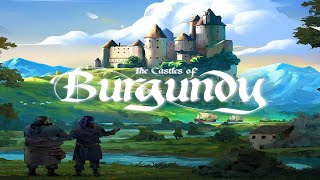
The Castles of Burgundy is celebrated as a timeless design that has aged exceptionally well. Reviewers consistently praise it as one of the best modern euro games, remarkable for its elegant simplicity paired with surprising strategic depth. Despite its straightforward turn structure and unassuming visuals, the game has earned lasting respect across the board gaming community for delivering meaningful decisions and compelling gameplay that keeps players returning long after their first plays.
Core Mechanics That Define The Castles of Burgundy
Dice Drafting and Worker Mitigation
At the heart of The Castles of Burgundy lies a deceptively simple action system: each turn, you roll two dice and use them to take exactly two actions. But the game's genius emerges from constraint and choice. The dice values directly determine which actions you can take, and the dice values you roll are often not the ones you need. This is where workers shine. By spending workers from your supply, you can increase or decrease any die value by one, wrapping around so that a six becomes a one or vice versa. This single mechanic creates tension on every turn. Do you spend a worker now to achieve your immediate goal, or do you preserve workers for future flexibility? According to reviewers, you never have quite enough workers, which drives the constant resource calculation that makes each turn feel important.
Tile Placement and Area Completion Scoring
The core action is taking hex tiles from the board's depots and placing them onto your personal duchy board. Placement is governed by strict adjacency rules: every tile must connect to at least one previously placed tile, and the tile color must match the space it occupies. The tile's value must also match your die roll. Once placed, each tile type triggers a unique effect. Completing a colored area grants points, and the more tiles in that area, the higher the score. Critically, the phase in which you complete the area matters enormously. In phase A, a four-hex area is worth more points than in phase E. This creates dynamic tension. Do you rush to complete small areas early for maximum points, or build deliberately toward larger completions later? Reviewers highlight this as the game's defining strategic conversation.
The Castles of Burgundy Experience
Cozy and Intimate Gameplay
Despite its medieval theme and competitive scoring, The Castles of Burgundy delivers a surprisingly warm experience. Every action feels constructive. You are building your estate, not attacking opponents. Reviewers note that even when you are losing, the game makes you feel like you are making progress toward a goal. There is no painful downtime where your strategy crumbles. The turn order track, managed through ship placements, creates a subtle mind game where moving first matters, but it does not humiliate players who fall behind. This is a game that respects all players' agency while keeping them engaged throughout.
Satisfying Engine Building Through Multiple Paths
The Castles of Burgundy is a point salad with multiple scoring channels: livestock in contiguous pastures, buildings that grant abilities, monasteries with special effects, mines that generate coins, ships that advance turn order and collect goods, and color completion bonuses. No single strategy dominates. You might win through livestock synergies, through aggressive early-phase area completions, through monastery abilities that unlock unique powers, or by carefully managing your economy to purchase premium tiles from the center market. Reviewers emphasize the game's replayability stems from this genuine tactical variety, not randomness.
What Makes The Castles of Burgundy Stand Out
Elegant Design That Belies Strategic Depth
Reviewers use the phrase "Millennium Falcon game" to capture The Castles of Burgundy's essential character: it may not look like much on the surface, but it has got it where it counts. The game does not dazzle with chrome or elaborate components. Instead, it channels its design toward pure gameplay. The board itself serves as a rules aid, with symbols that teach you what each tile does. The icons are clear enough that a young player can learn and enjoy it, yet the decision space remains crunchy and deep enough to challenge experienced players. This economy of design is rare. It is why Castles of Burgundy stands alongside other true classics in the euro game canon.
Infinite Replayability Through Board Variation and Asymmetry
The 2019 edition includes 30 different duchy boards for players to choose from, a massive expansion of the original release. Each board presents a distinct puzzle. Some boards cluster small colored areas for early quick points. Others feature larger regions requiring careful planning. Some positions favor access to mine spaces; others position you near ships from the start. When you place your starting castle, you are already committing to a game plan. Different boards reward different opening strategies. Beyond board variation, the monasteries add asymmetry. These yellow tiles are unique, and when you acquire one early, it shapes your entire game. One monastery might make workers more efficient; another might score you points at game end based on completed colors. This asymmetry keeps each play fresh and ensures that familiar strategies must adapt to new tile pools.
Potential Drawbacks
Minimal Player Interaction and Direct Competition
The Castles of Burgundy is not a conflict-heavy game. Interaction is limited primarily to taking tiles and spaces that other players want. There are no direct attacks, no negotiation, no forced trades. Players build their estates in near isolation. Some reviewers note that if you are seeking high player conflict, direct confrontation, or a game where your choices force opponents into difficult positions, Castles of Burgundy is not it. The game is solitary yet shared, which many players love but which will disappoint those seeking combative dynamics.
Visual Presentation and Component Expectations
Despite its gameplay excellence, The Castles of Burgundy makes no attempt to dazzle visually. The original editions feature functional but plain art. Even the newer printing, while cleaner, will never inspire awe from casual observers. For players accustomed to games with lavish production, striking illustrations, or tactile luxury components, Castles of Burgundy may feel austere. The game succeeds by proving that visual wow is unnecessary when the core experience is solid. However, reviewers acknowledge this remains a barrier for some audiences. The new edition addresses this with premium component options, including acrylic tiles, metal coins, and double-layered boards, but these add cost and are not essential to enjoying the game.
If You Enjoy The Castles of Burgundy
Fans of The Castles of Burgundy often gravitate toward other clean euro games with deep decision-making and multiple paths to victory. Suburbia shares the area-building and scoring-track foundation. Circadians First Light offers dice placement mechanics with similar tactical puzzle-solving. King of Tokyo delivers lighter, more chaotic dice rolling but with satisfying engine building. Spirit Island appeals to those who love asymmetry and special abilities, though with higher complexity and a cooperative angle. The common thread is games where simple rules hide engaging strategic choices and where your success feels earned rather than lucky.
What Reviewers Are Saying
"Castles of Burgundy is a beloved game from 2011 and this is a newer printing that contains several expansions and optional materials. It is a classic title where you'll be earning points at every turn, so many points, but can you earn the most?"
— Watch It Played
"Castles of Burgundy is a Millennium Falcon game, it may not look like much but it has got it where it counts. In an era where a lot of games have a lot of chrome, games like Castles remind us that good gameplay is the best thing a game can have."
— 3 Minute Board Games
"This is one of my favorite euro games of all time. The entire game there's a shipping where whenever you ship you get to move forward with your ship and you're trying to complete areas earlier, the earlier the better because it scores you more points. It is just a lot of one-upping each other in various ways but it's really fun."
— Before You Play