/pic3578101.jpg)












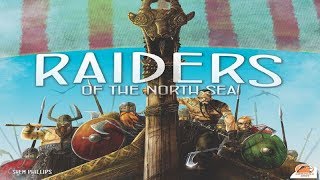








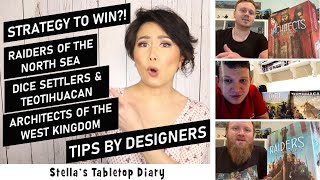























Raiders of the North Sea Deep Dive
What the Community Thinks About Raiders of the North Sea
Raiders of the North Sea has earned consistent praise from the tabletop community for delivering a Viking theme that feels narratively cohesive rather than grafted on. Reviewers appreciate how the game mechanics reinforce the fantasy of assembling a crew, gathering provisions, and conducting raids across increasingly dangerous territories. The game strikes a balance that appeals to both newcomers and experienced players, offering intuitive rules that mask surprising strategic depth.
Community response highlights the game's elegant design philosophy. Rather than overwhelming players with complexity, designer Shem Phillips has crafted a system where each turn involves two meaningful decisions, and the placement of crew cards serves multiple purposes. This efficiency of design means that games complete in 60-80 minutes without feeling rushed, a quality the community values highly.
Core Mechanics That Define Raiders of the North Sea
Place and Take Worker System
The most distinctive mechanic separating Raiders from traditional worker placement games is its place-and-take worker system. On each turn, players place a worker on one action space to trigger its benefit, then immediately claim a worker from a different action space to gain that benefit as well. This dual-action approach creates satisfying turn sequences where skilled players can chain actions together for maximum efficiency.
Workers come in three colors, each specialized for different tasks. Black workers are abundant early in the game and better suited for gathering coins. Gray workers, earned through successful raids, unlock mid-game actions with stronger rewards. White workers, the rarest, provide access to the most powerful action spaces and bonus effects. This specialization forces meaningful decisions about which worker to place and which to retrieve, preventing autopilot play.
Multi-Use Crew Cards and Resource Conversion
Each crew card in a player's hand serves multiple purposes, making deck management a critical skill. Cards can be recruited into the player's active crew (paying their cost in silver or gold), where they contribute strength for raids and may provide passive bonuses during resource gathering. Alternatively, cards can be sacrificed at the Town Hall to activate their special abilities, such as stealing silver from opponents or drawing additional crew cards from the deck. This flexibility means no card is ever truly wasted.
The resource economy ties tightly to the crew system. Players must balance spending on crew recruitment against accumulating provisions for raids and silver for armor upgrades. The game caps resource storage at eight units for each type, forcing eventual expenditure and preventing hoarding strategies. This scarcity creates tension as players compete for access to limited action spaces that generate the resources they need most.
The Raiders of the North Sea Experience
Tactical Decision-Making and Engine Building
Raiders excels at creating situations where players must adapt quickly to blocked action spaces and changing board states. The place-and-take mechanic means that after placing a worker on the Barracks to recruit crew, a player must find a valuable action space to retrieve from. If an opponent's previous turn claimed that ideal retrieval spot, adaptation becomes necessary. This reactive gameplay keeps every turn engaging.
The game encourages engine building without requiring it. Early turns often follow similar patterns: gather coins, draw crew cards, prepare for the first raid. But as white and gray workers enter circulation through successful raids, the board opens up dramatically. Players who invested in armor upgrades early gain strength multipliers, while those who prioritized crew quality enjoy higher raid success rates. By mid-game, individual player strategies create distinct paths to victory.
Risk, Reward, and the Valkyrie Mechanic
Each raid site contains a Valkyrie marker with varying frequency. When claiming a location with a Valkyrie, one crew member must be sacrificed. This loss serves as both penalty and pathway to victory. Losing crew to Valkyries advances the player's Valkyrie track, which awards points at game end. Certain crew members like Berserkers return to hand when killed, allowing repeated recruitment at ever-increasing costs. This risk-reward dynamic transforms defeat into strategic opportunity for players who can weather crew losses.
Raid success itself depends on strength calculations combining crew card values, armor track advancement, and dice rolls. Stronger fortresses require both higher base strength and fortunate die rolls. The game prevents runaway leaders by making the highest-value raids available only to players with sufficient resources, and the dice ensure even well-prepared raids carry uncertainty.
What Makes Raiders of the North Sea Stand Out
Elegant Mechanics That Reduce Downtime
The place-and-take system eliminates a common worker placement frustration: players watching others take turns without interactive decisions. Because players claim a worker from the board after placing one, every turn offers opportunities to disrupt opponents' plans while advancing their own. The game rarely creates situations where a player has no viable action, and setup time is minimal despite the abundance of tokens. Gameplay flows continuously with minimal bookkeeping between turns.
Accessible Complexity and High Replayability
Raiders teaches in fifteen minutes to players familiar with board games, and newcomers grasp the core concepts within two turns. The artwork on crew cards tells stories through Vikings with distinct appearances and ability icons that clearly convey function. The rulebook demands minimal reference after the first play. The large crew deck ensures variety across plays; with approximately eighty crew cards and players viewing only fifteen to twenty during a typical game, the specific cards that appear shape strategy. A draw heavy in berserkers encourages aggressive raiding; a draw with many utility specialists favors controlled resource gathering.
Potential Drawbacks
Early Game Similarity and Setup Time
The opening turns follow predictable patterns. With limited action spaces available to black workers and only three starting crew cards in hand, most players gravitate toward the gatehouse to draft new cards, the silversmith for coins, and the mill for provisions. This repetitive opening phase lasts roughly four to six turns until the first raid breaks the pattern and unlocks gray workers. Some players find this starter protocol tedious, particularly in multiplayer settings where watching others execute similar sequences tests patience.
Luck Variance and Card Draw Dependency
The crew deck's size, while supporting replayability, introduces randomness that can create challenging situations. A player dealing poor crew cards repeatedly may find themselves trapped recycling the gatehouse rather than engaging in raids. When an opponent blocks that same gatehouse, the player's tactical options compress dramatically. Raid success depends partly on dice rolls, and unlucky rolls on high-stakes fortress raids can cost two to four gold and three provisions with minimal point return. While the game provides multiple paths to victory, in three and four-player games this variance sometimes rewards lucky card draws or fortunate die rolls more than consistent play.
If You Enjoy Raiders of the North Sea
Fans of Raiders should explore Architects of the West Kingdom, the companion design from Shem Phillips that refined virtue systems and meaningful blocking mechanics. Blood Rage offers similar Viking mythology with simultaneous action selection instead of worker placement. Seven Wonders uses multi-use cards and card drafting in a lighter, faster-paced experience. Agricola introduces feeding mechanisms and deeper resource scarcity for players seeking more punishing worker placement. For players seeking the same designer's vision in a different setting, Paladins of the West Kingdom delivers heavier decision-making with the same accessible teaching philosophy.
What Reviewers Are Saying
"The place a worker take a worker mechanic is a different take on worker placement and it works really well."
— 3 Minute Board Games
"Pulling off a powerful combo is really satisfying and generally not possible with the one action turns utilized in most worker placement games, but Raiders gives us a little taste of combo excitement without overcomplicating things."
— Adam in Wales
"The game hits that sweet spot of being easy to learn but having enough depth that skilled players can really go to town. It's extremely tactical, fast to table, under an hour, great artwork and approachable rules."
— TableTop Wolf