




































Bärenpark Deep Dive
What the Community Thinks About Bärenpark
Reviewers describe Bärenpark as a tile placement game that looks gentle on the table but rewards careful planning. Its bear artwork gets consistent attention, and the game is praised for being quick to teach. John Gets Games says the game exceeded expectations set by its comparisons to Patchwork and Cottage Garden, because the tension comes from racing for tiles and objectives rather than from simply acquiring the right piece. Board Game Dad calls the game accessible to people of all ages and just as enjoyable for adults as for children.
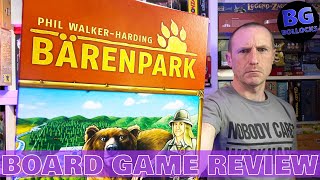
Not every point is positive. John Gets Games says the theme is completely pasted on and that the game feels highly abstract, although that matters less to a reviewer who cares about the puzzle. BoardGameBollocks praises the look and the easy rules but points to tiles that slide around the table and a late game that can feel empty.
Core Mechanics That Define Bärenpark
Tile Placement
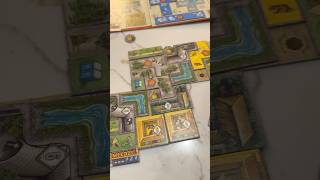
Players build their park by placing tiles taken from a central display, and BoardGameBollocks describes the loop as putting those tiles on a player board to score points. Each new tile has to touch a tile already in the park, and every tile covers icons on the board beneath it. Covering a green wheelbarrow, for example, lets a player take a tile from the matching section of the central display, so each placement is both a fitting puzzle and a shopping decision. John Gets Games notes that extensions cannot be rotated and may never stretch out in front of the park entrance.
Race for Shared Tiles and Points
The second mechanic is racing. The tile stacks are shared by everyone, and the bear house tiles lose value as the game goes on, so timing is part of the score. Board Game Dad describes the objective as point-based but race-driven, with players trying to be the first to get the exhibits and the first to finish the zoo. John Gets Games adds that players must compete in several races at once, because the reviewer argues you will not win unless you compete in lots of them. Optional achievements add more races on top of the tile market, and they pay more points to the earlier players who complete them.
The Bärenpark Experience
A Clear Turn Rhythm
The game is simple to describe at the table. Board Game Dad explains that the rules are easy to explain and that the objective is intuitive for children to understand, which makes teaching go over well. The downtime is also meaningful, because players hold their tiles for the next turn and have something to do while they wait. BoardGameBollocks reports that a young child had no trouble learning the game and actually beat the reviewer at it.
Tension Between Puzzle and Race
Beneath the approachable surface is real pressure. John Gets Games describes the constant weighing of which race to enter, since an opponent who grabs a second matching tile can take the lead away and force a change of focus. The reviewer frames the experience as satisfying because you can plan many turns ahead while still reacting to what everyone else is doing. Board Game Dad also says that every turn feels intentional and thoughtful.
What Makes Bärenpark Stand Out
Optional Achievements Change Each Game
The optional achievements are the feature John Gets Games praises most. A random selection of them is set out for each game, and the reviewer explains that some reward stalling on bear statues, some reward connected tiles, and others reward owning a set number of a particular tile type. Because the selection changes from game to game, the core puzzle keeps the play fresh. John Gets Games says the game would be significantly less fun without them, and that the variability overall is pretty darn good because of them.
Easy to Teach, Easy to Enjoy
The rules are short enough that the game works well as an entry point. John Gets Games says the kernel of the game is simple and elegant: on your turn, you take a tile you already own, place it so it touches the previous tile, and collect the tiles linked to any icons you covered. The reviewer says the simple core opens up interesting decisions, and admits to having assumed the game would be a much lighter experience. BoardGameBollocks calls the game easy to teach and a relief after heavier titles that demand a lot of study. Board Game Dad recommends it especially for families with young children, because the rules are so easy to explain.
Potential Drawbacks
Spatial Planning Can Feel Demanding
The planning that makes the game satisfying also makes it demanding. John Gets Games warns that the game can really tax spatial reasoning, and that players who are less comfortable with it may find themselves at a disadvantage. The reviewer also notes that for some people the heavy planning could be a turnoff. BoardGameBollocks points out a related friction: it is hard to remember which icons a newly placed tile covered, and a tile wedged into the middle of a crowded park can be difficult to pull back out.
Setup, Tear-Down, and a Fading Late Game
Setup and tear-down are the main practical complaints. John Gets Games describes tiles that have to be pulled from bags and sorted, house tiles that must be placed in a specific order, and pieces removed depending on player count. The same review notes a typo on the first edition that tells players to remove certain tiles they should keep. BoardGameBollocks warns that the tiles slide around if someone bumps the table, and that the late game can feel empty. As the central display runs low, the final turns can feel like taking tiles for the sake of it, and that leaves the reviewer wondering whether the designer intended the fade.
If You Enjoy Bärenpark
If the polyomino puzzle appeals to you, Patchwork and Cottage Garden are the games John Gets Games compares Bärenpark against most directly. The same review describes Patchwork as one of the more original polyomino puzzle games, but argues that its tension comes from acquiring the right tile, while Bärenpark's tension comes from racing for tiles and objectives. For a different take on tile placement, Carcassonne is a natural pick, since BoardGameBollocks places Bärenpark alongside it and Alhambra as a sound and enjoyable tile placement game.
What Reviewers Are Saying
"I just think that they really increase the variability of the game. You only pick three out of the 10 total every single time you play."
— John Gets Games
"The objective, I mean, it is point-based, but it is race-driven."
— Board Game Dad
"my six-year-old daughter had absolutely no trouble playing this game and actually beating me at it"
— BoardGameBollocks