/pic2197702.jpg)
/pic1086904.jpg)
/pic5412064.jpg)
Blokus (officially pronounced "Block us") is an abstract strategy game with transparent, Tetris-shaped, colored pieces that players are trying to play onto the board. The only caveat to placing a piece is that it may not lie adjacent to your other pieces, but instead must be placed touching at least one corner of your pieces already on the board.
There is a solitaire variation where one player tries to get rid of all the pieces in a single sitting.
Goal of the Game:
Each player has to fit as many of his/her 21 pieces on the board as possible.
Components:
Blokus Game Board (400 squares)
84 game pieces (four 21-piece sets of red, green, blue, and yellow)
Each color inlcudes:
1 one-square piece
1 piece with 2 squares
2 pieces with 3 squares
5 pieces with 4 squares
12 pieces with 5 squares
This page includes videos and mentions from the whole Blokus family. Drill into a specific game below.
/pic2197702.jpg)


Z War One: Exodus Review
Fearless - Tutorial & Playthrough
- Really fun game
- Good at four players
- Easy to learn
- Colorful and presentable
- Fun to play with the pieces like puzzle pieces
- Less enjoyable with fewer than four players (requires a dummy player)
- Trigon version is likely out of print and not necessary if you own regular Blokus.
- Blokus
Mechanics (from transcript analysis)
- abstract strategy — An abstract game focused on strategic placement of pieces.
- piece placement — Players place geometric pieces according to rules where edges cannot touch other pieces of the same color.
Video topics + discussion points
Quotes (from this video)
- My whole mission statement as a gamer and as a content creator is to make families aware of games that would be compatible with what they might do.
- It is an abstract game in the pure sense, but it is so much fun when you play it.
- It's probably the most chaotic trick taking game I've played.
- I hate luck based games almost as much as I love them.
- This game has fallen quite a bit because we just don't get it played.
- The pass the buck element to flip tactoe is really what makes it so good.
References (from this video)

- Doesn't have a theme
- Doesn't have artwork
- Box isn't even two inches thick
- Abstract
Mechanics (from transcript analysis)
Video topics + discussion points
Quotes (from this video)
- As Speaker, I’ve called this council to decide on our placement on the new shelf.
- Blokus, what are you even doing here? You don’t even have a theme. You don’t have artwork. Your box isn’t even two inches thick.
- We have been in the closet, waiting for the right moment. Monopoly! Life! Now is the time! Rise up! Charge!
- Guys, guys! C’mon. We gotta work together!
- Hello! I’ll trade three sheep and two wheat for a place on the shelf!
References (from this video)
Mechanics (from transcript analysis)
Video topics + discussion points
Quotes (from this video)
- Yes, Ollie is joining us today to ward off the bad luck that has been plaguing me this last week.
- But Ollie has a steep price, and that's constant pets.
- I'm going to need you to unpack that for me.
- That brain space had been dedicated to rubbing a dog, so I hadn't thought that far ahead.
- I'm changing it so we don't have the same answer and because I've decided dragons tell riddles.
- Don't correct me on camera, Google.
- That's And that's the problem with artificial intelligence. Unnecessary. So uppity.
- BoardGameGeek was built around a copy of Acquire, and that's the foundation of it.
- I need you to get one wrong if I'm going to catch up.
- If you're going through hell, keep going.
References (from this video)

- Simple to teach and quick to play
- Strong two-player appeal
- Clear spatial-puzzle decisions
- Depth can be limited for some players
- May feel repetitive for heavy gamers
- Blokus
- Qwirkle
Mechanics (from transcript analysis)
- Tile Placement — Players place polyomino tiles on a shared board with adjacency constraints (diagonal placement rules to own tiles).
- two-player abstract strategy — Direct head-to-head play emphasizing spatial planning and blocking opponents.
Video topics + discussion points
Quotes (from this video)
- you can only place your polyomino diagonal to one of your own
- you yell Boo and when you yell boo you flip them over
- it's this quick to get to play; you can play this whole game in probably 10 minutes
- you can keep going as long as you are still on one of those three rows
- it's basically match colors match symbols on a board
References (from this video)

- compact setup
- two-player accessible
- simpler design may not appeal to all
- polyomino-placement with blocking strategy
- two-player abstract small-box game
- abstract puzzle
Mechanics (from transcript analysis)
- Polyomino — place pieces to block opponent and maximize scoring opportunities
- polyomino placement — place pieces to block opponent and maximize scoring opportunities
Video topics + discussion points
Quotes (from this video)
- I had a total of 50 games that came out before 2024 that I played for the first time in 2024.
- we're starting to get a lot of games that um we really enjoyed.
- Sea Salt and Paper oh really yeah I like that game.
- The Bears and the Bees this is a tile placement game where basically the first person to get rid of their little tiles they have in their hand wins.
- Summer Camp is a competitive deck building game where you are racing against other players to earn badges.
References (from this video)

Mechanics (from transcript analysis)
Video topics + discussion points
Quotes (from this video)
References (from this video)
- tight two-player strategy
- Tetris-like appeal
- legal moves can be hard to visualize from photos
- geometric tile placement
- abstract strategy for two players
- puzzle-like
- Tetris
Mechanics (from transcript analysis)
- Area Control — block opponent's placements to limit options
- area control / blocking — block opponent's placements to limit options
- Polyomino — place shapes so that they touch only at corners; avoid overlaps
- polyomino placement — place shapes so that they touch only at corners; avoid overlaps
Video topics + discussion points
Quotes (from this video)
- Ticket to Ride ... this is the game that brought us into the modern board gaming world
- this game is simple enough to be taught very quickly to new Gamers
- it's a gateway game
References (from this video)
- Cool space game
- Players act as heroes fighting evil
- Looks fantastic
- Cool encounters
- Ship and ability leveling up
- Prototype sent, final product not yet seen
- Playing as heroes in space trying to stop massive evil ships
- Space
Mechanics (from transcript analysis)
- Encounters — Features cool things going on as far as the encounters go.
- Leveling up — Players can level up their ships and abilities.
Video topics + discussion points
Quotes (from this video)
- And in this video, I'll be discussing the best games that I played in 2025.
- And the golden torch award I am giving out to games that uh are just shining examples in the hobby. They are the golden torches and I think the game that I am awarding that to this year really really does deserve it.
- But my most disappointing was the uh the expansion for Talisman fifth edition, the co-op expansion. Man, what a disappointment.
- Those house rules created by Dragon Phoenix Games, which are the designers and publisher for Gathering Gloom, are great. they make the game how it should have been from the beginning.
- Wandering Galaxy was going to be my game of the year. It's a fantastic game.
- Conversely, my game of the year and the winner of the very very first Dungeon Dive Golden Torch award is shockingly just shocked me to like I couldn't believe that I am giving my game of the year to a Stonemer Games game uh from from uh from Jamie Stagmire and that is Vantage.
- It is so effortlessly easy to set up, to learn, to play. I mean, it literally takes about 5 minutes to set the game up and start playing.
- What I care about is having an experience of having a fun experience of exploration of discovery of mystery of of that kind of illusion of infinite possibility.
- And I can't think of another game that gives me that illusion better than Vantage does. It is absolutely truly the modern adventure game perfected.
- So, all right. Well, hey, let me know some of the best games you played.
References (from this video)
Mechanics (from transcript analysis)
Video topics + discussion points
Quotes (from this video)
References (from this video)
- Four players is the sweet spot
- Classic abstract with approachable flow
- Abstract and potentially dry for some players
- spatial puzzle
- abstract tiling
- pure abstract puzzle
Mechanics (from transcript analysis)
- color/area control through blocking — complete tiles color-wise to secure spaces and block opponents.
- Tile Placement — players place polyomino tiles to maximize coverage and block others.
Video topics + discussion points
Quotes (from this video)
- Four players is what we're talking about today.
- Four is the sweet spot.
- This is the classic board and dice game, Teayotiwakan.
- This is a four-player game to me.
- World Order nudged out Root from the number one spot because I thought, 'this is the four-player game'.
References (from this video)

- Enjoyed more at a higher player count.
- Silly and fun, especially at four players.
- Quick game length and easy setup.
- Open information allows for playing the player.
- Can be disadvantageous to team up on someone.
- Less fun with only two players compared to higher counts.
Mechanics (from transcript analysis)
- Blocking — Players try to block opponents from placing their pieces.
- Corner Adjacency — New pieces must touch at least one corner of a previously placed piece of the same color.
- spatial reasoning — Players must manage their available pieces and the shrinking board space.
- Tile Placement — Players place their colored pieces on the board.
Video topics + discussion points
Quotes (from this video)
- I feel like even though this is a not it's not an old game it's a like the last five four five years it feels like a classic to me
- this is almost some more fun multiplayer Patchwork
- emptying the cooler emptying the cooler
- this is one of the fastest Legacy games I think we finished
- my favorite Parts is you have bullets and when you shoot the Banis they become tombstones
- the mechanics in this game blew me away
- I love seeing the world wonders on the board the they're just so pretty and they're so vibrant
- auction games are not really my thing this is like a nice little like push into the auction space where it is very important to get your stuff but you don't get left in an unfortunate space of not being able to do anything
References (from this video)
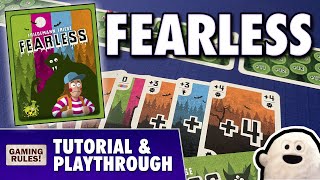
- Clever and different trick-taking spin
- Shifting dynamics make the game interesting
- Cute artwork and good production quality
- Accessible design with clear iconography
- Strategic depth despite being quick
- Interactive player screwing
- Fun and quick to play
- Scaring players
- A cabin
- Power Grid
- Fishing
- Stickham
Mechanics (from transcript analysis)
- Follow suit — Players must play a card of the lead suit if possible.
- Set Collection — Players take out certain cards from the deck depending on the number of players.
- Trick-Taking — Players play cards to win tricks, with the highest card of the led suit winning, but the total value of cards played affecting the score.
- Wild cards — Zeros are wild cards that can always be played and can win a trick if they are the highest value.
Video topics + discussion points
Quotes (from this video)
- It's basically how far you are away from zero, and that's how many points you score. And you don't want to score points. You want the lowest points possible in this game because I think the points represents how scared you are.
- The twist in the game is normally in trick taking games. It's the player uh who No, it's it's still the same rules. You have to play a card of the lead color in order to be able to win, but the value of the card still affects the total.
- Friedman Preer, I've played a lot of his games over many many many years, designer of Power Grid. Um, but he's one of the most versatile designers. Uh, and I am a fan and I think he is a genius.
- This is lighter. This is easier. This is more accessible. I think this is more fun as well.
References (from this video)
- Abstract geometric gameplay
- Minimalist art and graphic design
- High replayability and fun
- Requires molds for unique polyomino shapes, a considerable upfront cost
- Abstract
Mechanics (from transcript analysis)
- Area denial — Players try to make it harder for others to place pieces.
- polyomino placement — Players place unique polyomino shapes on a board.
- spatial reasoning — Pieces lock into place by corners touching, but not flat edges.
Video topics + discussion points
Quotes (from this video)
- games don't need no necessarily need a huge art budget to be a great game.
- I think this is one way for some games, not every game, but some games to really shine with a much lower sunk cost budget than other games.
- You don't need necessarily a bunch bunch of fancy components, dozens and do dozens of illustrations to have a really great game.
- We can all have slightly different definitions of this.
- It all leads to subtle and interesting choices.
- When everything feels like it's on fire around me, it's nice to find a bit of rest by respit in a gentle rain.
- This game is a chaotic good time, but in the best way.
- the components fit into a small box. They're they're very sparse components.
- But uh but they come across they end up having a fairly big table presence and I've gotten a lot of replayability out of multiple oint games.
- you can get a lot out of these games that rely on a wide variety of rules of words just by having words in the game. You don't necess you don't need
- By this I mean games with minimal components and or art.
- I think it's a great reminder for me and maybe you as a designer that games don't need no necessarily need a huge art budget to be a great game.
- So I think this is one way for some games, not every game, but some games to really shine with a much lower sunk cost budget than other games.
- there's a huge emergent narrative that comes through in Rumble Nation with very minimalistic components.
- I kind of thought of it as a combination of all those different things with some variances.
- investing in a really beautiful box cover is really really important for the game and investing in great graphic design is really really important for the game.
- I think valuing and investing in great graphic design is can can elevate a game even when you don't have much of an art budget at all.
References (from this video)
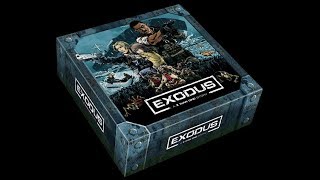
- Strong thematic immersion through a comic-book narrative and character dialogue
- Intuitive, easy-to-teach rules that support quick learning
- Solid cooperative and solo play frameworks with a clear narrative arc
- Director mode adds asymmetric play and high replayability
- Rich tactical depth via action points, sprinting, alerts, searches, and crafting
- Expansive world with varied locales and enemy types (roamers, aquatic foes, etc.)
- Progression through perks creates meaningful long-term player growth
- Potentially intimidating complexity for new players
- Setup and rulebook density can be lengthy to learn
- Thematic consistency relies on engagement with narrative elements; some players may prefer lighter themes
- survival and cooperative tactical play with a strong narrative through comic-book storytelling
- Z War One universe; zombie-infested world with modular map layout, objective rooms, and waterborne locales
- comic-book background materials and in-game dialogue that drive mission context and immersion
- Exodus (the original game in the Z War One universe)
- Other Z War One universe games
Mechanics (from transcript analysis)
- action_points — Players allocate a pool of action points each turn to move, search, shoot, and craft; movement-centric with sprint options
- alert action — Preps a teammate for line-of-sight on potential threats; involves facing indicators and token placement
- combat resolution — Ranged and melee combat with quick shots, aimed shots, and executions; ammo management and weapon-specific rules
- cooperative play — Players work together to complete mission objectives, with options for solo play
- crafting and equipment deck — Find items to craft weapons (e.g., Spiker) and gear; crafting consumes action points and uses resource tokens
- director mode — A player can control zombie actions and scenario events to shape the narrative against other players
- perks and leveling — Post-mission progression grants perks that improve attacks, defense, or abilities between missions
- search and objective rooms — Entering a room triggers a search action to reveal objectives or loot; activated rooms influence zombie spawning and roamers
- spawn tables and roamers — Infected spawn, roamers, and special enemies appear based on die results and proximity to players
- sprint — Move multiple spaces for two movement points, enabling rapid repositioning and dynamic twists in encounters
Video topics + discussion points
Quotes (from this video)
- I love when rules just make sense
- this is a narrative driven game this is a tactical rule set game
- Director mode is awesome I love playing the director
- the rules are intuitive and the game moves quickly
- the story and comic book narrative significantly boost immersion
References (from this video)

- Fun, memory-based
- Good party filler
- Memory and deduction
- Gift-like item distribution
- Casual party game
Mechanics (from transcript analysis)
- Memory / collection of items — Remember which items were given and to who; manage pile of gifts.
Video topics + discussion points
Quotes (from this video)
- it's a simple party game where you're trying to get rid of all your cards
- The price (€22) is a good price
- In flip tunes, you're doing exactly that. You're flipping tune cards one by one until you have six.
- Scout is a simple card game where you need to get rid of all of your cards, but you can only play out cards if you create combinations.
- That's not a hat. It's a board game.
- globus.
- Sea Salt on paper, you are collecting cards.
References (from this video)
- Stunning visuals and components that pop on the table; strong aesthetic appeal.
- Portability via the travel bag enhances convenience for casual gaming sessions.
- Gameplay depth reportedly lags behind the stunning presentation.
- May feel light for dedicated war-game enthusiasts seeking deeper tactical complexity.
- Dragons, siege-style warfare, and heroic conflicts with a high thematic flag.
- Fantasy war game that emphasizes epic battles with dragon-themed units, compacted into a travel-friendly package.
- Dramatic, bold battlefield storytelling expressed through minis and a compact board.
Mechanics (from transcript analysis)
- area_control — Players vie for control of villages and territories, attempting to maximize territorial influence and point accumulation.
- miniatures_war_game — Tactical combat with units represented by tiles, focusing on maneuver and clash across a stylized map.
- storage_and_transport — A travel bag integration that makes the system portable and encourages gameplay outside the typical shelf environment.
- tile_based_unit_deployment — Tiles serve as both units and currency; players spend tiles to move, reinforce, and engage in combat.
Video topics + discussion points
Quotes (from this video)
- this is by far the game that has made me feel like a detective
- it's a detective movie in a box
- the rule book freaking sucks
- the visuals for this game and the components are 10 out of 10
- the play is somewhere way below that
- this goes into my friends collection
References (from this video)
- Own it
- Missing red color piece, have extra yellow
- Tile placement
- Board game
Mechanics (from transcript analysis)
- Tile Placement — Classic tile placement game
Video topics + discussion points
Quotes (from this video)
- We love trick taking games
- This game is so much freaking fun
- I adore GMT games, they are becoming one of my favorite game publishers
- If you remember Vast Crystal Caverns is in my top five games of all time
- We bloody love it
- We can't stop playing
- It's a blimp game not a train game
- That's just work
- I don't think I want to play it
- I'll get it eventually
References (from this video)
- abstract/puzzle
Mechanics (from transcript analysis)
Video topics + discussion points
Quotes (from this video)
- This is absolutely amazing.
- It's not a solo mode. It's a real solo game.
- Wingspan is my most favorite game of all time.
- Can't Stop is an S-rank game for me.
- Beckas... this was one of my most anticipated games at Spiel.
- A Wild Venture... This is amazing.
References (from this video)
- offers variety beyond the big names
- fresh formats help maintain engagement
- less mainstream; may require teacher setup
- interactive game formats
- Online classroom
- varied and exploratory
- Kahoot
- Gimkit
Mechanics (from transcript analysis)
- card/quiz collection — Students answer questions to earn cards; a knockoff/alternative format to other classroom games.
- progression through questions — Cards are earned by answering questions correctly as directed by the teacher.
Video topics + discussion points
Quotes (from this video)
- the brain craves novelty
- we learn by playing
- language acquisition requires understandable messages
- the affective filter lowers when students are engaged
- brain breaks reset the brain in two to three minutes