/pic3469216.jpg)


































Brass: Lancashire Deep Dive
What the Community Thinks About Brass: Lancashire
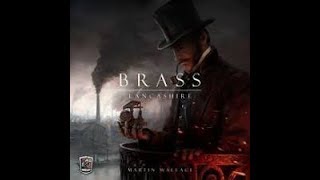
Brass: Lancashire represents a revised and streamlined take on the original 2007 game, released by Roxley Games in 2018. Reviewers across the community see it as an updated classic that remains highly playable despite significant evolution in the board game landscape. One common sentiment is that Lancashire works exceptionally well for newer players seeking to enter heavy economic games, while Birmingham offers deeper complexity for those ready to graduate.
Core Mechanics That Define Brass: Lancashire
Card-Driven Action Selection with Network Building
The core tension in Lancashire stems from the hand of cards players hold at any moment. Each action requires discarding one card, whether that card's suit matters or not. When building industries, the card played determines placement options: industry cards restrict builds to matching locations within your network, while location cards grant placement freedom. This creates constant tension between preserving potentially useful cards and discarding to take actions. Reviewers note this is what makes the game "crunchy" despite straightforward rules, players must constantly weigh whether they can afford to let go of a Manchester card they might need later.
Interconnected Economic Systems with Iron, Coal, and Shipping
Lancashire's second pillar is its elegant handling of resources. Iron and coal must be consumed to build certain industries, but the rules differ fundamentally: iron can be sourced from anywhere on the board, while coal must come from connected locations. When players build ironworks or coal mines, those resources populate a shared market that other players can access. This creates emergent cooperation, building a coal mine helps future players, yet they still must pay for the coal. One reviewer described this system as producing "symbiotic effects" where opponents' infrastructure becomes valuable to exploit.
The Brass: Lancashire Experience
Economic Depth with Breezy Decision Making
Despite its economic heaviness, Lancashire plays with surprising speed and clarity. Turns move quickly because the action set is small and accessible. Players make turns in just a few minutes once everyone understands the rules. Reviewers who have played both Lancashire and Birmingham note that Lancashire feels "tighter" with fewer idiosyncrasies, allowing groups to focus on economic optimization rather than tracking barrel positions or shipping port requirements. The game creates moments where players excitedly contemplate their long-term strategy while executing turns efficiently.
Interactive Dynamic with Push-Your-Luck Elements
The distant cotton market mechanic introduces genuine risk-taking. Players can attempt to sell cotton to a distant market instead of to opponents' ports, but drawing certain market tiles causes the sale to fail entirely, and the cotton mill doesn't flip. Reviewers describe this as "pushing your luck" in a way that creates memorable moments and table tension. Combined with the turn order track (where spending less money grants better turn order), Lancashire creates a game where every spending decision cascades: spend money to act early, or conserve resources and accept later positioning.
What Makes Brass: Lancashire Stand Out
The Two-Era Structure and Obsolescence
Lancashire splits into a canal era and a rail era, with a crucial transition at midgame. At the end of the canal era, all level-one industries vanish from the board entirely, never to score again. This forces early strategic decisions to have real weight: level-one tiles score only once (during the canal era), while level-two and higher score twice (once in each era). Reviewers highlight this as a masterful design choice that makes early-game development decisions feel urgent without being arbitrary.
Loan Mechanics with Meaningful Consequences
Lancashire offers loans in denominations of 10, 20, or 30 pounds, with players almost universally choosing 30 because actions are the most valuable resource. Taking a loan immediately drops your income track, creating a persistent penalty. Yet reviewers note loans feel strategically justified rather than desperate, they're often the right play when you want to move early in turn order or when iron costs surge. The flexibility to borrow different amounts (and the ability to time when you take loans) adds depth that reviewers find satisfying.
Potential Drawbacks
Limited Player Count Flexibility and Map Changes
Lancashire traditionally plays best with three or four players. While recent editions support two-player variants, reviewers who have tested two-player versions note they work "reasonably well" but lack the economic density and player interaction that defines the three-to-four player experience. The board feels more spacious and less contested at lower counts, reducing the urgency of network building and the symbiotic tension of accessing others' resources.
Rule Complexity and Conditional Resource Consumption
The distinction between how iron and coal are consumed creates a learning bump for new players. Coal requires connectivity to sources or the distant market; iron does not. One reviewer noted this is justified thematically (coal is heavy and needs transportation; iron comes as small machine parts) but remains a rules minutia that needs clarification. Additionally, cards must be discarded for nearly every action, leading to moments where newer players agonize over which card to sacrifice.
If You Enjoy Brass: Lancashire
Players drawn to Lancashire often appreciate games centered on economic systems and emergent player interaction. The comparison to Age of Industry appears frequently, with reviewers noting both games share DNA but Lancashire feels more streamlined. Those seeking heavier economic experiences sometimes jump to Brass: Birmingham, which adds barrels, additional industries, and shipping mechanics. Fans of network-building euros, tight resource management, and games where spending decisions create meaningful turn order consequences tend to return to Lancashire repeatedly.
What Reviewers Are Saying
"Lancashire is a 2018 re-release of the 2007 game Brass with new art, and other than a couple of streamlined mechanics it is the same as the classic game. It's fundamentally the same mechanics but with a few different industry tiles to give a different flavor to the game."
— Meeple University
"What makes Brass crunchy to me is the fiddly rules. It's like constantly considering whether you can do something. You have to discard a card for most actions, and most of the time the card doesn't matter, but when it does, you want to make sure you have that card in hand."
— Heavy Cardboard
"Brass Lancashire is kind of a route building game with heavy heavy economics. You're going to have a hand of cards, and every time you take an action you're going to discard one of your cards. What I love is when something's crunchy but the rule set is actually very easy."
— Foster the Meeple