/pic7784394.png)
























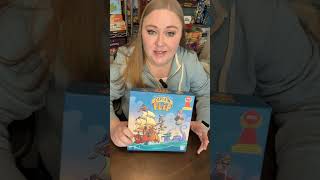













Captain Flip Deep Dive
What the Community Thinks About Captain Flip
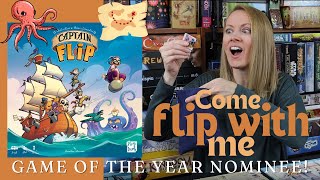
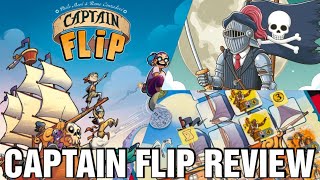
Captain Flip landed with genuine momentum in 2024, earning a Spiel des Jahres nomination and producing real enthusiasm across a wide range of reviewers. The consensus is clear: this is a charming, snappy tile-placement game that nails its modest ambitions. BoardGameCo's Alex Radcliffe describes it as "charming" and notes that when he finally played it on Board Game Arena, he "found it so easy and simple to play through that it does have a place for me." Jamie from Tabletoptiktok is more enthusiastic, calling it "a hit" and explaining that "it plays quick, there's a lot of fun moments that happen." Tabletop Tolson, breaking down the Spiel des Jahres field, said plainly: "I think it's exciting, I think it's fun, I think it's replayable."
What reviewers keep returning to is the game's ability to work across very different audiences. Rolls in the Family brought it up as one of their top picks for coffee shops and Airbnbs because it clicks almost immediately with new players. Foster the Meeple called it "weirdly addictive" and noted that they "don't know anybody that's played this that hasn't enjoyed it." The game earned its nomination not by being deep, but by being exceptionally well-calibrated for what it is: a 20-minute family game where the turns are fast and the core decision is always compelling.
Core Mechanics That Define Captain Flip
The Flip Decision
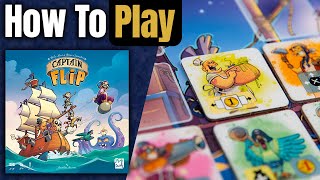
The defining mechanic of Captain Flip is also its name. On each turn, a player draws a tile from the bag and sees only one side. They then face a single, recurring question: keep what they see, or flip it over and accept whatever is on the back? As Jamie from Tabletoptiktok puts it, "you can flip it over once you flip it you cannot flip it back and you now must put that tile in your board." The commitment is total and immediate, which creates genuine tension in a game with very little rules overhead.
Board Game Dad described this as "exactly equivalent of being able to draw two cards, one face up and one face down: do you want what you see, or do you want what is a complete surprise?" That framing captures why the decision lands so well. The unknown back side introduces real risk, because tiles differ meaningfully in how they score. Some tiles earn points immediately, others score at the end of the game, and some carry penalties if they appear in the wrong context. Tabletop Tolson framed it as a clean press-your-luck moment: "the strategy of pulling a tile and saying do I want to keep this or do I want to kind of gamble to press your luck of flipping it over has just a lovely appeal to it."
Building the Board
Every tile drawn gets placed into one of the columns on the player's personal ship board, filling from bottom to top. The game ends when any player fills four of their five columns, triggering a final round so everyone gets equal turns. This structure creates a secondary layer of decision-making: not just what tile to keep, but where on the board to place it.
The tile roster includes nine distinct character types, each with its own scoring logic. The Gunner gives five coins immediately but causes an automatic loss if three or more appear on the same board. Swabbies score more the more columns they appear in, rewarding players who spread them out. The Lookout scores only if it sits at the top of its column. The Parrot lets a player draw an extra tile but costs a point at end-of-game. The Monkey lets a player flip an adjacent tile already placed. These interactions mean placement is never arbitrary. As BoardGameCo notes, you are "making those decisions based on what's currently on your board, what you've seen enter the bag." The four different ship boards, each with slightly different column bonuses and scoring modifiers, add enough variability to make individual games feel distinct without adding complexity.
The Captain Flip Experience
Fast, Social, and Breezy
Reviewers across the board point to the game's tempo as a key part of what makes it work. Tabletop Tolson noted that "it's the kind of game where you get to talk to each other while you're playing because the strategy isn't so much that it overwhelms you." When it's not your turn, there's nothing to stress about. The decision only arrives when the tile hits your hand. This rhythm keeps the table alive and social in a way that deeper games cannot always manage.
Rolls in the Family highlighted this quality when recommending it for coffee shops and Airbnbs, noting its "addictive quality with the drawing from the bag" and how quickly new players connect with it. The play time stays close to 20 minutes in practice. Jamie from Tabletoptiktok pointed out that "the turns are snappy and play moves around the table really really quickly," even when playing with children who are still learning.
Accessibility Without Emptiness
What prevents Captain Flip from being merely a luck game is the tile placement layer. The flip decision carries genuine weight because where you choose to place a tile, and what neighboring tiles already occupy that row or column, changes what the tile will ultimately score. As Rolls in the Family described it, the game is "one fun simple little decision that feeds into this kind of just simple puzzle game building up your thing." That structure means players who want to think carefully can do so, while players who just want to pull tiles and see what happens still have a great time.
Foster the Meeple reinforced this when they noted that first impressions of the game as a "kids game" quickly gave way to something more: "this game is cute but it is addictingly fun and there's different ships that you can use so there's lots of variability and there's a really fun decision space." The age recommendation of eight and up holds up, but Jamie from Tabletoptiktok observed that younger children can still participate meaningfully, even if winning is harder for them.
What Makes Captain Flip Stand Out
Production and Presentation
Reviewers repeatedly mention the artwork and component quality as genuine strengths. Board Game Dad called the character artwork "very charming," and the general tone of the game is whimsical and inviting in a way that translates well across player ages. The pirate crew characters are colorful and distinct, making the player board visually readable at a glance. Each character tile communicates its abilities through clear iconography: yellow boxes for immediate effects, gray boxes for end-of-game scoring.
The physical design supports the gameplay well. The bag-draw mechanism creates a tactile moment on every turn, the tiles are chunky enough to flip easily, and the shared treasure map token is described by Jamie as "really nice and big so that if you have it you recognize it and it can easily be moved around the table." These are small details, but they contribute to a product that feels considered rather than thrown together for the mass market.
The Gunner Risk and Satisfying Scores
One of the most discussed moments in Captain Flip is what BoardGameCo calls the "satisfying" payoff of landing Swabbies in every column: "when you do get those 25 points, it is so satisfying." Chasing five-column Swabbie coverage becomes a memorable goal in any given session, the kind of specific in-game objective that gives players something to root for beyond just beating the score.
The Gunner tile sits on the other side of this emotional range. Collecting one earns five coins immediately, which is powerful. Collecting three means automatic loss at end-of-game, which is a dramatic cliff. This creates the kind of moment where a player has to decide how far to push a risky strategy, and whether a third Gunner is worth the gamble. The clarity of the penalty, and the tension of watching someone approach it, is the sort of in-game drama that makes a light game memorable.
Potential Drawbacks
Depth Ceiling and Collection Longevity
The most consistent criticism is that Captain Flip hits its ceiling quickly. BoardGameCo gave it 3.5 out of 5 and was direct about the reason: "It's not a knock your socks off kind of game." After several plays, the nine-character tile set becomes familiar, and the strategic space starts to feel well-mapped. Radcliffe also noted in a follow-up video that Captain Flip "didn't enter my go-to fillers for my game group" and that his kids "while they enjoy it, they don't ask to play it." Games that no specific audience is pulling off the shelf tend to quietly fade from the rotation.
Board Game Dad was more blunt from the outset, noting that "the innovation in this game is not creating a problem space that is very interesting to me." For enthusiast gamers looking for long-term strategic engagement, Captain Flip simply is not designed to provide it. The four ship boards add some replay value, but they shift the experience rather than deepen it meaningfully.
Luck Variance
Because tiles are drawn from a bag and the back side of any tile is unknown until flipped, luck plays a real role in outcomes. Board Game Dad described the flip as "fate decides this game really, you're taking a 100% risk on the back side of the tile." Players can mitigate this somewhat through smart placement, the Monkey tile's re-flip ability, and reading which tiles remain in the bag. But a run of unhelpful draws is always possible, and less experienced players may feel the randomness more acutely than the tactical layer.
Jamie from Tabletoptiktok frames this as part of the appeal rather than a flaw: "sometimes you're going to flip, sometimes you're not, sometimes flipping really works out well for you and sometimes it doesn't." That framing is honest and accurate, but it does mean Captain Flip is not a game where skill reliably separates winners from losers over short sessions.
If You Enjoy Captain Flip
Reviewers pointed toward a handful of games that share Captain Flip's appeal. BoardGameCo recommends Carcassonne for players who enjoy the draw-and-place rhythm but want something with more strategic depth: "you draw something, you place it, it has that kind of fun of the experience, but you're building something collaboratively." Tabletop Tolson compared the experience to other Spiel des Jahres nominees, noting that In the Footsteps of Darwin offers a similar accessible structure with a heavier theme for those who want slightly more weight. Board Game Dad drew a comparison to Isle of Sky, describing how both games revolve around tiles "having varying value for each player." Rolls in the Family suggested Captain Flip as a natural companion to games like Welcome To for households that want light, fast, puzzly fillers. For players who like the push-your-luck tension specifically, Jamie from Tabletoptiktok noted that the game fits alongside others in that "risk to it, luck to it" space, and Cascadia comes up in the same Spiel des Jahres conversation as another accessible tile-based game worth exploring.
What Reviewers Are Saying
"I think Captain Flip is a hit because there's risk to it, there's luck to it, it plays quick, there's a lot of fun moments that happen. If you want a quick fun game to get to the table that's easy to teach and fun to play, I recommend Captain Flip."
— Jamie, Tabletoptiktok
"It is fun, it is light. It does what it's trying to do really well. It's a great gateway game, it's a great family game, and it's not a bad filler game either. And it plays in 20 minutes. It's kind of addicting to play through."
— Alex Radcliffe, BoardGameCo
"It is weirdly addictive. When they first explained it, you're like oh it's a kids game because it is for eight plus, but this game is cute and it is addictingly fun and there's a really fun decision space because you're like, do I risk it for the biscuit? Not like there's a parrot on this side which means there's this on this side, no, they're all different."
— Foster the Meeple