/pic6966125.jpg)

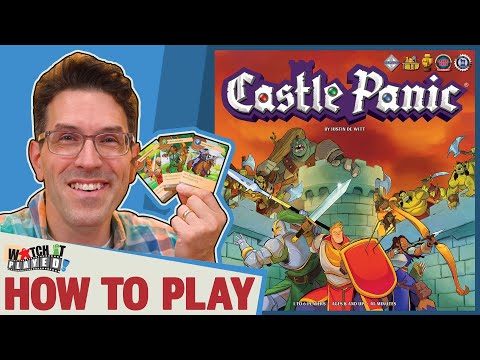



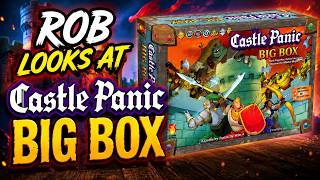












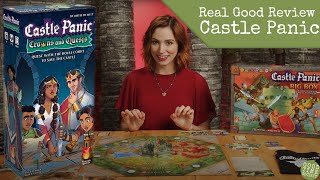







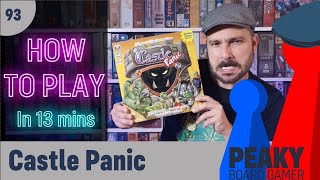


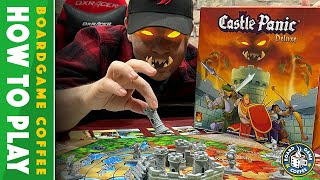
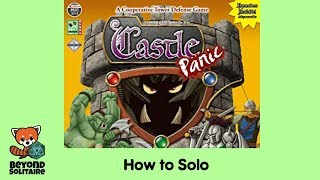
Castle Panic Deep Dive
What the Community Thinks About Castle Panic
Castle Panic occupies an interesting position in the board game landscape. The game has earned genuine affection from reviewers who praise its accessibility and cooperative spirit, particularly among families and newcomers to gaming. Classroom teachers highlight its appeal across diverse player groups, from young children to older students who want quick gratification without rules overhead. However, some reviewers criticize the game's reliance on randomness, arguing that luck dominates strategic decision-making. Despite this divide, the consensus from most reviewers centers on Castle Panic as an effective gateway game that welcomes new players while still offering enough depth for meaningful cooperation.
Core Mechanics That Define Castle Panic
Hand Management and Card Play
The heart of Castle Panic revolves around hand management. Players draw cards representing different combat units (archers, knights, swordsmen) and special abilities. On each turn, players build hands up to their limit, may optionally discard and draw a replacement card, and can trade cards with other players before playing as many cards as they wish. This card economy creates moments where teamwork feels tangible. Reviewers note that trading becomes central to strategy: a player might swap a card they cannot use with another player who can immediately benefit from it. The ability to keep cards face-up in cooperative mode reinforces this communication, letting all players discuss which threats to address first.
Cooperative Combat and Monster Movement
Combat itself follows a clean pattern. Each card targets monsters in specific colored zones (red, blue, green) and specific rings (archer, knight, swordsman). Playing a green archer card damages any monster in the green archer zone by one hit point. The simplicity is intentional: reviewers consistently mention that new players grasp the targeting rules within minutes. After players play their cards, all monsters advance one space closer to the castle. This movement phase creates urgency. If a monster reaches the castle walls, it destroys them. Reach the inner tower ring and those tower pieces fall. Destroy all six towers and the game ends in defeat. This mechanical loop runs the same way every turn, making Castle Panic predictable enough for teaching but tense enough to sustain engagement.
The Castle Panic Experience
Accessible Entry Point for New Gamers
Castle Panic has earned its reputation as a powerful teaching tool for bringing players into the hobby. Beyond Solitaire reported using it to introduce students to board gaming concepts without overwhelming them. The game requires no previous gaming experience. Setup is minimal, rules fit on a two-page reference card, and the theme speaks for itself: defend your home from invaders. This simplicity opens doors. Reviewers praise the game's ability to hook players who might otherwise dismiss hobby games as too complex. The cooperative structure means no one sits on the sidelines, and players cannot sabotage each other through hidden information or cutthroat mechanics.
The Tension of Resource Scarcity
As the game progresses, players feel mounting pressure from limited resources. The deck grows thinner. Special monster tiles introduce plagues that force players to discard entire card types from their hands, crippling carefully laid plans. Boss monsters arrive with devastating effects: the Troll Mage moves all monsters one space closer, the Goblin King forces players to draw extra monster tokens, and the Healer restores monster health points. Reviewers highlight how these cascading challenges create genuine panic, especially in the final turns when the monster pile dwindles and players must clear the board before running out. The game does not hide its difficulty behind complex rules. Instead, it strips strategy down to its essence: which monsters will you kill this turn, and which can you afford to let move closer.
What Makes Castle Panic Stand Out
Cooperative Play Without Analysis Paralysis
Castle Panic avoids a pitfall that traps many cooperative games: the alpha player problem, where one dominant player dictates everyone else's moves. Reviewers credit the card-based system for maintaining individual agency. While players can discuss strategy, the card they hold limits their options. A player without archer cards cannot help with threats in the archer zones. This natural limitation keeps decision-making distributed. Foster the Meeple described it as "a pretty fun one to start the day off," highlighting its role as an accessible cooperative experience. The stakes are shared: everyone wins together or everyone loses together, but only the player with the most monster tokens becomes the Master Slayer, adding a layer of personal achievement within collective victory.
Scalable Complexity with Depth for Committed Players
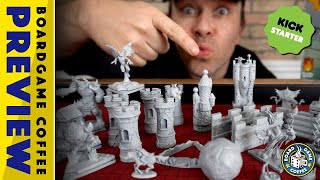
While Castle Panic teaches easily, it grows with its audience. Early plays feel straightforward: draw cards, play cards that match monster locations, manage the advancing horde. But reviewers who return to the game discover emerging tactics. A player might hold back a card to let a monster move into a space where the next player has better targeting options. Trading cards becomes about timing and prediction. The special cards unlock additional layers: Tar tokens slow monsters, Fortify cards provide temporary shields, Barbarians slay monsters regardless of location. Board Game Coffee noted the deluxe edition's beautiful wooden minis and modular expansion system that lets players "mix and match expansions to tailor difficulty and experience." The expansions (Wizard's Tower, Dark Titan, Engines of War) introduce flying monsters, fire damage, siege equipment, and resource systems for building traps, giving committed groups substantial room to grow.
Potential Drawbacks
Heavy Luck Component and Limited Strategic Scope
Some reviewers take issue with the randomness baked into Castle Panic. The die roll that determines where new monsters spawn is outside player control. Monster strength values are randomized when shuffled. Special monster effects like plagues and boulders can devastate hand composition regardless of player decisions. Board Game Dad described the game as having "all the chance of Candyland or Bingo," arguing that luck drowns out tactical play. This criticism carries weight for players seeking deep strategy. Castle Panic does not reward 40-minute turns of careful analysis. Monsters will appear in inconvenient places. Sometimes no player will hold the card to stop a threat. The game embraces this chaos rather than hiding it, which appeals to some but frustrates others seeking more control over their fate.
Pacing Challenges with Larger Groups
While Castle Panic scales from one to six players, reviewers note that the game slows noticeably with larger tables. Teaching four new players stretches playtime significantly. Turn order matters because some monsters may move or be defeated before reaching a player's turn. With more hands discussing strategy, downtime between turns increases. The trading phase, while thematically rich, can become a negotiation marathon if players overthink optimal exchanges. Reviewers recommend the game as exceptional for two to three players and note that four to six player games demand groups comfortable with a more relaxed pace and less optimization.
If You Enjoy Castle Panic
Players drawn to Castle Panic typically appreciate cooperative games that prioritize accessibility and theme over systems mastery. Forbidden Island and Forbidden Desert offer similar cooperative structures with lighter footprints. Pandemic brings deeper decision trees but maintains the cooperative spirit. For solo players, reviewers highlight Castle Panic's surprisingly engaging solitaire mode where one player controls all characters. Those seeking similar mechanics but more player interaction might explore Gloomhaven, though it demands significantly more commitment. Players who favor the fantasy castle-defense setting should consider HeroQuest, which layers miniatures and tactical combat onto a cooperative dungeon-crawling foundation.
What Reviewers Are Saying
"Castle Panic has also been a really huge hit. I like it as an awesome solo game especially for beginners, but it's also a really nice cooperative experience. Because it's got that kind of fantasy castle defense theme, a lot of students who want to feel a little bit tough or who like video games will give it a try with me."
— Beyond Solitaire
"Castle Panic is a cooperative game where one to six players work together to defend their castle from the relentless onslaught of castle-hating monsters pouring out of the surrounding forest. It's a tower defense game and it's co-op and I think it was a pretty fun one to start the day off."
— Foster the Meeple
"Castle Panic is a game that's been sitting on the shelf that I've wanted to play for forever. There's this cooperative castle defense where the monsters are walking towards your castle and you're trying to take them all out before they hit your castle. The way you're going to be doing this is by using cards that show a colored shape, so it's just a really good kind of next step with cooperative games."
— Rolls in the Family