Best Board Games for 3 Year Olds
Games in This Video
4 games are featured in this video — they unlock as you watch.



Transcript
hey my name is Ryan this is rolls in the family and today I'm going to be talking about what I believe to be the best board games for three-year-olds my eldest son is three and a half now and I think we've logged over a thousand board game plays so I feel like I'm coming from at least a place of solid practical experience to be able to recommend some games to play with a toddler um a few notes about this list as far as how I'm approaching it I definitely air on the side of kind of games that you could start introducing at three and it might be a challenge at three um but you know they could grow with the game or these it really could be like ages three to five honestly it's really hard to pin down a specific age because kids are so different but I'm kind of airing on the side of like this would be the earlier age that these could be introduced it also is kind of assuming that they at this point have had some exposure to games so know what a game is taking turns if that's not the case if they're completely new I actually would recommend checking out my previous video which was the best board games for two-year-olds which is really what I believe to be the um best completely introductory from scratch games whereas this is kind of like tier two they've gotten some of those foundational things um and may be ready to move into that but you know your kid you can use your best judgment as to you know if you're listening through this and it seems like maybe these are a little bit much or if they are ready for them um you know when you're playing
games with a three-year-old it's still very much um helping them a lot a learning experience be be prepared to be very patient it's very common with some of these games that you know maybe are some of the favorites that I play with my three-year-old that the first 10 plays were more of a struggle as they kind of learn it you know you might have games that you don't even finish you know but you're laying the groundwork um and so just be prepared to be patient you're working with a three-year-old um but I do think it is worth it like the the work you put in really does payoff it's very rewarding in what board games can offer for um their learning development as well as just sharing a fun experience um together in the bonding there so highly highly recommend sticking with it um I have nine games to talk about today and I'm going to be listing these roughly in the order that I would introduce them so it's kind of from like lowest complexity first thing after some of my two two-year-old recommendations and kind of getting more complex from there and I should mention that they also it's not like these games are just for three-year-olds a lot of these games do work well even with older kids if you have older siblings and I'll kind of touch on that maybe on the individual games but let's just go ahead and jump into it my first recommendation is going to be my my first my first Castle Panic um this is uh there's a lot of examples of this actually of a modern um board game that's not a kids game being reworked to be a kids game so a kids version of another game um so there
is a game called Castle Panic and this is kind of an introductory version of it where it's kind of this Cooperative Castle Defense you know where the monsters are walking towards your castle and you're trying to take them all out before they um hit your castle and the way you're going to be doing this is by using cards that show a colored shape so for example if I had the green Trum triangle card I can use that on my turn to defeat the monster that's on the green triangle space so each space on the path has a unique colored shape and so every turn you're drawing a card and then trying to pick you know which of these monsters do I want to hit and if I can't hit any you also can share cards so there's a little bit of the cooperation of oh could I use your card um to be able to defeat this monster and then at the end of each turn the the monsters move one space closer and a new monster comes out and so I think this is just a really good kind of next step with Cooperative games um it really boils down to just that color and shape matching so it's good practice with that um depending on how you know good your child is at that kind of matching but there's also some kind of nice layers here like it's very easy for them to play especially if you're helping them but there start to be some layers that they might kind of see as they go or maybe you have older kids that might still enjoy playing it for some of these reasons um one being just the decision of okay maybe I can get multiple monsters like I have matching cards which one is the best one to get and so you can start making decisions like oh this I if I don't get this guy next turn
he's GNA move to a space that we have the card for so maybe we leave that so that we could get it on the next turn now that is like beyond what a three-year-old is going to be thinking about but it is kind of fun as a parent and it shows kind of the potential of the game to be growing um with the kid as they play it more there are also um different enemy effects so there's like an enemy that when he comes out all of the monsters move an additional space again or there's one that jumps to the front like jumps in front of the frontmost um enemy and a lot of that like when you're first playing you as the the parent or the adult can handle that but it has allowed me you know I've started as my son has become more familiar with the game trying to let him do that you know like oh this moves all of them forward can you move all of them one space forward or this is going to jump to the front like what space is he going to go to which is just kind of a nice exercise of him thinking about okay who's in front and what's one space in front of that um so this is one that we've had a lot of fun with I think it's a great um Choice uh for a Cooperative game with three-year-old um so it's the first one I would recommend checking out now a lot of what we're looking for at games in this uh demographic is not just um that they're fun but also that they teach good lessons and build kind of foundational skills um and one of the skills if you're kind of working towards more complex board games that you're eventually going to have to tackle is this concept of counting spaces and there's a lot of classic children's games that you know have the concept of counting spaces you spin the spinner and
count spaces but if I had to recommend one um for this age to kind of fill that Niche I would recommend Richard Scar's busy town an I found it game and this is an interesting game where the board is massive it's like six feet long it's this is kind of a game you play on the floor um and you've got all your characters it's themed if you've ever read read like The Richard scari um books it's all that style of artwork um and on your turn you spin the spinner and you get to go that many spaces and you're trying to get all get to the end where the pigs are trying to eat your picnic before it ends so very basic Fair like Spin and move the spinner goes one to four spaces though so it's a nice kind of like constrained amount as far as how many spaces they would be counting and I like that the board Bo is so massive with these big spaces it's easy for a kid like to practice that okay count three spaces from where you currently are but really what pushes this up my list because if that was the game you know it'd be hard to recommend because it's so painful as a parent to like play that type of game um but this adds this whole I found it aspect to it this seek and search and find where if ever you do the spinner in you get one of the uh I for it's like the little gold bug but it's like the result then you get to draw a card from the search deck which will say something like umbrellas and now you have 30 seconds as a team to look for umbrellas on this on the giant board because the board is filled with all of these illustrations
and environments with tons of stuff going on and so everybody's looking at different parts of the board and trying to find umbrellas and putting the little magnifying glasses when you find them and when the timer goes off you count up how many you find which is another thing I like it's it's nice to ask the kid okay how many did we find and just that practice with counting and it'll say okay we found four everybody then gets to go an additional four spaces um and so those searches can be really powerful for the team you know getting to the end in time um so I think this is a really good one it's very fun the illustrations and and the search and find element while still getting that basic practice with the spin and move a number of spaces now I will say I have an older addition of this I actually just looked up and saw that they have kind of a new edition of it and it looks like they actually kind of changed some major things the board isn't nearly as big um and it's now a competitive game where when you're searching you're actually competing to find it first and hit a bell um and so I don't love the changes that I'm seeing there um I suppose you could get it and you could house rule it to be Co-op because I actually do like it better as that Cooperative game and we're working together I like the aspect of we're trying to find as many as possible instead of just find one quickly so my recommendation would be try try to find the older I found it version if you can you sometimes can find them getting sold secondhand um or I didn't like look a lot online to see if it's still being sold if you can't though it could still be a good option this new edition another thing you might see is a Disney edition of I found it
there's a bunch of different Disney editions I would recommend actually staying away from those at least initially they're more complex with the the numbers that you could spin going to eight the spaces are a lot smaller um the environments are like themed around movies which as a result means that for certain cards like only certain places will have that item because you know they're the only places with water whereas I really like about the Richard scari one any of the items is kind of evenly distributed through the whole board which which is works really well for different people looking in different areas and it's just a little bigger and easier you know for kids to actually find it so I definitely recommend going with the Richard scar version um and I think it's it's a great option especially for kind of reinforcing counting um in counting spaces uh next up I have another Cooperative one um and this is a Cooperative dexterity game called No Mercy for Monsters it kind of comes in this interesting magnetic class box that kind of opens and like folds up into this 3D house and so you're actually kind of looking into this diagram of of a room and you're going to be putting these little standup monsters into those rooms and then you Shuffle up all of these face down tokens and on your turn you're going to get to draw a token and most often it's going to be a sock and then you are going to get to throw that sock to try to knock down one of the monsters that's in the room and once you knock down all the monsters in the room you get to flip down to the next room it's kind of like almost paging through
a book um and then you keep doing that but there's some other things that you could get you know when you're drawing these tokens you might get a ball that you actually have to go to the side through the window and try to throw it through the window or you might get a of water that you have to throw from the top drop it on their heads you also could get a monster and if you flip a monster token then one of the monsters you've already knocked down stands up again and you have to leave that monster token face down still in the supply so there's a little bit of this memory element of okay we know a monster there now we don't want to pick that one again we want to pick different ones um so it's just it comes all together into this nice fun package it's very fun as a Cooperative game to be throwing these and the excitement of knocking them down the presentation's really nice it's also got a nice kind of grow with the kid aspect of you can make it a little more challenging you introduce this rolling of a purple Dy that has different effects of how you have to do your throw so you might have to make a silly face as you do your throw or make a sound or you might have to stand on one leg or so there's some things that might make it a little different or just funny um so we found that very fun um to mix in um so it's it's you know a little bit less on the uh maybe clear educational because it's got It's more on the dexterity though you're developing some of that uh handai coordination um but it's one my son and I have had a lot of fun with so I definitely recommend it my next one is an interesting one because it's not a children's game per
se um and it's one that most people are going to be familiar with this is uno the classic card game Uno and now you might be thinking like man isn't three like maybe a little early for Uno and I actually think it's a great one to introduce around this you know you're going to be helping them but this concept of matching um with a card game of you need to play the same color or the same number and you could strip it back you know initially to be even simpler of take out all the draw to all the reverse any of those special cards and just have the matching with the numbers another thing I really recommend here is to get a themed Uno set so we my son and I have played a lot of Uno and we specifically use the the Pixar Disney Pixar Uno set and so he knows a lot of these characters from these movies and it actually helps a little bit with the matching because the characters are the same for every number so all the eights have the same character which helps with matching those because it's not just a number it's a number and a picture to help U make that match um and so I think it actually works really well in kind of develops um some of these skills of kind of getting into card games which isn't something a lot of other kids games do now one thing to note here is kids have a hard time holding CS right and so what I recommend is first of all when you start playing Uno just have them face up on the table just play open hand that also allows you to help them a little bit and you know see sometimes I'll see that like you know my son thinks he needs to draw but it's like oh look
again like I think you have a match um but then the other thing I recommend is as they get more familiar with it you can actually buy I think it's game right that produces the little hands holder I'll end up showing a picture of it here uh in the actual video you're watching um but this is a nice little uh handheld thing that lets them stick Cards into it and so it allows someone with very small hands such as a three-year-old to hold a hand of cards you know my son can have you know 16 cards in there and they're all stuffed in there and it takes a little bit for them to learn how to use it but once they do it really allows them to play some of these card games while keeping their hand hidden that they otherwise just couldn't practic play um because there's uh the size of their hand so I'll be sure to link that in the description um as well uh next up is a game that's a little bit similar to Uno but takes it and kind of makes it into a stacking dexterity game and this is Rhino hero so in Rhino hero it's the same concept where you're trying to get rid of your cards but the way you get rid of your cards is you choose one to play as the roof on the tower that you're building and each roof is going to then show the next shapes of the walls that are going to get added on top of it and the walls are just these folded cards and so you're kind of making this giant card house collectively um but some of the cards have special effects like you might you know some of your basic stuff like you might skip the next person or make them draw a card or you might um but the most fun special effect is
there's one that forces you to the next player to move the Rhino hero so there's this little rhino superhero um meeple thing and if I play a rhino you on your turn to move the Rhino from wherever he currently is to that icon on that floor and so as the game goes on the Rhino is already going to be in the tower somewhere and so you have to carefully go in and like remove him from the tower and then move them up into this other spot which is just a nice little twist on um the formula that adds a lot of fun and the chance of maybe knocking it over um which Segways into the other consideration here which is the game almost always ends with the tower getting knocked over which with a three-year-old can be a little bit tricky you know I my son definitely sometimes gets nervous and almost like doesn't want to finish the game sometimes when we get here or there's just you know that that sense of like I don't want to knock it down now I think that's a good opportunity for a learning you know experience here and helping them to just understand that games are for fun right it's okay if you win then you lose and this is what the game happens um and just being able to practice that so many of my recommendations for younger kids are Cooperative which is great and there's a reason for that but it is nice to sprinkle in some competitive ones Uno is another example where you can practice this winning handling winning well and handling losing well um because that is a really nice foundational skill to be the type of gamer that people are going to want to play with in the future um so that is Rhino hero there is like a
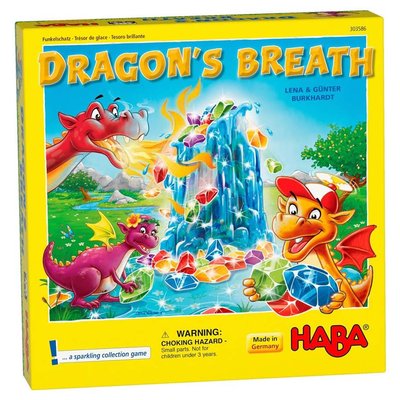
bigger version of rhino hero super battle that we haven't actually played in maybe is better geared to a little bit older kids since it has some additional complexity but maybe worth checking out if you find that you really enjoy Rhino hero so I think I'm getting to the point in my list where this is starting to get a little bit like you know maybe pushing threeyear olds a little bit and these are games that also work really well with old kids that are older than three and if you have older siblings but I have found that um they can work with three-year-olds well and if you're helping and they can learn it uh the first of these is dragon's breath now I will have to note here dragon's breath definitely has like tons of choking hazards because it comes with all these tiny gem pieces um that are quite small for a kids game um so you just have to know this is the type of game you want to always play with them and you don't want to just like leave this out um but it's a very unique game where there is this Tower of rings that's stacked up and you're going to then fill that with all of these colored gems so you kind of have the structure at the beginning of the game and then thematically each turn one player is going to be the dragon that's going to be breathing fire to melt one of the ice Rings you take one of the ice rings off and then you see which gems fall because before you take it off you're going to have the opportunity to draft which color you think is going to fall so there's the five little tokens for the colors and so you're kind of looking at this Tower and being like Oh there's a few Reds that are like right there on the edge I'm going to take the red one because I think the reds are going to fall and you go around the table and everybody gets to take one and then the last person that's the Dragon
Gets to take it off and any gems that fall that match your color you get to put in your little corner the box has kind of a storage way that you can um store for your gems that you've collected um so it's all about kind of like assessing the physical probabilities um of this Tower and selecting a color now why I think it works well even with very young kids is one the requirements to play they can handle it's like pick a color like even if they're not making a smart decision like I remember there were times my son would get locked in on just his favorite color and he picked it every time and it's like well I think you are going to lose and you know at the end of the game you open it up and that's the only color in his thing but it you know you're still learning a lot of the structure of the game that's going to you know get that out of the way so waiter they can start realizing this and I definitely watched it happen my son got better at it and it you know now very much does look at like what he thinks is going to happen um it's also a very fun one to play as an adult and play with other adults or older siblings because it's just a fun decision and it is kind of an ambiguous decision like a lot of times kids games can fall into like for an adult it's like well this is the right decision this is the best thing to do there's not really like interesting decisions this a lot of times you'll look at the way those are stacked there and you're not quite sure or it looks like something's going to happen but the way the things kind of fall or fall back in some other color did way better um so that helps even the playing field you know your your kid has a better chance of competing though it is generally you
know the if the kid isn't doing a very good job of picking with high probabilities they're probably not going to win um but I I do think it just really works well it goes up to four players um and yeah we've had a lot of fun with it like just with different ages playing together um so I definitely recommend it despite it maybe having a uh smaller pieces than you would normally want in a three-year-old game speaking of smaller pieces you'd want in a three-year-old game my next recommendation is Magic Mountain and this comes with marble so again you want to be um just keeping that in mind that you probably don't want to leave marbles out with your three-year-old or you know younger kids um but if you're supervising and playing this game I actually find it works very well despite this not being a game that's really targeting um this young of an age and so the way Magic Mountain Works it's got this big ramp that's got kind of all these splitting paths forking paths all the way down and you're going to start with all these blue student Miniatures at the top and then there's going to be these witches that are a little bit further down and on your turn you're going to draw a random marble from the five out of a bag and it's going to be a certain color like red and you're going to choose which of the top slots you want to put it in so picture like Plinko you know where you drop the thing and it bounces down randomly that's kind of what this whole board is simulating for this marble but whenever the marble gets caught behind either a student or a witch you then are going to get to move that person along the path to the next
available spot of the color of the marble so if it was the red marble and it goes to the student I'm going to look on the path which the path is zigzagging down the board and I'm going to see where is the next red space and then I'm going to move them there and by moving them there the marble is going to continue rolling and might get caught behind something else that then is going to move I me in fact there's even the opportunity that if you move the student quickly you could catch the marble behind the same student and move them again and that's completely a you know legal and fun play to pull off and so the ultimately the goal is you're trying to get all these students to the bottom of the mountain before the witches get to the bottom of mountain and there's different difficulty levels here of how you know how many you have to get before how many witches um and so this is one that it's again very fun like from an adult's perspective and you know because it's all this kind of probabilities and and moving it but from a three-year-old's perspective again the the actual requirements to play are pretty low it's like pick a marble pick where it wants to go and they'll start learning little things like you know kids are smarter than we give them credit for but they'll start to see oh there's some witches on the side of the board you know when I put the marble there like I'm going to be sending it right towards those or like there's a lot of students over here that I could do and so you'll start to see the kind of clicking with them of like the decision of where to put it now if I have one complaint with this game it's that it can be hard to get it on like a perfectly flat surface so that all of those splits are kind of like even
probabilities so oftentimes we're like man every marble is wanting to go way left and so we're like stuffing bags under it to kind of get it even so it can be a little finicky to get it to kind of play fairly um but still you know if you can kind of get around that it just works really well um and it's very different again it's more in kind of like teaching probabilities um kind of similar to dragon's breath and just kind of like if you do this that's then going to have a lot of Randomness like you know are you setting yourself up for the outcome um that you want also a Cooperative game so you can help them and it's fun to play together and it can play a lot of players you can actually go up to six players I guess you could go there's not a lot of reason you couldn't go more you're just like taking turns around the table um but we've had a lot of fun with this one it was one that I picked up because I it actually won the kener Spiel which is like the German kids game of the year a year or two ago and it was at my local game store and I picked it up um thinking H this will probably be a little down the road but then it actually worked really well and we've played it a ton um since my uh son has been three uh so have to recommend it on this list for that reason two more here we go we've got another one that's similar to dragon's breath has Little Gems these ones are a little bigger in this game but still probably something you're not going to want to leave out uh with young kids this is Hammer Time and in hammer time you're actually going to flip the box like the bottom of the box and you're going to put all of those gem pieces on the top and then on your turn you're getting to take this hammer and hit the Box until any number of those gems fall
off so it's like you're mining for them and then you check like did too many fall off I think it's if nine or more fall off then it's like you woke up the dragon and you have to put all of them back but if fewer than nine fell off then you get to take any of them to apply to your whatever your current kind of goal card is so you might have a card that says I need to get two Reds and two greens and so when you're hitting it you're kind of picking like where can I hit that I'm maybe going to get some of those or get the wild clear ones that I could use and so you get to place any of those gems on your card once you complete your card you flip it and go to the next card and it's basically a race to get four cards s completed um and so this is again kind of a dexterity one it's it's like a dexterity push your luck because you want to get a lot of gems because the more gems you get the quicker you can go the better chance you're getting the colors you want but the more you push your luck the closer you're going to be to busting and you know there's so many times you think you're doing it just right and then 20 of them come down because it's you know you hit it too hard this is definitely one that I think evens the playing field pretty well with kids and adults because I find even as an adult I so many times bust because I'm you know wanting to go for more I don't want to play Super conservatively but it is really hard to like hit something just right to get the right amount to fall um so I think that's nice um this is definitely one um that can grow with the kids like at the very simplest you can kind of help them with that it's a good practice with matching onto these cards but eventually you can add in um kind of similar to No
Mercy mon for Monsters this die that you roll that up makes you do do some different thing with how you hit like you might use your fist instead of the uh hammer you might have to put your head on the table while you hit it or use the backside of the hammer um so it's just a some fun little twist to add some uh variety into the game there's some other module with like these cards that we've never used that add some other objectives so I guess that's something you could look at as the kid gets older um but yeah this is one that early on it my son definitely struggled with it because it is hard you know to not and he he he tends to play more conservatively so there's a lot of times where he's just getting one or two because he's just you know chipping away at it until something Falls but sometimes it works because Dad's over here trying to do really well and like actually accidentally drops a bunch while he slowly completes his cards um so I think it it's fun for that reason um and kind of another one that mixes in dexterity sometimes dexterity is just a nice thing in kids games because it's very natural for kids but then still kind of has some nice game elements for them to work their brains and kind of where they should be hitting the Box Lastly lastly I've got drag omino dragino as in Dragons and dominoes this is actually the kids version of The Game King Domino um and it is revolving around these dominoes that have two different terrain Types on each Domino or two of the same and everybody's going to be building up their own kind of like
collection of dominoes so each round you get should draft from the four that are revealed which one do you want and then the next person gets to pick one and then you get to put that somewhere next to your other Domino so this is one that definitely is getting a little bit you know for a three-year-old this kind of tile placement is is probably going to be kind of new it might be kind of a little hard at first to get that lining things up and but you can help them with it and I think it's a good intro to kind of this tile placement because not a lot of the other kids games do it but then once you match these up ultimately you're trying to place the tile in a way that it matches the most terrains next to each other so I want to put the same ones next to each other um and then for each match that was made you get to take a dragon egg of that color and flip it and put it there and the dragon egg might have a dragon in it and it might be empty and ultimately at the end of the game you're trying to have the most Dragon so it's got this nice aspect of the actual building of the puzzle has some nice interesting decisions like even as an adult of where do I which one do I take where do I place this to get the most eggs and so you can kind of strategize to get the most eggs but then ultimately the eggs might be dragons they might not be dragons so there's this random layer that helps even the playing field which is really a desirable thing in a kids's game so that the adult isn't just either winning every time or feeling like they have to not try to allow the kids to have a chance um so I think that works really well um you know there's even a little bit of a uh like if anytime you get an egg you get to take the mama Dragon
which means that you get to pick first next turn so if you're really unlucky you're actually getting a little bit of a benefit and it's actually worth a point at the end of the game um so it's a little bit of nice balancing there um but we've really liked this one it's a really quick one like we can play it in 10 to 15 minutes um and it's one that you while it challenged him for sure at first it was pretty quick that he got pretty good at like matching these and I have been impressed at times of like you know the way he takes something and finds the one place in his arrangement where like both of those would match and you can just see the brain you know churning as he's trying to kind of figure out the spatial puzzle um so I think this one's kind of on the edge this would work great with older kids as well um but I think that you know I I call it out on this list because I think it's worth knowing that like you could work with this with a three-year-old early and it could actually be a very positive experience and so there you have it those are the nine games that I currently most recommend for three-year-olds hey thanks for watching like I mentioned I have also done a video on my top board games for 2-year-olds I have that link down in the description below if you want to check that out as well we also have a lot of other board gaming content on the channel I'm normally here with my brother Daniel um so you can check out some of that as well if you're interested and we will see you in the next one