/pic1638795.jpg)
/pic339842.jpg)
/pic4978911.jpg)
Once upon a time ...
1289. To strengthen the borders of the Kingdom of France, King Philip the Fair decided to have a new castle built. For the time being, Caylus is but a humble village, but soon, workers and craftsmen will be flocking by the cartload, attracted by the great prospects. Around the building site, a city is slowly rising up.
The players embody master builders. By building the King's castle and developing the city around it, they earn prestige points and gain the King's favor. When the castle is finished, the player who has earned the most prestige wins the game. The expansion Caylus Expansion: The Jeweller was included in the 2nd Edition.
Each turn, players pay to place their workers in various buildings in the village. These buildings allow players to gather resources or money, or to build or upgrade buildings with those resources. Players can also use their resources to help build the castle itself, earning points and favors from the king, which provide larger bonuses. Building a building provides some immediate points, and potentially income throughout the game, since players receive bonuses when others use their buildings. The buildings chosen by the players have a heavy impact on the course of the game, since they determine the actions that will be available to all the players.
As new buildings are built, they stretch along a road stretching away from the castle, and not all buildings can be used every turn. Players have some control over which buildings are active by paying to influence the movement of the Provost marker. The final position of the marker is the newest building that can be used that turn. The Provost marker also helps determine the movement of the Bailiff marker, which determines the end of the game. Generally, if players are building many buildings and the Provost is generous in allowing them to be used, the game ends more quickly.
This page includes videos and mentions from the whole Caylus family. Drill into a specific game below.
/pic1638795.jpg)


What is Worker placement


- good things about it
- gave a lot of credit
- enjoyment has diminished
- others games liked more
Mechanics (from transcript analysis)
- Worker Placement — the first real strong worker placement game, might be the first worker placement game ever made.
Video topics + discussion points
Quotes (from this video)
- Shadow Kingdoms of Valeria. The Valeria games keep getting better as the time goes by and this was a pretty solid one.
- Ankh: Gods of Egypt. I know this is some people's favorite of the trilogy of Blood Rage, Rising Sun. It's not mine.
- Roll Through the Ages: The Bronze Age. There's a lot of great roll and writes out there. Um Yahtzee of course is one of the OGs, but this is also one of the original games and I think it holds up very well.
- So Clover. What a fantastic party game. This is one of those games that when you get it right, everyone at the table is just so excited that figured it out.
- Links. And this is from Play to Z. And this is about trapping links. I'm not I don't love the theme, but it and it but it felt like a stock market game. it just wasn't very fun.
- Mycology, a game about mushrooms. The guy who designed it loves mushrooms, but I don't know about the game.
- Queen's New Capital, I almost liked this one, but there's just too much going on in it. A little chaotic, and honestly, this Queen's New Capital has been replaced by ironically, the King's Crown.
- Wine Cellar, a game with really giant cards here. Kind of a drafting game. I don't think it works well the full count of players, but with every other count, I I enjoy this drafting game.
- The Other Links, uh this one here is about Tetris, dropping Tetris shapes into a thing, and that worked pretty well. I liked it.
- 12 Rivers has a gimmick of rolling marbles down. It's a fun gimmick. Um but it also has some good decision space. It's not a very complex game, easy for people who haven't played many games, I think they would enjoy it.
- Jungo or Jungo, I this is a great little, very simple card game. Um trying to get rid of all the cards in your hand, but sometimes picking up them so that you can play a bigger hand later on. Found that to be a lot of fun.
- Star Wars: Battle of Hoth. What a fantastic uh game. Star Wars: Battle of Hoth is Memoir '44 Star Wars, something I've wanted for years, and I finally got it. So exciting. And it was exactly what I wanted it to be.
References (from this video)

- Really engaged with it
- Really liked it
- Really cool head-to-head two-player game
- New printing feels like a complete experience due to included expansion content
Mechanics (from transcript analysis)
Video topics + discussion points
Quotes (from this video)
- I was not granted a media badge, which means I have not gotten all of the emails from all the publishers about kind of what they have.
- Customs is a thing and customs is a nightmare.
- This is a game that I've said multiple times is the type of game that if I went to a booth and I did a demo of this, I would buy it right away.
- If you're flying, we all know how space work.
- I'm not leaving Gen Con without a Pookie Plushie.
- I'm going yoink and I'm taking one.
- If you come find me and you say, 'I'm hungry for promos,' I will give you a promo card of your choice.
References (from this video)

- Array
Mechanics (from transcript analysis)
Video topics + discussion points
Quotes (from this video)
- I am officially over winter now
- Just want it all gone
References (from this video)
- cooperative kingdom-building with threats (enemies, disasters, riots)
- civilization-building
- cooperative strategy with technology advancement
- Spirit Island
Mechanics (from transcript analysis)
Video topics + discussion points
Quotes (from this video)
- it's a fast-paced dungeon tile game where you end up to three fronts must explore a dangerous and ever-changing maze to win
- threading a string through one of the grommets either going up or going down
- it's a pinball game
- this is a loop based game where you're gonna keep playing the same thing over and over again
References (from this video)

- The Provost adds a nice bit of take that.
- Practically zero luck.
- It's the granddaddy of worker placement games for a reason.
- Only mitigation is your own mistakes.
- Medieval/Castle Building
Mechanics (from transcript analysis)
- Blocking — The Provost can be moved to block activated workers.
- Worker Placement — Placing workers on a road leading to a castle to build buildings and assist the king.
Video topics + discussion points
Quotes (from this video)
- fear not after this there's only going to be two more segments and then it will be Christmas day
- this was made infinitely better with the first expansion where each player was given a role and each role had a unique special ability
- the artwork in all own is really really nice it's in the same vein as twice it's got that old medieval style artwork that is remin of the days before people invented caffeine
- kis is the granddaddy of worker placement games for a reason
- space base is another one of them games that takes an idea that's already been implemented and turns it into something else
- it's called the granddaddy of area control games in the same way that kis is called the granddaddy of worker placement games
- Dogs of War is one of the most overproduced games that you can imagine
- playing RV Caesar is like saying goodbye to the world off into the Wilderness and living in a cave
- the fact that seven wonders can condense an epic civilization building game down to 30 minutes or less is nothing short of astonishing
- the way that all the cards are related to historical events and historical facts even if they are a little bit B towards the United States and the West means that Twilight Struggle is a fascinating game
- Feed the Kraken is an absolutely fantastic party game
- if you can find it and you got a large number of people especially at your Christmas piss up this should be a game that you pull out instead of your penis
References (from this video)

- Appears cutesy but is actually competitive and tight.
- Unusual pacing is interesting.
- Solid gameplay despite deceptive appearance.
- May need specific expansions for optimal experience (Pillbrook recommended).
- Animals, village building
- Village
Mechanics (from transcript analysis)
- Set Collection — reasonably simple tile bidding Drafting and set collection game
- Tableau Building — looks like a cutesy tableau building worker placement game
- Worker Placement — looks like a cutesy tableau building worker placement game
Video topics + discussion points
Quotes (from this video)
References (from this video)

- tension and strategic tension from provest positioning
- flexibility to balance tempo and safety margins
- tension can be punishing if misplayed
- mechanics can be opaque without rules reference
- programmed actions and building activation
- medieval kingdom with a provost sheriff on a winding track
- tableau-driven, tactical
- Kus
- Kalos 1303
Mechanics (from transcript analysis)
- building activation sequencing — buildings activate only when the provost passes their position
- Layer Building — buildings activate only when the provost passes their position
- provest/monarch track with activation — a sheriff-like provost moves along a linear road; what lies behind affects activation
Video topics + discussion points
Quotes (from this video)
- the tempo of the game it feels fast at the beginning but then as more properties kind of plop out onto the field you're trying to navigate what are the best places to put your property
- Barcelona is an absolute Gem of a board game
- suburbia is a classic tile placement city-building game
References (from this video)

- Stunningly beautiful
- Mix of simple choices, smart strategy, long-term planning
- Relaxing yet competitive
- Every turn matters
- Want to play again and again
- Can be a mean gardening game
- Gardening, love, and flowers
- Paris
Mechanics (from transcript analysis)
- Set Collection — Acquire floral beauties, hire additional helpers, earn coins, commission new garden features.
- Timing — Quick and time things just right to have the best garden at the right time.
- Worker Placement — Placing workers out in different parts of Paris to boost your grounds.
Video topics + discussion points
Quotes (from this video)
- Jazz, liquor, and points. That's what I'm all about.
- This game is mean, but in the best way possible.
- It's a mean gardening game with placing all these workers out in different parts of Paris.
- This takes the thinky puzzle of Trek 12 and adds a battleground.
- This game is beautifully produced with lots of decisions to make.
- Man, this game looks silly fun.
- A massive old west/horror/portal jumping themed cave crawl adventure.
- This is such a hoot.
- It's the silliness that we need right now.
References (from this video)

- Interesting scoring mechanism
- Keeps checks and balances
- papyrus making, ancient egypt
Mechanics (from transcript analysis)
- action selection — Choosing actions based on movement on the rondel.
- Rondel — Players move pieces along a path with choices and limits.
- Scoring based on knowledge — Points earned are determined by current knowledge, not total accumulated points for a scoring tile.
- Worker Placement — Implied with moving pieces and action selection.
Video topics + discussion points
Quotes (from this video)
- My number three is the Royal Society of Archaeology from Hutch Games.
- Mine is Bohemians. This is from Portal Games.
- Countryside is the one I picked for this one.
- My number two also involves animals sort of. It is Aquaria.
- My most anticipated Essen 2025 game is Kingdom Crossing from Sorry We Are French.
- Well, my number one is Wispwood from CGE.
- We've enjoyed Castle Combo a lot with our group.
- Lord of the Rings Duel, which has been very popular, is getting an allies expansion.
- And then Windmill Valley Oh, yep. Really enjoy Windmill Valley. It's I don't know if you can see it. See it. Windmill Valley, that's getting the Blooming Sails expansion.
- And then one other honorable mention is called Twisted Trumpets from Play to Z.
- What is it? We would love for you to tell us in the comment section after you like this video, what your most anticipated Spiel game is going to be.
References (from this video)

- Was a significant personal catalyst for getting into the hobby
- Offers rewarding strategic depth
- Groundbreaking worker placement mechanics for its time
- Creates memorable shared learning experiences within a gaming group
- Was out of print and difficult to acquire at the time
- Medieval town building
- Dragon Lance
- Power Grid
- Puerto Rico
- San Juan
- Lowenherz
- Catan
Mechanics (from transcript analysis)
- Town Building — And you build up the town, the town sort of comes up on the board and you build the castle
- Worker Placement — It's a worker placement, what is that?
Video topics + discussion points
Quotes (from this video)
- it is a crime against somebody that this game has not been just been picked up because people that have played this game, I still have the game and and you know, they love it.
- overrated, I'm going to probably get hated for this is I'm just going to say Magic the Gathering.
- it really elicits a lot of the interesting feelings of the movie.
- Now Urban Sprawl is like a city building game. Like think of SimCity or something like that. But, it's a little bit more I would say mean, but the players aren't really mean to each other.
- But, the combat everything else that happened in that round and in previous rounds and what might happen in the next round informs that moment of fight, that moment of conflict.
- it abstracts it in such a compact way that everything else in the in the system is is important and that's what actually where the combat is. So, the fight isn't where you think it is.
- it really just got me into the hobby, like learning about mechanics, reading reviews and all of that and then like really sitting with the game strategically and thinking about stuff
- his boards are seamless. Like it looks like an actual landscape and then the spaces are there as opposed to like, you know, drawing a border or a box.
- but they're they're written the best I've ever seen a like piece of flavor text or a paragraph written in the board game space
- Tales of the Arthurian Knights. It's beautiful game. The reason this is the top one for me is because the the level of care and craft that goes into the story entries
- they're written the best I've ever seen a like piece of flavor text or a paragraph written in the board game space.
- I will lose myself in the paragraph and feel like, oh this is like a good snippet from some ancient tale or something written in the 50s or whatever, you know, and or the 1800s.
- Rangers of Shadow Deep, which has been like my number one game for the last couple of top 50s that I did.
- it's a solo co-op miniature skirmish game that has a really vast expansive narrative campaign.
- It gives me that D&D sort of taste cuz it's a D20 system and it's very like miniature scape world building type of thing.
- it's just great. It's it gives you the chance to just play with all of your toys and play with all of your your terrain and your models and your your creative thinking, your world building cuz you can still kind of be a game master for yourself because the the game lays out like a narrative thing and then there's some like deck of card things that sort of change up the scenarios if you play them more than once. And so there is sort of a game master there, but the game master's kind of like left the table by the time you get there. They're gone. They gave you the outline and then you're there to kind of game master and play at the same time.
References (from this video)
Mechanics (from transcript analysis)
Video topics + discussion points
Quotes (from this video)
- The hard thing is I can't do it. I've got to rely on my wife to do it. So that's why we're kind of juggling things and it's kind of hard to get everything together.
- I added more stuff to the mystery lots. So, we're going to go over it here and make sure that you understand what's going on here.
- When you make a bid, it is for lots two and three. Okay.
- I can't show you the games because I just can't move on this thing.
- It is what it is. Um
- It's been like a machine but with this ankle completely torn up. It is really really hard. Okay.
- The rules don't take that much. They really don't take that much.
- I think it's a really really special game. And I can't believe I missed it for this long.
- We're going to end it this Thursday. So um this Thursday 12 noon it's the last time you can get your bids in.
- And lot 11, don't forget that Neuroscape game. That thing that that game is hot and expensive and, uh, good luck because it'
- Big time hockey. Big time boxing. I'll take a look at it. I'll write him if he'll bring he'll send it to us. I'm a big- time hockey guy. You know that. Very painful. Very painful.
- If you want to bid, email me novarapime860@hotmail.com.
- Galaxy Defender. Okay, at 250. We combined the two lots, two and three. Okay, they are going to be one lot now.
- Uh, Lot number four has no bids on it. That's the Memoir 44, Ace Armor, Flames of War starter set, uh, coin game, um, uh, D, uh, D-Day, uh, solo game from Decision Games. A great, great, great lot. Expensive lot, too.
- Lot number 11, Last Night on Earth, Darkest Night, the miniature expansion for it, Naroscape, and Risk. I threw that in there. Brand new copy. Nobody can ever have enough uh Risk.
- That thing that that game is hot and expensive and, uh, good luck because it's a low print run, so the cards are worth cash, but we need the cash.
- See, I got to talk more about that Dynasty baseball game. this there's certain games that just get get me a certain way and I go, "Yeah, that's that's gonna be a classic."
- Schnickel Fritz is if you just want to donate money. Snickler Fritz64@yahoo uh.com. If you don't want to bid on anything, you just want to send five bucks to help us out. Uh, we would appreciate that. You can do that, too.
References (from this video)

- don't really like the production
- very very okay at best
Mechanics (from transcript analysis)
- abstract strategy — an abstract strategy game
Video topics + discussion points
Quotes (from this video)
- I feel like that was the case here. Uh it just kind of distracted I felt from what I like in the core experience of Azure.
- But man, I wish a few tweaks uh could be made to it to make it a truly excellent, excellent game.
- It it just doesn't feel like any other uh cooperative game that I can think of and I love the theme and the look of it.
- This is one where I really feel like it gives me more of what I already like about Moour.
- There just something about it that missed the mark for me. It wasn't necessarily bad, but it was okay.
- The pirates has almost nothing to do with the theme at all, but a fun little game.
- It's a nice looking game from Panosaurus. It just at the end it just felt it felt fine.
- but the the game itself is a really nice game.
- It's like an adult version of the Haba game Monza.
- Beautiful cards, but not a great game.
- Really enjoyed this one.
References (from this video)

- Liked how much he liked it despite initial thoughts
- Liked the tile options for building
- Liked the interaction with the provost
- Liked the unfolding worker placement spawns
- Didn't appreciate the game initially
- Wants to get better at it and understand it more
- Building up the castle
- Agricola
Mechanics (from transcript analysis)
- tile laying — so many different tiles to to pick from to build along your road here.
- Worker Placement — the ability to create your own worker placement spawns in a unfolding kind of way as you start to build out these building these tiles and buildings here.
Video topics + discussion points
Quotes (from this video)
- I really liked how uh bombastic the cards get in allowing you to do, you know, things on your own board and how to explore it.
- Uh especially with the military aspect and, you know, creating or increasing the military might that you have to um impose on other opponents and when these battles really made our games uh come down to these in addition to uh the just straight-up deck building and um you know, playing cards from your hands and worker placement aspects that has a lot of good mechanisms that I enjoy.
- This game I really enjoyed for the theme. I like the the thematic story and the arc of this game where the plague gets pretty bad uh during the game, uh but then slowly as you start to unders- or, you know, uh combat the disease, you start to uh rely less and less on taking out the plague and more and more coming back to repopulate Messina.
- it's still a game that is is tough for me to play sometimes just because um you know, I if I think I know what is going on with the strategy of this game and and and you know, the the more that I have to learn from it and so it kind of deterred me from playing it more
- But yeah, uh as as bland as it looks, it's actually really fun order fulfillment game.
- Um it's not as deep or complex as Magic or Hearthstone or some of the other card games are, but it probably will get to that point at some at some point.
- I wish that the meta game was more diverse. It hasn't been so since the start of the game.
- And Wingspan for me, while it's a masterpiece of of a design um in my opinion, I really was really drawn to all of the birds and the individuality of these cards.
- It does take a while to play, I think if you're playing with new people, which was kind of a deterrent for me for bringing this game out more often.
- So, this is one of the latest Uwe Rosenberg games back in 2022, one of my favorite games. One for the solo version of this game. I think that is the peak way to play this game.
- And so I I hold it in high esteem.
References (from this video)

Mechanics (from transcript analysis)
Video topics + discussion points
Quotes (from this video)
- Rule books are a big barrier of entry for many people
- I also feel the hobby needs a website or youtube channel that welcomes new board gamers and helps them find the resources
- I know I spent too much money and time on games that didn't work for me and my friends at the start and nearly gave up board gaming unfortunately
- Ticket to Ride or Catan
- if you like uh i don't know uh ameritrash games or something you might want to try Star Wars Rebellion or Arkham Horror or Elder Sign
- The goal isn't to just let's get somebody else addicted to games that's not the goal that's that's a terrible goal but let's give people some options in their life to have some different experiences and have some fun
- once you like jump over that step over that line you're like oh look at the giant tsunami of stuff
References (from this video)

Mechanics (from transcript analysis)
Video topics + discussion points
Quotes (from this video)
- the only constant is change
- jungkus games is my full-time career
- i want to make this digest of all games i've talked about on the site
References (from this video)

- Enamored with the game, can't wait to play more.
- Already considered one of the top worker placement games.
- Modernized ruleset from the original Caylus.
- Second play was not as good as the first.
- Provost movement in the second game was less impactful.
- Hasn't resonated with Carlo as much as the host.
- Building a town and castle through worker placement.
- Caylus
- Bus
- Agricola
- Keyflower
Mechanics (from transcript analysis)
- action programming — Actions are programmed and resolved later.
- Area Movement — The Provost character moves along a path, affecting action resolution.
- player interaction — Players can manipulate the Provost to affect other players' actions.
- Worker Placement — Players place workers on action spaces.
Video topics + discussion points
Quotes (from this video)
- This is the heaviest game I've played that I have no issues playing.
- It's just it's just struck this amazing balance that I guess what I love about it, too, is just it's just been so long since it's really been since Feast in some ways that a heavy game that with this much of depth has landed for me so spectacularly.
- This is one of the very best games I've ever played, and unquestionably a 10 out of 10.
- It's just incredible what it does with a relatively streamlined rule set. The amount of player interaction.
- Would you agree that of all the games we play, this is one of the ones that's most like groan-inducing around the table?
References (from this video)
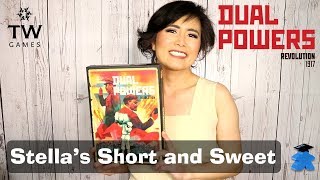
- Leader powers make it interesting
- Leader powers can overturn the power quite easily
- No direct battle, just area control
- Internal struggle for power
- 1917 Russia
Mechanics (from transcript analysis)
- Area Control — Players compete to control areas, which is determined by secret objectives each round.
- Card Driven — The game is driven by playing cards, which dictate actions and advance markers.
- Hand Management — Players manage cards in hand to dictate actions.
Video topics + discussion points
Quotes (from this video)
- hi it's Ella from evil University
- thanks for watching please subscribe and hit the bell to be notified of my next videos for any questions in the comment sections below you can also follow me on instagram for port games photos and reviews until next time
References (from this video)
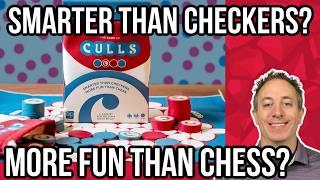
- Very quick (about 5 minutes per game).
- Easy to teach (can be taught in a minute).
- Engaging and tactical despite being simple.
- High replayability in short sessions.
- No luck involved (no-luck abstract).
- Rule ambiguity about whether you can place where you would normally call yourself (clarified later with publisher).
- Can be challenging for new players due to the depth of strategy in a short game.
- Advanced variant exists for additional depth.
- abstract strategy
- checkers
- chess
Mechanics (from transcript analysis)
- call_and_flip — A 'call' occurs when a piece is placed between two opponent pieces; the player who makes the call flips one of the two between them, and the opponent must move that flipped piece somewhere else.
- flip_and_move — After a call, the opponent moves the flipped piece to an open location instead of placing a new piece.
- initial_piece_placement — Each player places two pieces on setup (two pieces per player).
- multi_call_sequences — Multiple calls can occur in a row, creating back-and-forth movements and strategic depth.
- no_luck_abstract — Characterized as a no-luck abstract game.
- Objective — Aim to achieve five in a row to win.
- placement — On each subsequent turn, a player places one piece.
- Roll/Spin to Move — After a call, the opponent moves the flipped piece to an open location instead of placing a new piece.
Video topics + discussion points
Quotes (from this video)
- it's a no-luck abstract.
- You can teach this game in a minute.
- the rules actually say play three times and see who wins two out of three.
- it's addicting.
- this is a great quick little abstract game.
References (from this video)

- lovely components
- welcoming, easy to pick up
Mechanics (from transcript analysis)
Video topics + discussion points
Quotes (from this video)
- It is an excellent production. It is everything you've come to maybe know and love about Neuroshima Hex.
- Outstanding, man. I love this trick-T game that also includes set collection.
- Disappointing. This is basically Forbidden Island, the card game with too few spaces and a little too much swinginess.
References (from this video)
- consistently delivering unforgettable moments
- energy around the table and dynamic alliances
- not universally approachable due to its energy and theme
- Dynamic table energy with hostile/alliances dynamics
- Rhiner Kitia’s signature tension-filled interaction
- personal favorite, emphatic
- Rhinelander
- Gazebo
Mechanics (from transcript analysis)
- Area Control — territory control with dynamic interactions
- area_control — territory control with dynamic interactions
- Auction — auction-based tension with player interaction
- Auction / Bidding — auction-based tension with player interaction
Video topics + discussion points
Quotes (from this video)
- The energy of this list.
- They give me the same energy ultimately as chess.
- Circus Flucati is a wonderful push your luck and rummy like game where you draft cards from the face up river but can push it and add more hoping you don't hit the same suit again.
- Zuvatus is still my favorite game from Rhiner Kitia.
- Gold Country is just a fascinating economic stock manipulation game with tile laying that at the end of the day I'm already going to describe as Bitewing's most kinesia game.
- No other game does them so balanced, so logical yet so highly replayable. It's RAW.
References (from this video)
- Interesting dynamic of risk-taking vs. protection of resources
- Strong social interaction through table governance and possible collusion
- The Provost mechanic adds a learning curve
- Cooperative or competitive tensions can slow early rounds
- resource management under a push-your-luck line with Provost mechanics
- medieval castle-building and negotiation
- dynamic table politics and pacing under shared board constraints
- Caylus
Mechanics (from transcript analysis)
- Cancellation and blocking — Players can conspire to cancel or hinder others' actions through placement and timing.
- End-of-line activation pressure — Buildings placed after the Provost may not activate immediately, creating risk decisions.
- Provost movement mechanic — The Provost marker can be moved up or down the track, changing which buildings activate.
- Track Advancement — The Provost marker can be moved up or down the track, changing which buildings activate.
Video topics + discussion points
Quotes (from this video)
- Clues are used to seal gates in the game which is one of the main ways of winning
- one at a time after any skill check failed or not each spent clue token allows the player to roll one additional die and the result is a success
- the Provost can be moved up and down the board
- it's a fantastic atmosphere at the table
- the greatness in games is that they're fun and enjoyable
- you trick yourself into spending your important resource Clues into passing a check out of desperation
- trades are binding and you can't lie
- success is harder to move forward from than failure
References (from this video)

- Dry game
- Requires sitting and thinking
- Boring for hyperactive teenagers
- Heavy Euro game mechanics
- Castle building
- Medieval
- Strategic euro game
Mechanics (from transcript analysis)
- Dry gameplay — Requires concentration and thinking
- Worker Placement — Placing workers to build castle
Video topics + discussion points
Quotes (from this video)
- a series of videos where I take a bunch of different possible scenarios some of them provided by you the viewers and I shuffle them up into a deck of cards I reveal a scenario and roll a dice to see how many players I've got
- I got in lots of trouble last time for using the word dice as a singular so we'll be sticking with die as long as I remember today
- everything economic uh that I really really love seems to cap out at five players
- I can't imagine how long it would take so I think that would probably ruin ruin game
- frankly I played that with uh two players once and we gave up after about seven hours
- there's some good ones but most games before 1995 would ruin game night if you tried to play them today
- you're not allowed to speak to each other and you're playing against the time so it's very frantic
- the only way you're able to communicate is by tapping this wooden token to say look I need you to do something
- I think Mysterium would fall apart if they didn't speak the language and that's odd isn't it because it does isn't a game that has any text in it
- I think a terrible idea there's not that much interaction and the game gets longer with each player that you add
- I don't understand the people who put down a big you know they stick down Scythe in front of kids or boast about the fact their four-year-old can play sides
- there's no reason to be playing um Snakes and Ladders or or Candyland I would say not that Candyland is a big thing in the UK
References (from this video)
- Kicked off the worker placement boom
- Rocketed towards top of BoardGameGeek charts
- Bus
- Aladdin's Dragons
- Cathedral
Mechanics (from transcript analysis)
Video topics + discussion points
Quotes (from this video)
References (from this video)

- strong thematic flavor and visual appeal
- accessible tile-based decisions
- less widely known; potential availability issues
- some players crave deeper engine-building
- navigating in a world of coastal cities and trade
- medieval/renaissance-inspired harbor-city exploration
- city-building with a historical vibe
Mechanics (from transcript analysis)
- set_collection — collect resources or cards to maximize points
- tile_placement — arrange tiles to optimize city layout and scoring
Video topics + discussion points
Quotes (from this video)
- this is the board game quiz show
- i'm quizmaster christina
- viewers you can feel free to pause after the questions to play along at home
- it's just great
- i started with agricola
- it's a fantastic game
- you can check out our bi-weekly podcast
References (from this video)

- accessible modern take on a classic worker-placement vibe
- still challenging enough for seasoned players
- expands well with simple to find add-ons
- older complexity can feel dated to some
- rule clarity can be an initial hurdle
- castle construction and road network management
- medieval kingdom with a grumpy king
- lightly humorous with competitive tension
- Catan
- Agricola
Mechanics (from transcript analysis)
- area/efficiency optimization — As players build, the efficiency of actions improves; you must balance provost movement with action access.
- Worker Placement — Players place workers on action spaces to perform tasks; action availability is influenced by a provost/poverty mechanic that can poke holes in desired spaces.
Video topics + discussion points
Quotes (from this video)
- QE is an absolutely fantastic game I've had so much fun with this since we picked it up about a year ago.
- it's absolutely hilarious when somebody just goes absolutely mental with the bids.
- Arcadia Quest is an absolutely compelling campaign Skirmish game that looks absolutely fantastic and still plays fantastic today.
- Eric M Lang's Masterpiece in my opinion.
- The Lost Ruins of Arnak doesn’t feel reinvented, but it feels exceptionally well balanced and clearly designed.
- Dune Imperium is absolutely outstanding. this is a deck-building worker placement game.
References (from this video)

- thematic cat art
- variable gameplay
- potentially chaotic
- cats, chaos, and changing rules
- cat-themed Flux game
- family-friendly chaos
- Fluxx
- Flux the Cat Game
Mechanics (from transcript analysis)
- Flux mechanics — Rule-changing cards create a fluctuating game state; hand size fluctuates.
Video topics + discussion points
Quotes (from this video)
- Hey, I'm Grant with Grant's Gamerecks.
- There's a lot of new additions this month.
- If my voice sounds weird or I'm a little lower energy than normal, it's because I am currently sick.
- So, what a month.
- I'll be back next month with more retail releases.
- I appreciate you being here, liking, subscribing.
References (from this video)
- Strong thematic integration and a dense, puzzle-like feel
- Innovative two-world (above/below) interaction with dynamic movement
- Engaging app-like real-time feedback via shimmer/shadow mechanics
- Rich table interaction and variable strategy due to ritual components and spells
- High difficulty and potential for rule ambiguity in prototype state
- Complex setup and occasional perceived imbalance during play
- Large amount of attention required; may be lengthy for casual sessions
- survival horror with ritual sealing, exploration, and shifting spatial dynamics between two worlds
- A haunted, multi-dimensional asylum where above and below boards and rings interact, with a looming monstrous force (the Monarch) to seal away.
- chaotic, emergent, puzzle-driven with a strong thematic emphasis on ritual work, exploration, and escalating danger
- Nemesis
- Spirit Island
- Silent Hill (board game/spinoff interpretations)
Mechanics (from transcript analysis)
- above/below world and ring rotation — The board is two-layered with mirrored and interlinked rooms; phase and event-driven rotations alter which spaces are accessible and how threats move.
- cooperative semi-op (semi-cooperative) play — Players cooperate to survive while pursuing their own objectives; occasional conflict or competition arises from shared threats and timing.
- events, trauma, and rift mechanics — Event cards drive rotating maps, fiend movement, and rift dynamics; trauma cards add lasting penalties or twists that shape risk/reward decisions.
- exploration cards and items — Exploration cards reveal permanent board effects; items and spells are gained, traded, or used to modify actions and improve survivability.
- fiends, nurses, skinwalkers and monarch activation — Various enemy types move and attack using event-driven cards; the Monarch activates with its own deck, introducing traumatic effects and shifting threats.
- lead_agent_token and shimmer cards — Players contend for the lead agent token; drawing shimmer cards can flip and pass the token, enabling end-of-turn follow-up actions and shaping turn order and tempo.
- portal/ritual component placement and board upgrading — Placing components into ritual tracks upgrades character tracks and unlocks new actions, spells, and buffs; progression feeds into the endgame sealing ritual.
- rituals, seals and greater seals — Players collect components and perform rituals to seal gates; regular vs greater seals determine progress toward closing powerful threats.
Video topics + discussion points
Quotes (from this video)
- I freaking love this game and the chaos it creates
- Nemesis plus Arkham Horror plus Silent Hill
- This is going to be our October game
- I love survival games
- I freaking love this game, this is cool
- The two-world interaction is really clever
References (from this video)
- Forward momentum as the game evolves
- Dynamic setup keeps players adapting
- Complexity and teardown can be heavy
- Building locations and scoring through monuments
- Medieval construction and guilded expansion with construction actions
- Strategic development with a focus on throughput and expansion
- Chaos
- Architects of the West Kingdom
- Everdale
Mechanics (from transcript analysis)
- Endgame momentum via monuments — Shifts in action power and scoring as basic spaces are replaced by monuments.
- Variable setup and evolving spaces — Players can introduce new action spaces throughout the game, creating a changing board.
Video topics + discussion points
Quotes (from this video)
- I'm Adam Porter I'm a game designer from Wales and I've been fascinated by worker placement games for a decade
- Five criteria immersion interaction tension feedback and decisions
- worker placement is a thematic description... describes a narrative of sending our little in-game avatars out to take actions
- the simple Act of placing such a token denies other players access to that action for the rest of the round
References (from this video)
- innovative turn-order mechanic via master builders
- strong thematic integration with action choices
- pivotal early example of a dense, strategic eurogame
- long playtime and setup complexity
- high learning curve for new players
- castle construction and strategic village development via worker actions and turn order
- medieval kingdom with a castle road and rebuilding effort
- classic eurogame flavor with misdirection via provost mechanics
- Agricola
- Caverna: The Cave Farmers
Mechanics (from transcript analysis)
- bag draft / master builder timing — master builders are drafted from a bag, influencing turn order and timing; players may pass or place
- Worker Placement — players place workers to gather resources and trigger actions on a shared board
Video topics + discussion points
Quotes (from this video)
- i haven't gone back and looked at all the video i watched about five seconds of it and then i was sick in my mouth because it was that bad
- if your top 10 worker placement game ain't on this list that's because a [__] or b probably ain't played it
- bollocks
- there is literally no luck in this game
References (from this video)
- Excellent pacing via a central worker pool that reinforces a sense of managing a workforce
- Provost mechanic introduces meaningful and sometimes disruptive interaction
- Tension between expanding infrastructure and converting basic resource buildings into housing tightens the board
- Mid-to-medium weight with accessible depth and bite
- Multiple ways to counter or affect opponents through power tiles, favors, and timing
- Provost can be confrontational; not all players will enjoy direct interference
- No solo mode mentioned in the video, which may limit solo play options
- Ambiguity in subtitle title (Caylus 1303 ambiguous title)
- Some players may find the complexity and interaction overwhelming if not familiar with worker placement
- construction, political power, resource management
- medieval fortress-building setting centering on constructing a castle at Caylus with supporting town infrastructure
- concise, instructional overview with emphasis on how players interact and progress
- Caylus
- Architects of the West Kingdom
Mechanics (from transcript analysis)
- Action Interruption — The Provost interrupts or blocks actions, creating direct confrontation and forcing players to adapt plans.
- Construction site with limited spots — Only one worker per player can occupy the construction site; passing allows changes in cost and flow.
- Deliveries to castle — Spending resources (e.g., food plus others) yields victory points; multiple deliveries possible for ongoing scoring.
- Favors and timing — Favors provide free access to certain buildings when conditions are met; timing advances or delays access to power tiles and actions.
- Housing vs monuments — Houses can be upgraded to monuments; owning houses provides scoring when opponents use them.
- Point Salad — Spending resources (e.g., food plus others) yields victory points; multiple deliveries possible for ongoing scoring.
- Power tiles — Power tiles grant special abilities that can affect rules or allow players to bend the standard flow; they can be stolen or removed to rebalance.
- Provost interaction — The Provost interrupts or blocks actions, creating direct confrontation and forcing players to adapt plans.
- Resource converters — Certain locations convert inputs into outputs, enabling resource cycling and strategic planning.
- Resource Management — Resources include wood, food, stone, cloth, and gold; these are spent to build, deliver points, and enable other actions.
- Tile Placement — Players build wooden and stone buildings, unlocking new worker spots and expanding the board.
- Tile placement / building placement — Players build wooden and stone buildings, unlocking new worker spots and expanding the board.
- Turn order and flow — First player passes to move to next round's first position; workers resolve along a road in sequence.
- Worker Placement — Players place workers on locations to gain resources, favors, or construction opportunities, with a central pool managing flow and action order.
Video topics + discussion points
Quotes (from this video)
- the Provost this guy is a complete bastard and a wonderful way to mess with other people's plans
- the flow of workers back to a central pool that needs to be managed is an excellent pacing tool
- it's a very sensible and logical worker placement game where you have lots to do but without it being overwhelming
- all up a very solid mid-complexity worker placement with a bit of bite to it
- however, unlike a lot of modern worker placement games this one has plenty of ways to mess with your opponents
- for the original and more complex game try caylus
- and for another game with a cycling Workforce try architects of the West Kingdom