






Chu Han Deep Dive
What the Community Thinks About Chu Han
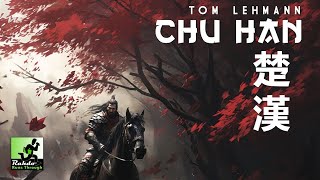
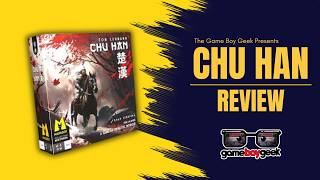
Chu Han is a two-player card game of dynastic rivalry from designer Tom Leman, published by Mato Games, and reviewers generally treat it as a compact, clever take on a format most players already know. Opinions split on how much it lands. Chris Ye of The Dice Tower called it a phenomenal two-player card shedding game and gave it an 8 out of 10, while Alex of Board Game Co offered a 2.5 out of 5 after a single play and argued that the game asks for more plays than most players will give it. Rahdo Runs Through went further in praise, calling it one of the greatest ladder climbing games ever made, even while admitting that this style of game is not a personal favorite. Rolling Dice & Taking Names framed the design as a Leman twist on card shedding, and the consensus is that the core ladder mechanic is familiar while the special powers and the token system make it distinct. The most enthusiastic voices come from players who already enjoy shedding games, and the most cautious voices want more control over outcomes.
Core Mechanics That Define Chu Han
Matching Sets and Special Powers
The core loop is a ladder climb. The leader plays a set of cards sharing one number, and each following player must answer with the same number of cards at a higher value, or pass. Rolling Dice & Taking Names highlighted this exact-match requirement as the feature that separates Chu Han from many ladder games, where a player can win a trick simply by playing more cards. The threes and sixes carry special abilities. Some let a player answer with an equal set rather than a higher one, and others cancel an opponent's power. Twos reward a player who manages to play six or more at once. Before You Play pointed out that the deck contains only one nine and only one zero, so players must keep track of which numbers remain. A round ends when one player empties their hand, and that player scores up to five points based on the cards the opponent still holds. The first player to reach 31 points wins the game.
Rit Tokens and Push Your Luck
On a turn, a player can take a Rit token instead of playing and draw the top two cards of the deck. Rahdo Runs Through described this as the element that adds push your luck to ladder climbing, because each extra card can enable a combination or a power, while a pile of tokens becomes a liability. As Rahdo put it, if a player takes a bunch of Rits and still loses, that player has handed the opponent a bunch of extra points. Board Game Co explained that each token counts against the player who holds it when the opponent goes out. Rolling Dice & Taking Names also noted that some lead powers let a player look at the top cards of the deck and reorder them before drawing, which can set up the exact cards needed. The result is a constant calculation over whether to commit to more cards or keep the hand already held.
The Chu Han Experience
Tension in Every Trick
Reviewers describe the table feel as a continuous duel of foresight. Rahdo Runs Through said that each turn becomes a question of how best to ruin an opponent's plans, how to box them in, and how to set up a run that wipes them out. Rahdo was clear about taking no pleasure in that cutthroat side even while admiring the design. Before You Play reported the same tension from the other side, explaining that players must avoid revealing which powers they hold, because an opponent can wait for the right moment to cancel them. Players who track the remaining numbers gain a clear edge, which keeps the pressure high from the first trick.
Dramatic Swings and Stalls
Rahdo Runs Through called one session an incredibly dramatic run through, describing a long combination that left one player unable to answer. Game Boy Geek, by contrast, warned that the pace can stall. A few bad draws can leave a player watching the opponent play out a hand while hoping for a turnaround. The emotional arc is therefore streaky. Rounds are short, but a single well-timed run or a stubborn stretch of weak hands can decide whether a session feels thrilling or tedious.
What Makes Chu Han Stand Out
Exact-Match Ladder Logic
Rolling Dice & Taking Names singled out the matching rule as a reason to admire the design. Many ladder climbing games let players beat a play by adding cards, which can make decisions feel less precise. Here each answer must match the size of the previous set, so holding a pair of fours or a trio of fives becomes a deliberate choice. The Dice Tower also praised the deck construction. Chris Ye noted that lower numbers appear far more often than higher ones, which makes it easy to shed many small sets early while saving the high cards for later.
Powers That Turn Against Opponents
Game Boy Geek described the card abilities as clever and said that turning an opponent's power into your own feels really great. The same reviewer praised the historical guide included in the box as surprisingly detailed and well done. Even though it does not change gameplay, the guide adds an appealing layer of context for players who enjoy theme. Rolling Dice & Taking Names echoed this appreciation by describing the powers as the clever layer that sits on top of a familiar format.
Potential Drawbacks
Limited Control and Convoluted Abilities
Board Game Co was the most critical on this point. Alex said that the game left them without a large sense of control over what was happening, and that the abilities felt convoluted and too numerous for a game that should reward players who are not yet deeply familiar with it. Before You Play raised a related concern. The card distribution and the way powers are dealt at the start made outcomes feel less dynamic than the interplay suggested, since a player who receives a strong power has less need to manage resources to earn it. Both reviewers accepted that the strategy may deepen with repeated play, but neither felt the early sessions justified the time investment.
Rulebook Clarity and Pacing
Game Boy Geek was blunt that the rulebook is clunky for such a simple game, arguing that the teach should have been a breeze. Before You Play likewise described the rules as a bit difficult to understand. Both criticisms connect to pacing. When a teach is rough and the hands are unlucky, a session can drag. Game Boy Geek also judged that the design lacks the wow factor of many modern trick takers, and suggested that it feels closest to President, the card game often played in school study halls.
If You Enjoy Chu Han
Game Boy Geek recommended Chu Han to fans of Scout, Fox in the Forest, and The Cat in the Box, and drew a direct comparison to President. Players who enjoy Chu Han's exact-match ladder will find a similar satisfaction in President, where shedding a hand efficiently is the whole point. Players who enjoy the reshaping of a familiar trick-taking format through special powers will find a related pleasure in Scout, where the timing of each card choice matters. Fox in the Forest offers a compact two-player trick-taking duel with a different theme, which suits players who want a lighter, faster contest. The Cat in the Box fits players who want another small two-player card game they can carry along, much as Game Boy Geek described Chu Han as a light, fast two-player trick taker that can travel well.
What Reviewers Are Saying
"That was one of the things I liked about this game. I really like the fact that, hey, I got stuck with a bad hand. I'm not going to be punished if I can't match a bunch of your cards."
— Rolling Dice & Taking Names
"I really like the distribution of the cards in this deck here. There's more ones than twos than threes than all the way up. So, it's easier to play lots of a lower number."
— Chris Ye, The Dice Tower
"I just never felt like I was being cunning or like really outwitting you even with all those powers. I would use those powers and I just was like, but I just have that power. It was just given to me at the beginning of the game."
— Before You Play