/pic992459.jpg)

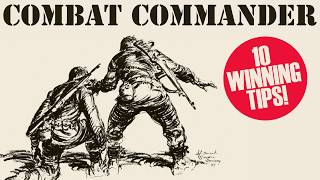
Combat Commander: Europe is a card-driven board game covering tactical infantry combat in the European Theater of World War II. One player takes the role of the Axis (Germany) while another player commands the Allies (America or Russia). These two players will take turns playing one or more “Fate” cards from their hands in order to activate their units on the mapboard for various military functions.
Players attempt to achieve victory by moving their combat units across the game map to attack their opponent’s combat units and occupy as many objectives as possible. The degree to which a player succeeds or fails is measured by a scenario’s specific “Objective” chits, the destruction of enemy units, and the exiting of friendly units off the opponent’s board edge.
A game of Combat Commander is divided into several measures of Game Time. There is no sequence of play to follow, however each Time segment is divided into a variable number of Player Turns, each of which may consist of one or more Fate Card "Orders" conducted by the active player. Fate Card "Actions" may generally be conducted by either player at any time. "Events" — both good and bad — will occur at random intervals to add a bit of chaos and uncertainty to each player’s perfect plan.
SCALE: Each hex of a Combat Commander map is roughly 100 feet of distance (about 30 meters). Each complete Player Phase abstractly represents several seconds of real time. Each complete measure of Game Time abstractly represents several minutes of real time.
Each unit in the game is approximated as either a single Leader, a 5-man Team, or a 10-man Squad. Radios — and individual weapons larger than a pistol, rifle or BAR — are represented by their own counters.
This page includes videos and mentions from the whole Combat Commander: Europe family. Drill into a specific game below.
/pic992459.jpg)

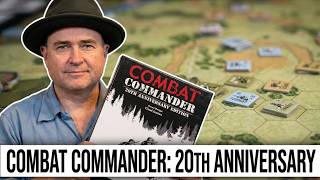
- Combines Combat Commander Europe and Mediterranean into one edition
- Includes 24 unique scenarios
- Features decks for major Axis and Allied powers, and includes minor nations
- Cards dominate gameplay in interesting ways with events and combat resolution
- Offers a good balance of strategic depth and accessibility
- Hits a sweet spot in great gameplay
- Tactical combat between major and minor Axis and Allied powers
- World War II battles (European and Mediterranean)
- Combat Commander Europe
- Combat Commander Mediterranean
Mechanics (from transcript analysis)
- Card-driven actions — Players use cards for various actions like moving, firing, calling artillery, and rallying, or for event triggers.
- Dice combat resolution — Combat is resolved by drawing cards based on attack and defense values, rather than rolling dice, with potential for special outcomes.
- hex-and-counter — The game utilizes a hex-based map with units represented by counters, featuring stats for movement, attack, and morale.
- scenario-based gameplay — The game includes numerous unique scenarios covering European and Mediterranean battles, with the possibility to build custom ones.
- Unit customization/equipment — Units can be equipped with weapons that modify their stats, potentially impacting movement and firepower.
Video topics + discussion points
Quotes (from this video)
- Hello ladies and gentlemen and welcome to the discriminating gamer.
- You know, I love to tell jokes about old bikes. Mostly because I think it's important to recycle.
- Please somebody help me. I'm on my feet again, AND I DON'T KNOW WHERE I'M GOING, AND I DON'T know where I've been. Please somebody help me. I'm on solid ground. IT'S A LONG TIME THAT I'VE BEEN DYING. ONCE A YEAR I WIND UP IN THE VAN.
- It's raisin awareness.
References (from this video)
- Fantastic card system
- Great scenarios
- Great hex encounter gameplay
- World War II combat
- Europe during World War II
Mechanics (from transcript analysis)
- Card Driven Wargame — you use cards for everything. You use cards for actions, you use cards for events, you use cards to take shots.
- Dice Symbol Cards — the cards themselves have, you know, dice symbols on there. So when you draw a card, it kind of says what a die roll would be.
- Hex and counter — This is a Hex Encounter War game.
- terrain — You know, things like terrain and movement points and and the different weapons and you can attach heavier weapons there.
Video topics + discussion points
Quotes (from this video)
- All right, ladies and gentlemen, going ahead to look at my numbers 90 through 81. Again, my top 100 games of all time.
- So, a lot of new games here and some older games that uh
- Really a lot of fun. So I really like Coober Libre.
- frankly is just a hoot. It is a lot of fun.
- But you cannot talk. You can't talk to each other. And so it's crazy trying to communicate just by placing these dice and hoping that the other guy understands what's going on.
- It is fantastic.
- This may be one of my absolute favorite Hex Encounter World War II games of all time.
- But this is the Barracks Emperors from GMT Games.
- Really fun cooperative game with that pandemic feel. One of the better of the pandemic games in my opinion.
- I really enjoy uh, Heat Pedal the Metal. fun racing game, fun system, very intense.
- Mystery of the Abbey is such a fun game.
- It is a very fun game. It's full of surprises and ups and downs, and you're trying to learn as much as you can without giving too much away yourself.
- Great deduction game.
- This is a game I really liked and wanted to see take off, but I just I never got never really saw too much happen.
- an absolutely fantastic game that really needs more love.
- It's just great fun and it's very inventive the way they're using the cards here.
- I really quite enjoyed it.
- I I I think Expeditions to me is just a much more fun game.
- I love the world building here and the artwork here, the components. They did a great job.
- really, really fun game.
- Do you like these games? Do you not like these games? Would you put them higher? Would you put them lower? not here at all. Let me know what you think.
References (from this video)

Mechanics (from transcript analysis)
Video topics + discussion points
Quotes (from this video)
- I think we did it. We've started on time. That never happens.
- The words are on both sides. No, but for them, they're going to be seeing this side.
- This was not a sponsored segment. They didn't ask me to like feature this on their content.
- I think that's why I go half elf cuz I I do like role playing.
- Well, technically you could do this. Um, we just don't feel it creates an optimal playing experience.
- They're not going to make money off of all the board gamers who are suddenly going to jump to League of Legends because of this board game.
- My brain like blew out the back of my head.
- It's not a fake word. It might not be a common word to some of our listeners.
- The puns definitely got worse.
- I'm still above Daredevil. But again, I just in general just so impressed with how they're bringing those characters to life.
References (from this video)
- Amazing experience
- Wartime combat
Mechanics (from transcript analysis)
- Chips and Hex — Uses hex-based maps and possibly a chip-driven mechanic.
- Wargame — A game simulating warfare.
Video topics + discussion points
Quotes (from this video)
- Well the way I think of it is one day we'll have a situation where the live show went perfectly last time so we'll start the next one we won't have to ask that it'll just be without a hitch
- If you get nothing else from this yeah that's the important they say 72-hour window if you don't hit it within 72 hours oh you're you're likely an experience of bad things so yes to get on it quick if you think you might be getting experiencing shingles
- I really enjoy I look big conventions are fun they're exciting yeah small conventions yeah I just do now I agree
- I love deck builders it's probably one of my favorite types but eventually unless you're adding a very new mechanic it does just become like when I walking by the market yeah buy the most expensive card that's available pick up cards that let you draw more cards like it's cold
- For both of us to be thinking that simultaneously and find each other it was just perfect it was perfect
- It's not everyone's looking for a hug damn thing right it's like get a feel at it a little bit
- I avoid pre-announcing games that we might feature because our schedule can change and I just don't want disappoint
- It's nice to go back and play some older ones I wouldn't only get to and it was nice to see a lot of people there
- The point is it's really to the show yeah it was fog of love the gameplay we did for fog yes yeah yeah yeah I really enjoyed that particular gameplay because I don't want to remove like a fog of disbelief that everyone has but not everything we do in every part of every gameplay happened in that moment no right absolutely not
- Mr. Rogers neighborhood all day long I yeah I mean Bob Ross is great but I watched Mister Rogers
- It's nice to have a moment of silence we're both going where is it where is it
References (from this video)
Mechanics (from transcript analysis)
Video topics + discussion points
Quotes (from this video)
- i don't believe in the concept of must-have game oh this is a game you must have there's no game you must have there's no game that everyone enjoys
- you know what i i have to say i think the mountie from dead of winter is my favorite promo
- i don't want to say no very very well could be
- if you enjoyed seeing me at this convention that we're now meeting in person and we're shaking hands if you enjoy seeing the things online that you do understand you made it happen like you've literally made it happen because none of this works uh without some kind of financial support at the end
- I always say that and then I don't actually keep to it.
- You know what uh oh gosh hold on one more second oh I'm gonna get something else really the stream should be over this chat is we're closing it down in just a couple of minutes this is the last time I'm getting up it really is I promise you
- I won't belabor the story here because you should buy this book.
- I don't have a link in the description to it I'll try to think to put it there but this is a great tips and tricks guide
- I really felt like the fifth edition is really quite quite cool.
- I like what they've done with it so anyway.
- I would love a a game based on the television show the prisoner
- I highly recommend it to you go out and watch that that show it's so so good
- I would love to do a rules tutorial for twilight struggle
- it's it's a fantastic game it really is
- I am not a number that is right that is a quote from the prisoner
- I hope you stay safe wash your hands be careful keep distance from everyone
- Let's just stay safe I just want all of you to stay safe
- Stay safe out there I care about you all and I really appreciate the caring and thoughtful things that people have said to me as well
References (from this video)
Mechanics (from transcript analysis)
Video topics + discussion points
Quotes (from this video)
- clash of giants civil war battle of gettysburg it's lee's greatest victory but also his greatest defeat
- not be a typical rules tutorial from this channel
- we're going to learn how to play cuba libra together
- grab your favorite beverage get comfortable and let's go on an adventure
- this could take a while
References (from this video)
- Incredible experience
- Masterpiece of a game
- Fantastic game to be exploring deeply
- Looks very much like a traditional war game, not necessarily very attractive
- Creates such a strong emergent narrative with so many twists and turns.
Mechanics (from transcript analysis)
Video topics + discussion points
Quotes (from this video)
- this is going to absolutely take me out of my comfort zone since I don't usually Express personal favorites
- if you force me to declare my favorite game of all time right now after much resistance I would say it's this
- I'm expressing probably in this video more personal opinions about games than I have over the entirety of this Channel and I'm not sure how I feel about it
- I just don't get any joy out of explaining why I don't like something when I know it might be something another person could possibly absolutely enjoy
- I have to admit it's kind of fun
- I probably won't do it again for another 10 years
References (from this video)
- quick to play compared to other games
Mechanics (from transcript analysis)
Video topics + discussion points
Quotes (from this video)
- I'm the last stop for double-checking all components " making sure that what we are claiming is in the box is what we're actually sending off to the printer
- The three of us uh they called us the triumvirate at the last convention so we like the secondary layer behind the Five Guys who initially ran GMT for forever
- I have always been a huge nerd when it comes to things like Excel spreadsheets and tracking data
- I just get to keep doing it sounds like a win to me
- The uh burn rate on paper if it's self-extinguishing
- you're paying someone to take one of your games and light it on fire
- What does the game need and so you're you know obviously in that position more willing to to add and add and add to the project and as a project coordinator I'm looking at how much can we pair down from what you got
- Oh I'm so bad at this I always want to add I want to pimp a game
- p500 is a pre-order process " no funding involved so you don't hand over money but it's just an indication to the company of your interest in a game
- We're not going to change the name at this point " and that that funding doesn't happen until just before the game comes back from the printer
- It's the anniversary edition and it's the what is it fourth reprinting of this Edition
- It's human error " what Jason and Justin and I are trying to do is come up with an actual system like a checklist of certain items that because our names are going on the box the three of us want to be sure that we have gone through this entire process
- I've got a checklist for all the steps that have to happen for each one of these and so I make sure as we're running through the uh the printing process that I'm checking all the boxes
- The whole box and I get one of those for every game and have a whole stack of them sitting right behind me
- I don't know I just geek out on the spreadsheets and the my Pivot tables and my charts and my I love that aspect of it
- Combat Commander I'm right back to the beginning
- between silk and Cyanide
- I'm always afraid of being a blabber mouth and " I actually outed one of my own programs because or one project " because I talk too much
References (from this video)
- Fantastic game
- Outstanding card system
- Fantastic system
- Tremendous fun
- World War II
- Combat Commander Pacific
- Combat Commander: World War I
Mechanics (from transcript analysis)
- Card-driven actions — You use cards for different actions that you do or reactions.
- Hex and counter wargame — This is Combat Commander Europe is this great hexenccounter war game
- Printed dice on cards — On every card at the bottom, you have printed dice. So, every time you have to resolve dice, you just draw a card and look at the what dice are on there.
Video topics + discussion points
Quotes (from this video)
- My number 20, Apocalypse Road.
- My number 19, Plains Indian Wars.
- My number 18 is Commands and Colors Ancients. My number 17 is Commands and Colors Medieval.
- So, this is Combat Commander Europe, and that is my number 16.
- So, I'm actually hopefully they they can do this with with other people as well. I find other historical figures to place with like Augustus or Julius Caesar or uh Charlemagne or you know what have you, Alexander the Great. I think there's a lot of stuff you could do with this kind of a system. Uh but that is my number 15. I Napoleon.
- Still, I loved it. That is my number 14, Mr. President.
- So, that is uh my number 13, Commands and Colors, Samurai Battles.
- And that is why it is my number 12.
- So this is 1989 Dawn of Freedom. That is my number 11.
- Again, I DON'T KNOW WHERE I'M GOING and I don't know where I've been. IT'S A LONG TIME AND I'LL BE DYING.
- That sounds suspiciously like something a bear would write.
References (from this video)
- Memorable two-player tactical combat experience
- Plays amazing narratives
- Provides challenging decisions
- Brilliantly integrated cardplay
- Dynamic gameplay with potential for comebacks
- Incorporates deep tactical combat elements
- Leaves the player rethinking the game positively
- Swingy nature implies luck is involved
- Tactical combat
- World War II (Pacific, Europe, Mediterranean, Vietnam)
- Combat Commander family of games (Pacific, Europe, Mediterranean, Vietnam)
Mechanics (from transcript analysis)
- card-driven — Relies heavily on card-driven elements.
- Swingy/Chaotic — Features a swingy and chaotic nature where fortunes can change.
- Tactical combat — Focuses on tactical combat with considerations for line of sight, smoke, and positioning.
Video topics + discussion points
Quotes (from this video)
- My criteria for this particular list is enjoyment. The games that pulled me in and captured my attention, had some sort of an emotional rush, or just created great memories.
- Gettsburg, A Time for Heroes from Worthington Publishing, a fantastic Gettysburg game.
- Old School Tactical Volume 5. If by the way, if you are curious about this one, there are four volumes before this. They're all, I imagine, very good, but this has just been my experience with the system so far.
- Combat Commander is number three on the list, and it might be one of the games I'm most excited to continue playing in 2026.
- This game, I I think part of the reason why I liked it so high and why I put it so high is that it has opened up my eyes to the potential of the Cold War Modern Combat series and families of games, which to be fair, I haven't really explored yet.
- I could probably rank these games in almost any order and be happy with it. So, I wouldn't take the rankings of the games so seriously.
- Traces of Victory. Uh my top game for 2025 and just I can't say more about this game. You should check it out if you like operational World War II level combat games.
References (from this video)
- Powerful use of cards as a design tool
Mechanics (from transcript analysis)
- cards — Cards are a powerful design tool and central to the gameplay.
Video topics + discussion points
Quotes (from this video)
- All human progress all innovation is a matter of ideas having sex. That is to say there actually is not any innovation that is just not based on anything else not based on anybody else's ideas right it's all a matter of what ideas already there how can I take and put them together synthesize in new ways to new purposes maybe you know twist it this way a little bit you know you use the word tweak um and then sometimes that new fusion of ideas is indeed adds up to a fundamental new new new new thing or breakthrough right
- It was a sandbox, right? I mean, they g it was a sandbox and we were invited to create and games hadn't done that before.
- I think the greatest innovation would here it is would be a rat and a rat free rule book.
- Yes. War games are innovative.
References (from this video)
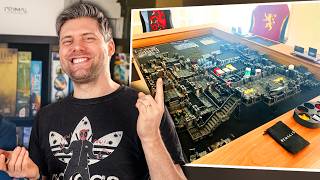
- Encourages homebrew customization and tinkering
- Historical flavor through terrain and map design
- Original components may be plain (paper maps) and require upgrades
- Array
- World War II tactical warfare
- Operational, simulation-like
- Nemesis
- Dune Imperium
Mechanics (from transcript analysis)
- Customizable terrain components — Players create and integrate self-made trees, fences, and other terrain into the map
- Map-based tactical combat — Boards and terrain support tactical engagements; maps can be plain or customized
- Variable Map — Players create and integrate self-made trees, fences, and other terrain into the map
Video topics + discussion points
Quotes (from this video)
- Insane. Insane in the best way possible.
- This is a literal 3D board where you will place tiles right here and move around little corridors here
- Look at that alien right there in the corridor. I mean, it's already scary, just the board itself
- Way back when, 3D printers were not as accessible as you think.
- What I really like about people when they're coming up with upgrades for games is how innovative and funny they can be.
- All it's missing is like voice over AI talking, 'Please select your deck.'
- I think I would upgrade it to bring the game from 10 to 11.
- The pieces are giant. Look, that's a real human hand right there on a giant meeple.
References (from this video)
- created a beautiful chaos and emergent storytelling
- highly engaging and deep despite accessibility
- tactical combat with emergent storytelling
- World War II two-player tactical
- chaotic but manageable, emergent storytelling
- Front
- Advanced Squad Leader
- Band of Brothers
- No Retreat: Russian Front
Mechanics (from transcript analysis)
- card-driven, two-player tactical combat — players use a hand of cards to move counters and complete missions
- Hand Management — players must manage a limited set of actions each turn
- Multi-Use Cards — cards serve multiple purposes within the same turn
Video topics + discussion points
Quotes (from this video)
- I've designed close to a hundred. They are all asymmetrical.
- I've been working on that game for 10 years.
- Twilight Struggle... it's so good. It's like chess to me.
- it's like full space 4X cosmic encounter
- This is what I'm hoping will be the first game in the will to fight system.
- Common Sense is the name of the game
References (from this video)

- squad-level tactical warfare
- World War II (European theater)
- operational/mission-based
- Agent Honey Bunny
- Hero's Stand
Mechanics (from transcript analysis)
- card-driven system — cards drive events and player actions
- fog of war / hidden information — mechanics limit information to increase tension
- Hidden Deployment — mechanics limit information to increase tension
- squad-level tactical play — simulates individual squads and unit-level decisions
Video topics + discussion points
Quotes (from this video)
- Plants make everything better.
- board games are the centerpiece of this whole room.
- Now it actually looks like it's in a forest.
- Bling.
- This fixes it.
References (from this video)
- Generates narrative and story
- Chaotic and unpredictable nature
- Incorporates tactical combat concepts
- Engaging and friendly community
- Squad Leader
Mechanics (from transcript analysis)
- Card Play — Cards have orders, actions, and events. Actions can modify orders or provide other benefits. Players must remember to utilize these actions. Cards are also used as dice for rolls and can be discarded for hand management.
- combat resolution — Combat involves dice rolls (represented by cards) and tactical considerations. Units can break, suffer reduced effectiveness, or be eliminated.
- Combined Orders — Coordinating multiple cards and actions into a coherent plan is essential for effective play, rather than acting piecemeal.
- cover — Cover is a significant factor, reducing incoming firepower. Modifying cover, like with pillboxes or foxholes, is a key defensive tactic.
- defense — Specific actions and cards are crucial when on defense, offering more options than when attacking. These include defensive actions like hidden foxholes and hidden entrenchments.
- Discarding — Players can discard cards to improve their hand, with limits based on nationality. Strategic discarding is key, especially for essential cards like recover and ambush.
- Hand Management — Players manage a hand of cards, deciding which to keep and which to discard, especially important for crucial cards like Ambush and Recover.
- initiative — Initiative can be used to force an opponent to re-roll dice or to re-roll one's own dice, particularly crucial in sudden death situations or when facing catastrophic outcomes.
- Ladder Play — An online ladder system administered by Patrick Pence exists for the game, providing a structured way to play against others.
- Melee — Initiated by advancing into an opponent's hex, melee occurs at the end of an order and can be influenced by ambush cards.
- Morale checks — When attacked, units must take morale checks. Cards play a role in these checks, and drawing multiple cards can deplete decks faster.
- Movement — Moving through enemy fire requires preparation, potentially using smoke or having recover cards. Advances into enemy hexes initiate melee.
- Offense — Attacking involves moving and firing, often requiring coordination of multiple cards and actions.
- random events — Random events can occur, significantly altering the game state, either beneficially or detrimentally.
- Smoke — Smoke can be generated by artillery, mortars, or smoke grenades. It provides cover and hinders enemy fire, but can also impede one's own advance if not managed.
- Vassal Module — A digital module exists for Vassal, allowing players to play the game online remotely.
- victory conditions — The game can end via time triggers, sudden death victory points, or by reaching a surrender level based on unit casualties.
Video topics + discussion points
Quotes (from this video)
- There is a lot of evil mischief in combat commander for sure.
- The cards and the nature of playing it does capture I think to in my mind what I picture this is all the chaos of combat and the uncertainty of combat.
- The most fun is the hidden wire uh because that stops them dead because it takes all of your movement to move in or out of of that hex.
References (from this video)
- Absolute cinematic flavor
- Makes games feel dramatic and engaging
- Highly immersive and can evoke strong emotions
- Puzzle-like scenarios are interesting
- Easy rules that are smooth to get into
- Good entry point for war games
- Goes in and out of print
- Squad level combat during World War II
- World War II
- Squad Leader
- Advanced Squad Leader
- Conflict of Heroes
- Band of Brothers
- Up Front
- Heroes of Normandy
Mechanics (from transcript analysis)
- card-driven — A 'card driven' game where cards augment normal actions and are flipped for outcomes.
- Dice Rolling — Cards are flipped to roll dice, and cards themselves can have outcomes and events.
- Hex Encounter — A 'hex encounter Squad level war game'.
- scenario-based — Plays specific scenarios that are set up like a puzzle.
Video topics + discussion points
Quotes (from this video)
- it's just really tight this game is a game that if you invest time in it it's relatively straightforward and simple mechanically
- it's just a fantastic amazing game two player only
- 1989 is almost like the epilogue Twilight struggled
- it is just a majestic piece of ancient design that somehow Reiner canizia dug up from the substrate of the human subconsciousness
- the game feels like it was originally designed during the time that it takes place
- it's like a Euro game with direct conflict
- every time I crack it open and play it I like feel like there's sand coming off of these tiles
References (from this video)
- Gets constant updates and expansions
- Still gets played
- Kept in print
- Combat
- World War II
- Advanced Squad Leader
- Band of Brothers
Mechanics (from transcript analysis)
- Wargame — Fits within the wargame genre and is compared to other games in that space.
Video topics + discussion points
Quotes (from this video)
- I think from my perspective based on what I've seen of the games that they inducted the original 25 uh I just wanted to speculate on what the next 25 would be
- there's some interesting gaps in the 25 list that's out there now
- Shadows over Camelot out really started that whole thing
- it influences things that you wouldn't necessarily think that it did influence that kind of thing
- it really took the world over for several years
- it's like too big I mean the shadows of Brimstone which isn't on this list and I would never suggest to be in the Hall of Fame is like its own thing
- it is such um a force or a presence in the board gaming world that it just has to be in there
- it's almost like the quintessential board game in in a way
- it is really the predecessor of all of these board games that have been a big part of the board game geek hobby
- maybe eventually this is my opinion here I think they should stick to the games for a few years and then you know later on they can start thinking about like putting ryer kitsi in or stefen Feld or Christian Peterson or Corey kesa Cole Worley Richard Borg
References (from this video)
Mechanics (from transcript analysis)
Video topics + discussion points
Quotes (from this video)
- I've been going through all the most anticipated lists on Board Game Geek starting with 2010 I'm up to 2014.
- I don't need to play it anymore and how much do I need to play a game to have gotten my worth out of it or whatever I'm not talking about dollar amount either it's like you know
- better to let it move on to somebody else and they can enjoy it and they can pass it on to somebody else as well
- so I think that's okay doesn't doesn't it because it's on my shelf has nothing to do with the quality of the game
- so we have seen those disappear a little bit no still being made it's still being played and as we add more people to the Hobby by osmosis some of them are going to you know find out about war games
- those big crazy games those coffin boxes and those those big splash releases from Fantasy Flight they just really haven't been doing that
- I don't like that and I don't know that any of the games on the on the last two lists are like that but I'm sure God I know there was some of that
- it's no different than like let's say GMT or Fantasy Flight or whoever has a newsletter you know that goes out let's say every month an email newsletter and they tell people hey we're nominated on this list go vote for
- it's a reviewer getting a review copy is much less biased than a Kickstarter backer
- The way the hobby has worked I think going back to the 70s somebody will do something and this is the way a lot of things work somebody will do something that's successful and so you get copycats you get people trying to iterate on that
- expansions will show up on these anticipated lists and that kind of says something to the kind of known quantity
- there was a fair number of games that had a lot of trouble whether it was licensing trouble like glory to Rome nothing personal alien frontiers or other kind of Kickstarter Shenanigans
- crowdfunding we're going to see more of that for sure moving forward in the years but it was also kind of still like the wild west back then
References (from this video)
- ludo-narrative dissonance where the story doesn't match mechanics (e.g., a soldier dying and then being put back into play).
- World War II
Mechanics (from transcript analysis)
Video topics + discussion points
Quotes (from this video)
- mechanisms over theme for the win
- Stories can be great the first time around but I think atmosphere is way more important
- I like feeling immersed in the aesthetic and setting of a game
- if you can get someone invested in the story of what they're doing I have seen time and time again how that can increase their capacity to learn the rules because now they have a sense of motivation
- for me if a board game tries too hard to tell me a specific story it takes away from my experience
- I like ludo-narrative Harmony when mechanics match story and it's great when the story Jump Start strategy
- Ludo stands for play and narrative so it's where those two things meet
- if the story is poorly written poorly read or it was just more story than what the players were looking for it's not going to work
- English isn't my native language and others around me aren't very fluent in English and reading well
- one thing I expected with Rodney standing next to those shelves of coin games was for him to take one out and talk about how games can retell stories
- if some players really want to embrace the story of a game while others aren't in the mood for elaborate theatrics or dramatic readings those story elements they just they won't land
- I'm glad there's a wide spectrum of games to choose from so that everyone can find something that provides enjoyment for them and the other players that they game with
References (from this video)
- Strategic depth for war-game fans
- Tactical card-driven combat
- Complex rules for casual players
- May feel inaccessible to newcomers
- Array
- War games
Mechanics (from transcript analysis)
- Card Play — Players play cards to drive actions and outcomes on each turn.
Video topics + discussion points
Quotes (from this video)
- This is a one out of ten I gotta balance out the ten out of tens that are clearly wrong
- This game is just actually trash
- The whole point of playing games is to have fun with your friends
- The luck is so well managed in this game
- see look you have to understand katan is over two decades old
References (from this video)
- A thorough keyword and rules index with numbered pages is invaluable for quickly finding information.
- Has a table of contents in the front and a full index on the back with terms and specific pages.
Mechanics (from transcript analysis)
Video topics + discussion points
Quotes (from this video)
- Beyond learning the game a rule book will often be used as a reference and so it should also serve that purpose well
- the rule book not only needs to provide the information but it needs to provide easy ways to find the information inside of it
- you don't want to have to be trying to pick through information on the War of 1812 and George Washington's hair stylist I just want the answer to my question so I can get back to my game
- Blind play test your rulebook
- if the frequently asked questions document is longer than your rule book it's time to rewrite your rule book
- the problem is Publishers are not willing to pay a profession to write their rule book
- Rule books should ensure you that you are contractually going to understand the game and not look like a contract for an insurance
References (from this video)
- Excellent emergent storytelling
- Tightly themed for WWII combat and manoeuvre
- two-player tactical warfare with a focus on command and control
- World War II Europe
- emergent storytelling through card-driven actions and events
Mechanics (from transcript analysis)
- Card-driven actions — cards determine orders, actions, and events each turn.
- Hand Management — players curate and play a hand of action cards to influence the battlefield.
- two-player tactical conflict — direct confrontations with strategic depth and randomness via cards.
Video topics + discussion points
Quotes (from this video)
- Star Wars Rebellion has everything a Star Wars fan would need.
- This is Star Wars in a box.
- Combat Commander Europe has one of the best emerging storytelling ever.
- This is what real men play.
- It's gorgeous, eye candy.
- Space horror is one of my favorite themes.
- The diplomacy, the backstabbing, the negotiation, it's never boring.
- Here I Stand is epic like no other game I've ever played.