/pic4991925.jpg)























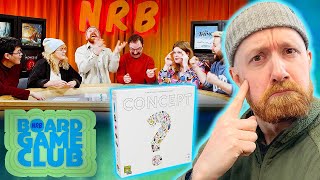


Concept Deep Dive
What the Community Thinks About Concept
Concept occupies a special place in the hearts of board game reviewers and players alike. The game is remembered fondly as one of the first titles many players acquired when entering the hobby, and it continues to demonstrate remarkable staying power across diverse groups. Reviewers consistently highlight the game's accessibility to newcomers while maintaining creative depth for experienced players. One reviewer noted that Concept feels like "charades with icons," which immediately conveys the game's accessibility to anyone already familiar with that classic party game. The game has earned the trust of content creators who bring it repeatedly to their tables, recommend it warmly to others, and rely on it as a touchstone for family gatherings and casual game nights.
Core Mechanics That Define Concept
Deduction Through Icon Association
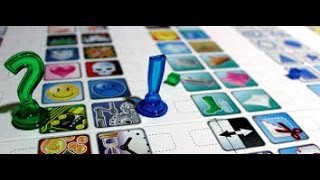
At its core, Concept operates on a pure deduction mechanic where one team provides clues through the strategic placement of tokens on a board filled with evocative icons. Players place differently-colored pieces to indicate both primary concepts and modifying aspects, creating visual associations that guide other players toward the answer. The mechanism is admirably straightforward yet endlessly malleable. A reviewer praised how this icon-based system eliminates the physical limitations of charades, enabling a much broader range of concepts to be communicated. The elegance lies in the constraint itself: players must think creatively about which icons can combine to suggest their target word or phrase, leading to clever lateral thinking and surprising connections between seemingly unrelated symbols.
Compound Scoring and Flexible Difficulty
Concept's scoring system provides multiple pathways to victory and allows players to adjust difficulty within each game. The card system presents clues ranging from quite straightforward to extremely challenging, giving every player the ability to calibrate their experience. Reviewers observed that players can vary difficulty on a whim, selecting harder clues to push themselves or easier ones to keep the game flowing freely. This flexibility means the game scales naturally with player experience: families learning together can start simple, while experienced groups can attempt elaborate multi-step clues that build surprising conceptual bridges. Some players embrace the competitive scoring system entirely, while others abandon it altogether, treating Concept as a collaborative creative exercise. This adaptability has made the game resilient across multiple replay cycles, as the challenge level need never feel stale.
The Concept Experience
Social Accessibility and Gateway Appeal
Concept stands as a genuinely accessible entry point into board gaming, suitable for any group from small families to large gatherings. Reviewers consistently described bringing this game to newcomers with confidence, knowing the rules explanation takes mere minutes and the appeal crosses age and experience barriers. The game's social nature emerges naturally from the rules: everyone participates in guessing, meaning no one sits idle. The party game atmosphere feels collaborative rather than hostile, creating an environment where players want to help one another succeed while still enjoying the challenge of interpretation. One reviewer noted with genuine warmth that Concept has been "a hit to be honest," and another described it as something they would "happily play with anybody in any circumstance." The game requires no hidden information management, no complex turn structure, and no specialized knowledge, making it the rare title that bridges hardcore gamers and casual players without either feeling their intelligence is being insulted.
Nostalgic Bonding and Shared Understanding
For many players, Concept creates deeply memorable moments because it operates on a foundation of shared culture and personal knowledge. Reviewers described how the game becomes a lens into how other people think, with sudden moments of recognition when a clue finally lands and everyone realizes the connection. One player recounted dusting off Concept after years away and finding it "just as good as I remembered it," creating a bridge to their earlier gaming journey. The game works especially well with long-time gaming partners, friends, and family members, because the more intimate the group, the more likely unexpected cultural references and inside jokes will enrich the cluing process. These moments of clarity, when disparate icons suddenly resolve into a unified concept, produce the distinctive "aha" moment that reviewers returned to repeatedly. The game creates memories not just of winning rounds, but of discovering how friends' minds work, what references matter to them, and how creatively they can link ideas together.
What Makes Concept Stand Out
Elegant Icon-Based Communication System
The board of icons at Concept's heart represents thoughtful graphic design that immediately strikes viewers as clever and cohesive. The icons encompass basic categories (people, animals, objects, vehicles) and more abstract concepts (emotions, actions, spatial relationships), creating a vocabulary that feels both comprehensive and finite enough to master over repeated plays. Reviewers noted that the beautiful execution of the iconography helps players understand the system quickly and think creatively about combinations. The visual design is accessible and instantly readable, avoiding the ornate artwork that might distract from the core puzzle. One reviewer specifically praised "the iconography is so beautifully done. It's such a nice graphic design." This elegant visual language does the heavy lifting of making the game immediately playable while remaining sophisticated enough that creative players never exhaust the possibilities.
Versatility Across Player Counts and Group Dynamics
Concept functions admirably across a wide range of player configurations. The core rules support 4 to 12 players, but reviewers confirmed it works just fine with smaller or even larger groups by adjusting teams or playing more cooperatively. The game has proven flexible enough that one reviewer brought it on vacation with eight family members and easily accommodated the full group. The semi-competitive scoring system can be engaged fully or largely ignored based on group preference. One reviewer specifically noted they "don't play this competitively at all" but still love it, while others embrace the scoring system enthusiastically. The game scales gracefully because each round is fundamentally independent: a group playing Concept with three people produces the same quality experience as a group with ten, just with different social dynamics. This flexibility has made Concept a reliable recommendation for gatherings of unknown size or composition, a rarity in modern board gaming.
Potential Drawbacks
Unpredictable Difficulty Variance Across Clues
One structural tension in Concept emerges when the game's difficulty levels prove inconsistent. A reviewer noted that when all players select the most challenging clue options available, significant variance can appear in the actual difficulty of different cards. One opponent might draw "armed to the teeth" requiring sophisticated wordplay, while another draws "black eye," solvable through literal icon reading. This unpredictability means players selecting the same difficulty level may face markedly different challenges in the same round, creating a small fairness concern. While this rarely bothers most groups, it remains a minor blemish on an otherwise elegant design that some players will notice and others will find charming as part of the game's natural variance.
Physical Component Challenges in Play
The tiny colored cubes that players place on the board, while functionally perfect for the game's design, present practical difficulties in some environments. Reviewers mentioned that the small pieces risk being knocked loose, especially when playing standing up or at crowded tables. One player specifically noted concern about small children potentially mistaking the cubes for candy. These pieces also require an elevated or carefully managed surface to stay organized during play, and they can scatter if the board shifts. While this remains a minor quibble and easily managed in most situations, players in tighter spaces or with younger children may find themselves wishing for slightly larger or sturdier components.
If You Enjoy Concept
Those drawn to Concept likely appreciate games that emphasize communication, creativity, and social interaction over mechanical complexity. Players who love the collaborative puzzle of explaining ideas to others will find the game endlessly rewarding. The party game community gravitates toward Concept strongly, as do players who value accessibility without sacrificing depth. Fans of deduction games like Codenames or social deduction games like Werewolves will find familiar ground here, though Concept trades bluffing for collaborative creativity. Players who use board games as a vehicle for understanding how others think will particularly treasure the constant moments of discovery. Concept also appeals to those who value games that scale from intimate small groups to large family gatherings, and to people seeking beautiful, elegant design that serves gameplay rather than ornament.
What Reviewers Are Saying
"Concept is still one of my favorite party games and I just think it's so versatile. You can play with all different ages, you can vary the difficulty, you can even add clues in yourself."
— Might I Suggest A Game
"Concept is probably the most simple game on this list. It's pretty much charades just condensed down into a board game. But the more and more I played it the more I started to appreciate how creative you could be when giving your clues."
— Chairman of the Board
"Concept is a great bonding game because you really get to understand how other people think. I really love the aha moment of Concept when someone guesses the correct answer and all those random cubes on the board finally makes sense."
— Might I Suggest A Game