/pic7375241.jpg)



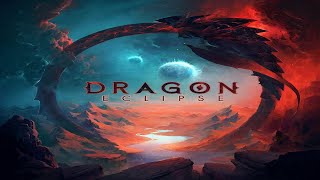
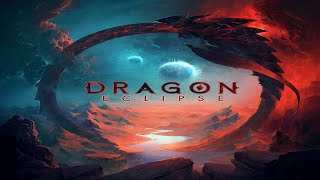
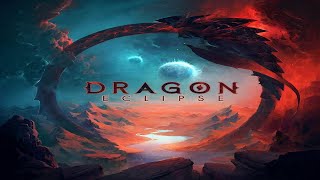











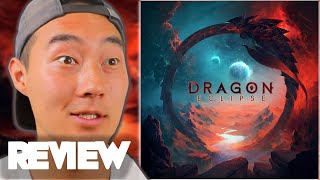
















Dragon Eclipse Deep Dive
What the Community Thinks About Dragon Eclipse
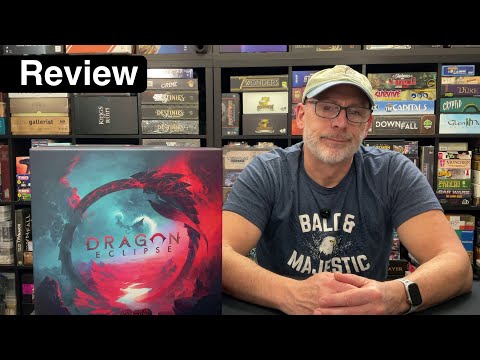
Dragon Eclipse has struck a chord with the board game community as one of the most accessible campaign games to emerge from Awaken Realms. Reviewers consistently highlight its ability to balance narrative depth with streamlined mechanics, making it approachable for newcomers while maintaining enough tactical challenge to satisfy experienced gamers. The game has earned recognition as a standout entry in the lighter campaign space, with particular praise for its elegant design choices that eliminate unnecessary complexity without sacrificing meaningful decisions.
Core Mechanics That Define Dragon Eclipse
The Power Token Card Play System
At the heart of Dragon Eclipse lies a deceptively simple but strategically rich card mechanism. On each turn, players choose one of four action cards displayed in a row. The longer a card sits in the player's hand before being played, the more power tokens it generates, a design philosophy similar to Arc Nova that rewards patience with increased tactical options. Players gain crystals that scale based on the card's position, then resolve the card's effects. These power tokens can be spent on bonus actions, special abilities, and enhanced card effects, creating a satisfying tension between playing immediately for needed effects and waiting longer for resource accumulation. This mechanism naturally guides new players toward strategic thinking while offering depth for those seeking optimization.
Deck Building and Character Expression
Each scenario begins with a deck-building phase where players select one of several Mistlings (the game's creature companions) and construct a personalized deck from basic cards, elemental specialists, and Mistling-specific cards. Rather than building from scratch, players work with a foundation and make meaningful tweaks, adding specific cards to enable combinations and playstyles. Different Mistlings naturally encourage different approaches: some focus on aggressive defense with high mitigation, others on rapid strikes, and still others on ranged tactics and stealth. This foundation-and-tweaking approach feels far more intuitive than traditional deck building, giving players the sensation of developing distinct strategies across multiple playthroughs without the overhead that typically accompanies the mechanic.
The Dragon Eclipse Experience
The Narrative Choice Engine
Dragon Eclipse weaves its story through a choose-your-own-adventure system that relies entirely on physical components rather than an app. As players progress through the adventure journal, they encounter branching narrative paths where their choices directly shape the unfolding story. The writing is consistently described as charming and well-crafted, creating an experience that keeps players invested in how events unfold without demanding they sit on the edge of their seats waiting for the next revelation. The protagonist functions as a silent facilitator much like in Thea games, allowing the world and its inhabitants to carry the narrative weight rather than focusing on character development. The absence of an app integration feels refreshingly clean and direct, allowing the story to flow naturally between exploration and combat phases without technological interruption.
Combat as Tactical Puzzles
Rather than emphasizing action economy or heavy numerical systems, Dragon Eclipse presents combat scenarios as tactical positioning puzzles. Since players know what the enemy will do each round based on visible cards, the challenge becomes planning movement, attacks, and resource expenditure to optimize the outcome. In solo play, this creates satisfying puzzle-solving moments. In two-player mode, the taunt token system adds an extra layer: players can strategically position themselves to absorb attacks, or they can set themselves up to be the target to trigger specific tactical advantages. The combat encounters conclude relatively quickly despite the depth, with scenarios typically running between one and three hours depending on player count and encounter complexity.
What Makes Dragon Eclipse Stand Out
Accessibility Without Compromise
Dragon Eclipse manages to deliver complexity through elegant mechanics rather than heavy rulesets. The story sequences are straightforward, the combat rules are intuitive, and the only substantial learning curve involves understanding how power tokens and card synergies interact. Awaken Realms' previous campaign games developed a reputation for obtuse rulebooks and frustrating early scenarios, but Dragon Eclipse sidesteps these concerns almost entirely. Players can begin enjoying the game within the first scenario rather than spending the first two scenarios trying to understand basic interactions. This accessibility opens the game to families with older children and players fatigued by overly complicated systems, while the tactical depth ensures that experienced players still find meaningful strategic decisions worth making.
Multiple Victory Conditions and the Taming System
Combat encounters offer three possible outcomes instead of the binary win-or-lose structure common in most games: players can lose an encounter but fail forward with consequences, they can defeat an enemy through combat, or they can tame the creature and add it to their growing Mistling roster. This Pokemon-style collection mechanic rewards players who play beyond minimum requirements, encouraging exploration of builds and tactics that prioritize befriending creatures over destruction. The fail-forward design philosophy means that even setbacks advance the story rather than punishing players with mechanical dead-ends, making the campaign feel like a cohesive narrative experience regardless of individual battle outcomes.
Potential Drawbacks
Two-Player Rules Ambiguity
While the solo experience is cleanly designed, the two-player variant suffers from incomplete documentation in the rulebook. Small clarifications about whether shared abilities benefit both players equally or divide unevenly, such as whether healing five health means each player gets five or if it distributes between them, aren't fully specified in the rules. Awaken Realms' AI rules assistant sometimes provides helpful guidance, but other questions remain unanswered. Despite this limitation, the game remains playable once house rules are established, and most groups resolve ambiguities quickly without major disruption to the experience.
Limited Character Customization and Length Variance
The protagonist lacks internal layers and characterization beyond surface-level reactions to events, similar to other silent protagonists in narrative games. Players seeking deep personal investment in their character's arc may find the experience emotionally distant. Additionally, scenario length varies significantly based on player count and decision-making speed. Solo play with quick decisions can resolve in 60 to 90 minutes, while two-player games and lengthy explorations can stretch to three hours or beyond, making scheduling predictable play sessions challenging.
If You Enjoy Dragon Eclipse
Players drawn to Dragon Eclipse likely share interests in several other titles. Gloomhaven and Frosthaven offer deeper character progression and more complex systems but share the satisfying engine-building progression. The Tainted Grail and Ether Fields provide richer narrative experiences but demand significantly more rules overhead, making them better for dedicated campaign groups. Arc Nova features similar waiting-to-maximize-value mechanics in a different context. For those specifically seeking lighter campaign experiences, Fate Forge and Kyrie occupy the same design space but lack Dragon Eclipse's tactical depth and clean narrative integration. Gloomhaven: Jaws of the Lion provides a gateway into the Gloomhaven system with lower commitment, while Pokemon naturally appeals to anyone drawn to the creature-taming aspect of Dragon Eclipse's design.
What Reviewers Are Saying
"I really like Dragon Eclipse. I think like I'm a sucker for these games in general, so it it's just like automatically I'm more inclined to like it than to dislike it. But I have to say that this so far is my favorite of the easier-to-get-into ones, and I have a lot of fun with it, especially the combat because it's so snappy and I when you're playing just two of us it doesn't have this very lengthy discussion like what should you do on your turn, what should I do on your turn, and but it's still very challenging."
— Board Gaming Ramblings
"I think my favorite mechanism in this game is in regards to the card play system, which happens to be during combat. It's a little similar to the Arc Nova system where the longer that you wait to play a card, the more powerful it is. I really like games that have this type of thing where the longer you wait to play a card, the more powerful it is. Partially because it feels good when you finally play that card, but also because it gives you something to focus on when you don't know what to focus on, especially when you're playing a new game."
— Stonemaier Games
"The thing that really got me enjoying Dragon Eclipse was that if you're looking for something like this without an app, that's a huge plus. If you have been looking at The Ether Fields, The Tainted Grail and thinking this is too much stuff, this is too much going on, too many rules, too many systems, then this is going to be great because this has very few systems. You're doing your reading passages, taking choices, placing some tokens, writing some stuff down, and then you're doing the combat. It's so simple, but it's still very challenging."
— Board Gaming Ramblings