/pic7906240.jpg)
/pic1731731.jpg)
/pic7906240.jpg)






































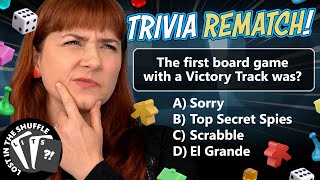
El Grande Deep Dive
What the Community Thinks About El Grande
El Grande occupies a rare position in the board gaming world: a game designed in 1995 by Wolfgang Kramer and Richard Ulrich that reviewers today describe not as a historical curiosity but as an active benchmark. Chairman of the Board has placed it at number one on his all-time list across multiple independent rankings, calling it "the Magnum Opus when it comes to area control designs" and insisting he "couldn't think of a single thing you could do to improve this game." Board Stupid echoes this verdict, calling El Grande "the granddaddy of area majority" and "an absolutely perfect majority game." No Pun Included awarded it "Old Game of the Year" upon its reprint, making a pointed comparison: "Can you believe that El Grande is as old as Catan? I couldn't. Because whilst Catan has been showing its age for more than a decade now, El Grande still confidently stands as a game that should be part of anyone's collection."
What strikes reviewers is how much the game achieves with focused rules. Board Stupid describes it as part of a lineage of wonderfully interactive '90s Euros that "feels a world away from what the term Eurogame has become," noting this design tradition inspired contemporary classics like Brass: Birmingham. The game is ruthless and cutthroat, yet operates through Euro-style manipulation rather than dice-driven combat. Chairman of the Board puts it plainly: "Everything you do is dependent on the other players, knowing when to set up second or third place, knowing when to go all in on a region."
Core Mechanics That Define El Grande
Area Control Through the Power Card System
El Grande's central tension flows from a deceptively elegant bidding mechanism. At the start of each round, players play one power card from a hand numbered 1 to 13. The highest card wins first selection of the available action cards, but the tradeoff is real: higher cards mean fewer Caballeros drawn from supply into court. Lower cards mean acting last but replenishing forces substantially. As Chairman of the Board explains, "if you play higher valued cards you will get access to the best actions, but sometimes you need to take a backseat and refill your coffers." Each card can only be played once per game, adding a permanent resource-management layer to every bidding decision.
The action cards reshape the board: moving the king to lock a region, kicking opponents' units out of territories, scoring a region ahead of the regular phase, or deploying units across the map. No Rolls Barred's gameplay session shows how the Civil War card, which forces opponents to secretly choose a region and lose all units there, can devastate carefully positioned forces. Board Stupid describes the experience as "hand management" intertwined with area placement, where the card selection creates meaningful decisions every round.
The Castillo: Hidden Deployment as a Swing Mechanism
The Castillo, a tower placed beside the main board, functions as El Grande's most dramatic strategic tool. At any point during a round, players may choose to deploy their Caballeros into the Castillo rather than onto the regions of Spain. These units accumulate in secret. When a scoring phase arrives, the Castillo resolves first: players secretly select a destination region using a hidden disc, then all units flood out simultaneously onto the board before regular scoring begins. Board Stupid describes it as "a kind of secret stash of men that you can place somewhere on the map, changing the dynamics of the game toward the end." Chairman of the Board emphasizes its disruptive power: units inside "can redeploy secretly to another region in order to maybe steal a victory when it comes to majorities."
The Castillo also scores internally: whoever contributes the most units earns points directly, with second and third place earning smaller rewards. This makes the Castillo simultaneously a scoring opportunity, a troop reserve, and a threat every player must track. No Rolls Barred's gameplay footage illustrates the moment of revelation when regions that seemed stable are suddenly flooded, reversing majorities that had been locked in for multiple rounds.
The El Grande Experience
Ruthless Board Manipulation Without Direct Combat
El Grande's interactivity is adversarial without being destructive in the dice-rolling sense. Chairman of the Board frames this as the game's defining character: "it's all about board manipulation, pushing and pulling units at the right time and striking where the iron is hot." The king piece anchors this dynamic: Caballeros may only enter regions adjacent to the king, so whoever controls king movement controls where the entire table can deploy. Moving the king away from a contested region locks it; moving it toward your target opens it. Board Stupid uses the phrase "passive aggressive" to describe how El Grande lets players squeeze opponents without open destruction: "you can just squeeze someone into an area that is already over capacity." Action cards that force opponents to return units to their province, or that relocate troops against an opponent's wishes, produce this quality. No Rolls Barred's session shows players calculating knock-on consequences of every king placement and every card left on the table for others to take.
Sustained Tension Across Three Scoring Phases
El Grande plays over nine rounds divided into three scoring phases, creating a rhythm of buildup, revelation, and reset. Chairman of the Board notes that "you need to know when to sit back and bring more troops so that you can set yourself up better for the future." A player who deploys aggressively early and burns through high power cards will run low on units at later scoring phases; a player who sits back building their court will find others have claimed the key regions. No Pun Included's description of El Grande as "ruthless and full of satisfying moments" captures this precisely: the satisfaction comes because the tension is real. Board Stupid describes a game where the Castillo reveal reshapes the final scoring in ways nobody fully predicted but everyone could have partially anticipated.
What Makes El Grande Stand Out
A Perfect Design That Resists Expansion
Multiple reviewers independently arrive at the same conclusion: the base game of El Grande is complete and requires nothing added. Chairman of the Board states this explicitly: "despite the big box having tons of little modules and expansions you can add in, I never use them. The base game alone is perfection." Board Stupid reaches the same verdict: "it is an absolutely perfect majority game." This is remarkable for a 1995 design. Most games from that era have been superseded or require expansions to reach their ceiling. No Pun Included frames the Hans im Gluck reprint as confirmation of timelessness rather than nostalgia: "the reprint made it look better, but it's still the same game. People still love those games, are still playing those games."
The Forefather Standard in Area Control
Chairman of the Board returns to El Grande repeatedly because newer area control games have not displaced it. "El Grande is the forefather of the area control genre of games, and considering this one is the earliest one, it's still the best one out there." Board Stupid's discussion of Eurogame history places El Grande alongside Ra and Hansa Teutonica as games that defined interactive European-style design, contrasting them with the direction modern heavy Euros have taken. The argument is not nostalgia. It is that El Grande accomplished something specific: a highly interactive, deeply tactical game where every mechanism connects to every other mechanism and nothing feels extraneous. Chairman of the Board articulates why newer designs have not replaced it: "it doesn't try too hard, but at the same time it just has that magical ingredient that makes it feel timeless."
Potential Drawbacks
Kingmaking and Late-Game Disengagement
No Rolls Barred's full gameplay session surfaces a tension the game does not fully resolve: a player who falls clearly behind has diminishing incentive to play strategically. In the final rounds of their session, one player declares "I might even send everyone back and stick everything in the tower, I don't care," illustrating how El Grande's score can diverge enough that a trailing player becomes a spoiler rather than a genuine competitor. The Castillo's secret deployment compounds this, since a player without a winning path can still decide who wins by targeting the frontrunner. Chairman of the Board acknowledges "it can be pretty cutthroat," implying the game does not soften the experience for players who fall behind early.
Player Count Sensitivity
El Grande is designed for 2-5 players but reaches its full potential with four or five. With fewer players, the board thins out and fewer regions are contested simultaneously. The king mechanic and Castillo are most compelling when multiple players compete over the same territories, creating the layered pressure that defines the best moments. Board Stupid positions El Grande firmly in the 4-5 player sweet spot, and Chairman of the Board's high-praise accounts consistently reference multi-player sessions. The 90-minute runtime is manageable, but the game is less itself below its recommended count.
If You Enjoy El Grande
Players drawn to El Grande's area control and hand management will find a natural companion in Ra, which Chairman of the Board consistently pairs with El Grande as a benchmark of interactive '90s Euro design. Both games reward reading opponents and timing bids. Tigris and Euphrates offers similarly tense area control with a multi-colored scoring system that punishes over-specialization. Carcassonne provides a gentler entry point to tile-placement area control. Brass: Birmingham represents the modern lineage that Board Stupid traces directly to El Grande's tradition of competitive Euro design, with shared resources creating interdependence rather than direct conflict. Katan shares El Grande's origins in the 1995 German game boom but channels its interaction through trading and negotiation rather than territorial competition.
What Reviewers Are Saying
"Been my number one for quite a few years now. This is still for me the Magnum Opus when it comes to area control designs. An absolutely perfect design. I couldn't think of a single thing you could do to improve this game. I love how careful you need to be just to move this troop there, move this troop there, shift this person over here in order to score as many points as you can."
— Chairman of the Board
"Can you believe that El Grande is as old as Catan? I couldn't. Because whilst Catan has been showing its age for more than a decade now, El Grande still confidently stands as a game that should be part of anyone's collection. Ruthless and full of satisfying moments."
— No Pun Included
"It is an absolutely perfect majority game, there's absolutely nothing more to say about that game. The granddaddy of area majority. You need to put as many dudes as you can on the map, with a couple of twists. It does it perfectly."
— Board Stupid