/pic4167562.jpg)

/pic4167562.jpg)











Endangered Deep Dive
What the Community Thinks About Endangered
Endangered arrives as a cooperative experience that divides perspective through its weighty subject matter. Reviewers consistently praise the game's mechanical integrity and thematic coherence, yet opinions vary sharply on whether the conservation narrative enhances or dampens the entertainment value. The cooperative system generates genuine moments of meaningful interaction, where players must weigh personal advancement against collective survival. Most who embrace Endangered celebrate its unique position in the hobby; few games manage to tackle environmental protection with both mechanical substance and thematic authenticity.
Core Mechanics That Define Endangered
The Cooperative Foundation and Player Powers
Endangered builds around pure cooperative gameplay where all players win or lose together. Each player takes on a distinct role, like the Zoologist, Philanthropist, TV Wildlife Host, Lobbyist, or Environmental Lawyer, and each role features unique player powers. The character cards come double-sided, offering different ability flavors depending on which orientation players choose. This design ensures that even when playing the same animals repeatedly, the combination of selected powers creates new strategic landscapes. The interplay between abilities matters deeply. Reviewers note that sometimes a player must step back and sacrifice their turn potential so another player can execute a more powerful action, turning Endangered into a game of calculated sacrifice rather than simple optimization.
Winning Through Influence and Resources
Victory hinges on securing votes from world powers and diplomatic ambassadors. Players must balance three critical resources: money to run campaigns, cards to influence these world powers, and careful timing around when to deploy their efforts. The system creates genuine tension. Reviewers describe needing funds to conduct campaigns while simultaneously needing the very cards that fund those campaigns to appeal to the ambassadors deciding whether to support conservation efforts. The vote threshold remains the true victory condition, making resource allocation and player negotiation the mechanical heart of the experience.
The Endangered Experience
Thematic Immersion and Emotional Weight
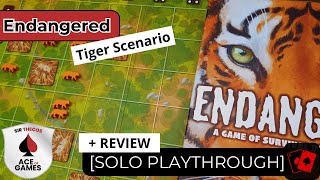
The game excels at translating a wildlife preservation narrative into mechanical form. Instead of abstract points, players feel the pressure of deforestation, habitat destruction, and oil spills. Tigers face extinction from development; sea otters struggle against polluted waters. Each animal scenario carries distinct survival challenges tied to real ecological threats. Reviewers emphasize that the theme is not pasted over mechanics but integrated throughout. The combination of thematic authenticity and solid game design creates what one reviewer called "a wonderfully thematic and engaging" experience where adjusting strategy based on which animal you protect feels natural rather than arbitrary. However, this thematic commitment comes with weight. Some players appreciate the gravity; others find the ongoing depiction of environmental destruction creates a classroom atmosphere rather than entertainment escape.
Difficulty, Variability, and Replayability
Endangered presents genuine challenge. Base game success rates are low, with players reporting single victories across multiple plays. Card draw carries meaningful luck, so how quickly destruction cards appear changes the difficulty calculus dramatically. Reviewers note that this luck factor is inherent to cooperative games broadly but acknowledges Endangered's steep learning curve. However, the game includes substantial variability through expansions offering different animal scenarios. The base box contains two animals, with expansion modules adding otters, sea turtles, koalas, frogs, and reef systems. Each animal brings unique breeding patterns and behavior requirements, forcing players to fundamentally reconsider their approach. This modularity extends the game's shelf life for dedicated players willing to invest in mastery.
What Makes Endangered Stand Out
Unique Theme and Mechanical Marriage
Most cooperative games choose fantasy quests or zombie survival. Endangered stands alone in the board game landscape by marrying conservation strategy with accessible cooperative mechanics. Reviewers struggle to name similar games in their collections. The design resists simple comparisons to Pandemic or Spirit Island; instead, Endangered occupies its own niche, making it valuable for players seeking thematic variety. The specificity of each animal mission, combined with the distinct player powers, creates scenarios where no two sessions feel identical even when playing the same species.
Player Interaction and Cooperative Depth
The double-sided character abilities and action economy create meaningful moments of mutual dependency. Unlike cooperative games where players execute individual strategies that happen to align, Endangered frequently rewards deliberate table talk and tactical support. A player with specific cards or abilities can amplify another's action, creating genuine moments of teamwork. Reviewers highlight these instances as the game's best memories: the moment when one player sacrifices their turn to set another up for a powerful play, knowing the collective goal matters more than individual contribution.
Potential Drawbacks
Thematic Heaviness and Emotional Accessibility
The game's greatest strength proves its most divisive element. Some players experience the ongoing depiction of animal suffering and habitat destruction as antithetical to entertainment. One reviewer described the game as "a smidge too serious," noting that rather than providing escapism, it feels like material suited for an educational classroom on environmental science. The mechanics transform players into advocates forced to prevent ecological collapse, which some find immersive and others find emotionally exhausting. This weighing toward educational messaging means Endangered works better for players who actively seek games with serious thematic content rather than those seeking lighter cooperative fun.
Luck-Heavy Card Draw and Learning Curve
Victory depends partly on when destruction cards appear. A fortunate draw sequence can swing the game significantly, and conversely, an unlucky sequence can make recovery nearly impossible despite smart play. Reviewers report learning curves that require multiple plays before victory feels achievable. The combination of substantial luck variance and high difficulty creates a barrier to entry. For groups seeking quick cooperative victories, Endangered demands patience and repeated plays. The upside is that this difficulty maintains tension; the downside is that losing streaks test commitment to the experience.
If You Enjoy Endangered
Players drawn to Endangered typically love thematic games where mechanics and narrative intertwine seamlessly. Wingspan offers nature-themed gameplay with a lighter tone, while Kavango explores preservation themes through its own lens. The cooperative nature appeals to anyone seeking non-competitive tabletop experiences where the group succeeds or fails together. The modularity appeals to players who want to gradually expand an experience through targeted expansion purchases. The unique position of the game, standing alone in its specific focus on wildlife conservation, means fans should also explore games that tackle serious subjects through mechanics, seeking that rare intersection of weightiness and playability.
What Reviewers Are Saying
"It's a theme that we love. It's a lot of mechanisms that we love and just it's so interesting to dig into the money side of it. You have to have these funds to run these campaigns and to influence these world powers because that's really how you win or lose the game is by how many world powers are going to vote on resolutions to help your animal that you're trying to save."
— Let's Table It
"The system is good. It all makes sense. It does feel different enough from other co-op games. The tricky is it's just a smidge too serious. It feels a little bit like something that you might play in a really fun science or social studies class. The mechanics and the cooperative system do work really well."
— Allies or Enemies
"Saving threatened species, each with unique behaviors and breeding patterns, make every scenario feel different. You really have to adjust your strategy depending on the animal you're trying to protect. A wonderfully thematic and engaging solo experience."
— Sir Thecos