












































Evolution Deep Dive
What the Community Thinks About Evolution
Evolution from North Star Games arrived in 2014 and immediately found a passionate following among gamers who crave that rare combination of accessible rules and genuinely deep strategic play. Reviewers consistently return to one phrase when describing it: survival of the fittest played out on a tabletop. The theme is not cosmetic here. The mechanics and the natural world narrative are inseparable, creating a game where every decision feels like watching a species adapt in real time.
Core Mechanics That Define Evolution
Multi-Use Cards Drive Every Decision
Evolution's most elegant design choice is its card system. Every card in the deck serves double duty: it carries a food value used to determine how much food enters the central watering hole, and it carries a trait that can be attached to one of your species. Each round, players simultaneously and secretly commit one card face-down to the watering hole, contributing to the shared food pool. The remaining cards become your action currency, spent to increase body size, grow population, spawn new species, or attach traits. The tension of deciding which card to sacrifice to the food pool, and which to use as an action, is present on every single turn. Reviewers at Getting Games note that this imperfect information layer, where you see what your opponents are doing with their species boards but not what they committed to the watering hole, creates a constant puzzle of reading the table and hedging your bets.
Traits Create a Living Ecosystem
Each species can hold up to three trait cards simultaneously, and the interaction between those traits determines what a species can eat, how it defends itself, and whether carnivores can reach it. Long Neck pulls food automatically before the feeding round begins. Hard Shell adds three to effective body size for defensive purposes only. Climbing requires a carnivore to also have Climbing before it can attack. Symbiosis shields a species entirely if the species to its right is larger. Warning calls protect adjacent species from carnivores lacking Ambush. Pack Hunting adds three to a carnivore's effective attacking size. This web of interactions means the board state is constantly changing. If an opponent evolves a Climbing Carnivore, your Climbing Herbivore is suddenly vulnerable. Adapting your traits in response to what others are building is the core loop, and it maps directly onto how evolution actually works.
The Evolution Experience
Survival of the Fittest Feels Real
The thematic resonance Evolution achieves is unusual for a card game. Adam in Wales, who named Evolution his favorite game at the time of his review, describes the theme as deeply immersed in the whole experience, with mechanisms and theme working together rather than one decorating the other. Getting Games captures this well: when a Climbing Herbivore suddenly has no reason to climb because a Climbing Carnivore now exists, and the population that survived was already evolving Hard Shell, it genuinely feels like the real thing. That narrative emerges from the mechanisms themselves rather than from any flavor text. Players consistently report finishing games feeling like they witnessed something, even games they lost badly.
Adaptation Is Constant and Rewarding
Unlike games where an early engine locks in your strategy for the entire session, Evolution demands constant pivoting. The watering hole food supply fluctuates round to round. Carnivores shift which herbivores are safe targets. A dominant predator that was unkillable in round three may starve in round six if every other player builds huge populations and drains the food pool. Traits that seemed useless in hand become critical depending on what species hit the table. Getting Games highlights that certain cards will look better or worse in your hand based on the game state, which is precisely what makes the replayability so strong. You can never build the same creature and expect it to perform identically.
What Makes Evolution Stand Out
Carnivores Create High-Tension Moments
The carnivore trait is Evolution's most dramatic design element. Carnivores cannot eat plant food. They must attack other species to survive, and they can only attack a species with a smaller effective body size that lacks defensive traits the carnivore cannot counter. A large Pack Hunting Carnivore that establishes itself early becomes an apex predator that dominates the ecosystem. Getting Games describes the fear of a 6/6 carnivore that cannot be stopped, consuming population every turn while its owner accumulates food tokens. This creates genuine table drama: all other players share an interest in keeping the watering hole depleted enough to starve out the predator, while not leaving themselves exposed. Watch It Played's rules coverage and the community discussions around it confirm that carnivore play requires reading the table as much as building your own species, making it feel different from any other faction or role in a comparable game.
Production Quality Matches the Ambition
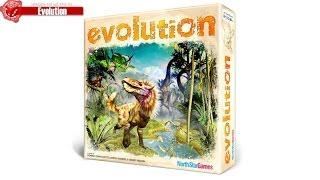
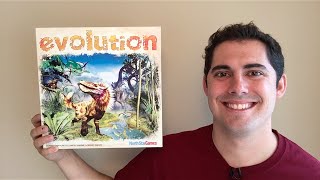
Getting Games makes a point of calling out the art and production quality as top notch. Every trait card carries artwork. The box front is vivid enough that the reviewer jokes about displaying it art-side-out on the shelf. The species boards are functional and readable from across the table, allowing a quick scan of the entire ecosystem at a glance. Player aids carry all trait information plus a scientific names section that lets players name their creatures based on trait combinations, adding a light social layer. The small card text is the one common criticism, but the player aid resolves it. For a game published in 2014, the production values hold up well.
Potential Drawbacks
Pack Hunting and Runaway Leaders
Getting Games raises the sharpest critique: a first-turn Carnivore plus Pack Hunting combination is extremely difficult to defend against in the opening rounds. Pack Hunting adds three effective body size to attacks, making an early carnivore almost immediately the most dangerous thing on the board. If nothing stops it from feeding, it grows in population and body size quickly enough to become nearly unkillable. The reviewer speculates about removing Pack Hunting from the deck to test whether carnivore economies feel more balanced. Separately, once any species, carnivore or herbivore, reaches a very large body size, it tends to become dominant for the rest of the game. The ecosystem can calcify into one Mega Predator and one or two massive herbivores while everyone else is eaten or starved. This is thematically appropriate but not always fun to play through.
Comeback Is Difficult Once You Fall Behind
Evolution's card draw mechanism is tied to species count: three cards per turn plus one per species. Players who lose species to carnivores or starvation draw fewer cards each round, which makes it harder to rebuild. The reviewer at Getting Games describes losing three games in a row while thoroughly enjoying them, but notes the feeling of slowly falling farther behind with no lever to pull. Players who get attacked early, especially by an aggressive Pack Hunting carnivore, may spend several rounds cycling through extinctions without gaining meaningful ground. The game offers a small rebound when a species goes extinct, returning trait cards to hand, but this rarely compensates for the cumulative card disadvantage. Paula Deming's footage of the solo mode shows that even against a simulated opponent, the game can snowball in one direction quickly. This is the game's most commonly noted frustration and also its most honest representation of how nature actually works.
If You Enjoy Evolution
The Evolution family has grown substantially. Evolution: Climate adds weather as a third force shaping which species survive, increasing complexity while deepening the natural world simulation. Oceans moves the ecosystem to the deep sea with a hidden trait mechanic that changes the information game dramatically. Earth shares the nature theme but is a tableau builder with far less conflict. For players who love the multi-use card tension in a different setting, Race for the Galaxy scratches a similar itch. Paula Deming and others in the community note that Evolution the Beginning serves as an excellent streamlined entry point that captures the core feel in a shorter, simpler package.
What Reviewers Are Saying
"The theme integrates into the mechanics and really comes out feeling like natural selection and survival of the fittest is happening on the table. You have these species and you are constantly adapting them to a changing landscape. It really kind of feels like that theme comes through with the mechanics as you're playing."
— Getting Games
"Evolution has really become my favorite game at this point. I absolutely love it. I'm ready to play it any time. The theme is deeply immersed into the whole experience, the mechanisms are great, the artwork is fantastic."
— Adam in Wales
"Evolution is all about hand management and adapting to the availability of food and the danger of carnivores. It has multiple variations and if you like this you may also check out Earth or San Juan."
— Board Game Dad