/pic8149442.png)



















Fishing Deep Dive
What the Community Thinks About Fishing
Fishing has quickly gained traction among trick-taking enthusiasts and card game aficionados as one of the most innovative takes on the genre in recent years. Reviewers consistently praise its clever deck-building twist on traditional trick-taking, where the cards you win become your hand for subsequent rounds. The reception ranges from enthusiastic first impressions to detailed analysis of its strategic depth, with multiple reviewers noting that the game delivers on its promise of reimagining a classic genre. While some find it demands more plays to fully appreciate, the overwhelming sentiment is that Fishing offers something genuinely new to a crowded field of trick-taking games.
Core Mechanics That Define Fishing
Trick-Taking with Evolving Decks
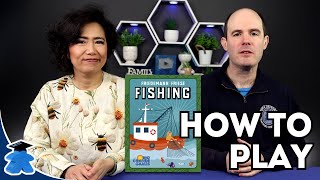
At its foundation, Fishing follows standard trick-taking rules: players lead cards, follow suit when able, and the highest card of the lead suit wins the trick. However, the game introduces a crucial twist. Cards won during a round are shuffled together and become your draw deck for the next round. This creates a self-balancing economy where successful players accumulate cards but initially weak ones. Losing fewer tricks means drawing from a communal pool of special cards, creating a natural catch-up mechanism that keeps games competitive across eight rounds.
The Ocean Stack System
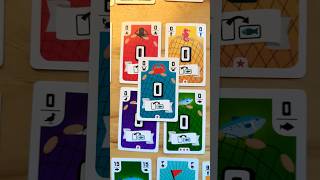
Beyond the basic numbered cards (1-10 in starting suits), the ocean stack introduces increasingly powerful special cards as players draw to fill their hands each round. These include high-value cards reaching into the teens, zero cards with steal mechanics that disrupt trick outcomes, green trump cards that override other suits, and bouy cards with special abilities. This graduated introduction of complexity ensures early rounds feel accessible while later rounds introduce sophisticated decision-making around which cards to pursue and which to avoid.
The Fishing Experience
Strategic Tension Between Winning and Losing
The genius of Fishing lies in its push-your-luck core decision: do you want to win this trick? Winning tricks scores points but fills your future hand with cards of uncertain quality. Losing tricks costs immediate points but allows access to the ocean stack's premium cards next round. Reviewers note this creates constant, meaningful tension where players must balance short-term scoring with long-term deck power. The eight-round structure provides ample opportunity to recover from missteps, yet each decision ripples forward in subtle ways as card pools diminish and players' strategies diverge.
Memory and Card Knowledge as Gameplay
Success in Fishing rewards players who track which special cards have been played and into whose hands they've gone. Since caught cards remain visible before being shuffled into decks, observant players can make educated guesses about future hands. This transforms the game from pure luck into a skill game where attention and memory matter. The special cards don't introduce overwhelming complexity, they function as clean, elegant effects that are easy to resolve but create meaningful board impact. Reviewers consistently mention this accessibility combined with hidden information creates an engaging puzzle.
What Makes Fishing Stand Out
Innovation Within a Familiar Framework
Fishing succeeds because it respects the trick-taking tradition while genuinely reimagining it. Rather than grafting unrelated mechanics onto tricks, the deck-building element flows naturally from the game's core concept of catching cards. Designers Freedman Freeze takes the envelope-pushing approach that characterizes his work and, for once, lands it perfectly. The special cards feel organic to the maritime theme rather than arbitrary, and each mechanical tweak serves the larger system. Players note this cohesion is rare among designers attempting to refresh established genres.
Elegantly Simple Rules with Deep Decisions
The rules teach quickly: play a card, follow suit, highest wins, build your next hand from your catches. Yet each turn spawns genuine decisions about bidding, card reading, and forward planning. The game creates meaningful choices without requiring players to track complex interactions or bookkeeping. Reviewers appreciate that downtime stays minimal even with full player counts, as turn structure moves briskly while providing space for strategic thinking. The game respects both competitive and casual play without requiring variant rules.
Potential Drawbacks
Length and Pacing Considerations
At eight rounds with varying player counts, Fishing can run longer than its 30-45 minute estimate suggests, especially with four or five players taking time to evaluate decisions. Some reviewers note that by round seven or eight, even well-paced games extend toward the hour mark. This isn't necessarily poor design, but players seeking quick fillers or tightly timed gaming sessions may find the experience stretches longer than hoped. The game rewards careful play, which naturally increases deliberation time.
Luck's Role in Outcome Determination
Despite the strategic elements, Fishing retains luck through card draw and the ocean stack's composition. While the catch-up mechanic mitigates swing turns, players who consistently draw weak special cards in crucial rounds can find themselves permanently disadvantaged. Some reviewers note that in games with five players, the randomness of which cards appear when becomes more pronounced, occasionally making optimal play feel insufficient against favorable shuffles. However, most acknowledge this as acceptable trade-off given the game's elegant simplicity.
If You Enjoy Fishing
Players who appreciate Fishing typically love trick-taking games that innovate thoughtfully rather than haphazardly. If you enjoy The Crew, Niku Dice, or Tricky Badger, Fishing offers similar satisfaction through elegant mechanical tweaks and meaningful decisions. The game works well with 3-5 players and accommodates both experienced gamers seeking fresh challenges and newcomers to trick-taking eager to understand the genre's possibilities. Freedman Freeze's signature style of pushing boundaries appears here refined rather than experimental, making it accessible to players who've bounced off his previous work. Consider Fishing a modern classic in the trick-taking renaissance, offering strategic depth without overwhelming new players.
What Reviewers Are Saying
"It's a fascinating concept, this idea that your cards that you're interested in winning and losing tricks based on what sort of cards you're going to win, because you've got to consider not only the value of points and when you know for each round, but you've also got to consider how good your cards are going to be in the future rounds."
— The Broken Meeple
"It is absolutely incredible, there's it sounds simple, it is simple, but there's some nuance and some gameplay here that is really, really unique and it's really, actually very difficult to juggle."
— Foster the Meeple
"The idea with this is that it's the standard rules, play a card, follow suit, highest card wins the trick, but it's such a clever idea. It's completely innovative and I can't think of a single trick-taking game that utilizes this mechanic and if there is please tell me because I want to see it."
— The Broken Meeple