Fishing / Fischen - How to Play. Complete, Clear, Concise Board Game Tutorial.
Games in This Video
1 game is featured in this video — it unlocks as you watch.
Transcript
reel in tricks, ride the waves of deck building, and let your cards evolve to score the points at the right time in fishing.
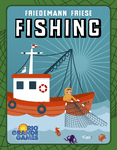
And today we'll be teaching you how to play fishing or fishing game designed by Freedom and Freeze and published by 2FA.
And hi everyone, it's Stella
and Tarant. Welcome to MEL University.
And hey, if you enjoy this video after watching, like, subscribe, and comments. You know what to do. All right, now let's get to the classroom. Fishing is a trick taking game for three to five players in which players compete over eight rounds of trick taking to catch the most fish. Every card is a fish and every fish is a point. So the more tricks you take, the more points you'll get. But at the end of each round, the fish you've just caught will become the deck from which you'll draw your new hand. Meaning those who catch plenty will see those cards again. While those who catch few will bolster their deck with more powerful cards they collect from the ocean.
Over eight rounds with increasingly powerful cards coming into play. Whoever catches the most total fish will be the winner. To set up, give each player these two cards, a net and a boat. Take the game card corresponding to your player count. Find all the cards with this back and separate them into six piles based on their number of stars from 0 to five. Shuffle the five starred decks individually and stack them in order face down so that the one stars are on top and the five stars are on the bottom. This is called the ocean stack and you can set it aside for now.
The remaining cards are the starter deck containing cards from 1 to 10 in four suits. You'll use all cards in the five player game. Remove the ones in a four-player game and also remove the twos and the red and blue threes in a three-player game. Shuffle everything that's left and deal the entire deck out into the player's starting hands. Players should have as many cards in hand as shown for round one on the reverse side of the player card and use this overlay to keep track of the current round. Randomly choose a first player and you're now ready to play.
Fish plays over eight full rounds of trick taking. And if you're familiar with tricktaking, the first round is very simple. It plays like a standard whist or bridge style trick taking game with no trumps and mandatory following of suit. If you're not familiar with what that means, I'll now explain that in full. The round is broken down into a series of individual tricks and whoever was chosen as first player will lead the first trick. That player looks through the cards in their hand, chooses any card among them that they wish to play, plays it face up on the table. This is the lead card, and its suit is the lead suit. Players then take turns clockwise around the table, adding their own card to the trick.
On your turn, if you have any cards in your hand matching the lead suit, then you must play a card matching the lead suit. If and only if on your turn you have no cards matching the lead suit, then you may play any card of any other suit. This check is always done against the lead suit, not any other recently played suit. In this case, the player would still need to play a purple card and would do so like so. Once each player has played one card into the trick, the trick is over. And whichever player played the highest numbered card matching the lead suit is the winner of the trick. Here, purple was led. The seven is the highest purple and so this player is the winner.
Collect all the cards from the trick and place them onto that player's net. Now move to the next trick and the player who won the previous trick chooses which card to lead for the new one. This could be the same suit or a different suit to the previous trick. Continue playing tricks in this way until all players are out of cards. Also, make a mental note of who led the final trick as this may be needed for some upcoming tiebreers. Now, you move to the end of the round and the first step of this is to calculate scores. This is done simply by counting up the number of cards in your net. So, this player, for example, has collected four cards and would gain four points, while this player with a more significant stack has collected 20.
Tally the scores on a piece of paper. Now, set up for the second round. The eight card tells you how many cards players will have in hand for the round. So, here it's nine. What happens next depends on the size of your hall. If you have enough cards in this deck to make that hand limit, then shuffle up all of those cards from your net and deal yourself that many. Whatever's left is then moved from your net to your boat. And it's not in the rules, but I recommend you place it underneath your boat card. This will help you avoid getting confused between your boat and your net. You'll now play the next round from this hand of random cards that you'd previously caught.
The other scenario is you did not catch enough cards to make a new hand. Here I need nine, but I've caught only eight. In this case, take those eight cards to hand and then make up to the required hand size by drawing cards off the top of the ocean stack. Remember, this is the layered stack of starred cards, and these are much more powerful than the starting hand. In this instance, I need one ocean card to make up to nine, meaning that my hand now contains eight starters that I'd previously caught and one more powerful card from the ocean. When multiple players need to draw ocean cards in the same round, begin with the players who need the most cards progressing down to the players who need the fewest.
When there's a tie, whoever played earlier in the prior rounds final trick draws first. So here, if this player led the final trick, this player would first draw five cards from the ocean, then this player would draw five. And finally, this player would draw one. This player may have the early lead in points, but now has a much weaker hand than everyone else. You'll follow a similar process at the end of each subsequent round, but with one important change. After scoring the fish in your current net. So, here it's eight points from the second round. Shuffle the cards in your net and place them on the bottom of the stack in your boat.
Then refer to the required number of cards in hand for the next round. And this is going to increase gradually as the game goes on and deal them to yourself off the top of your boat deck. This means you're always going to have to rework through the cards you took in earlier rounds before getting to the potentially stronger ones you took in later rounds. It's only if you have insufficient cards in your boat deck after moving your net across to it that you get to draw from the ocean deck in subsequent rounds. Now proceed to the next round with the player with the lowest overall score leading the first trick. In the case of a tie, the tie once again goes to whoever was earlier to play a card in the last trick of the last round.
So, what riches will you find within the ocean deck? You'll find stronger cards in all of the basic suits. The base suits go to 10, but the ocean deck will quickly give you cards from 11 all the way up as high as 18 if you get through the entire ocean deck. You may come across a zero card, which you'll again find in all the basic suits. Zero cards follow the standard rules of following suit. This is a purple zero, so right now I can't play it. Whereas this player with a blue zero does have the opportunity to play it. Once a trick is done, first check the winner. So here it's the blue nine. But then any player who played a zero into the trick gets the chance to steal any one other card from that trick, adding it to their net before the winner gathers all the cards that are left.
That means the player with the zero has gained one point and a decent card, whereas the winner of the trick has lost one of the points they thought they would gain. If a trick has multiple zeros, then claim the rewards in the order in which they were played. A zero can't capture itself, but it can capture another zero from the same trick. The ocean deck introduces a fifth suit, which is the green trump suit, beginning at one and potentially going as high as 16. There's also a zero, which can come into play with the standard zero effect. The trumps follow the standard rules with regard to following suit.
So in this case, the player has red cards in hand and must play a red card, not a trump. Whereas this player having no red cards in hand could choose to play a trump card on top of this trick. When resolving any trick, the winning card will be the highest numbered trump and only if there are no trumps, then the highest numbered card of the lead suit. This trick would be won by the two trump. A trump card can be led, and in this case, all other players must follow suit playing a trump themselves if able. All other Ocean cards are boys. They show the boy icon in the corner and the white color on the background. These cards are considered numberless and suitless.
These cards can be played at any time, even if you're otherwise able to follow the suit. And if you play a boy as the first card in a trick, then the next card played becomes the lead card. Here, other players would have to follow purple if they could. Any boy cards without the ellipses icon are resolved at the end of the trick in which they're played. For this card, everyone gives one card of their choice from their hand to the player on their left. For this card, whoever collects that card to their net immediately loses three points. Although this card and any others they collected in that trick are still worth their usual one point per card.
This one allows whoever played it to collect all of the other cards from this trick to their own net before the trick's winner takes anything. So, for example, in this play, the two trump wins, but this player takes all three of these other cards, leaving the winner with only the boy. This boy and zeros are resolved in the order in which they were played. Here purple three was the winner. But how this is resolved is the first played zero takes a pick of cards first. The second played was the boy who takes every other card. Third played was blue zero who takes one card the only one left being the boy.
Leaving the actual winner of the trick with nothing other than the right to lead the next trick. Finally, boys showing the ellipses icon impact the trick after the trick in which they're played. If you play this card, you will lead the next trick regardless of who wins the current one. If you play this card, then you get to declare the color of the next trick. That means even the player who leads the next trick must follow the suit you've chosen. If no one follows or trumps, whoever picked the color is the one who wins the trick. Finally, if you play this boy, then in the next trick, lowest card wins instead of highest. This does not impact the ranking of suits. So in this five card trick led with red, the winner is the lowest trump, the three. The ranking of the remaining cards in order are the higher trump 16, the lower lead suit four, the higher lead suit of nine, while the offsuit 11 remains ineligible to win.
The game ends after scoring the eighth round or in very rare cases ends immediately if the ocean deck is empty before all players have been able to draw up to the required hand size. Either way, the player with the highest score wins. And if tied, victory is shared.
Thanks for watching. And if you like this video, maybe you'd like to watch this next one. Have a great day. Bye.