/pic2471359.jpg)
















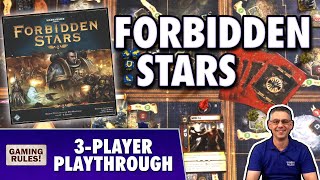










Forbidden Stars Deep Dive
What the Community Thinks About Forbidden Stars
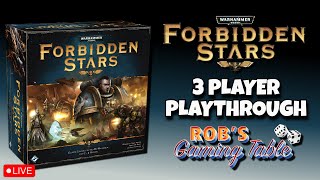
Forbidden Stars occupies a unique position in the board gaming landscape: a gorgeous, mechanically rich game that has achieved legendary status despite being out of print. Since the licensing agreement between Fantasy Flight Games and Games Workshop dissolved, this Warhammer 40K-themed strategy experience has become increasingly difficult to find, yet reviewers consistently rank it among the best science fiction games ever made. The game's absence of reprints has only deepened its cult following, with players who own copies treating them as prized possessions and those seeking copies on the secondary market often finding themselves outbid by passionate fans willing to pay premium prices.
Core Mechanics That Define Forbidden Stars
The Order Token System
What sets Forbidden Stars apart from other wargames is its signature order token mechanic. Rather than acting in simple turn order, players place tokens face-down into sectors where they want to take actions, but crucially, these orders resolve from the top of the stack downward. This creates a profound planning challenge: the first action you place is the last one you'll execute. Players must think ahead, anticipating how the board state will shift before they can activate their plans, while simultaneously trying to mislead opponents about their actual intentions. This inverted action order forces players to balance multiple strategic layers and creates natural bluffing opportunities as opponents attempt to deduce which moves matter most.
Asymmetric Faction Design
Each of the four playable factions, the Ultramarines, Eldar, Orks, and Chaos Space Marines, feels genuinely distinct. Every faction has its own unique starting deck of combat cards, special abilities, and upgrade options. Players can spend orders to purchase additional cards, allowing them to customize their army composition and battle approach throughout the game. The factions differ enough that strategic paths diverge significantly from player to player, creating varied early-game advantages and encouraging different approaches to controlling objectives. This asymmetry ensures that even repeated plays feel fresh, as players discover new synergies and tactical possibilities with their chosen faction.
The Forbidden Stars Experience
A Warhammer 40K Universe Brought to Life
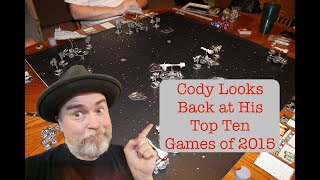
The game captures the epic scope and aesthetic of Warhammer 40,000 through its lavish production values. The board is assembled from 12 unique double-sided tiles that can be arranged in countless configurations, ensuring no two games feel identical. Over 100 beautifully detailed miniatures represent the various unit types across all four factions, with each faction sporting its own visual identity. Warp gates on the board shift between rounds, suddenly opening new pathways or blocking established routes. Resource management systems allow players to build factories and command centers, creating a genuine sense of expansion and military buildup.
Combat That Demands Tactical Depth
When armies clash, battles resolve through a multi-layered system that involves both randomness and player agency. Players roll dice that represent attacks, which opponents can block with shield values. However, combat extends beyond dice: each player draws five cards from their faction deck and selects three to play, adding symbols and triggering special abilities that can sway the outcome. Morale becomes as important as pure firepower; having fewer forces with superior morale can still claim victory. These battles can drag as players deliberate over card choices, but the tension created by weighted decisions and moment-to-moment uncertainty drives compelling gameplay.
What Makes Forbidden Stars Stand Out
A Fresh Take on the 4X Genre
While Forbidden Stars follows the familiar explore-expand-exploit-exterminate structure of the 4X genre, its order token system distinguishes it from traditional civilization builders. Rather than the sequential action resolution found in most wargames, the inverted token mechanic creates unprecedented planning depth. Players must commit to strategies before seeing how competitors respond, forcing genuine foresight and bluffing. This design choice transforms standard 4X gameplay into something more cerebral and tense, where information management and psychological warfare matter as much as tactical positioning.
The Tragedy of a Perfect License Implementation
The marriage of Warhammer 40K's grimdark aesthetic and military flavor to sophisticated board game mechanics feels effortless. The theme doesn't just paint the mechanical bones; it genuinely informs gameplay. Factions play according to their lore: Space Marines function as elite, powerful units; Orks represent overwhelming force; Eldar bring speed and precision; Chaos Space Marines wield unpredictable power. The asymmetry flows from thematic identity, making mechanical differences feel narratively meaningful. This integration of theme and mechanics is particularly painful given the game's out-of-print status. The licensing dispute between Games Workshop and Fantasy Flight Games means this implementation will likely never see a reprint or expansion, making every copy on the market a finite artifact.
Potential Drawbacks
Length and Downtime
Forbidden Stars demands significant player commitment. A full game spans 3-4 hours, and that duration isn't always well-distributed. Combat resolution, while engaging for the players involved, can create extended downtime for opponents. When two factions clash, uninvolved players must wait while the active combatants work through card selections, ability triggers, and casualty resolution. The order token system, while strategically superior, also creates analysis paralysis opportunities, particularly among experienced players who recognize the depth of the bluffing layer.
Complexity and Teachability
Forbidden Stars presents a steep learning curve. New players must grasp the order token system, faction-specific deck building, the modular board with its ever-shifting warp gates, upgrade mechanics, and combat resolution before they can meaningfully participate. A full teach typically requires 20-30 minutes, and that initial game usually plays long as players grasp implications and strategic depth. The game rewards repeat play and player investment, but demands that investment upfront.
If You Enjoy Forbidden Stars
Players drawn to Forbidden Stars typically appreciate heavy strategy games with asymmetric designs and strong theme-mechanics integration. Starcraft: The Board Game similarly brings a video game IP to the tabletop with factions that play radically differently. War of the Ring offers another licensed gaming experience with its own hidden action system and asymmetric victory conditions. Star Wars Rebellion provides a similar blend of political maneuvering, hidden information, and faction abilities. Dune delivers comparable faction asymmetry with negotiation elements that create distinct gameplay experiences at the table.
What Reviewers Are Saying
"This game's never going to be reprinted in its current form because there was a spat between Fantasy Flight Games and Games Workshop. Luckily, I grabbed a copy when it was in print. It's a fantastic game, and Forbidden Stars is one of the best sci-fi games that you can get today."
— BoardGameBollocks
"Forbidden Stars is a great 4X game where you are the various factions from Warhammer 40K. The game is beautiful with these tiles that have different planets, and you've got these beautiful spaceships and tanks and forces. It's got this kind of order token system where you lay down your tokens in order and you kind of hope they come up in the way you laid them down. Really, really love Forbidden Stars here."
— The Discriminating Gamer
"It's a collaboration between Games Workshop and Fantasy Flight. You'll be buying ships floating around the galaxy trying to take control of different objectives. The thing that makes this game stand out is that when you take an action you will place a token face down in the center of the area where you want to take it. It's an absolute tragedy that this is never ever going to see a reprint or any expansions."
— BoardGameBollocks