/pic5253984.jpg)

/pic5253984.jpg)


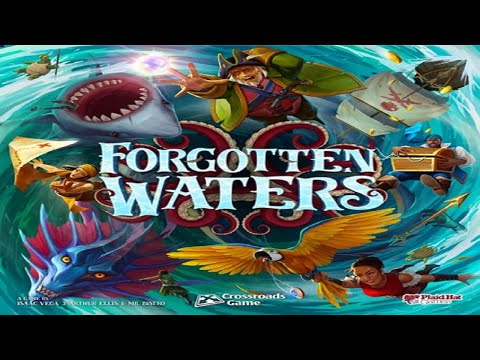












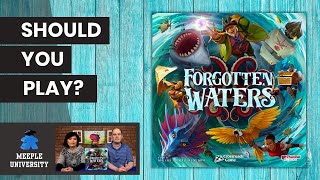






















Forgotten Waters Deep Dive
What the Community Thinks About Forgotten Waters
Forgotten Waters, designed by Plaid Hat Games, has earned widespread acclaim from the board gaming community as a masterclass in blending narrative excitement with accessible gameplay. Reviewers consistently highlight the game as one of Plaid Hat's strongest achievements, particularly in how it sidesteps the mechanical bloat that has plagued their previous story-heavy titles. The game manages to deliver a remarkably lighthearted and joyful experience that captures the essence of pirate adventure without sacrificing narrative depth or player agency. From casual players to dedicated hobbyists, the response has been overwhelmingly positive, with many citing it as the gold standard for cooperative storytelling games.
Core Mechanics That Define Forgotten Waters
App-Assisted Narrative Direction
At its heart, Forgotten Waters uses a downloadable web app to guide players through branching narratives and handle the heavy lifting of story tracking. The app narrates passages, tracks choices, manages scenario progression, and ensures each replay feels fresh by customizing text based on prior decisions. This mechanic elegantly solves the problem of overwhelming rulebooks in narrative games by offloading bookkeeping to technology. The app reads story passages aloud with full voice acting, complete with sound effects and musical cues, creating an immersive audio experience that enhances rather than disrupts the table experience. Because it's web-based rather than a native application, players can confidently play it for years without worrying about platform obsolescence or compatibility issues with future devices.
Elegant Cooperative Skill Resolution
Forgotten Waters employs a refreshingly light mechanical framework where players take actions from location pages in an adventure book, rolling dice to determine outcomes and progressing their personal constellations through successful skill checks. Each player has an assigned ship role, first mate, bosun, scribe, that tracks simple cooperative statistics like crew morale or supplies. What makes this system brilliant is its restraint. Mechanics exist purely to support storytelling rather than override it. Reroll tokens, misfortune tokens, and treasure cards provide meaningful player agency without creating decision paralysis. The skill checks are straightforward: gain a permanent boost to a relevant stat, roll a die, add your skill, and discover the outcome. This featherweight design respects player attention by preventing the analysis paralysis that plagues heavier narrative games, allowing players to act instinctively like swashbuckling pirates rather than cautious strategists.
The Forgotten Waters Experience
Whimsical Humor and Charm
Forgotten Waters drips with wit and playful irreverence from the opening moments. The game begins with mad libs character customization that immediately breaks any fourth-wall tension. Players fill in absurd character details, professions like "debater pirate," "colony pirate," and "safety pirate," that generate hilarity before anyone has even opened the adventure book. The flavor text on cards and in passages is consistently laugh-out-loud funny without ever feeling forced or stale. Even after multiple plays, reviewers report that the same passages still land because the comedic writing is fundamentally solid. The included pirate name generator produces genuinely entertaining character names with personality. The voice acting throughout the game leans into exaggerated pirate clichés, fake Irish accents, fake Scottish brogue, cartoonish English, in a way that's simultaneously ridiculous and endearing. This commitment to lightheartedness sets the tone that players should prioritize fun and discovery over mechanical optimization, creating a space where creativity and humor flourish.
Narrative-Driven Adventure and Exploration
Each scenario takes place across a spiral-bound book containing location pages that populate as players explore an emergent map. Players move their ship, discover islands, towns, and encounters, then turn to corresponding location pages to see what actions are available. The procedural generation combined with fixed narrative beats creates genuine replayability: the same scenario can play radically differently depending on which tiles appear, which locations are visited, and how players respond to branching choices. Individual characters develop through personal story threads unlocked as players earn constellation stars, creating distinct arcs even within a single adventure. The game strikes a remarkable balance between player agency and authored experience. The choices feel meaningfully impactful because the app genuinely acknowledges them, creating branching consequences that make replays surprising even for veterans. Between exploration, flavor encounters, skill checks, and voiced story passages, Forgotten Waters delivers a cohesive narrative experience that emerges through play rather than being imposed on players.
What Makes Forgotten Waters Stand Out
Superior Writing and Voice Direction
Plaid Hat Games invested significant effort into the quality of written text and vocal performance. Reviewers consistently cite Forgotten Waters as among the best-written board games ever produced. The narration features a full cast of voice actors covering multiple accents and character types, adding authentic personality to every passage. What elevates this further is the care taken in how passages are assembled: they avoid the jarring splicing that can undermine immersion. Every line of text has been injected with wit, whimsy, brightness, and bravado. The developers understood that a lightweight mechanical framework needs robust storytelling as its foundation, and they delivered lavishly. The writing works equally well when read silently or heard through the app's narration, ensuring accessibility and personal preference are both honored. This commitment to craft extends to every corner of the game, making even repeated passages feel fresh because the quality of execution is simply that strong.
Seamless Integration of Mechanics and Narrative
What makes Forgotten Waters remarkable is how fluidly mechanical systems serve the story rather than impeding it. Many narrative games suffer from thematic misalignment: you're telling a dramatic story but spending turns on tedious resource shuffling. Forgotten Waters eliminates that disconnect by ensuring every mechanic directly supports the narrative. Role assignments represent crew duties that feel natural to pirate fiction. Skill checks drive character progression and unlock personal story beats. Resource management affects which encounters your crew can tackle. The app directly responds to mechanical outcomes by narrating consequences. This seamless weaving of structure and story means players never feel like they're playing two games at once. The experience unfolds with the effortlessness of a well-crafted story while maintaining the engagement and agency of a strategic game. Reviewers praise how remarkably cohesive the system feels despite its scope.
Potential Drawbacks
Difficulty Scaling and Scenario Balance
While the first two scenarios strike a satisfying balance between challenge and accessibility, the difficulty curve becomes uneven in later scenarios. Scenario three in particular can hand players a punishing string of failures early in the adventure, potentially dampening the lighthearted tone during an extended low point. The game's approach to difficulty relies heavily on random dice rolls, which can create stretches of unfairness when luck turns sour. This matters less in scenarios with long playtimes where eventual success feels earned, but becomes frustrating when the narrative momentum breaks due to mechanical misfortune. The game doesn't attempt to mitigate bad luck runs through comeback mechanics or dramatic comeback systems, instead letting the dice speak. For players seeking consistent pacing and dramatic arcs, this randomness can occasionally undermine the story.
App Dependency and Accessibility Concerns
Forgotten Waters cannot be played without the web app, creating a hard requirement for internet connectivity during setup and play (though the app can cache content). While the web app approach ensures long-term viability better than native platforms, it does introduce a technical barrier for players without reliable internet, those uncomfortable with digital interfaces during board gaming, or communities that prefer disconnected tabletop experiences. The app handles so much bookkeeping that attempting to play without it would be cognitively overwhelming. Additionally, while solo and two-player variants exist and function well, the game is genuinely designed for larger groups. Playing with fewer than three players changes the experience meaningfully, and the five-to-seven player count shows off the game's strengths most clearly. For households without consistent access to a larger gaming group, Forgotten Waters loses some of its appeal.
If You Enjoy Forgotten Waters
Players captivated by Forgotten Waters should explore Dead of Winter, the acclaimed Crossroads Game that established many of the design principles Forgotten Waters perfects. Fiasco offers similar narrative emergence through collaborative storytelling without app assistance, though with less guided structure. For those craving more pirate-themed adventure, SeaFall delivers an exploratory legacy experience, while Sea of Legends provides competitive seafaring thrills. Freelancers offers a lighter approach to character-driven adventure gameplay. If the app-assisted storytelling appeals, Wandering Galaxy provides a comparable experience with science fiction theming. For pure cooperative narrative satisfaction with less mechanical complexity, Gen7 explores the Crossroads Game lineage further.
What Reviewers Are Saying
"Forgotten waters is a cooperative game about telling stories on the fantasy high seas. What's remarkable is that Plaid Hat, a company prone to bloat for the sake of thematic immersion, has managed to make their most cohesive system yet. The system feels expertly crafted to facilitate the story rather than becoming a clunky obstacle impeding it."
— The Cardboard Herald
"The one thing that Forgotten Waters does very well is finally reconcile the fact that the ethos of Plaid Hat's storytelling-based games frequently try to fit too much into a package that can't really support it. Mechanically Forgotten Waters is as light as a feather, and thank god it is. Every ounce of text has been injected with wit, whimsy, brightness and bravado."
— No Pun Included
"Forgotten Waters is such a fun, thematic game. You're developing your own story and telling your own story. It's cooperative, there's a lot of fun, you're out there doing so many cool piratey things, and man, do I want to hear that story you're creating as your character unfolds. It's just really fun to talk about."
— The Dice Tower