







Formaggio Deep Dive
What the Community Thinks About Formaggio
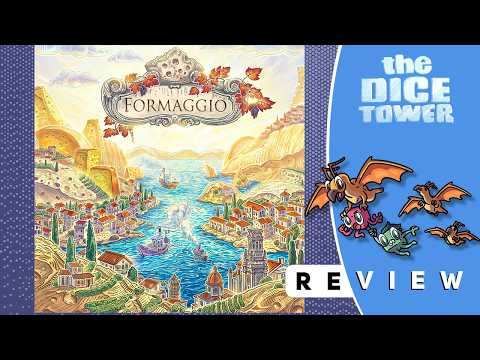
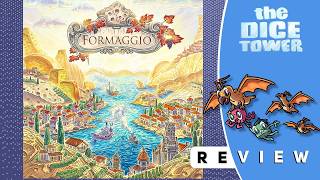
Formaggio has impressed strategy gamers as a standalone companion to Fromage, designed by Ben Rosset. The Dice Tower praises how clever and fast it feels, Game Boy Geek ranks it near the top of the year's strategy releases, and Tantrum House highlights the satisfying tension of its timing puzzle. The consensus is that the game stands fully on its own while adding a fresh layer of depth through its modular, mini-game scoring boards, all wrapped in a charming cheese-making theme.
Core Mechanics That Define Formaggio
Time-Based Worker Placement with Board Rotation
At its heart, Formaggio is a simultaneous worker-placement game where the timing of your actions drives every decision. Game Boy Geek explains the core: when you place a worker, the cost of its spot determines how many rotations it takes to come back to you, from a quick return on a cheap space to a long wait on a premium one. This forces constant forward planning, since you are always asking how to have the right workers and resources available two turns from now. The rotating board adds a spatial layer, because you only act on the quadrant facing you each turn while your committed workers wait elsewhere.
Distinct Mini-Game Scoring Regions
Rather than a single scoring method, Formaggio offers several completely different ways to earn points across its modular boards. One region scores rows and columns of placed cheeses, another rewards collected wine bottles, another asks for clever gondola placement, and another turns on majority control. The Dice Tower notes that the boards mix and match with those from Fromage, multiplying the possible combinations, and reviewers agree there are no weak regions. Players can specialize in whichever board appeals to them and largely ignore the rest, which keeps every game feeling fresh.
The Formaggio Experience
Fast, Engaging Simultaneous Play
The simultaneous action system is the standout experience. Everyone places workers at the same time, then the board spins, so there is almost no downtime. The Dice Tower is struck by how quickly games move, noting you keep thinking it is clever and different from anything else, and then suddenly it is almost over. The cheese-placement theme doubles as an elegant expression of the turn structure, and the brisk pace keeps every player engaged even while others are resolving their actions.
Strategic Tension Through Timing
The tension in Formaggio comes not from direct conflict but from scarcity and timing. Tantrum House describes the central decision well: do you commit a worker to a high-value placement that locks it away for several rotations, or play it safe for quick returns? The new platinum spaces sharpen this gamble, since locking a worker away for the longest stretch only pays off if you successfully execute a complex plan. Asymmetric player powers and seasonal resources give each player different paths to victory, deepening the puzzle without adding conflict.
What Makes Formaggio Stand Out
Modularity and Asymmetry Drive Replayability
The asymmetric player boards are more than flavor; they change how each player engages with the game, granting different powers and starting positions. Combined with the freedom to choose which scoring boards are in play, and the ability to fold in boards from Fromage, no two games feel identical. Reviewers who bounced off one particular board appreciated that they could simply leave it out next time and play their preferred regions, which also makes the game easier to teach since newcomers can start with a simpler set.
Crunchy Puzzle in a Quick Package
Game Boy Geek likens the planning to the crunchy, puzzly feel of Calico, where every placement matters and you must think several steps ahead. That depth is unusual for a game that plays in around forty-five minutes. The combination of a tight timing puzzle, modular scoring, and a fast simultaneous structure gives Formaggio the rare profile of a brain-pleasing strategy game that never overstays its welcome, which is a large part of why reviewers rate it so highly.
Potential Drawbacks
Indirect Interaction and Delayed Blocking
One consistent critique is that interaction, while present, feels indirect. Because the board rotates and workers linger for multiple turns, an opponent blocking a space you wanted will not affect you until a rotation or two later, by which point you have often moved on. The gondola region offers the most direct interaction, letting you place pieces adjacent to opponents' cheeses, but most regions keep players in their own lanes. Reviewers accept this as the trade-off for the smooth simultaneous play, though players seeking sharp conflict may find it too gentle.
The Gondola Region's Fiddly Planning
While most boards reward clear spatial or set-collection strategies, the gondola region proves more convoluted in practice. Its scoring depends on placing gondolas adjacent to your cheeses, but since you cannot reliably predict when your next turn will let you place cheese in that region, the plan often falls apart. Reviewers note this board demands more planning effort and is harder for new players to grasp, and they suggest simply substituting it out when it does not suit the group.
If You Enjoy Formaggio
If Formaggio resonates with you, the obvious companion is Fromage, the original that Formaggio mixes and matches with; reviewers and the designer treat the two as interchangeable standalones. For the crunchy, puzzly placement that Game Boy Geek compares it to, Calico delivers a similar every-tile-matters challenge. For more simultaneous, low-downtime worker placement, Tribes of the Wind and the rotating-wheel timing of Tekhenu: Obelisk of the Sun scratch comparable itches, rewarding players who plan several turns ahead.
What Reviewers Are Saying
"It's fast-moving, simultaneous play, and yet it feels clever. It feels different from anything else that's been out there. Everyone's working at the same time, you spin the board, and it plays so quickly. You'll be surprised; you're like, oh, it's almost over."
— The Dice Tower
"It's a very interesting time-based worker placement game where you place a worker, and depending on where you place it, it's going to take you one, two, or three turns to get it back. The planning is: I want to do that cheese on that board two turns from now, so how do I make sure I've got the resources I need and the right workers to do it?"
— Game Boy Geek
"The tension in this game is good. Do I place my worker in such a way that I'm going to get a lot of benefit, lots of resources or a really good aged cheese, but then I have to wait to get that worker back? The platinum power is really powerful, but limited; it's almost like a race to get there quicker."
— Tantrum House