/pic5092291.png)

/pic5092291.png)















Frosthaven Deep Dive
What the Community Thinks About Frosthaven
Frosthaven has landed as one of the most eagerly anticipated and enthusiastically received cooperative campaign games in the hobby, arriving as the standalone sequel to the massively popular Gloomhaven. Reviewers across the community agree that designer Isaac Childress has taken everything that made Gloomhaven compelling and built substantially on top of it. As one reviewer put it, Frosthaven "answers the biggest gripes with Gloom Haven" by deepening the narrative stakes, adding meaningful out-of-combat systems, and introducing character classes that feel genuinely distinct and inventive.
The consensus is that this is a gold-medal level achievement in cooperative gaming, though reviewers are consistent in one important caveat: Frosthaven demands a serious commitment. 3 Minute Board Games describes it plainly as "a game that needs to dominate your table for the better part of a year." The tactical card combat that made Gloomhaven legendary returns, but the new classes, the settlement-building layer, seasonal events, and a puzzle book add dimensions that make this feel like a genuinely expanded experience rather than a simple content dump. The community broadly agrees that for groups willing to commit, Frosthaven delivers an RPG-scale campaign experience in board game form.
Where reviewers diverge is in how they weigh the game's ambition against its demands. Some celebrate every additional system as making actions feel consequential. Others treat the weight of commitment as a genuine barrier, particularly for players who found Gloomhaven already substantial. Reviewers who went deep consistently report that the new starting classes alone make the game worth exploring, with the Death Walker, Blink Blade, Geminate, and Necromancer all drawing specific praise for their mechanical novelty.
Core Mechanics That Define Frosthaven
Hand Management and the Two-Card Action System
At the heart of Frosthaven sits the same elegant hand management engine that defined Gloomhaven, refined and expanded through the lens of richer starting classes. Each character holds a hand of ability cards, and on every turn players select two: the initiative number on one card determines when the character acts in the round, then the player uses the top action of one card and the bottom action of the other. This creates constant, layered decision-making. Do you use a card for its powerful top action, burning it forever to the lost pile, or play conservatively and keep your hand viable for future rounds? Resting recovers discards but costs a card permanently each time, so every rest is a small erosion of capability.
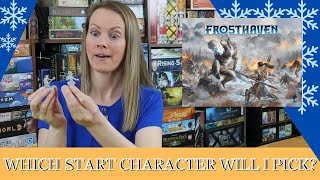
The Getting Games playthrough illustrates how this system generates genuine tension: the Blink Blade adds a fast/slow dimension where spending tokens before card selection unlocks enhanced ability versions, while slow triggers entirely different effects. The Necromancer leans on summon management and persistent effects that stack over turns. The Drifter builds ability tokens that amplify otherwise modest base stats. Hand management in Frosthaven is not one experience but a family of related ones, each class offering its own rhythm.
Campaign and Settlement Building
Frosthaven distinguishes itself from Gloomhaven most visibly through its campaign structure, which now wraps around a living settlement that players build up between scenarios. After each scenario, players conduct an outpost phase: spending loot, including wood, metal, and hide collected from the new resource-based loot deck, to construct buildings in the town of Frosthaven. The craftsman, alchemist workshop, and barracks are examples of structures that unlock new options for future scenarios. This means looting feels more purposeful than in Gloomhaven, because resources directly feed the town's survival.
The Shelfside review highlights the seasonal structure as a major narrative engine: scenarios are organized in fifteen-scenario summer and winter blocks, and when winter arrives, events become harsher and resources drain faster. Retired characters build houses in the settlement and remain as persistent figures. A puzzle book adds investigable mysteries separate from the main scenario flow. For reviewers who felt Gloomhaven's campaign was largely "an excuse to fight things," Frosthaven's settlement layer makes the world feel inhabited and the consequences of play feel real.
The Frosthaven Experience
Epic and Narrative-Driven
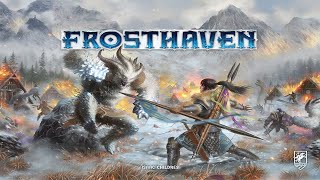
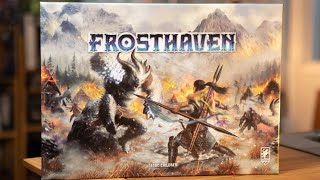
Frosthaven carries a weight and scale that reviewers consistently describe as epic. The opening scenario drops players into a burning outpost town, beset by massive Algox raiders, and the tone established in those first moments sustains across the campaign. The setting, an isolated northern settlement cut off from civilization for six months each year, creates a foreboding backdrop that gives every scenario a sense of purpose. Reviewers note that unlike Gloomhaven, where the city of Gloom Haven felt like a backdrop, the town of Frosthaven feels like something worth protecting and building.
The narrative stakes translate into genuine table investment. Players from the Meeple University live playthrough described feeling the weight of resource decisions, knowing that wood collected in a dungeon run would become a building that shapes the next scenario. The story text, delivered through the scenario books, sets scenes with genuine atmosphere. Reviewers find that Frosthaven sits closer to the RPG end of the spectrum than its predecessor, rewarding players who invest in the world as much as those who optimize their card plays.
Collaborative and Discovery-Driven
The cooperative structure of Frosthaven produces tight coordination between characters with radically asymmetric abilities. Because each class operates on entirely different mechanical principles, a group playing Death Walker alongside Geminate alongside Necromancer must genuinely understand what each character can do. The Getting Games channel demonstrates how this plays out: the Death Walker builds shadow tokens across the map and detonates them for massive burst damage, while the Blink Blade commits to fast or slow before selecting cards each round, and the Drifter layers persistent effects that accumulate over multiple turns. These characters create synergy opportunities that reward real coordination.
Discovery is woven into both the campaign and the class design. New classes unlock as the campaign progresses. Sealed scenario content reveals surprises. The puzzle book offers mysteries separate from the main scenario flow. Reviewers describe a feeling of forward momentum where every session both resolves something and opens new questions. The 3 Minute Board Games review notes that the game has 13 classes beyond the starting six that most reviewers have not yet explored, signaling depth that extends well beyond initial impressions.
What Makes Frosthaven Stand Out
Inventive Starting Classes
Where Gloomhaven's starting roster felt competent but conventional, Frosthaven's six beginning classes are among the most praised aspects of the game. The Death Walker places shadow tokens across hexes and spends them to amplify attacks, turning map positioning into a resource. The Blink Blade commits to being fast or slow before choosing cards, changing which ability versions are available. The Geminate switches between melee and range forms with a different card set in each. The Necromancer summons creatures while spending its own health to raise undead. The Drifter stacks persistent ability tokens that amplify otherwise modest base stats. Reviewers from 3 Minute Board Games describe the Death Walker and Blink Blade as "simply Neato," noting these classes alone make Frosthaven worth exploring for anyone who loved Gloomhaven's class variety.
Richer Out-of-Combat Systems
Frosthaven's most substantive structural improvement over Gloomhaven is the depth added outside of scenarios. The resource-based loot deck replaces simple coin collection with wood, metal, hide, and herbs, each serving specific purposes in town construction and equipment crafting. New buildings unlock crafting options: potions require herb combinations at the alchemist, the barracks improve defensive options, and the craftsman enables equipment forging. The seasonal event structure creates narrative arcs within the campaign. A companion app offers narrated story text. The puzzle book introduces investigation sequences. Reviewers from Shelfside describe this accumulation of systems as addressing the feeling that Gloomhaven was "80% dungeon crawling" with a thin campaign veneer. In Frosthaven, the time between scenarios feels as designed as the scenarios themselves.
Potential Drawbacks
Massive Time and Financial Commitment
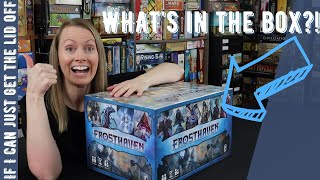
Frosthaven is one of the largest games in the hobby, and reviewers do not shy away from naming this as a genuine obstacle. The campaign spans more than 100 scenarios across a full narrative arc. The box is physically massive, filled with component density that requires real setup and teardown time. The financial investment at retail is substantial, and the storage problem inherited from Gloomhaven is present here too, with third-party insert solutions recommended by multiple reviewers. The 3 Minute Board Games channel is direct: Frosthaven "requires a serious commitment both in financial terms and the amount of time you'll spend on it," adding that it is a game that must "dominate your table for the better part of a year, lest it not be worth picking up." Groups whose schedules are irregular, or who rotate through many different games, may find the ongoing campaign difficult to sustain at the pacing the game is designed for.
Complexity Barrier for New Players
Frosthaven is a deeply complex game. The base rules layer hand management, initiative systems, elemental energy tracking, condition management, monster AI behavior, loot resolution, and end-of-scenario campaign steps into a framework that takes meaningful time to learn. Each new class adds its own distinct mechanics on top of the shared rules. The Death Walker's shadow token placement and detonation system, the Blink Blade's fast/slow commitment mechanic, and the Geminate's form-switching all require their own internalization before players can begin optimizing play. Reviewers from Getting Games demonstrate through careful tutorial play how many individual rules interact in a single round. For players new to the Gloomhaven universe, the 3 Minute Board Games channel explicitly recommends starting with Gloomhaven: Jaws of the Lion as a gentler entry point before committing to Frosthaven's full scope.
If You Enjoy Frosthaven
Players drawn to Frosthaven's tactical card combat will find Gloomhaven an essential companion, set in the same universe with a slightly lighter campaign layer. Gloomhaven: Jaws of the Lion is the ideal entry point for anyone who finds Frosthaven intimidating, offering a shorter campaign with streamlined rules and a tutorial-style scenario sequence. Reviewers also compare the experience to Aeon Trespass: Odyssey, another massive cooperative campaign with deep tactical systems and a heavy narrative component, appealing to the same audience that values both mechanical and storytelling ambition. The Gloomhaven universe remains the benchmark for cooperative campaign dungeon crawlers, and Frosthaven is its fullest expression.
What Reviewers Are Saying
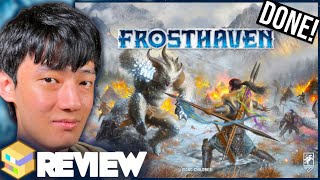
"One thing I said about Gloomhaven was it was almost too much game and Frosthaven is Gloomhaven but extra. The tactical combat and decision making with its excellent card play returns, but based on my limited plays it's even more intense as the classes in Frosthaven are more unique and interesting than the starter ones in Gloomhaven. And I think that's the key to whether Frosthaven is the right game for you: not the extra missions, the settlement building or the narrative, but whether the new classes grab you and make you intrigued."
— 3 Minute Board Games
"In Frosthaven, from what I understand, it's still got that great amazing Gloomhaven combat, you're not gonna miss it, but they've added so much more to the campaign, to the story itself. There's so many new things going on outside of combat that you actually like care about now, and it just further drives the narrative. It just makes it way more of a cool experience. Unlike Gloomhaven, your interactions with Frosthaven are gonna be way more in depth, and the survival of the settlement is probably gonna lie way more, the responsibilities are on you."
— Shelfside
"There's also ingredients, building materials and more. The group also must work together to solve escape room tile puzzles that come up throughout the journey. I thought Gloomhaven was good but Frosthaven is looking even better. Frosthaven feels even more like video games, with equipment you can forge at the craftsman, potions you can combine at the alchemist. The initial six new characters have awesome unique powers that give some fresh plays and strategies to the world of Gloomhaven."
— Meeple University