/pic3481216.png)
/pic7087639.jpg)
/pic3481216.png)






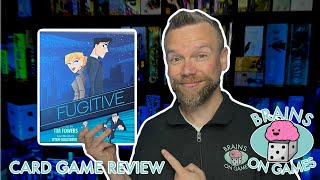










Fugitive Deep Dive
What the Community Thinks About Fugitive
Fugitive has carved out a special place in the world of two-player games. Channels like No Rolls Barred, Chairman of the Board, and Jamie of Tabletoptiktok consistently praise the design's elegance and the unique tension that emerges from its asymmetric gameplay. The game has become a favorite among those seeking something beyond traditional head-to-head competition, offering instead a cat-and-mouse experience grounded in deduction, bluffing, and hidden movement. What stands out most is how a single deck of numbered cards creates such compelling gameplay that players want to return to it repeatedly.
Core Mechanics That Define Fugitive
Hidden Movement and Sequential Card Play
At its core, Fugitive hinges on one player secretly building a path from card zero to card 42 using hidden hideout cards. The fugitive plays cards face-down in ascending numerical sequence, with each card constrained to be within a small range of the previous one. This creates a hidden trail that only becomes visible when the marshal guesses correctly. The elegance lies in the constraint itself, forcing the fugitive to make meaningful decisions about pacing, card economy, and when to use sprint cards to extend their range. Designed by Tim Fowers, the system turns a small deck into a taut duel.
Deduction Through Risk Management
The marshal's turn offers a fundamentally different challenge: balancing safe, incremental information gathering against bold guesses that could unlock everything at once. Guessing multiple hideout numbers at once risks losing all the information if even one guess proves wrong, making every decision a calculated gamble. This tension between caution and boldness is what makes Fugitive such a riveting experience. Players must weigh the comfort of certainty against the payoff of aggressive play, creating dramatic swings of momentum.
The Fugitive Experience
The Thrill of Escape
For the player assuming the fugitive's role, Fugitive delivers genuine tension as the net tightens around their escape route. Early moves are critical, as an awkward hand or poor sequencing can leave the fugitive trapped within a narrow range that the marshal quickly narrows down. The sprint cards become lifelines, allowing desperate bounds across larger numerical gaps, but each one revealed chips away at the fugitive's options. The game captures the psychology of pursuit perfectly, with the fugitive aware they are being hunted and forced to make increasingly difficult decisions about whether to risk exposure for progress or consolidate their position.
Bluffing and Deduction Dance
What makes Fugitive stand out from pure deduction games is its bluffing layer. The fugitive's card play does not necessarily correspond to a fixed movement distance; it simply expands the range the marshal must consider. This uncertainty keeps the marshal perpetually off-balance, never quite sure if the fugitive is desperately scrambling or methodically advancing. Both players are reading each other constantly, with the marshal trying to catch patterns and the fugitive attempting to sow confusion and doubt.
What Makes Fugitive Stand Out
Asymmetric Gameplay That Works Both Ways
Unlike many asymmetric games where one side feels compromised, both roles in Fugitive are equally compelling and challenging. The fugitive's role demands constant tactical thinking about card sequencing, hand management, and knowing when to push forward. The marshal's role requires strategic deduction, hypothesis testing, and the courage to make committed guesses. Players genuinely enjoy swapping roles for a rematch because the experience is entirely different, yet equally satisfying. This balance is rare and speaks to Tim Fowers' mastery of elegant design.
Elegant Design from Minimal Components
A deck of numbered cards, a notepad for the marshal, and some sprint cards: Fugitive achieves remarkable depth from minimal components and rules. The game teaches in minutes but reveals strategic layers over many plays. There is no luck of the dice, only hidden information for one player and deduction potential for the other. This purity of design creates a game that feels like a classic, and the compact production also makes it accessible, fitting into a small box that travels easily.
Potential Drawbacks
Analysis Paralysis and Downtime
The marshal's best strategy often involves careful note-taking and methodical elimination, which can lead to extended think time. A player prone to deep calculation might stall the game while working through logical deductions. If both players are analytical, a game can stretch longer than expected, potentially dulling the tension that makes Fugitive special. Because one player is always acting while the other waits, Fugitive also has inherent downtime during the marshal's lengthier turns.
The Weight of Early Decisions
The fugitive's opening moves are disproportionately important. A poor draw or unlucky first few turns can leave the fugitive with few viable paths to victory, making recovery difficult. Some players may find this frustrating, as a game can feel decided within the first few turns if the marshal makes a lucky early guess or the fugitive's hand simply does not cooperate. This variance in openings means not every match will feel equally competitive, depending on the cards available to the fugitive.
If You Enjoy Fugitive
If Fugitive captures your imagination, Sheriff of Nottingham offers similar bluffing and deduction on a lighter, more social scale. You might also appreciate Unmatched, which delivers asymmetric two-player competition through character-specific decks and hidden combat, creating a similarly engaging dance of hidden information and tactical play. For hidden movement expanded to a larger board and more players, Specter Ops develops the same cat-and-mouse concept, though it trades some of Fugitive's elegance for added complexity and scale.
What Reviewers Are Saying
"Fugitive is a game of bluffing and deduction. One of you is a fugitive and one of you is the marshal. Over time this creates a trail of face-down breadcrumbs which the marshal has to try and guess and follow. I haven't played games more tense than Fugitive as the net closes around the runaway."
— No Rolls Barred
"This is a two-player game where one of you is playing as the fugitive trying to get to the plane so they can get away with their loot and make a clean getaway. The other one is like Tommy Lee Jones chasing him down. If you can find all of their hidey-holes, then you will catch them. It's very clever, and the gameplay is excellent."
— Jamie, Tabletoptiktok
"One player is the fugitive who's just robbed the bank and is trying to catch a plane and escape the country, and the other player is the marshal who is trying to stop the fugitive and catch him. It's so asymmetrical. Working out the stops involves big gambles, as you guess several things at once, and if you make a single mistake then it all counts against you."
— Chairman of the Board