/pic3926631.jpg)
/pic6125184.jpg)

/pic3926631.jpg)













































Galaxy Trucker Deep Dive
What the Community Thinks About Galaxy Trucker
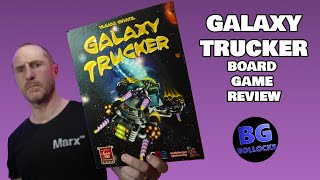
Galaxy Trucker stands as a beloved classic in the modern board gaming hobby, earning its place through a unique blend of strategic building and hilarious chaos. Designed by Vladimir Chvátil and published by Czech Games Edition in 2007, the game has maintained relevance across nearly two decades, receiving a critically acclaimed second edition that streamlined the experience without sacrificing its core identity. Community sentiment consistently celebrates the game for its ability to deliver laughter alongside meaningful decisions, a balance rarely achieved in real-time games. Players consistently describe it as unpredictable, tension-filled, and fundamentally entertaining, whether experienced through the competitive tournament structure of the original three-round format or the modern single-round approach.
Core Mechanics That Define Galaxy Trucker
Real-Time Tile Placement Under Pressure
The foundation of Galaxy Trucker rests upon its most demanding element: the frantic assembly phase where players simultaneously grab randomly-drawn tiles and piece together spaceships while a timer drips sand. This is not casual puzzle-building. Players must connect components with proper adjacency, place lasers to defend against meteor showers, position engines to outrun danger, and ensure batteries exist to power upgraded systems. The temporal pressure forces difficult trade-offs between careful optimization and speed, creating a mechanical experience that rewards both quick thinking and tactical foresight. Reviewers note that skill genuinely matters here; confident players can build significantly better ships than panicked ones, yet the randomness of tile availability prevents the phase from becoming purely mechanical. The rule set remains straightforward enough to teach in minutes, but the cognitive load during play separates competent captains from overwhelmed amateurs.
Consequences-Driven Event Resolution and Ship Destruction
Once the building phase concludes, ships depart on their cosmic journeys through a semi-randomized sequence of challenges. Meteors strike, pirates attack, cargo opportunities arise, and players watch their carefully constructed vessels succeed or fail based on preparation. This phase inverts player agency entirely—the event deck determines outcomes, but earlier decisions determine how well-prepared each ship is to face them. The mechanic creates a satisfying narrative where poor ship design leads to visible failure (tiles literally fall off destroyed sections), while well-prepared ships navigate hazards gracefully. Community responses highlight how this bipolar structure serves the game's identity: the building phase demands intense focus, while the adventure phase encourages relaxation and humor, particularly when catastrophic failures dismantle opponents' work in spectacular fashion. The consequence system punishes bad luck harshly yet fairly, generating memorable moments rather than feeling arbitrary.
The Galaxy Trucker Experience
Chaotic and Comedic Tone
Galaxy Trucker embraces silliness as a design principle rather than an accidental byproduct. The original rulebook was noted as one of the first hobby game manuals to be genuinely funny, establishing a self-aware tone about the absurdity of building starships from sewer pipes and watching them disintegrate. Players describe the experience as hilarious, with failure being more entertaining than success. When a ship gets catastrophically dismantled by meteors, the table erupts with laughter at the builder's misfortune. This tone persists throughout—crew members are present for survival, cargo holds exist solely to be jettisoned for points, and the entire premise celebrates Murphy's Law. The game knowingly acknowledges that terrible things happen constantly, and the best response is to find humor in the wreckage. Reviewers consistently mention that mindset proves crucial; playing Galaxy Trucker while expecting to maintain control leads to frustration, but embracing the chaos makes it endlessly entertaining.
Simultaneous Action Creating Frantic Energy
The real-time building phase generates a visceral, tactile experience where all players act simultaneously. There is no downtime, no waiting for opponents, only the constant scramble for tiles and the pressure of the timer. Reviewers describe this as simultaneously stressful and exhilarating—the clock forces commitment before perfect solutions emerge, and the shared time pressure bonds players through collective panic. The absence of traditional turn order creates a fundamentally different social dynamic than sequential games. Everyone contributes to the table's energy simultaneously, and the real-time resolution removes analysis paralysis entirely. Once decisions are locked in at time's expiration, consequences unfold regardless of second-guessing. This simultaneity makes Galaxy Trucker particularly effective as a social experience; the shared temporal constraint creates unity and narrative tension that meditative games cannot match.
What Makes Galaxy Trucker Stand Out
Accessible Complexity That Rewards Skill
Galaxy Trucker occupies a distinctive design space where simple underlying rules generate complex decision-making. Players don't need to memorize complex systems—just connect components properly, satisfy adjacency requirements, and think about consequences. Yet experienced players can identify ship designs that handle different scenarios better, understand the probability of certain events, and optimize under time pressure in ways novices cannot match. The game remains teachable to newcomers in a single session while offering depth for repeat players. The second edition amplified this by reducing the painful experience of cascading defeats that plagued the original three-round format; new players no longer face insurmountable point deficits after a rough first round. Instead, single-round gameplay with three difficulty levels lets players engage at appropriate challenge levels, making the game accessible to casual groups while retaining the tension that competitive players appreciate.
The Satisfying Failure Aesthetic
Most games treat failure as something to avoid or minimize. Galaxy Trucker makes failure entertaining. When ships disintegrate spectacularly, the visual destruction becomes memorable rather than merely disappointing. Players walk away from a terrible run not with regret but with stories—the ship whose engines didn't engage because all the power came from a disconnected section, the cargo that fell off at the worst possible moment, the laser turret that faced the wrong direction. This aesthetic flips the traditional success-equals-fun equation. A perfectly built ship that survives intact might be satisfying, but a ship torn apart by relentless meteors generates the table's biggest laugh. The game succeeds by making interesting failure states that are fun to describe afterward, rather than trying to prevent failure entirely. This design philosophy separates Galaxy Trucker from games where losing feels merely disappointing.
Potential Drawbacks
Real-Time Pressure as Inherent Friction
For players who fundamentally dislike real-time mechanics, Galaxy Trucker remains problematic regardless of quality. The time pressure that creates excitement for some players generates pure stress for others. Anxiety-prone players or those with processing difficulties may find the simultaneous-action building phase overwhelming rather than fun. The second edition's introduction of a turn-based alternative mode acknowledges this legitimate audience segment, though many observers note that removing real-time elements substantially changes the experience—stripping away the core mechanic that defines the game's identity. Some reviewers feel the real-time nature creates its own chaos that undermines strategic depth; with less time to plan, execution becomes more luck-dependent than they prefer. Those seeking meditative, thoughtful gaming experiences consistently find Galaxy Trucker incompatible with their preferences, making it genuinely unsuitable for certain gaming groups regardless of implementation quality.
Random Events Overwhelming Player Agency
The event resolution phase inverts player control so completely that some view it as unsatisfying. Once the building phase concludes, outcomes depend almost entirely on the event deck rather than subsequent decisions. A brilliantly built ship facing catastrophic meteor storms becomes damaged through no subsequent action, while a poorly built ship might encounter clear space and succeed despite inferior design. This randomness can feel unfair to optimization-focused players who expect their superior building to guarantee superior results. The game partially mitigates this through peek mechanics—players can inspect three of four event stacks before the round begins, allowing some anticipatory preparation—yet Lady Luck maintains ultimate authority. The bipolar structure means someone who excels at the building phase might face an event sequence that punishes their specific design choices, generating frustration for those seeking consistent reward for superior play. Reviewers critical of this element describe the adventure phase as arbitrary rather than consequential, potentially making the entire building effort feel futile if the wrong events appear in the wrong order.
If You Enjoy Galaxy Trucker
Players who love Galaxy Trucker consistently gravitate toward other real-time experiences that value chaos and humor alongside meaningful decision-making. Kitchen Rush shares the simultaneous-action pressure and coordination challenges while maintaining a cooperative focus. Rapid Response and Dice Duel offer lighter real-time experiences that reward quick thinking without the building puzzle element. Rapid Fire provides similar time-pressure decision-making in a card-drafting context. For those drawn to the comedic failure aesthetic without the real-time component, games featuring swingy outcomes and memorable disaster moments resonate similarly. Puerto Rico offers deep strategic complexity and engine-building satisfaction without time pressure, appealing to players who loved the optimization aspects but struggled with the frenetic building phase.
What Reviewers Are Saying
Galaxy Trucker is really the only real-time game that I truly love. It's kind of like paperback in that way for the most part I want to have time to think about my actions when there's a time element involved I get stressed out and I start panicking and all plans and strategies that I might have had just completely disappear from my head. But the saving grace with Galaxy Trucker is the game gets better the worse you are at it. Failure is hilarious and entertaining for everyone at the table.
— Totally Tabled
Galaxy Trucker still slaps, and a big part of that is the goofiness of the game, but I have to respect and love it for what it did for the real time genre, paving the way for some more thoughtful favorites of mine, from Kitchen Rush to Rapid Response to Dice Duel to Rapid Fire. The second edition is mostly a visual overhaul but convenience is the name of the game. Games take 20 or 30 minutes tops and it keeps the tone light and goofy while still having the satisfying crunch the game is known for.
— The Cardboard Herald
Galaxy Trucker is such a funny game. It is just so good. The game gets in two phases and the faces are very different. I do love the building of the spaceship more than I like the other part but the other part is like the funny part. When someone's spaceship gets hit by a meteor and then like half of their spaceship falls off and floats off into space it is just the funniest thing. It's very sad but it's very funny to see your opponent's spaceship fall apart so yes that is galaxy trucker we played it on live stream and it is just such a funny game it is just so good.
— The Board Game Garden