/pic7490756.png)

/pic7490756.png)

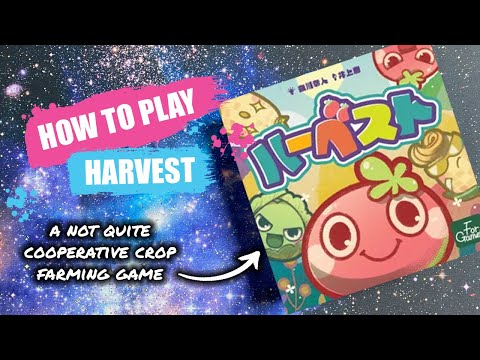







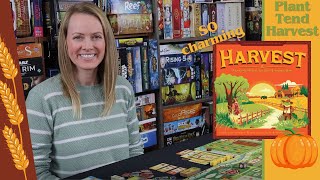

























Harvest Deep Dive
What the Community Thinks About Harvest
Harvest occupies a genuinely contested space in the board gaming community, which makes it one of the more interesting games to examine through reviewer eyes. On one side, enthusiastic voices describe falling hard for it: the Foster the Meeple team counted it among their standout games of the summer, played it repeatedly on Board Game Arena, and even developed a solo mode around it. On the other side, Tabletop Turtle placed it near the bottom of a personal dislike list, arguing that its worker placement bones are stripped too bare to justify a seat at the table. Both reactions come from experienced players, and both are grounded in the same game. What separates them, in essence, is what a player wants from a game like this.
What most reviewers agree on is the tone. Harvest lands squarely in cozy, lighthearted territory. Foster the Meeple captured this personality vividly by describing the game as that friend who grew up on a farm, someone who can casually say "the alfalfa is looking good this year" or "it's a little too dry for potatoes," wears overalls unironically, and knows how to fix a tractor. That warmth and rural domesticity is not accidental. It is baked into every layer of presentation, from the artwork to the pace of play. For families and gateway gamers, that combination of approachability and cozy theme draws genuine affection. For players who want more levers to pull, the same combination can feel thin.
The Key Master Games edition, which drew significant attention at Gen Con, generated considerable buzz on the BoardGameGeek hotness list. Our Family Plays Games noted that the designer, Trey Chambers, was on-site and thrilled by the reception. That excitement came with some curiosity, since the Key Master version expanded and reworked the original TMG release, and players who knew the original version were watching to see how the DNA carried over.
Core Mechanics That Define Harvest
Farming Actions and the Work Cycle
At its core, Harvest puts players in the role of farmers with their own unique character powers, drafting cards and moving around the board to gather resources, plant seeds, tend the land, and complete a cycle of rural tasks. The action set is intentionally focused rather than sprawling. You are not navigating a dozen interlocking systems. You are doing farm things, in a farm order, with farm goals. For the audience this game is clearly designed for, that focus is a feature. The game teaches quickly, plays in roughly thirty minutes, and does not punish newcomers for misreading the board on turn one.
The character powers add a thin layer of asymmetry. Each farmer begins the game with a different ability that nudges you toward a particular approach. Tabletop Turtle criticized these powers for feeling restrictive rather than empowering, arguing that good asymmetric design should expand options rather than funnel players into predetermined paths. This is a fair tension in the design. Whether the asymmetry feels like a useful compass or an unnecessary constraint will depend significantly on how much agency a player expects from a game at this weight.
Drafting and Resource Flow
Sunrise cards form a key drafting element in the game, giving players choices about how to stock their hands and what to prioritize across the arc of a session. The resource loop is meant to feel organic: you gather, you plant, you tend, you harvest. The rhythm mirrors the actual logic of farming in a way that makes the rules feel intuitive rather than arbitrary. Reviewers who enjoyed the game frequently pointed to how smoothly it moved, noting that the game almost teaches itself because the theme and the mechanics are pulling in the same direction.
Critics argued that this same intuitive flow becomes a liability when the action space is small. With only a limited number of distinct things to do in any given game, some plays feel repetitive even within a single session. Tabletop Turtle noted that certain actions seemed to echo each other without enough differentiation to make each feel meaningfully distinct. For players who find deep replayability in games like Agricola or Caverna, Harvest operates at a much shallower depth, and that shallowness is either liberating or limiting depending on who is sitting at the table.
The Harvest Experience
Gateway Warmth and Quick Sessions
The experience of playing Harvest is genuinely breezy. Games resolve in around thirty minutes, the rules click into place quickly, and the atmosphere stays warm throughout. This makes it an unusually strong candidate for game nights where mixed groups are present: families with kids, couples where one partner is new to the hobby, or gatherings where not everyone wants to spend an hour learning before they can play. The Cardboard Herald hosts mentioned it in passing as something played at a holiday gathering, exactly the kind of casual, low-stakes context where Harvest fits naturally.
Foster the Meeple's description of the game as a kind of person who rises with the roosters and speaks knowledgeably about soil conditions captures something real about the experience. Harvest makes you feel like you are doing something rural and grounded without burdening you with complexity. You do not need a strategy guide. You do not need to study the card pool. You just sit down, embrace the farming vibe, and let the game carry you through a pleasant half hour.
Solo and Digital Play
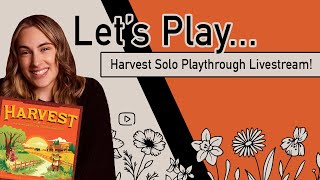
Harvest has a solo mode that received enough attention from Foster the Meeple that they produced a dedicated video for it, a sign that the solo experience holds up as more than a tacked-on afterthought. The game is also available on Board Game Arena, and multiple reviewers mentioned returning to it there repeatedly. Tabletop Turtle played it extensively on BGA specifically to reassess their initial impressions, noting that more plays did not soften their criticisms. Foster the Meeple, by contrast, found themselves pulling it out on BGA regularly and described it as one of the standout games of their August playing season.
That split is itself informative. Harvest is the kind of game that rewards players who have already decided they enjoy its particular flavor. It does not reveal hidden depths after ten plays. What you see at the table is largely what you get. For players who love that flavor, this is not a problem. For players who need a game to grow with them, it may feel like a ceiling arrived too early.
What Makes Harvest Stand Out
Theme Integration and Presentation
In a hobby full of games where themes are essentially decorative labels applied to abstract mechanisms, Harvest does something slightly different. The farming cycle actually maps onto what you are doing mechanically. Gathering resources, planting, tending, and harvesting proceed in an order that mirrors real agricultural logic, and that coherence makes the game feel grounded rather than arbitrary. Our Family Plays Games spoke warmly about the world the game creates, noting their affection for the original TMG version and the atmosphere it established.
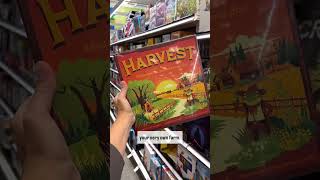
The Key Master edition expanded the footprint of the game, adding more components and production value. The Cardboard Herald opened a package of promos and expansion content on camera, noting a Fall Harvest mini-expansion that added preparation elements including pies and flowers, a cooking dimension that extended the agricultural theme into the post-harvest world. Whether this expansion adds meaningful depth or simply more surface texture is a question the game's audience will answer for themselves, but the design intention is clearly to grow within the same cozy thematic space rather than shift the game's fundamental identity.
Accessibility for New Players
Harvest earns genuine respect as a gateway game. The rules are light enough that a total newcomer can be playing competently within a few minutes, and the game does not punish exploration or early mistakes harshly. For households where board gaming is still a new activity, or for communities where the barrier to entry matters, this accessibility has real value. Our Family Plays Games expressed clear affection for designer Trey Chambers and the warm, inviting game he created, noting that the original version felt like a game built from genuine love for its subject matter.
The comparison games that come up alongside Harvest are telling. Terraforming Mars and games like it represent the opposite end of the weight spectrum: games that demand hours and deep card knowledge. Sky Team represents a different kind of accessibility, a tightly cooperative experience that strips out a different kind of complexity. Vampire Village, mentioned by Foster the Meeple in the same breath as Harvest, was described as a mild disappointment at two players, while Harvest was the one that landed. The contrast suggests that Harvest's particular combination of clarity, warmth, and brevity is doing something specific and purposeful, even if it is not for everyone.
Potential Drawbacks
Limited Action Space
The most consistent criticism of Harvest targets its action economy. With a small number of distinct actions available in any given game, experienced players may find themselves cycling through the same decisions repeatedly. Tabletop Turtle argued this firmly, describing the game as a stripped-down worker placement experience in ways that felt reductive rather than elegant. The concern is not that the game is too simple to learn, but that simplicity does not give way to interesting strategic texture once the rules are familiar. When you know what the best move probably is most of the time, the tension drains out of the decision space.
Player powers were singled out as a related issue. Asymmetric abilities in games like this work best when they suggest possibilities rather than dictate paths. Reviewers who found the character powers limiting felt that they constrained rather than enabled, narrowing what already felt like a narrow game. Players who enjoy playing within constraints and finding efficiency within a defined role may experience this differently, but it is worth knowing going in.
Weight and Staying Power
Harvest occupies a weight class where it faces stiff competition. At the gateway and light family game level, there are a great many options, and several of them offer more interesting decisions without significantly more complexity. Tabletop Turtle made this point directly, arguing that there are hundreds of worker placement games that serve the family audience just as well while delivering more nuanced gameplay. This is less a criticism of Harvest specifically than a reflection of the crowded market it inhabits.
Long-term staying power is uncertain for players who are building diverse collections. Harvest plays best when the table is right: a relaxed group, a short window of time, and an appetite for something pleasant rather than challenging. In that context it delivers reliably. As a game that will be pulled out year after year with serious hobbyists, it may find itself outcompeted by games that deepen with familiarity. For a dedicated family game collection, though, its reliability and accessibility make it a natural fit.
If You Enjoy Harvest
If Harvest resonates with you, several other games might belong on your radar. Terraforming Mars sits at the opposite end of the complexity dial but shares the satisfaction of building and tending a world across the arc of a game session. Players who want more strategic weight around a similar feeling of gradual construction may find it a rewarding next step. Sky Team offers a completely different kind of cozy constraint in a tight cooperative game that, like Harvest, keeps sessions short and teaches quickly. Players who enjoyed how clearly Harvest defined roles and goals may appreciate Sky Team's focused challenge. Vampire Village appeared alongside Harvest on similar anticipated games lists and offers a light card game in a similarly themed, accessible package, though reviewers noted it plays better at higher player counts. For players who love the farming aesthetic specifically, exploring the broader catalog from designer Trey Chambers is worth the time, as the warmth and thematic clarity in Harvest reflect a design sensibility that carries across his work.
What Reviewers Are Saying
"It's a stripped down worker placement game in the worst possible way. The actions feel really samey, and the player powers feel like they're railroading players into a very specific strategy rather than opening up options."
Tabletop Turtle (— Games I Dislike)
"Harvest is your friend who grew up on a farm and they can casually throw around phrases like 'the alfalfa is looking good this year' or 'it's a little bit too dry for potatoes.' They're always up early like at dawn with the roosters, they wear overalls unironically, and they know how to fix a tractor. It's a handy friend to have."
Foster the Meeple (— Board Games as People)
"Harvest was on the BGG hotness for Gen Con, getting a lot of love. We know the designer Trey Chambers out of Houston Texas, we love Trey. It has the same DNA of the other game but it has changed some things, so we definitely want to check it out."
Our Family Plays Games (— Gen Con Coverage)