/pic3559531.jpg)
/pic4906385.jpg)
/pic3559531.jpg)























Kitchen Rush Deep Dive
What the Community Thinks About Kitchen Rush
Reviewers who cover Kitchen Rush keep returning to the same two points: how completely the real-time sand-timer system captures the feeling of working a restaurant line, and how divisive that same pressure can be. Actualol calls the sand timers ingenious, tracing the stress of never having enough time back to the simple rule that a timer, once placed, cannot move again until its sand runs out. The Cardboard Herald puts Kitchen Rush on a top-10 worker placement list and describes it as some of the most fun worker placement played with family and friends, while Getting Games includes it among the most thematic cooperative games for how completely the ticking clock pulls players into a hectic kitchen.
Not every channel is equally sold. 3 Minute Board Games, explaining why the game left their collection, says Kitchen Rush is perfectly fine but prefers Rush MD, the same designers' hospital-themed take on the identical system, and argues that owning both means Kitchen Rush would only get played once every few years. That channel frames the decision around what it calls game space: when two games occupy the same niche this closely, the weaker one tends to get set aside.
Core Mechanics That Define Kitchen Rush
Sand-Timer Worker Placement
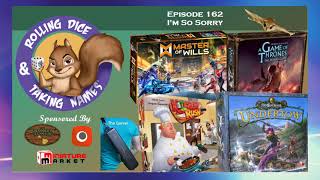
Every worker in Kitchen Rush is a sand timer instead of a meeple. Meeple University's teach-through explains that players place a timer on an action space to start it, and that timer cannot be picked up again until its sand finishes running, whether the action is fetching ingredients from storage, cooking in the oven, cleaning a plate at the sink, or taking a new order. Getting Games describes the same system from the table: a player who starts cooking is locked out of any other action until the timer empties, and because oven space is limited, one person's timing can strand a teammate who has nowhere left to put their own timer. Rolling Dice & Taking Names adds that the whole team works out of a kitchen too small for four cooks at once, so the group is constantly trading requests to go to storage, grab a plate, clean a plate, or fill an order.
The Spice Bag
Spices are not laid out visibly on the board the way most games would keep them. Actualol points out that Kitchen Rush keeps its spice cubes in a bag, so a player reaching in for a dish's spices has no idea what they will pull out and has to fumble around for the exact cube needed. That same review calls the bag a clever piece of design because it forces players to communicate and to remember what has already come out of circulation, right down to a joke about one chef hogging the spice cupboard while a teammate needs it at the same moment. Meeple University confirms the bag sits alongside the ingredient piles as one of the resources players draw from over the course of a round.
The Kitchen Rush Experience
A Frantic, Ticking Kitchen
Every source that discusses Kitchen Rush at length describes the same sensation: a countdown that never really lets up. Getting Games says the time crunch pulls out the theme of running a stressful kitchen trying to fulfill as many orders as customers demand, and adds that most real restaurants are nowhere near as frenetic as the one on the table. Rolling Dice & Taking Names compares the format to Overcooked, noting that each round only lasts a few minutes and that resetting the board between rounds is the only real downtime, so a full game moves quickly.
Working as a Team, Not Just a Crew
Because timers lock players out of retrying an action, Kitchen Rush pushes the group toward constant negotiation. Rolling Dice & Taking Names describes the back-and-forth directly: players ask each other to fetch ingredients, clean a plate, or take an order because there are not enough spaces at the storage facility or the sink for everyone to act at once. Actualol frames failure the same way: if the team loses, it is because the group did not work together, made the wrong choices, or simply was not fast enough, not because of bad luck.
What Makes Kitchen Rush Stand Out
Thematic Integration
Multiple reviewers single out how tightly the mechanics map to the theme. Actualol says every rule feels satisfyingly accurate to how a kitchen actually works, pointing to needing every ingredient plated before a dish goes in the oven while still being able to add spices mid-cook. Getting Games agrees that the real-time structure sells the theme better than a turn-based version could, comparing the experience to a televised cooking competition with a clock winding down while everyone runs at once.
Upgradeable, Tactile Components
Kitchen Rush's physical presentation attracts hobbyist attention beyond the base components. The Brothers Murph 3D-printed a replacement set of serving plates for the game and reported that the stock plates work fine but are flat cardboard, while the printed versions sit inside each other, read at a glance thanks to two-tone printing, and hold food on the plate more securely while being carried across the table.
Potential Drawbacks
Unattractive Graphic Design
Actualol's chief complaint is not the gameplay but the look of the components: the review calls the card layout some of the ugliest seen in a modern board game, singling out the font choice, a clip-art oven icon, and stark lettering plastered over an otherwise well-illustrated board. That review argues non-gamers will take one look at the cards and dismiss the game before ever learning the rules.
Not for Every Group
The Cardboard Herald notes that some players have already passed on Kitchen Rush because of its format, cooperative games, real-time play, and sand timers are not for everyone. Rolling Dice & Taking Names adds a practical version of the same complaint: with four players working at once, there are not enough spaces to cook everybody's dishes or gather everyone's ingredients, which can make the kitchen feel cramped. 3 Minute Board Games' criticism is more about a crowded shelf than the game itself, arguing that owning Rush MD, built on the identical system, made Kitchen Rush redundant enough that it only got played once every few years before being sold off.
If You Enjoy Kitchen Rush
The Cardboard Herald and Rolling Dice & Taking Names both point players toward Overcooked as the closest comparison, the video game's frantic kitchen coordination is exactly what they say Kitchen Rush replicates at the table. 3 Minute Board Games instead recommends Rush MD, the same designers' hospital-themed reworking of the same real-time system, for anyone who wants the format in a different setting.
What Reviewers Are Saying
"The sand timers deliver a game that's frantic, stressful, and immense amounts of fun. But more than that, they put you in that kitchen, and you're about as useless as you are in real life."
— Actualol
"This is some of the most fun worker placement that I've done with my family, with my friends. If you've ever played games like Overcooked on the PC, this is very much trying to replicate that feel."
— The Cardboard Herald
"If you're a fan of Overcooked, you've got to try this board game. And if you're not, it's one of the best real time co-op games I've ever played."
— Rolling Dice & Taking Names