/pic6173371.jpg)
/pic2888783.jpg)


/pic6173371.jpg)
























Labyrinth Deep Dive
What the Community Thinks About Labyrinth
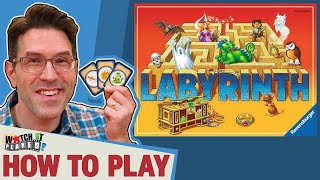
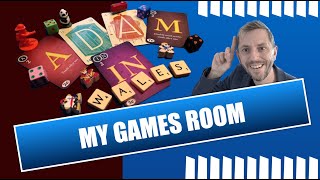
Labyrinth has earned its place as a timeless family classic since 1986. Reviewers consistently praise it as a game that has withstood decades of play precisely because its core design is both elegant and endlessly engaging. The fact that it remains popular enough to be reprinted and reimagined with different licensed themes speaks to the depth of its appeal. Channels like Watch It Played walk new players through its rules, while designers like Adam in Wales speak fondly of it as a childhood favorite, a sign that this Ravensburger staple works just as well today as it did decades ago and continues to bridge generations at the table.
Core Mechanics That Define Labyrinth
The Shifting Maze
At the heart of Labyrinth lies an elegant mechanism that defines the entire experience: the shifting tiles. Before each player moves their piece, they must first insert the spare maze tile adjacent to one of the arrows around the board's edge. The player rotates the tile however they choose, then pushes it in the direction the arrow indicates. This push slides all the tiles in that row or column one space over, and the tile at the opposite end falls off the board to become the new spare. This single mechanic creates the core puzzle: players manipulate the maze itself to reshape the paths available to them. The elegance lies in how this forced rearrangement prevents anyone from simply memorizing a solution. Every turn changes the layout, creating a dynamic spatial puzzle that keeps the game fresh throughout play. Designed by Max Kobbert and published by Ravensburger, it built an entire family game on this one idea.
A Treasure Hunt Through a Changing Landscape
Each player secretly holds a deck of treasure cards, revealing only the top card, which shows their current objective. This could be anything from a glittering crown to a magical creature. Players move their colored piece from wherever it sits to any tile they can reach through open paths. The goal is to reach the tile matching their treasure card and claim it, then move on to the next target. The winner is the first to find all their treasures and return home. What makes this mechanic sing is the tension it creates: you want to open a path to your treasure, but you must also consider that your tile placement will reshape the entire maze for your opponents. Every turn forces a meaningful decision between pursuing your own objective and disrupting everyone else's routes.
The Labyrinth Experience
Spatial Puzzle Play That Rewards Quick Thinking
Reviewers describe Labyrinth as a genuine spatial puzzle wrapped inside a family game. The moment a player inserts a tile, the board transforms. Players must look at the new configuration and immediately see how the paths have shifted. Can they now reach their treasure? Did an opponent's previous placement create an opportunity they missed? The game generates these moments of clarity where a player suddenly sees a route open up and feels real satisfaction at solving the arrangement. Success comes less from luck than from understanding how the maze works and reading the board quickly. These moments, where mental effort translates directly into progress, form the core of why Labyrinth remains engaging after decades.
A Game for a Surprising Age Range
Labyrinth officially carries an age rating of seven and up, yet reviewers observe that it works much more broadly than that label suggests. The rules are simple enough that younger players grasp them easily, and the spatial puzzle naturally appeals to children who think visually. At the same time, the game offers genuine strategic depth, since players must weigh the consequences of every tile placement. Parents introducing children to board games frequently choose Labyrinth as an entry point, and it delivers a satisfying experience for newcomers while remaining engaging for veterans. The short playtime of roughly thirty minutes keeps energy high and prevents the length-related frustration that can plague family games, which helps explain why it works across such a wide spectrum of players.
What Makes Labyrinth Stand Out
Elegance Through Simplicity
Reviewers consistently note that Labyrinth is simple at its core yet genuinely fun in play. The genius lies in how Ravensburger built a system where a single mechanic, the tile shift, generates endless variation. Players do not need to track multiple resource systems or remember complex card interactions; the entire game state sits visible on the board. This clarity, combined with the fact that the maze changes every turn, creates a game where every decision matters but no single decision demands lengthy analysis. It is a design that respects the player's time while still delivering a meaningful puzzle. The tiles feature charming illustrations of pathways and treasures, and the colored pieces are easy to track, so the presentation serves the gameplay without distraction.
Timeless Design That Outlasts Trends
Modern board gaming often celebrates complex systems and intricate mechanics, yet Labyrinth proves that simplicity itself is a form of sophistication. Reviewers highlight that the game has been reprinted and reimagined with many licensed themes because the core system is so solid that it can accommodate any aesthetic. The fact that it has remained continuously popular since 1986, while countless other games from that era faded into obscurity, is a testament to the strength of its design. Publishers keep bringing it back not out of nostalgia alone but because it genuinely delivers an experience that works for modern players, standing on its own merits in any contemporary collection.
Potential Drawbacks
Luck in Tile Placement Can Swing Fortunes
While the spatial puzzle is engaging, players have only moderate control over which tiles become available, since the spare tile is whatever was pushed off last. If the board shifts in a way that benefits one player's treasure hunt over another's, luck plays a role in the pacing. A player might be on the verge of reaching an objective when the next player's placement unexpectedly closes the path they were counting on. Conversely, a lucky configuration might open a direct route and let a player claim multiple treasures in quick succession. Over many games this evens out, but within a single session, the random element of which tiles come available can create moments of frustration, particularly for highly strategic players who prefer to feel in control.
Bounded Strategic Depth Across Many Plays
Because the core ruleset is so straightforward, players who engage deeply with Labyrinth over many sessions eventually understand the tile mechanics completely. There is no hidden information beyond the treasures you pursue, no evolving ruleset, and no expansion mechanics in the base game. The strategic space, while solid, is finite. The game becomes almost a pure puzzle, with players growing steadily more skilled at reading the board and predicting tile movements. For those who thrive on discovery and surprise across many plays, this can eventually feel like a ceiling. This is more an observation about depth limits than a design flaw, and it is a trait shared by many timeless classics.
If You Enjoy Labyrinth
Players who love Labyrinth often appreciate games that combine spatial reasoning with accessible play. Scotland Yard shares that classic family-game DNA, offering tactical pursuit and strategic cat-and-mouse tension from the same era of design. Ticket to Ride provides a different kind of route-building satisfaction with a simple turn structure and visible progress. For those drawn to the maze-like pathfinding aspect, Carcassonne offers tile-based building where players construct the landscape themselves, creating open paths that scratch a similar itch. And Magic Maze takes the shifting-maze idea in a cooperative, real-time direction for groups that want a faster, frantic twist on navigation.
What Reviewers Are Saying
"Here you're on the hunt for treasures and magical creatures, and you'd have an easier time finding them if the walls of this maze would just stop shifting around. But there's no chance of that, and besides, that's half the fun."
— Watch It Played
"It's just a nice spatial puzzle where you're looking at the board thinking, oh, if I push this thing up here, then that T-junction connects here to here, and I can get over to the crown that I need. It's a fun way to think about it, but it's a very simple game that's been around for a very long time, and it's just great."
— The Brothers Murf
"Labyrinth was my wife's favorite game as a kid, so Ravensburger is a publisher I'm quite fond of. These are games for young players and families, fun quick games. To be honest, I don't only play them with young players and families; I tend to play them myself and enjoy them too."
— Adam in Wales