/pic4853794.jpg)

















Letter Jam Deep Dive
What the Community Thinks About Letter Jam
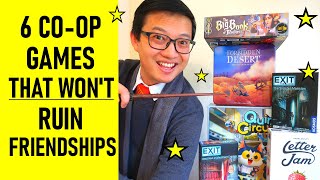
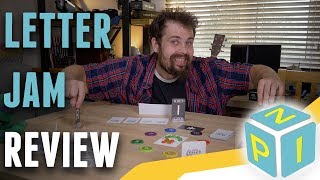
Letter Jam occupies a unique and celebrated position in the board gaming community. Published by Czech Games Edition in 2019, this cooperative word game has impressed reviewers across multiple channels for its clever deduction mechanics and refreshing approach to collaborative gameplay. Unlike many word games that feel like reworked classics, Letter Jam presents a genuinely novel experience that has earned consistent praise from experienced board gamers and casual players alike.
Core Mechanics That Define Letter Jam
The Hidden Letter Foundation
Letter Jam's central innovation is its inversion of typical word game mechanics. Each player receives a five-letter word represented by letter cards arranged face-down in front of them. The crucial twist is that players can see everyone else's letters except their own. This creates an asymmetry of information that becomes the engine for meaningful deduction. Over the course of the game, players work through their letters one at a time, each attempting to deduce their hidden letter by analyzing the clues that teammates create through word formation. The setup ensures that every player contributes equally to the puzzle-solving experience, preventing any single dominant player from controlling the table.
Collaborative Clue-Giving Through Words
The clue-giving mechanism transforms Letter Jam into a genuine puzzle where communication must be precise but limited. On each round, players look at all visible letters and collaboratively construct words that use as many of them as possible. Once the group settles on the best word (determined by word length and quality), the player giving the clue places numbered tokens in front of each letter in the order they appear in the word. For example, if the word is CAT, the player places a 1 in front of C, a 2 in front of A, and a 3 in front of T. Any player whose letter appears in that word can now narrow down their possibilities based on the token positions. This system creates layered deduction where players must not only think of words but also consider what information each word reveals or withholds about their hidden letter.
The Letter Jam Experience
A Relaxing Yet Engaging Puzzle
What distinguishes Letter Jam from other deduction games is its distinctly peaceful atmosphere. Multiple reviewers noted that the game creates a meditative quality despite requiring active thinking. Players engage in silent contemplation of their notes, piecing together clues and cross-referencing them against possibilities. The absence of competitive tension allows players to appreciate both their own solving journey and the clever clues their teammates construct. This cooperative focus means there is no pressure to beat anyone or optimize individual strategy at the expense of the group. One reviewer described it as having "that peaceful feel" where you are "at peace when playing it," and the hour-long playtime dissolves without feeling burdensome.
The Satisfying Reveal and Shared Victory
Letter Jam reaches its climax when players lock in their final guesses and attempt to rearrange their five letters into a coherent word. This endgame carries genuine emotional weight because each player has invested real cognitive effort across multiple rounds of deduction. Success feels earned rather than lucky. When players successfully identify their word, the group shares in that accomplishment. Conversely, when someone misses a letter or ranks possibilities incorrectly, the post-game discussion of where reasoning diverged from reality becomes a source of humor and learning. The game does not punish failure with humiliation but instead invites shared laughter and analysis of the deduction chain.
What Makes Letter Jam Stand Out
A Fresh Take on Word Game Design
Letter Jam succeeds where many modern word games falter by recognizing that players do not need complex rules to enjoy word mechanics. The ruleset remains elegantly simple, yet the interactions create surprising depth. Reviewers consistently noted that despite similarities to Codenames in terms of publisher and design philosophy, Letter Jam charts its own course. Where Codenames emphasizes rapid-fire intuition and party dynamics, Letter Jam demands careful reasoning and individual puzzle-solving that happens to be collective in nature. One reviewer called it a step beyond Scrabble for players seeking something more cerebral yet less confrontational. The game respects players' time and attention without demanding either to excess.
Accessibility Paired With Replayability
Letter Jam's greatest strength is its broad appeal. The game teaches quickly enough that even players unfamiliar with word games grasp it within a round or two. This accessibility does not come at the cost of replayability. Because each game uses different random words and different player configurations produce different deduction challenges, no two games follow identical paths. Players report eagerness to return to Letter Jam repeatedly, describing it as a game that "hits the table very often" and one they are "always in the mood to play." The consistent player engagement suggests the game has found an ideal difficulty balance: challenging enough to stay interesting but not so complex that teaching becomes a barrier to new players joining sessions.
Potential Drawbacks
Limited Party Game Energy
While Letter Jam excels as a cooperative puzzle experience, it lacks the raucous social energy of traditional party games. The game requires players to work quietly with their own notes for extended periods, making it less suitable for groups seeking constant interaction and laughter. Some reviewers noted that the silent, introspective nature means "there isn't much to talk about because you very much have to keep secret what you know about the other players' letters." This solitary quality, while perfect for certain gaming environments, may feel isolating in social settings where everyone expects rapid banter and group discussion.
Difficulty in Teaching the Concept
Despite simple rules, Letter Jam proves surprisingly difficult to teach verbally. The premise of giving clues through words while pointing at letters in a specific order confuses many first-time players. Reviewers attempting to explain the game reported difficulty conveying the mechanism without live demonstration. One reviewer humorously noted, "It's extremely difficult to explain for some reason," even after teaching it multiple times. New players benefit from watching an example round rather than hearing instructions, which can extend setup time beyond what the rules suggest.
If You Enjoy Letter Jam
Players who love Letter Jam often gravitate toward Hanabi for its similar emphasis on information management and deduction without direct communication. The Crew series appeals to those seeking cooperative trick-taking without the word game focus. Codenames offers a similar Czech Games Edition pedigree but delivers faster, more social gameplay. For those who enjoy the puzzle-solving aspect without the cooperative element, Scrabble variants and word-building games in the solitary space may also satisfy. Letter Jam occupies a sweet spot that few games match, blending wordplay, deduction, and genuine cooperation into a package that welcomes both casual gamers and experienced strategy players.
What Reviewers Are Saying
"This is a really enjoyable fun experience that has a you know it's almost like a step up from a game like Scrabble where you can just sit back and enjoy the experience and the fact that you are working together with your teammates also makes the game feel a bit more relaxed for a game that's I suppose pretty dry on the face of it, it's extremely funny because you could really be derailed and do different things that you you know you wasn't foreseeing if you were giving those clues."
— Chairman of the Board
"I really like the deductive element of it. A lot of people were loving this game and to be honest it was my favorite game that I played at the convention. I've really wanted to be able to take it home but it's still just a prototype. It's a really interesting puzzle and just I really like the deductive element of it. It's a very clever game and it's a really engaging game but it doesn't have the same sort of party game feel or the discussion of code names because you're doing a lot of the stuff on your own even though you are playing cooperatively."
— Actualol
"I know this is such a nice pleasant experience. I think it took us about an hour to play in the end but it kind of feels like you're at peace when playing it. It's not like I was looking at my watch thinking this is taking too long. I was just enjoying the process. I think we did quite well and the game is a fun one where everybody is actively engaged because every single round you're all trying to figure out the best words simultaneously."
— Chairman of the Board