/pic1326136.jpg)












































Libertalia: Winds of Galecrest Deep Dive
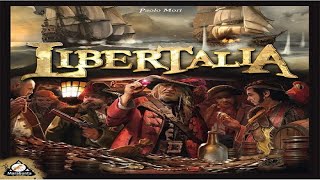
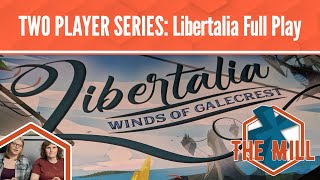
Libertalia: Winds of Galecrest is a 2022 reimagining of Paolo Mori's beloved 2012 pirate card game, published by Stonemaier Games. Set in a whimsical world of skyship pirates, it accommodates one to six players in roughly 60 minutes. The premise is simple: your crew of pirates is racing across three dangerous voyages, playing cards simultaneously to claim loot and outsmart rivals. The player with the most gold when the final voyage ends wins.
Compared to games like Citadels, Race for the Galaxy, or King of Tokyo, Libertalia sits in an interesting middle ground. It shares Citadels' simultaneous reveal tension and the card interaction playground of Race for the Galaxy, while delivering the chaotic, punchy energy of King of Tokyo. But it carves out its own identity through one core design choice: every player holds the exact same set of crew cards. The battlefield is your mind, not your hand.
Who Is This For?
Libertalia hits a particular kind of gamer: someone who enjoys outsmarting opponents rather than outbuilding them. If your idea of a good time involves reading the table, bluffing with a card you know they might also be holding, and reacting when everything goes sideways at once, this game was made for you.
Three Minute Board Games frames the appeal directly: the game is petty, vicious, and wonderfully cutthroat, with a fairness that comes precisely from everyone starting with identical options. That shared card pool creates a level playing field that shifts the competition from resource management to prediction and psychology.
Groups that prefer multiplayer solitaire where no one can touch your plans should look elsewhere. The same goes for households where losing feels catastrophic. This is an interactive, confrontational game with real take-that teeth, and it makes no apologies for that.
How It Plays
Three Voyages, Four to Six Days Each
The game runs across three voyages, each made up of four to six days. At the start of each voyage, one player shuffles the 40 crew cards and deals six to themselves. Everyone else takes the same six cards in their own color. Each day, every player secretly chooses one card from their hand, all cards are revealed simultaneously, then sorted by number from lowest to highest. Day actions fire left to right, dawn actions let players draft loot tokens, and night actions resolve next. End-of-voyage anchor powers then trigger before players tally gold, add it to their chest, and draw a new hand for the next voyage.
As Three Minute Board Games puts it: the game asks players to be petty and vicious, because the design supports exactly that. Cards can punch rivals off the ship, steal loot mid-draft, or flip the reputation track that governs turn order and starting gold.
The Shared Deck and the Mind Games It Creates
The defining innovation is that shared hand. Because you know exactly which cards your opponents have access to, every play becomes a psychological exercise. As All You Can Board describes it, the game creates moments where you are trying to track whether opponents have used a particular crew member yet, and those reveals produce genuine eruptions of excitement around the table.
The reputation track adds another dimension. Players who perform well on certain days slide around the track, changing who claims money first at the start of each round. This means an early lead is not a permanent advantage; the system actively redistributes momentum.
What Reviewers Love
Accessibility Meets Genuine Depth
Multiple reviewers comment on how deceptively approachable Libertalia is. The rules click quickly, the iconography is clean, and the voyages structure creates natural entry points. Yet behind that simplicity sits a game that rewards pattern recognition, bluffing, and reading opponents across multiple sessions.
Three Minute Board Games calls out the 40-character roster as the engine of replayability. Because players never see the same arrangement of six cards twice, they must adapt their approach every single voyage. No single dominant strategy survives contact with a different card combination.
Adam in Wales, reviewing the original Libertalia for a Spiel des Jahres retrospective, notes that the original earned a recommendation from the jury in 2013 and probably deserved a full nomination. The simultaneous reveal mechanism that frustrated him in other games like Get Bit became entirely enjoyable here, because the pirate theme and card interaction density gave it context and payoff. The 2022 edition carried those same strengths forward with mechanical refinements.
The Stonemaier Production
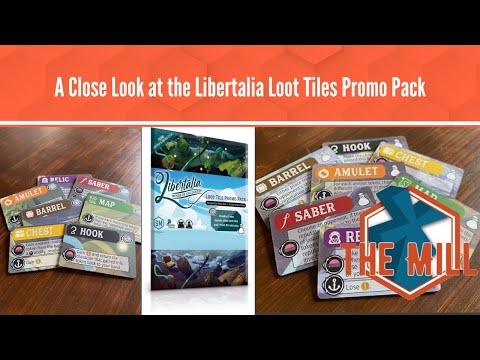
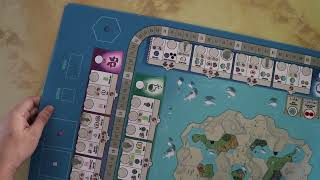
Winds of Galecrest arrives with Stonemaier's signature production values: crisp component quality, a dual-sided board offering calm and stormy loot tile variants, and a promo pack of additional loot tiles that The Mill covered in detail. The promo pack introduces two new tile sets, a greedy set and a maom set, expanding the loot combinations players can mix and match. The Mill describes the new tiles as opening up fresh combinations with the existing calm and stormy boards, which is significant because the loot tile side of the board is a core variable across plays.
The Criticisms Worth Knowing
Randomness and Player Count Sensitivity
The most consistent critique across reviewers is that Libertalia leans on randomness in ways that can feel punishing. The Broken Meeple describes playing games of Libertalia, including the Winds of Galecrest edition, where they effectively shuffled cards at random and still came close to winning. That kind of outcome raises a question about how much strategy actually shapes results versus card order and loot token luck.
Player count also draws scrutiny. The Broken Meeple observes that the game plays best with four: too few players and the card interactions thin out, too many and the session drags and chaos intensifies to the point of frustration. This is a real consideration for groups whose regular count floats between two and six.
The Original vs. the Remake Debate
Board Game Bollocks, reviewing the original game in a top 100 list, is unambiguous in preferring the 2012 version. They describe the Stonemaier remake as having stripped out what made the original compelling and replaced it with something that feels sterile by comparison. The pirate-of-the-Caribbean aesthetic and the raw tactile nastiness of the original cards are cited as irreplaceable. Tom Vassel at the Dice Tower similarly mourns the art direction shift, expressing genuine sadness at losing the human pirate theme for the animal fantasy retheme of Winds of Galecrest.
The consensus that emerges is that the 2022 edition is mechanically superior while aesthetically divisive. Players who never touched the original are well positioned to simply enjoy what Stonemaier built. Players with nostalgia for the 2012 version may find the new look a difficult adjustment even as they appreciate the tightened design.
The Experience at the Table
Chaotic, Social, and Breezy
The energy this game generates at a real table is one of the clearest themes across reviews. The simultaneous reveal creates a natural rhythm of anticipation followed by reaction. Cards interact in ways nobody fully predicted, someone's Brute punches a rival's Quartermaster off the ship, a Barkeep quietly collects coins while chaos erupts around the table, and everyone processes what just happened at the same moment.
Three Minute Board Games summarizes it well in their top 100 countdown: this is a wonderfully intense game that is not too long, well suited to any group that does not mind a little take that. That phrasing captures something important. The nastiness is not grinding or oppressive because the session stays under an hour and the voyages structure provides natural resets.
The Solo Mode
Libertalia includes a solo mode, which is relatively unusual for a card game of this style. Three Minute Board Games acknowledges it in their overview but does not dig into its depth. For players who want to explore the card ecosystem before bringing the game to a group, or who simply game alone, the solo implementation exists. The promo loot tiles The Mill covers also include matching solo-side variants, indicating Stonemaier has continued supporting that mode through expansion content.
- 3 Minute Board Games: Libertalia Overview
- 3 Minute Board Games: Top 100 (Libertalia entry)
- The Dice Tower: Top 10 L Games
- All You Can Board: Top 10 Games of All Time
- The Mill: Loot Tile Promo Pack
- The Broken Meeple: Podcast Discussion
- Board Game Bollocks: Top 100 List
- Adam in Wales: Spiel des Jahres Recommendations
Should You Play It?
Libertalia: Winds of Galecrest earns its place at the table as one of the most approachable take-that games available. The shared deck mechanic is genuinely clever, the session length stays honest, and the voyages structure gives every player multiple chances to recover before the final tally. If your group likes reading opponents, making bold simultaneous plays, and laughing at the chaos that follows, this is a strong pick.
Know going in that randomness matters, that player count shapes the experience significantly, and that the Winds of Galecrest theme is a genuine departure from the original's pirate aesthetic. None of those factors are dealbreakers for the right group. For players new to the game, All You Can Board's enthusiasm is an honest signal: this is the kind of game that produces moments you want to replay and talk about on the way home.
What Reviewers Are Saying
"There are so many moments in Libertalia that make me just want to get out of my chair and be like, I am having so much fun. I just leave every session of it radiating."
— All You Can Board
"My wife and I really love Libertalia, and we prefer the calm side to the stormy side, so I'm excited to mix it up with two whole new sides of tiles and find all the fun combinations."
— The Mill
"I was really sad to see this theme change. This was such a fun drawing, it was so piratey looking. But I do like the rules though, I thought they updated the rules nicely."
— The Dice Tower