













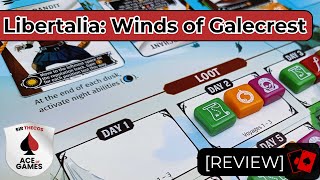


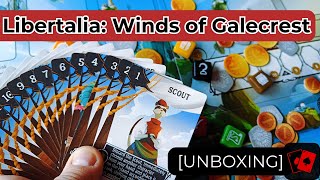

In the world of Galecrest, sky pirates set sail on the winds in search of adventure, treasure, and glory. As an admiral, you command a vast and varied crew...but so do your rivals sailing other ships in the pirate fleet. Each day the fleet lands on a different island where you'll send a crew member to collect your share of the loot, hoping they'll return to boost your growing group of characters.
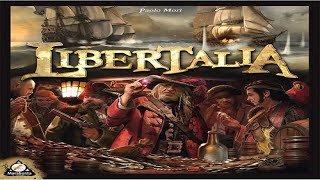
Libertalia was originally released in 2012. Ten years later, Libertalia: Winds of Galecrest celebrates the foundations of the original design with a revised and expanded edition that includes all-new art, 40 characters per player, a reputation system to resolve ties, deluxe loot tokens, a robust solo mode, and much more.
—description from the publisher
Mechanics (from transcript analysis)
Video topics + discussion points
Quotes (from this video)
- optimization is the death of discovery and exploration in board games.
- We don't accept gatekeeping.
- Gloom Haven sized box.
- Don't think you have to back day one.
- This is going to be a standalone game. This isn't meant to be combined.
- You can't please everyone.
References (from this video)
- Excellent physical components (loot tokens, treasure chest dials)
- Two-player tweaks improve balance
- Solo mode effectively simulates an opponent
- High replayability due to 18 of 40 cards and deck variability
- Clear, confident now-brighter artwork and accessible rules
- Might be a bit much for absolute beginners
- Six-player games could use more doubloons
- Art style change may not appeal to fans of the original
- Cardboard coins are only passable
- Outwitting rivals through card play and loot collection
- Pirate adventures across three voyages on a Caribbean island
- playful, brighter atmosphere compared to the original
- Libertalia
Mechanics (from transcript analysis)
- card drafting — Each turn you select one card from your hand and place it in a shared order; actions resolved by power order.
- card drafting / hand management — Each turn you select one card from your hand and place it in a shared order; actions resolved by power order.
- Deck variability — Only 18 of 40 cards are used per game, creating high variability.
- Increase Value of Unchosen Resources — On each voyage, players pick a loot token with varying positive/negative effects.
- Loot token selection — On each voyage, players pick a loot token with varying positive/negative effects.
- Order-based resolution — Day powers resolved left-to-right; dusk powers right-to-left, affecting timing and strategy.
- reputation track — New track in Winds of Gale Crest influencing play and reminders.
- Simultaneous action selection — Players choose cards at the same time, reducing wait time and encouraging prediction.
- Simultaneous Actions — Players choose cards at the same time, reducing wait time and encouraging prediction.
- Treasure and dusk scoring — End-of-round scoring via treasure gained and powers used.
- Two-sided board with variants — Calm side for more predictable play; stormy side adds risk and variability.
Video topics + discussion points
Quotes (from this video)
- winds of galecrest is an updated version of the 2012 classic card based pirate game of hiring ship hands and sailing for booty
- the loot tokens are the real standout they have a terrific tactile feel and are satisfying to clack around in the bag
- the biggest change is in the artwork winds of galecrest replaces the gritty original art with a more cartoony style
- two-player mode work way better than we had anticipated
- it's still highly interactive and at its base it is about outwitting your opponent
- we've enjoyed this new version
References (from this video)
- Swingy, thematic pirate feel with dynamic play
- Coherent solo mode that exercises the design space well
- Fast, chaotic, and replayable
- Theme may feel offbeat or too spicy for some players
- Not consistently in top tier lists
- swashbuckling treasure hunts with a cutthroat vibe
- pirate chaos and treasure hoarding with a pirate-themed auction/selection
- live-action simultaneous choice and resolution with high variability
Mechanics (from transcript analysis)
- Auction / Bidding — Resolve actions by card priority and timing, with wild swings.
- Auction-like resolution — Resolve actions by card priority and timing, with wild swings.
- Pirate-themed wild actions — Treasure sets, cursed items, and strategic manipulation of others’ draws.
- Simultaneous card/character selection — All players secretly pick a card; reveal and resolve in order.
- Simultaneous reveal — All players secretly pick a card; reveal and resolve in order.
Video topics + discussion points
Quotes (from this video)
- it's crazy it sounds downright ridiculous but it's incredibly fun
- Time Track in order to determine turn order
- zombies are represented by wooden cubes
- the solo mode is very well done
- it's wild and crazy and swingy and really leans into the pirate theme
- you can screw yourself over you can have just an absolutely horrendous game
- it's one of my favorite rolling rights
- cooperative pick up and deliver puzzle that is deceptively crunchy
- this auction system is brutal but incredibly satisfying
- the zombies feel scary the system is just incredible
References (from this video)
- innovative solo AI deck that feels purposeful
- predictable, clear solo behavior that supports deduction
- solid implementation of solo in a party-style game
- may still feel like party game under solo conditions
- some might find the AI rules a touch plain
- take-that style pirate intrigue
- pirate loot and heist
- chaotic, humorous, competitive
Mechanics (from transcript analysis)
- AI deck for solo — Solo uses an AI deck that plays based on loot distribution; cards guide the solo opponent's plays.
- Area Control — Player cards determine when and how loot is claimed, with AI responses.
- area control / card play — Player cards determine when and how loot is claimed, with AI responses.
- Combat: Deck/Hand — Solo uses an AI deck that plays based on loot distribution; cards guide the solo opponent's plays.
Video topics + discussion points
Quotes (from this video)
- Voidfall is one of my favorite games of all time.
- I love that he brought completely new mechanisms to solitare voidfall that aren't used in the competitive multiplayer mode.
- Ultimately, Voidfall shows that even highly interactive games can make for great solo experiences as long as you have a designer dedicated to the art form.
- Solo tricktaking. Actually, is tricktaking one word? Maybe I only need two words.
- Heat not only exposes how ridiculous that opinion is, but I think it shows how much the genre has suffered by not including solo play.
References (from this video)
- Very large character roster (40 characters in Winds of Gale Crest) enhances variability and replayability
- High component quality (plastic booty tokens, sturdy cards, printed booty tiles, and per-booty tile variety)
- Printed booty tile descriptions on the board reduce memory load and simplify rules interpretation
- Two-board variants and themed overlays add depth and expansion potential
- Three-voyage structure with distinct pacing and scoring opportunities
- Art direction shifts away from the original gritty tone to anthropomorphic animal imagery, reducing thematic immersion
- Many new cards rely on the reputation track; if players ignore or bypass reputation, some cards become underutilized
- Rule change about discarding from the island (instead of from ships) can dampen strategic opportunities and booty flow
- The emphasis on reputation and newer cards can create imbalance or confusion relative to the original game
- Overall atmosphere and theme feel diminished compared with the original Libertalia
- treasure, reputation, and social interaction among pirates
- Pirate island setting spanning three voyages, with an island board and a ship for discarded characters
- thematic but uneven; original gritty tone contrasted with a newer, more whimsical art direction
- Libertalia (original)
Mechanics (from transcript analysis)
- board variations and overlay capabilities — The dual-sided board and different booty tile overlays enable multiple play configurations and expansion potential.
- booty tokens, map tokens, and booty tiles — Booty tokens are allocated per voyage; map tokens yield booty tiles with varying abilities that affect end-of-voyage scoring.
- combat/eviction and discard rules — Certain cards allow removing other players’ characters from the island or discarding characters from ships or the island to graveyards.
- deck refresh and character pool dynamics — Each voyage replenishes hands with unused characters, increasing variety but also altering how the deck interacts with reputation.
- end game bonuses — Treasure chests, balloons (scoring dials), and booty tiles drive end-of-voyage scoring and resource management.
- end-of-voyage resource and scoring resolution — Treasure chests, balloons (scoring dials), and booty tiles drive end-of-voyage scoring and resource management.
- reputation track and its interactions — Reputation influences starting resources and interacts with certain booty tiles and card text, shaping early decisions.
- simultaneous character selection and placement — Players choose one character from their hand, reveal simultaneously, and arrange characters left to right on the island based on numerical order for resolution.
- Simultaneous reveal — Players choose one character from their hand, reveal simultaneously, and arrange characters left to right on the island based on numerical order for resolution.
- Variable Phase Order — The game unfolds over three voyages; each voyage has a fixed day/dusk/night sequence that resolves in order.
- voyage-based play with phased days — The game unfolds over three voyages; each voyage has a fixed day/dusk/night sequence that resolves in order.
Video topics + discussion points
Quotes (from this video)
- the component quality is off the charts
- the artwork in this new version isn't in keeping with the theme
- they've removed everything that made the game a modern classic
References (from this video)
- Stonemaier quality and presentation
- Pirate theme appeals to many players
- Edition-specific rules may differ from original Libertalia
- adventure, piracy
- Pirate crew seeking treasure and glory
- thematic, treasure-driven
- Libertalia (Paolo Mori)
Mechanics (from transcript analysis)
- Crew recruitment / area control — Assemble a crew and contend for treasures through action selection
Video topics + discussion points
Quotes (from this video)
- it's not too late to pick up a badge
- I'm really looking forward to grubbing and gaming at the same time
- this stuff that really gets me going
- I can't wait for Tantrum Con 2022
- let's get into it
- this has been a minor suggested game production and I'm Alex, your board game sommelier, signing off
References (from this video)
- card effects variety
- improved scoring system
- engaging theme
- altered art style sparked some debate
- capturing treasure through card play and cunning
- Pirate-themed heist and deck-building
- swashbuckling, competitive luck and strategy
Mechanics (from transcript analysis)
- card drafting — drafting of cards to build engine and scoring opportunities
- card_drafting — drafting of cards to build engine and scoring opportunities
- conflict_and_tiebreakers — tiebreakers and combat-like interactions are improved
- set_collection_and_scoring — collect cards and score through variable schemes
Video topics + discussion points
Quotes (from this video)
- it's my favorite Legacy experience so far
- the product design is immaculate with great presentation and it's an exemplar of diversity and inclusion to boot
- this is not a game which you're going to play to show off your economic Wilds
- I don't play many war games but this one really connected with me
- the rules are super simple and clear, the artwork was always of a high standard, but this fresh coat of paint is much more modern and appealing
References (from this video)
- fast-paced with meaningful decisions
- high interaction and tension around turn order and treasure tiles
- solid solo mode and strong replayability
- potential analysis paralysis can extend play time
- art direction is divisive among players
- rules can feel dense to new players
- Piracy, mutiny, and cunning plunder
- Pirate-themed treasure hunt during a voyage; competing crews seek riches
- Player-driven, with day and night card effects shaping decisions
Mechanics (from transcript analysis)
- card drafting — All players have access to a shared pool of cards; players secretly choose cards to influence turn order and actions, creating turn-by-turn tension.
- card drafting / simultaneous selection — All players have access to a shared pool of cards; players secretly choose cards to influence turn order and actions, creating turn-by-turn tension.
- Solo mode with AI — A dedicated solo variant uses AI to simulate other players, preserving the game's strategic feel in single-player games.
- Treasure tile collection — Treasure tiles are claimed through play and contribute to scoring; tiles vary in value and can shift in availability during the journey.
- turn order control — Turn order is influenced by card choices, which can create strategic competition for early or late actions.
Video topics + discussion points
Quotes (from this video)
- I like this game a lot it plays fast it has a lot of interesting decisions and can lead to quite a bit of tension.
- the play interaction is quite high as well; because you directly compete for the order of the turn as well as the treasure tiles each round.
- you're trying to get the most treasure and gold, so that will always be your incentive.
- I like this game; it plays fast and has a lot of interesting decisions.
- it's a great dynamic; the AI in solo mode makes the game feel lively even when you're playing alone.
- I would call this game strategic as well as tactical.
- I highly recommend this game.
References (from this video)
- Flavorful pirate theme
- High player interaction and chaos
- Chaotic movement can be overwhelming for some players
- Pirate crews competing for loot
- Pirate world with shared loot and rival fleets
- playful and chaotic
Mechanics (from transcript analysis)
- bidding / negotiation — players bid to recruit crew and claim plunder; interaction drives tension
- set collection / area control — collect loot as currency and try to out-claim rivals across islands
Video topics + discussion points
Quotes (from this video)
- card dancing. It's a thing that I didn't understand and then I saw it happen and now it makes sense to me.
- An odd little game where a bird lays gems and gold.
- pirates and their inability to share properly.
- All hail the mind bug.
- I am such a fan of Tableau engine building games.
- How can you make a great gateway game and make it better? Add golems.
- Ah gosh, I want this. This is I I want this game because you start off with a yellow die and it's just who scores you score the face.
References (from this video)
- Accessible and streamlined rules that are easy to teach
- Strong thematic synthesis and high-quality components/art
- Smart tiebreaker implementation via the reputation track
- Solid solo mode and strong replayability through card interactions
- Limited crew pool can feel restrictive and railroading early on
- Weak catch-up mechanics can leave players behind without many chances to recover
- Luck of loot tokens can swing outcomes and reduce perceived agency in some games
- Limited direct interaction or confrontation between players in some sessions
- treasure, piracy, cunning, and bluffing through crew selection
- Pirate-era, treasure-seeking voyages on the seven seas
- Simultaneous action selection; hand management; loot token drafting; reputation-based tie-breaking; deck/character management
- Red Rising
Mechanics (from transcript analysis)
- deck/card pool constraints — Only a subset of the 40 available crew cards is used each game (about 18), shaping options and replayability.
- hand management — Each player manages a hand of crew cards (six per voyage) to optimize actions and combos across days.
- loot tokens with varied effects — There are seven types of loot tokens with positive, negative, and mixed effects that influence decision making.
- reputation track for tiebreaks — A reputation track provides tie-break advantages and affects starting resources and future choices.
- Simultaneous action selection — Players secretly choose a crew member each voyage and reveal them together, driving the timing and order of activations.
- Simultaneous Actions — Players secretly choose a crew member each voyage and reveal them together, driving the timing and order of activations.
Video topics + discussion points
Quotes (from this video)
- i'm coming for that booty
- let's jump right into my quick gameplay overview for libertalia winds of gale crest
- i like the streamlined nature of the original design
- this game actually reminds me a lot of red rising
- gateway game that appeals to new and experienced gamers alike
References (from this video)
- Tense gameplay
- High player interaction
- Quick to pick up
- Easy to teach
- Deduction skills important
- pirate adventure
- pirate
Mechanics (from transcript analysis)
- hand management — reskinned pirate themed hand management game
Video topics + discussion points
Quotes (from this video)
- Why are you so obsessed with me?
- I'm not the only one with opinions on board games out there
- It's a pirate's life for me
- You make sausage till you can make bikes and make your people happy
- Fun to lose games
- Everything you do is satisfying even if you don't win
- A pie snatching good time
- All of Stonemeier games in one game
References (from this video)
- High interaction and negotiation with crew powers
- Thematic loot economy with curses adds risk
- Replayability through multiple pirates and deck variety
- Tense endgame with reputation and loot tracking
- Balance can be fragile; some combinations are very powerful
- Downtime at larger player counts; can be chaotic
- Complex setup and token tracking may be fiddly
- Piracy, reputation, curses, hidden crew identities
- Pirate crew aboard a ship during three voyages to collect loot
- Competitive, card-driven, high interaction with crew powers
Mechanics (from transcript analysis)
- Daytime/Dusk/Night powers — Powers activate in sequence depending on time of day, shifting loot and effects.
- End-of-voyage scoring with chests, maps, and tokens — Score is based on money and tokens carried forward.
- Killing or attacking neighboring pirates — Certain cards let you eliminate rivals or steal loot.
- Loot tokens and curses — Loot tokens provide wealth; some carry curses that hurt players.
- Reputation track as tie-breaker — Reputation determines tie-breaks on the track.
- Simultaneous card play and rank ordering — Players secretly select a pirate card, reveal, and place on a track by rank.
- Simultaneous reveal — Players secretly select a pirate card, reveal, and place on a track by rank.
Video topics + discussion points
Quotes (from this video)
- the pirate life is for me after all i stomped on all those flowers
- genuinely more thematic than youtube
- simply put whoever's got the most money will win the game
- we're gonna be playing with pirates in order
References (from this video)
- strong play with larger player counts
- high replay potential due to negotiation dynamics
- engaging theme and chaos that suits casual groups
- learning curve can be steep for casual players
- not ideal with very small groups
- negotiation, risk, and alliance dynamics
- pirate-themed heist on a chaotic seascape
- player-driven negotiation with a chaotic tone
- Cult Express
- Scout
- Hot Streak
Mechanics (from transcript analysis)
- action selection / simultaneous choices — Players choose actions that influence the round flow and outcomes.
- negotiation — Players negotiate actions and effects, leveraging alliances and timing.
- negotiation / social interaction — Players negotiate actions and effects, leveraging alliances and timing.
- set collection — Collect and optimize resources to maximize scoring opportunities.
- set collection / hand management — Collect and optimize resources to maximize scoring opportunities.
Video topics + discussion points
Quotes (from this video)
- This collection's bloated and ugly and I heard it struggling to perform on game night. There's no sh there's only some shame in it.
- If you want me to answer your collection concerns, then become a patron of the channel. I would love to soothe your shelves and caress your callax until all your pain is gone.
- It's about trying to play to the situation, finding games that you like that these people would play.
- Sleeping Gods is like a epic kind of narrative driven thing, and that's not something that really exists in a compact format that you can teach in 15 minutes.
- Like Sleeping Gods... you got to set that aside possibly selling them because it's unlikely you're going to get that experience that you want right now and investing in games that you can play.
- This video is sponsored by Hule and I'm going to make myself a meal right now.
- Top tip for anyone, just buy one of these crime games, finish it, then move on to the next one because you've also got like five boxes of Chronicles of Crime and then there's the expansions down the bottom.
- If you're new to the hobby, don't just be buying the new stuff that they're pitching to you at GenCon because that is not the best games.