Top 10 Solo Board Games That Shouldn't Work (But Do!) | Surprisingly Good Solos
Games in This Video
10 games are featured in this video — they unlock as you watch.





Transcript
Hello everybody. Welcome to Totally Tabled. My name is Shaggy and today I'm running down my top 10 solo board games that shouldn't work, but somehow they do. These titles prove that any style or genre of board game can have a fantastic solo mode as long as you have a creative designer who cares about solo play. Now, let's go ahead and dive in with my number 10, Voidfall. Voidfall is one of my favorite games of all time. It was my top game of 2023. I've made a full solo playthrough and first impressions video. I've spoken about it extensively on numerous top 10 lists. But when I first heard that this new epic Space 4X game was going to play solo, I was initially shocked. My mind went immediately to Twilight Imperium 4, Eclipse, and Exodus Proxima Centuri.
games where you can't play solo. And really, you want to have at least four players around the table, if not six. Most civilization building games, at least that I've played, don't have solo modes. Not through the ages, uh not Antiquity or Sidmire Civilization or Clash of Cultures. And the reason is obvious. These games usually involve a lot of direct player interaction and complex board states that can change rapidly. Creating effective bots for these games would likely involve long decision trees and tables. That's fine for war games, but it's not elegant enough for traditional games. Eventually, I noticed David Turtzy's name as a co-designer for Voidfall, and I was no longer surprised by the inclusion of a solo mode. He is obviously someone with a deep passion for solo gaming. I love that he brought completely new mechanisms to solitire voidfall that aren't used in the competitive multiplayer mode. The main one, of course, is the crisis board.
Each turn you draw a crisis card and you need to either solve the crisis by accomplishing the goal on it or you need to ignore it and and let it move onto the crisis board which will cause problems for your civilization later on, especially if you let a bunch of them build up. This mechanism helps infuse the solo game with tension which is missing without the other players. I enjoy the extra strategy of the crisis mechanism. In fact, I enjoy it so much solo is my favorite way to play. Ultimately, Voidfall shows that even highly interactive games can make for great solo experiences as long as you have a designer dedicated to the art form. We'll see another great example of this coming up later on on the list, but for now, that's my number 10, Voidfall.
Number nine is Longot the Dice game. This is a rollandright style party game that can play up to eight people, although I think the sweet spot is probably about half of that. In this game, you are betting on a horse race in the 1930s, but you can also hedge your bet by buying horses and influencing the race with different special abilities. The game play is driven by dice. You roll a d8 and a d6 each turn. The D8 tells you which horse moves and the D6 says how many spaces it moves anywhere from 1 to three. And then depending on which horse moves, other horses will get a one space secondary move. It's a super smooth system. You can check out my solo playthrough to learn more. Now, you would never expect a game like this, a party game to play well solo. Longshot the Dice game defies the odds by using a very clever AI system for your solo opponent who's called Roland. Roland basically has an action matrix and they will take a very specific action depending on the dice you rolled on your turn. You simply just check the chart and do what it says. It makes running the AI very simple and quick, which is what you want in a racing game. Now, don't get me wrong. I'm not saying solo is the best player count, but it's definitely surprising how well it works.
I think my only criticism is that Roland may be a little too easy to beat and games can often end in a blowout. So, you might end up needing some house rules to increase the challenge. But there you go. That's my number nine. Longot the dice game. Number eight is Bullet Heart. I assume what I'm going to say will apply to Bullet Star as well and really any of the expansions like Bullet Orange, Bullet Paw, or Bullet Pallet. And no, I'm not making that up. There is an expansion called Bullet Pallet. Anyway, the Bullet Series is a realtime competitive multiplayer puzzle game where players take turns simultaneously placing out tokens, manipulating them to form patterns, and then sending them to the other players in order to try to fill up their boards. It's a frantic experience that's meant to evoke bullet hell video games. Now, you're probably asking yourself, how do they turn that into a solo game? That seems impossible.
Well, it is. That's why the solo mode completely removes the real-time gameplay, turning Bullet Heart into a slow, thinky puzzle game. There's also a co-op mode that you can play solo where you battle against one of eight different boss characters. Both of these modes are better than the main real-time mode in my opinion. Solo saves this game and keeps it in my collection because the puzzle at the heart of Bullet Heart is really fun and compelling. It has a bit of push your luck and a lot of pattern matching and managing your resource in order to activate your special powers. Adding in real time pressure only ruins all of that. This is a prime example where adding solo, even against all odds, ended up improving the game. We're going to see many more examples of that. Please go check out my full solo playthrough to see more.
That's Bullet Heart, my number eight. Number seven is It's a Wonderful World. This is a closed drafting card game that has really grown on me over the years. So much so, it's one of my most played games. It uses the same drafting as games like Seven Wonders, Blood Rage, Sushi Go, and one of the most underrated card games of all time, Greed. If you aren't familiar, closed drafting is when everyone has a hand of cards. They each pick one to keep and then everyone passes their hand either to the right or the left. And you just keep doing this in order to select your hand of cards. It's a great way to let players even out the luck of the draw. And most of the strategy of these games comes from reading other players and knowing when to hate draft a card that will be really valuable to somebody else. That's why the games I just mentioned don't have solo modes. most closed drafting games don't. Now, in the solo mode for It's a Wonderful World, they actually replace the drafting in a pretty interesting way. Instead of normal setup, you're going to make eight piles, each with five cards in them. Each pile is your hand of cards for one of the eight rounds of the game. And with each card, you can either construct it or recycle it for its resource, just like you normally would. However, you have a third option in the solo game. You can
discard two cards in order to draw five off the top of the deck and pick one to keep. Once again, I'm not saying that solo is the best player count for its wonderful world. That simply doesn't matter because it's a great alternative way to explore the game. And that's why it's my number seven. Number six is Libertalia Winds of Gailrest. I'm talking specifically about the second edition of Libertalia from Stonemer Games because the first edition didn't have a solo mode. That's why this new version was so headscratching. Libertalia is straight up a party game for up to six players. The entire game is about pirates fighting over limited loot. You need to play the right card at the right time. There's all these special abilities going off. I mean, it's basically like a very well-designed Take That Card game. It just didn't really make sense to add a solo mode to this game. Well, once again, an innovative set of mechanisms makes the solo mode work. I've made a playthrough video, so you can go check that out. But to summarize, Libertalia uses an AI deck that picks a card to play based on the distribution of loot available that day.
And it does it in such a simple way that it takes seconds to execute. I love that it allows you to deduce what the solo opponent will do in a similar way that you would to a human player. You know, if there's only one good piece of loot that day, they're probably going to play a high card. But if it's all the same quality of loot, then they'll probably play a low card. You know, the AI isn't just playing randomly. It actually plays cards that make sense. I mentioned Libertalia in my top 10 underrated solo games because I think people have dismissed this solo mode without trying it just because of how ridiculous it seems. I know it shouldn't work, but it really does. And that's why it's my number six.
Number five is Black Sonata. Black Sonata is a hidden movement and deduction game about discovering the identity of the mysterious dark lady of William Shakespeare's Sonnetss. Cool theme aside, when I first heard of Black Sonata, I was absolutely baffled. A solo hidden movement game that can't possibly work, right? Well, wrong, of course. It works great. You can watch my playthrough to see it in action. You basically just set up a deck of cards in a specific order and there's a bunch of different orders and some are more difficult than others. And that deck determines the movement of the dark lady on the board. It's really quite hard to explain clearly. You really just need to go watch my playthrough video. But in the end, that deck allows the game to play out just like any hidden movement game. It's bonkers. I honestly can't think of another hidden movement game with a solo mode. There must be another one. Uh, tell me in the comments below if you can think of one. And I wonder if there are more. Are you actually the one hiding or are you the one searching?
Because I could see a solo game where, you know, you're hiding, but in Black Sonata, you're the seeker. That's what makes the implementation so awesome. Like I said at the beginning, every genre can support solo gaming and Black Sonata is just more proof. That's why it's my number five. Number four is At the Gates of Loyang. At the Gates of Loyang is one of my favorite games of all time. It's a farming game, but the focus is on selling your produce to long and short-term customers. It might be one of Rosenberg's most unique designs. It doesn't use worker placement or tile laying or resource wheels. None of his signature mechanisms. My favorite way to play at the gates of Loyang is solo, which is kind of funny because if this was made by any other designer, it would be a two to four player game. The only reason this has a solo mode is because Rosenberg is a designer that supports it. He's been supporting solo modes long before anyone else outside of Wargaming. He actually completely redesigned the card drafting phase in this game just for solo and came up with a system that I actually like more than the regular multiplayer version. As a solo game, you make a 3x4 grid of cards and each round you draft up to two. The cards range from completely free in the lowest row to two
cash in the two highest rows. At the end of each drafting phase, all of the one cache cards are discarded and then everything slides down to get cheaper. It's a brilliant system because if you want a card in that row, you either have to pay or it will be gone for good. And money is extremely tight in the game. At the gates of Loyang is more proof that all a game needs to have a great solo mode is a designer willing to put in the work and change aspects of the game where necessary. And at the end of the day, the solo mode might end up being the best way to play. I should also mention that At the Gates of Loyang appears to be coming back after being long out of print. Publisher Trick-or- Treat Games is doing a second edition with artwork from Vincent Drait. It's scheduled for release towards the end of the year, so keep an eye out for my retail rundown series. Well, I'll be sure to announce when it becomes available. Well, there you go. That is At the Gates of Loyang, my number four.
Number three is Ginkopoulos. Ginkopoulos is a seriously underrated abstract citybuilding game with area majority and closed drafting. We've already spoken about drafting several times. It's not a mechanism that works well solo. So, most games have to come up with a solitire twist. Genopoulos goes simple. You just draw three cards, pick one to play, and the other two are discarded. And then the solo opponent, who's called Hal, draws and plays a single card. I'll admit that this lacks some of the tension of the multiplayer drafting, but it's actually kind of crazy how well it works. Hal has a knack for playing the most painful card at the worst time. Go check out my playthrough if you don't believe me. Incorporating area majority into a solo game is even more challenging. In Genkopoulos, you gain points for having the most and the second most resources in each region. A region is just a group of same colored tiles. These regions are being created, expanded, destroyed, and merged throughout the game as the city grows both out and up. This gameplay is so interactive and playerdriven. It's very difficult for a bot to replicate all the petty feuds and strange obsessions that come with area control and area majority mechanisms.
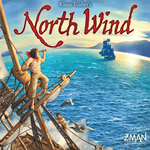
Hal does a pretty admirable job because he's just so chaotic. For one thing, he always takes a build action, so the city never stagnates. He also can change the color of buildings without penalty, so regions are dynamic and interesting. And lastly, he always has resources available, so no tile is safe from his wrath. He will mess up your plans. I promise you. Again, watch my playthrough. It's all there. That's Ginkopoulos. My number three. Number two is for Northwood. I only need to say three words. Solo tricktaking. Actually, is tricktaking one word? Maybe I only need two words.
Either way, the idea of a solo trick-taking game just sounds insane. I remember being very dubious about this game when I first heard about it. As a mechanism, tricktaking is so interactive. You're reading the other players trying to deduce what's in their hand based on how they played in previous tricks. If you strip that away and play solo, it just doesn't sound like it's going to be fun. Miraculously, it is fun. As you know, if you've seen my full solo playthrough, the way it works is you get your hand of cards and then you pick how many tricks you're going to try to win. And you must win that exact amount. For each trick, you start by flipping over a card, and then you must play a card, following suit if you can, and you'll either win or lose the trick. But you have four special abilities. And these special abilities can do all sorts of things from changing the trump suit to letting you alter your hand in various ways. The game becomes less about deduction and more about pressing your luck and puzzling out how to use your powers for maximum effect.
When I first came up with the topic for this top 10, for Northwood was the first game that came to mind. That's why it's my number two. And my number one is Heat Pedal to the Metal. Heat is a pure racing game that uses a wonderfully subtle card cycling system. You start with a small deck of movement cards and then another deck of heat cards. You can spend heat to go faster and perform special maneuvers, but when you do, those cards go into your movement deck and clog it up. You have to slow down in order to cool off and discard the heat out of your hand. This game is all about timing, the use of heat and slowing down around the corners at just the right time to cool the heat so you can reuse it again. It's subtle but satisfying.
Very few pure racing games have solo modes and nearly every single one that does was made after heat. Racing is one of those genres kind of like party games where people are likely to say, "Ah, you don't need a solo mode here. the design space just isn't there for a solo mode. Heat not only exposes how ridiculous that opinion is, but I think it shows how much the genre has suffered by not including solo play. The simple system for controlling AI drivers in heat creates a really enjoyable solo experience in my opinion. The game moves quickly and feels like a race. It also improves every single player count. Heat would be dreadful at two and three players without the use of the solo bot drivers. I'm of the opinion that regardless of player count, you should always have all six cars on the track.
It just makes the game play more interesting, and you have the solo mode to thank for that. But the reason this is all the more surprising is because Heat is published by Days of Wonder. Days of Wonder for their entire 20y year history has never once before made an officially soloable game until Heat. Correct me if I'm wrong, but even games like Relic Runners, Five Tribes, and Quadropolis, which could be ripe for solo modes, never officially got one. The fact they broke that streak with Heat seems pretty remarkable to me. That's why Heat is my number one solo game that shouldn't work but does. Which surprisingly good solos did I forget to mention? Let me know in the comments below. And if you enjoyed the video, why not give it a like and subscribe to the channel. I'd really appreciate it. Until next time, thank you so much for watching and goodbye.