
























Long Shot: The Dice Game Deep Dive
What the Community Thinks About Long Shot: The Dice Game
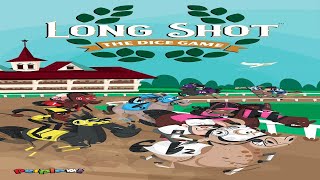
Reviewers across teach-throughs, convention roundups, and Kickstarter previews describe Long Shot: The Dice Game as an accessible horse-racing roll-and-write that layers real betting decisions onto a simple two-dice engine. No Pun Included called it a more modern design with all the bells and whistles, noting that the game gives players seventeen different mechanisms to offset a bad bet. Board Games UnLocked agreed the game hits a rare sweet spot for a roll-and-write, appealing to both strategic and casual players, and settled on an eight out of ten after playing it at Gen Con. Board of It, a two-host podcast, went further, calling the game terrifically fun after playing it eleven times inside a single week.
Not every take lines up. No Pun Included argued the game plays fine even at two players, if not its favorite count, while Board Games UnLocked found lower counts made the race feel too predictable and recommended six to eight players for the tension to click. Might I Suggest a Game, which had also played designer Chris Handy's original tabletop Long Shot, preferred this roll-and-write version because it felt like there was a little more control over what happened to the horses.
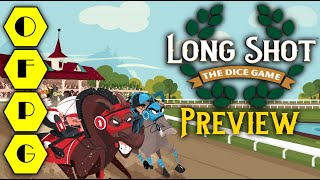
Some of the coverage carries disclosures worth noting. Our Family Plays Games labeled its walkthrough a paid preview of a prototype copy, cautioning that things could change before release. Drive Thru Games likewise previewed a pre-production Kickstarter copy that was close to final but not locked. Nights Around a Table's rules explainer opens by saying Perplext asked the channel to teach the game, marking it as publisher-commissioned rather than an independent review.
Core Mechanics That Define Long Shot: The Dice Game
Rolling the Race Forward
Each turn one player rolls two dice: one determines which of the eight horses moves, the other how far. Nights Around a Table explained that the roll also triggers secondary movement, since each horse's card carries marks for other horses, so any horse checked off on the moving horse's card tags along for an extra space. No Pun Included described the same system from the losing end of a bad roll, pointing out that no player can change the result once the dice land, calling it a simulationist rule that no amount of table talk can override. Both channels agreed that players never choose which horse moves, only shape how that movement cascades through the card network they have built up over the race.
Betting, Buying, and the Concession Grid
Beyond the race itself, players spend money on a shared menu of actions tied to whichever horse was just rolled. Nights Around a Table walked through betting up to three dollars on the active horse, buying a horse outright for a shot at its finishing purse, and purchasing jerseys and helmets that grant extra movement or let a bet through after a horse crosses the no-bet line. Drive Thru Games focused on the concession grid, where crossing off numbers to complete a row or column unlocks bonuses like free bets, extra cash, or the chance to nudge a horse forward or back, describing the grid as a little bit of an economic engine and a little bit of a combo builder running alongside the race.
The Long Shot: The Dice Game Experience
Shifting Fortunes and Tension
The unpredictability of the dice sits at the center of how the game feels at the table. No Pun Included said the shifting fortunes make everyone go, or oh, or the reviewer's favorite reaction, the moment of not seeing a swing coming at all. Watch It Played shared a viewer submission that described the same energy from the player seat, recalling a session where the group ended up yelling at their horses to get moving and booing each other over turns spent pushing an opponent's horse backward.
Scaling With Player Count
Reviewers repeatedly flagged how much player count changes the experience. Board Games UnLocked felt the game sings with six to eight players, since more people competing over the same horses keeps outcomes uncertain, while three or four players let one or two horses pull away in a way that felt predictable. Drive Thru Games came at the question from the solo side, noting the built-in AI opponent runs quick and close games, but conceded that the at-table banter obviously is not present when playing alone. Board of It landed somewhere in between, reporting they were surprised by how good the game plays with only two.
What Makes Long Shot: The Dice Game Stand Out
A Roll-and-Write Crossed With a Betting Game
Drive Thru Games called the pairing of a roll-and-write chassis with an in-progress betting market the most interesting thing about the design, pointing out that most roll-and-writes do not fold in wagering and most betting games are not built around a personal scoresheet. No Pun Included framed the same hybrid in terms of where the decisions land: on an active turn, a player crunches the numbers alone at their own sheet, a different rhythm than the open table negotiation the reviewer described in a similarly themed racer.
Replayable Horse Sets
Every horse carries its own special power, and the game ships with more than one numbered set that can be swapped in. Board Games UnLocked called the amount of content in the box surprising and praised the horse abilities as cool and unique in their own way, singling out powers that erase a mark on a card or let a player steal cash from an opponent. Board of It confirmed the variety firsthand, noting the group had already collected several different sets of horses between the base game and its mini-expansions.
Potential Drawbacks
Luck You Can Only Partly Steer
No Pun Included raised the game's core tension directly, asking whether it is fun to have no control over what happens once the dice are rolled. Its answer was that Long Shot only offers indirect control, since a player can mark up cards to influence future movement but can never choose the outcome of the dice already in hand. Board Games UnLocked pushed a related complaint about the push-your-luck label itself, arguing the game does not put a player in control turn to turn the way some push-your-luck games do, and instead builds tension slowly across the whole race rather than one roll at a time.
Uneven Powers and Rough Edges
Board of It's biggest gripe was not with the core game but with its parts, admitting some of the horse powers are not as interesting or as useful as others and that an ability can be forgotten mid-game once it is bought. Board Games UnLocked was blunter about the packaging, describing the box itself in unflattering terms even while praising the components inside it. Our Family Plays Games added a caveat about timing rather than design, noting the copy shown was a prototype where balance and components could still change before the final release.
If You Enjoy Long Shot: The Dice Game
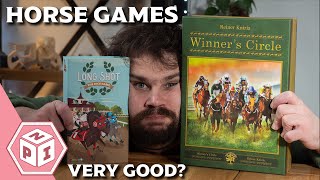
No Pun Included spent an entire episode setting Long Shot against Winner's Circle, an older role-and-move racer where a single die controls both horse and distance and a bad bet simply has to be lived with, rather than offset the way Long Shot's helmets, jerseys, and concessions allow. Board Games UnLocked pointed players who enjoy Long Shot's late-race repositioning toward Downforce, describing a similar feeling of shifting a bet onto someone else's horse once your own pick falls out of contention. Drive Thru Games linked the in-race betting adjustments to Camel Up, another racer that lets players shift bets mid-race rather than commit up front. Might I Suggest a Game, having also played designer Chris Handy's original tabletop Long Shot, still came away preferring the dice-and-marker edition for the added sense of control it gave over the horses.
What Reviewers Are Saying
"No amount of willpower can make that horsey go any faster. It's also fun at the table because shifting fortunes makes everyone go, or oh, or my favorite, I did not see that coming."
— No Pun Included
"I really like the fact that you have this concession stand area that you're trying to just make rows and columns, fill out rows and columns, to get a benefit. There's a lot of benefits here, and none of these are a bad choice."
— Board Games UnLocked
"It's easy to teach, you can teach in five minutes, very quickly. Players understand what's going on. There's only five actions to take on your turn."
— Board of It