











Long Shot Deep Dive
What the Community Thinks About Long Shot
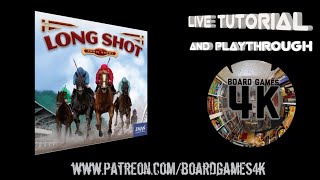
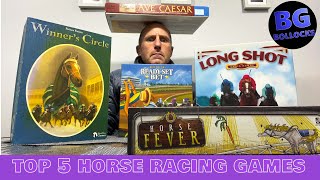
Long Shot is a horse racing board game first published in 2009 for one to eight players, and the reviewers who discuss it tend to treat it as a cult favorite that is difficult to find. BoardGameBollocks placed it third in a countdown of horse racing games, describing it as a game with a huge deck of rule-bending cards that makes the whole experience far more fun than the horse movement alone would suggest. The same channel, in a separate top 100 countdown, called it one of the best horse racing games the group has played and said it does not last too long.
The consensus is that Long Shot is a light, chaotic romp rather than a deep strategy game. Good Time Society described it during a live session as a crazy fun game in which you play someone trying to make as much money as possible, and noted that it moves quickly once the race begins. Reviewers agree that luck plays a large role, but they differ on how much that bothers them. Some treat the randomness as part of the appeal, while others see it as the game's main weakness. The out of print status comes up repeatedly, and it adds a sense of scarcity to the praise.
Core Mechanics That Define Long Shot
Dice Rolling Decides Which Horse Moves
Dice rolling is the engine of every turn in Long Shot. In a full playthrough, BoardGameBollocks explains that the active player rolls two dice, with one die choosing which horse moves and the other choosing how many spaces it advances. That single roll is what makes the race unpredictable, and it is the reason reviewers describe the game as luck-driven. The dice do not simply move one horse, either. Reviewers point out that when a horse moves, any other horses listed beneath it on its card move as well, so a single good roll can shake up the whole field at once.
The randomness has a leveling effect that reviewers mostly appreciate. A player who carefully plans their purchases can still lose a race to a lucky sequence of rolls, and a newcomer can win just as easily. That keeps every turn tense, because the next roll can overturn the position that looked settled a moment earlier.
The Race as a Three-Horse Finish
Long Shot is a race in the most literal sense. The game ends once three horses have crossed the finish line, and the player holding the most money at that point wins. BoardGameBollocks summarizes the structure by noting that the race is decided by the first three finishers, which means a player does not need to win every race to come out ahead. Good Time Society echoed this when it described the race as a single lap around the track in which the first three horses across the line end the game. Because the finish line rewards speed, reviewers note that the game can wrap up quickly, and each turn feels like a step toward that conclusion.
The Long Shot Experience
Playful Chaos Around the Table
Reviewers describe Long Shot as a game that generates noise and laughter. The rule-breaking cards are the main source of this energy, because they let players alter the race in unexpected ways, and every new card brings a reaction from the table. Because the rules are simple enough for newcomers to pick up mid-game, the table quickly becomes a shared source of reactions, and reviewers describe the result as a lighthearted session rather than a serious contest of planning.
Tight Tension on a Fast Track
Underneath the silliness, the betting and the close finishes create real tension. Players place bets on horses they do not control, so every roll changes who is likely to profit. Good Time Society remarked that the game is a really fast game, and that speed keeps the pressure high because a player who falls behind may not have many turns left to recover. The tension is less about careful calculation than about watching the board and hoping the next roll breaks your way, which is why the final stretch of a race tends to draw the most reaction from players.
What Makes Long Shot Stand Out
The Long Shot Card Deck
The most frequently praised element is the deck of Long Shot cards. BoardGameBollocks describes the deck as enormous, and says each card lets players bend the rules in a different way. Examples given include advancing all horses in last place, collecting money for owning a horse, and taking a bonus payout that changes the economics of the race. The reviewer argues that this variety is what makes the game so much fun, beyond the appeal of buying horses. In the reviewer's view, the deck gives every race a different flavor, so no two games play out exactly the same way.
Buying Horses With Special Abilities
Players can also purchase horses, and each horse brings a special ability that a player can trigger on their own turn. Reviewers see this as a way to add planning to a game that is otherwise driven by dice. A player who owns a horse with a useful ability gains a reason to chase specific rolls, and that tension between buying and betting gives the purchasing phase real weight. The combination of owned horses and betting is what gives the game its strategic layer on top of the random race.
Potential Drawbacks
Luck Can Feel Unfair
The most common criticism is that the randomness can overwhelm skill. BoardGameBollocks acknowledges that the game is sometimes a little unfair, because the dice largely determine which horses advance, even though players spend their money on bets and horses. Players who enjoy strategy may find that frustrating, particularly when a well-planned position collapses after a few unlucky rolls. Reviewers who accept the randomness tend to treat it as the price of a light, social game, but the criticism is fair, and it explains why some players will prefer more controllable racing games.
Hard to Find and Out of Print
Availability is the second concern. BoardGameBollocks calls it an absolute tragedy that the game remains out of print, and notes that the reprint was released as a dice game, which the reviewer felt was a cheaper option than a full reprint of the original. BoardGameBollocks makes the same point in a separate countdown and says the game has been out of print for years. Because the original is hard to obtain, many players will have to seek out a used copy, which limits how many people can experience the full card deck and horse abilities.
If You Enjoy Long Shot
Players who enjoy Long Shot's mix of betting and dice-driven racing will find a similar appeal in Win a Circle, which BoardGameBollocks names directly when comparing it to Long Shot, placing both among their favorite games of all time. Win a Circle shares Long Shot's focus on betting on horses while rolling a horse die, and it also rewards players who can predict how opponents will bet.
Ready Set Bet is another horse racing game that BoardGameBollocks ranked alongside Long Shot. It is a real-time betting game in which players place chips on horses while the race plays out, which suits players who enjoy the tension of a race that can turn at any moment. Players who want a lighter horse racing experience with more cartoonish flavor may also want to look at Horse Fever, which the same channel ranked in the same list for its movement cards and disruptive action cards.
What Reviewers Are Saying
"It's one of the best horse racing games that we've ever played. It doesn't last too long and the long shot cards allow you to break the game rules and give you a load of laughs."
— BoardGameBollocks
"It's one of our favorite awesome games of all time. It's right up there with other games like Win a Circle and all that sort of crap."
— BoardGameBollocks
"It's a crazy fun game. We're gonna get more people to play in here with us when they show up, but this is a horse racing game where you play someone who's trying to make as much money as possible."
— Good Time Society