/pic7712683.jpg)

/pic7712683.jpg)








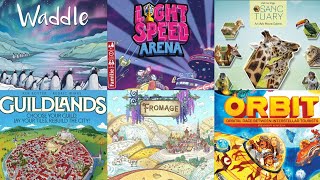
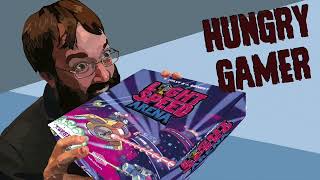

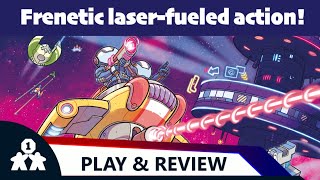









Light Speed: Arena Deep Dive
What the Community Thinks About Light Speed: Arena
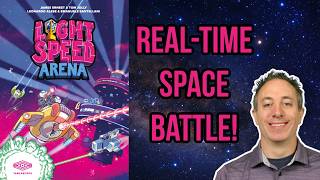
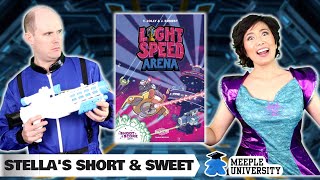
Light Speed: Arena arrives as a reinvention of a 2003 classic, modernized with a smartphone app that transforms what was once a 30-minute calculation marathon into a two-minute spectacle. Reviewers agree: the game is chaotic, frenetic, and undeniably fun. Published by CrowD Games, it delivers exactly what players expect from a real-time spaceship combat game, with enough strategic depth hidden in the mayhem to reward repeat plays.
Core Mechanics That Define Light Speed: Arena
Real-Time Simultaneous Placement
Players shuffle their spaceship tiles face-down and place them into the arena one per timer pulse, typically 10 seconds per round. Placement is simultaneous, meaning no one waits while others deliberate. Once a ship leaves the player's hand, it cannot be moved. This forces rapid decision-making under constant pressure. Every spaceship carries an initiative number determining firing order. Lower numbers fire first but possess fewer batteries and weaker lasers. Higher numbers are powerful but must survive earlier attacks to unleash their strength. This asymmetry creates tension: do you aim your weak early-firing ship at a critical threat, or play defensively?
App-Driven Resolution and Scoring
After all ships are placed, a player photographs the board. The app scans the image, identifies each component, and resolves combat instantly. Ships fire in initiative order. Lasers come in three damage types: green (one damage), yellow (two), red (three). Each ship has batteries equal to its health value. Shields reduce incoming damage by one per beam. The app shows results visually, tracking points in real time for damage dealt, mining asteroids, destroying enemy ships, and survival bonuses. Players earn one point per hit on any target, bonus points for finishing off enemy ships, one point per mineral extracted from asteroids, and four points if their base survives.
The Light Speed: Arena Experience
Breezy, Quick, and Endlessly Replayable
The entire game completes in roughly 80 seconds of placement time for a two-player game. After photographing and app resolution of one to two minutes, the game ends. Multiple matches can run back-to-back without fatigue, making Light Speed: Arena an ideal filler or convention game. Reviewers report playing it repeatedly over hours, with players cycling in and out, each round generating new chaos and different winners.
Visible Tension and Engagement
The real-time placement creates visible tension as players jockey for position. One reviewer described seeing opponents reposition while your ship is still mid-placement, creating a simultaneous dance where neither player can react once hands release. The app's visual battle playback heightens engagement: watching ships fire, shields flicker, bases explode, and minerals accumulate on screen mirrors arcade appeal. Even spectators feel invested because the action moves so fast that speculation about outcomes becomes communal entertainment.
What Makes Light Speed: Arena Stand Out
Strategic Depth Hidden in Ten Seconds
Despite the frantic pace, measurable strategy exists for players who refine their plays across multiple games. Players can block laser paths with their own ships. They can focus damage on specific opponents to eliminate threats before activation. They can prioritize mining asteroids over aggressive tactics. The challenge is that all these calculations must occur in a ten-second window, compressing what might normally be a full turn's deliberation into a snap decision. Reviewers note that first plays feel random, but subsequent plays reveal deliberate positioning choices that shift outcomes.
Expandable Through Asymmetric Variants
Special asteroid tiles and faction powers introduce mechanical variety without requiring expansions. Flipping asteroids reveals abilities that alter play: some grant bonus points for distance-based shots, others modify scoring. Faction powers turn bases to their unleashed side, granting unique mechanics per color. Blue factions double damage after taking any hit. Red factions neutralize all damage from a single initiative. The app automatically recognizes variant asteroids and faction powers, adjusting scoring accordingly.
Potential Drawbacks
App Dependency and Accessibility
Light Speed: Arena cannot be played without a smartphone app. The original 2003 version required 27 minutes of manual calculation per eight-second placement phase, making it impractical. Players uncomfortable with companion apps have no recourse, though the publisher does offer a "downgrade pack" with string and measuring tools for manual scoring. Solo mode exists but remains in beta with limited scenario variety.
Perceived Randomness for New Players
New players frequently report feeling overwhelmed by simultaneous placement, leading to seemingly random ship positions. The compressed decision window prevents meaningful analysis, leaving players guessing. When multiple ships get destroyed before firing or self-inflicted friendly fire occurs, outcomes feel divorced from choice. However, this perception shifts with repeat plays as players internalize common patterns and develop rapid-fire positioning heuristics. For groups preferring turn-based euro mechanics or extended deliberation, Light Speed: Arena's forced speed will frustrate rather than delight.
If You Enjoy Light Speed: Arena
Real-time dexterity games like Magic Maze or Space Base belong in the same collection as Light Speed: Arena. Players who love arcade-style visual feedback and rapid gameplay loops will appreciate the app's instant scoring and dramatic laser animations. Stellar Conflict offers a similar real-time space combat experience. Those who value simultaneous player engagement over waiting for turns will find natural appeal, and convention organizers seeking a high-throughput filler should prioritize this game.
What Reviewers Are Saying
"It is pure chaotic goodness. There's actually some strategy buried in the chaos, which you don't get until you played a few times, but as you start to really get the feel for it, you start to be able to pay a little bit of attention to okay, I need this laser to go this way to try to hit this thing."
— Hungry Gamer
"This game is quick, light fun. It literally plays in like two minutes to actually play the game. The game has simultaneous play, so there is no room for analysis paralysis. So much depth here that there's no way that you can sort of digest everything in the 10 seconds."
— TheGameBoyGeek
"The app works well. It makes the game flow really smoothly. It has a tutorial to teach you how to play, and you could just put ships down in fun configurations, snap a picture and see the battle. This game is so quick, it is the ultimate filler."
— One Stop Co-op Shop