
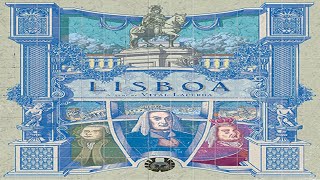
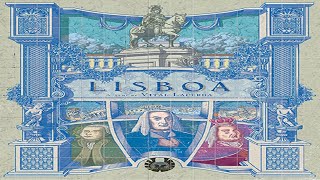

























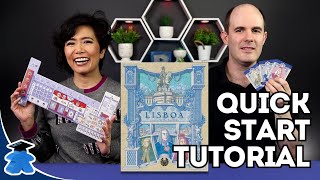








Lisboa is a game about the reconstruction of Lisboa after the great earthquake of 1755.
On November 1, 1755, Lisbon suffered an earthquake of an estimated magnitude of 8.5–9.0, followed by a tsunami and three days of fires. The city was almost totally destroyed. The Marques of Pombal — Sebastião José de Carvalho e Melo — was the then Minister of Foreign Affairs and the King put him in charge of the reconstruction of Lisbon. The Marques of Pombal gathered a team of engineers and architects and you, the players, are members of the nobility; members who will use your influence in the reconstruction and business development of the new city. You will work with the architects to build Lisbon anew, with the Marquis to develop commerce and with the King to open all the buildings, but the true reason you do all this is not for greatness or fame or even fortune, but for the most important thing of all in that time: wigs.
Lisboa is played on a real map of downtown Lisbon. During the planning of the downtown project, the type of business permitted in each street was previously determined. The economic motor is driven by the wealth of the royal treasure and this treasure is controlled by player actions during the game, making each game a totally different experience. The game ends after a fixed number of rounds and whoever gathers the most wigs by the end of the game wins.
Lisboa is played in rounds. Each round, all players play one turn. They may place one card on their display or replace one card from this display. During the game, players schedule hearings to get character favors, such as commerce, construction, and openings. The iconic buildings score the stores and stores provide income to the players. Players need to manage influence, construction licenses, store permits, church power, workers and money, with the workers' cost being dependent on the prestige of the players.
Lisboa - Oct 7 2018
Lisboa - Playthrough & Review
- Immersive Lisbon theme with authentic visuals and inspiration
- Cool sliding-card action selection mechanic
- Beautiful production and high-quality components
- Clear thematic integration between mechanics and setting
- Personal connection to Lisbon adds credibility and planning inspiration
- Heavy rules and long playtime (roughly 1.5–2 hours)
- Steep learning curve for new players
- Array
- Lisbon, Portugal in the 18th century after the 1755 earthquake
- thematic, atmospheric
- The Gallerist
- Kanban
Mechanics (from transcript analysis)
- action selection — Selected actions are revealed and form the ongoing engine the player builds each round.
- card drafting — Players select actions by sliding a card into the top or bottom, which hides the chosen action and reveals the next one.
- Currency/Influence management — Multiple currencies are used (including influence) to perform actions and advance strategies.
- engine building — Players build an engine by collecting rubble, upgrading buildings, and managing various resources to gain points.
- engine building / resource management — Players build an engine by collecting rubble, upgrading buildings, and managing various resources to gain points.
- follow mechanism — A follow mechanic is used, with turn order and actions made clear by the top card.
- Influence Points — Multiple currencies are used (including influence) to perform actions and advance strategies.
Video topics + discussion points
Quotes (from this video)
- this is a beast of a game
- the coolest part about this game is the player board... there are slots here to stop your card when you slide it in
- this game has a sliding card mechanic where you'll slide the cards either into the top or the bottom and you're going to hide the action that you're going to get instantly and it'll reveal the action that you get continuously
- the game is extremely thematic
- might be a lot of rules but once you've learned them it makes sense
- the game takes about two hours to play
- there's about three different currencies in the game that you can use; influence is one of them
- I went to Lisbon and visited some of the public buildings you're going to build throughout the game
References (from this video)
- Pleasant, accessible arcade-leaning gameplay
- Affordable (under $10)
- Good replayability with multiple levels and modes
- Deck-building buffs add strategic depth
- Some rounds feel luck-based with limited control
- Confusion around certain mechanics (e.g., locked legendary card) and shop interactions
- Luck and strategy via buffs and deck-building
- Arcade/Plinko-inspired level-based play
- Observational/first-play commentary
- Bellatro
- Plinko
Mechanics (from transcript analysis)
- currency and upgrades — Tokens and tickets are earned to buy buffs, challenges, and permanent ball upgrades via in-game Shops; tokens convert to tickets.
- round-based progression — Levels are broken into rounds with targets to beat; progress is tracked and round-specific budgets apply.
- shop and card synergy — Buying buff cards builds a synergistic deck; the shop refreshes each round and the first reroll is free.
- slot payouts — Ball values determine slot payouts with multipliers (e.g., 64 value can yield a 10x multiplier, e.g., 640).
- spawn balls — Players spawn balls by clicking or pressing space to drop balls through a pegboard, accumulating score as they descend.
- Track advancement — Levels are broken into rounds with targets to beat; progress is tracked and round-specific budgets apply.
Video topics + discussion points
Quotes (from this video)
- It's a very pleasant game, I think.
- I like this game. I like Plinko-type games.
- it's also a pretty affordable game. It's definitely under 10 bucks to play, so worth checking out.
References (from this video)
- rich thematic integration with a historical city-building arc
- heavy rule set, longer playtime
- city-building / economic management
- Urban development after a major disaster (historical, European city focus)
- historical, heavy indirect control
- Glass Road
- Labora
- Underwater Cities
Mechanics (from transcript analysis)
- grid- and tile-based city planning — Players manage city development and efficiency, balancing resources and buildings.
Video topics + discussion points
Quotes (from this video)
- I feel like theme really matters to me if I want to put myself in a setting in a board game and have a relatively good understanding of how to play
- the theme that it's set in as well as how well those mechanisms integrate with the theme
- I think it's my number one theme because of how interested I am in games that I'm previewing and looking at further in the Horizon
References (from this video)
- Strong theme and deep strategic design
- Encourages long-term planning and meta-game awareness
- High learning curve
- Time investment for in-depth play
- Economic and political upheaval
- Lisbon during the 18th-century disasters and reconstruction
- Heavy thematic euro with strong historical flavour
- Votes for Women
Mechanics (from transcript analysis)
- card-placement — Place cards on top of previously played cards to modify future actions.
- Multi-use cards — Cards have multiple potential actions/effects to optimize.
Video topics + discussion points
Quotes (from this video)
- the app itself is neatly done and the UI is intuitive
- it's a race to find synergies among the card decks that are set up at the beginning of the game
- this is a breezy game that I can see being played and being great for kids
- I can't wait to continue playing this more
- votes for women this game is designed by Tory Brown and published by Fort Circle games
References (from this video)
- hugely intricate and interconnected
- ambitious design with depth
- one of the most complex games in the list
- high AP (analysis paralysis) potential
- crisp interlocking mechanisms and dense decision space
- grand, heavy euro with deep interconnections
- weighty, crunchy, highly strategic
Mechanics (from transcript analysis)
- Card-driven action economy — complex set of actions triggered by card play
- Resource management — managing multiple resource types with tight economy
- resource management and routing — managing multiple resource types with tight economy
Video topics + discussion points
Quotes (from this video)
- This pseudo tileing auction game is an absolute banger.
- Spirit Island is the best cooperative experience you will ever have.
- A Feast for Odin is my number one, but other games in his catalogue are almost as good.
- In a two-player game, this is one of the tightest board games you can play.
- The push your luck aspect in RAW is absolutely wonderful.
References (from this video)
- Rich, thematic heavy euro experience
- Great footprint for long play sessions
- Steep learning curve and potential downtime
- Difficult to teach mid-game
- complex economic and crisis management
- Lisbon after earthquake, tsunami, and fire; early modern urban reconstruction
- heavy euro
Mechanics (from transcript analysis)
- Card-driven action selection — Play cards to trigger actions and board effects
- Iconography-guided actions — Symbols indicate actions and resource flow
- Route planning and planning paralysis — Lots of choices and ripple effects across turns
Video topics + discussion points
Quotes (from this video)
- this game is so much fun because it gives you such a wide variety of things that you could do
- I think this is a game of skill and you don't see games of skill very often with very short
- Isle of Skye Journeyman adds a lot to this game but it detracts from some of the greatness of the original game
- Lisboa is a heavy game; there's a lot going on
- Teotihuacan has a lot going on
- Western Legends is a sandbox with tons of directions you can go
References (from this video)
- clean and elegant design
- viewed as a masterpiece of board game design
- high complexity; can be hard to top
- famine of rebuilding with political and economic interplay
- early 19th-century Lisbon after a disaster
- unknown
Mechanics (from transcript analysis)
- deck-building / hand management — play cards from hand to take actions and influence the city
- influence track / resource management — manipulate resources and track influence to drive scoring
Video topics + discussion points
Quotes (from this video)
- Lisboa such a good game
- The Gallerist was the first design that I saw that looked absolutely beautiful
- Kanban is a fantastic game
- it's a clean and elegant design
- Escape Plan is the outlier in this group
- On Mars is a great game, but it's hard to teach
References (from this video)
- Dense, rich mechanistic design
- Beautiful, thematic presentation
- Very heavy, can be overwhelming
- Rulebook is long and dense
- risk management, urban planning, and rebuilding
- post-disaster Lisbon after the 1755 earthquake
- grim realism with strategic depth
- Vinhos and other Vital Lacerda titles
- The Gallerist
Mechanics (from transcript analysis)
- Railroad / board economy and movement — Players manage a complex system of actions for city rebuilding.
- Resource management / action economy — Complex decision matrix guides reconstruction and growth.
Video topics + discussion points
Quotes (from this video)
- Artwork does have a big impact on my interest in playing the game.
- I bought games just for artwork that I've never played.
- Santorini doesn't turn me off, and Arcadia Quest doesn't turn me off exactly but I would prefer it to be more realistic in general.
- I think games with Xavier Colette his kind of artwork he did the a lot of the dixit stuff.
- I love getting up and coming down here and shooting a video and editing a podcast and developing content for the next show.
- quit drinking soda it's poison.
- Feast for Odin is a Viking-era title that rewards careful planning.
References (from this video)
- strong thematic integration
- beautiful artwork and production
- deep strategic depth
- heavy rules overhead
- long play time
- economic crisis and urban rebuilding
- 18th-century Lisbon during reconstruction after the 1755 earthquake
- historical simulation with heavy theming
- Nemo's War
- Stockpile
Mechanics (from transcript analysis)
- Deck building — action selection using a deck of cards
- deck-building — action selection using a deck of cards
- economic/resource management — managing funds, goods, and reconstruction efforts
- Resource management — managing funds, goods, and reconstruction efforts
- roundel/action grid — actions chosen via a central action wheel/grid
Video topics + discussion points
Quotes (from this video)
- Eric Lang is the rock star of board-gaming
- artwork and production matters; artwork and production matters; it's not just putting a game out
- Jamie Stegmaier... Kickstarter guru
- it's not just putting a game out, artwork and production matters
References (from this video)
- rich thematic flavor and elegant design
- high strategic depth for experienced players
- very heavy rules; intimidating for newcomers
- indirect player interaction can feel limited
- city planning under catastrophe
- post-disaster Lisbon, rebuilding district economies
- heavy thematic narrative with mechanical tension
- The Gallerist
- Lisboa expansion packs reference
Mechanics (from transcript analysis)
- action programming — plan sequences due to repression tokens and penalties
- Worker placement / consequence tracking — areas yield different penalties and rewards; managing outcomes
Video topics + discussion points
Quotes (from this video)
- this is the a to z board game challenge
- we love to challenge ourselves and each other
- there's no timer this isn't speed round because there's going to be some where it's going to be harder
- you should definitely do this at home it was super fun
- that is not easy that is so much harder than you would think
References (from this video)
- Innovative resource model (metals and vials)
- Rich IP integration with strong art and design
- Multiple paths to victory increase replayability
- Can be heavy for new players due to multiple resource layers
- Combat/offense options may dominate in some player counts
- alchemy and metal-based resource management within a fantasy universe
- deck-building with Mistborn IP
- story-driven deck-building with IP flavor
- Slay the Spire
- Other deck-building games with resource mechanics
Mechanics (from transcript analysis)
- deck-building with metal tokens — play cards that cost metals; metals exist as tokens and can be flipped to expend value
- dual-use cards — every card also acts as a metal or vial for other plays; some cards function as resources
- Multi-use cards — every card also acts as a metal or vial for other plays; some cards function as resources
- targeting and tracks — win conditions include advancing mission tracks or eliminating opponents; a rare target mechanic exists
- Track advancement — win conditions include advancing mission tracks or eliminating opponents; a rare target mechanic exists
Video topics + discussion points
Quotes (from this video)
- In the world of Vantage, nobody cares that I'm trans. I'm merely a passer by chatting with the Denizens, playing games, and participating in trials.
- Dispatch is eight scenarios. It's a little bit like a superhero animated TV show where you are making story choices.
- Inkorn is a deck builder in the style of Slay the Spire, but it adds a lot of things that aren't in Slay the Spire without overly complicating the game.
- Here Lies is a cooperative mystery solving game that does a brilliant thing with limited communication and limited information where one player has all the answers.
References (from this video)
- tight economic engine
- deep strategy
- heavy rules overhead
- Feast for Odin
- Glenmore 2
Mechanics (from transcript analysis)
- Economic engine / tile placement — City-driven scoring through tile placements and economic management.
Video topics + discussion points
Quotes (from this video)
- it's basically that we are we're not quite at the 10th anniversary yet, but we are in in the 10th year of the channel
- This is a very unfair top 10
- Welcome to the Moon is one of the best one of the first big flip and fill games
- I love it again like with me and Ra we've played like 60 70 games of it
- If you could only keep one, would you keep X or Y? It's a terrible question
- It's an unfair top 10. It's the same 10 L games with some Garfields
References (from this video)
- one of the heaviest and most satisfying euros in the collection
- crunchy decisionmaking that pays off when it clicks
- beautifully designed and visually striking
- very heavy; not beginner-friendly
- long playtime can be taxing for two-player sessions
- interlocking mechanisms driving a heavy euro engine
- Lisbon after disaster; city reconstruction and financial reorganization
- deep, crunchy strategic narrative
Mechanics (from transcript analysis)
- Card-driven actions — Four-action per turn framework with deep interlocking decisions.
- heavy euro dynamics — High weight and long playtime with a strong emphasis on planning.
- interlocking mechanisms — Actions interact in layered ways to create a dense strategic puzzle.
Video topics + discussion points
Quotes (from this video)
- Blocking becomes super important because you can only build roofs and pillars so many times during the game.
- There's a ton of mind games involved in this game.
- The dice rolls affect everybody equally. So, we both have to work with the same puzzle.
- It's tense, it's brainy, and it's super satisfying.
- I don't understand why it's not up there with the likes of Brass, Terrammystica, Bough Island, even a bunch of other big strategic games.
- For me, it is Magnum Opus and it deserves all the credit in the universe.
- This is my favorite co-op game of all time and I believe it's the best two-player co-op experience ever.
- There are multiple ways to win and the exploration of discovering new scoring methods is thrilling.
References (from this video)
- deep, cascading interdependencies create thematic depth
- strong transition between actions via noble negotiations
- excellent balance between planning and adaptability
- rule complexity can be intimidating for new players
- heavy decision space may slow shorter game sessions
- resource management, political influence, and urban reconstruction
- rebuilding a city after disasters in 18th-century Lisbon
- interconnected decisions with cascading consequences
- Lisboa (itself as subject)
Mechanics (from transcript analysis)
- cascading repercussions — actions on one top-level choice trigger further options and chain reactions
- interlocking action choices — top-level actions unlock subsequent, dependent options via nobles, goods, and tools
- portfolio card play — play cards to generate goods, trade with nobles, or influence the royal court
Video topics + discussion points
Quotes (from this video)
- Players take on the role of farm managers who want to deliver the goods to the market stalls, local towns, and hopefully to the ports of Palma.
- the same basic mechanisms as Lacrania, just kind of turned up to 11 essentially.
- with the dice drafting mechanism, you're going to be drafting a die and taking out the inner and outer action.
- One of the key other points I really enjoy about this one is the help your neighbor.
- This is the engine building that I find so enjoyable.
- You're working towards gaining the most prestige before the arrival of the Napoleonic forces.
- The main mechanism in this one is kind of a common action selection.
- There will be more workshops opening up along the way as where players can play their cards.
- This is another Euro game that has some very intricate working cogs.
- Trade with a noble action, cascades into more options depending on which noble you trade with.
- Everything is tied together in interlocking cogs.
- I love planning everything out and cursing the other players when they foil my perfectly laid plans.
- It's a game of chains. I want to take this task because I think I can achieve it.
References (from this video)
- strong thematic immersion in a historical setting
- multi-step planning with a satisfying payoff
- great table presence and decisions
- complex rules
- maybe less accessible to new players
- history, disaster recovery, urban planning
- Lisbon after the 1755 earthquake and reconstruction
- historical, resource-driven with a strong theme
- Kanban
- On Mars
Mechanics (from transcript analysis)
- area control / influence — influence districts and reconstruct the city on a board
- Resource management — manage concrete resources to rebuild and score
Video topics + discussion points
Quotes (from this video)
- it's kind of fun right
- it's kind of structured
- we're gonna be playing them in order of release so we're gonna be starting with video this first release and all the way up until on Mars
- we'll probably do it again in the future with a whole new list of games
References (from this video)
- Strong theme integration
- Artistic production
- Density and complexity
- Socioeconomic planning, disaster response
- Lisbon after a major disaster
- Heavy thematic Euro
- Gaia Project
- Brass
Mechanics (from transcript analysis)
- Action selection with cost — Hidden costs for choices
- Simultaneous action selection — Multiple actions chosen with hidden costs
- Simultaneous Actions — Multiple actions chosen with hidden costs
- worker placement — Allocate workers to influence outcomes
Video topics + discussion points
Quotes (from this video)
- I think it might just be the most underrated feature on Board Game Geek.
- I found it to be very very helpful for myself.
- the analyze feature is actually built into every game page.
- Lisboa might be one that I want to check out.
References (from this video)
- Excellent card system with portfolio mechanics
- Multiple card play options with meaningful choices
- Visually appealing board
- Complex decision-making
- Board visibility can be challenging
- Intricate game system
- City Building
- Historical
- Portuguese Reconstruction
- Co2
- Escape Plan
- On Mars
Mechanics (from transcript analysis)
Video topics + discussion points
Quotes (from this video)
- these are my top 100 games not necessarily the top 100 games
- the lower end of my top 100 is still games I rank 8-9 out of ten if there are no sevens on this list
- everything on here is the creme de la creme as far as I'm concerned
- it hurt a lot
- this can really destroy friendships if you're not careful
- I have played through the whole game and I feel like I've barely scratched the surface
- there is such a thing as too much for a game
- I really want to play this but maybe not quite every single week
- I am serious and don't call me Shirley
- there's a lot of new content to throw in there
- I do love a good sandbox game
References (from this video)
- Excellent thematic integration: theme and mechanics reinforce each other, especially around reconstruction and governance.
- High production quality: art, components, and the player aid book are praised for clarity and aesthetics.
- Huge replayability due to a large pool of decree cards and clergy tiles; plays differently across game sizes.
- Scales well to 2-4 players; two-player games have tighter airflow but still offer meaningful decisions.
- Deep planning and strategic depth with a clear, rule-based decision tree that rewards foresight.
- Steep learning curve: the decision tree and interplay of actions can lead to analysis paralysis for new players.
- Component footprint and box size can be unwieldy for small spaces.
- Some rule clarity issues around the temple/clergy tiles and scoring interactions can be confusing without reference aids.
- reconstruction, political influence, public works, and urban planning
- Lisbon, 1755, rebuilding after the earthquake, tsunami, and fires
- historical reconstruction intertwined with resource and influence management
- The Gallerist
Mechanics (from transcript analysis)
- building construction and storefront effects — Public and private buildings are built across the downtown grid, with storefront colors determining what goods they produce and how scoring works based on rows/columns.
- card drafting / action selection — At the start of a turn you draw five cards and choose one to either place on your portfolio or to visit nobles via the Royal Court, then follow a decision tree on your board to resolve subsequent actions.
- clergy track / church scoring — The clergy track provides ongoing bonuses and triggers Church scoring when clergy markers move or land on specific spaces, influencing treasury and scoring opportunities.
- deck/resource/portfolio management — Treasury cards and noble cards go into a portfolio, which has distinct top (nobles) and bottom (Treasury) zones and capacity limits that expand with rubble sets.
- royal favorites / following actions — Royal Favorite tokens let you follow another player's noble action, spending influence to choose one of the three actions, adding a layer of interaction and planning.
- set collection / rubble management — Rubble cubes come in blue (tsunami), beige (earthquake), and red (fire) colors. Completing full sets increases warehouse capacity and drives scoring opportunities.
- worker placement / officials in offices — Players place and move official tokens into different noble offices to unlock state actions and main actions, with influence and treasury modifiers affecting costs.
Video topics + discussion points
Quotes (from this video)
- The theme of this game is based off of something that happened in history in the year 1755.
- This game is a heavy euro; everything works in synergy with mechanics.
- Lisboa is a masterpiece.
References (from this video)
- exceptional elegance and design
- beautiful components and aesthetic
- great for teach-and-play sessions
- can feel opaque to new players at first
- weight and pacing can be intense
- city rebuilding through card-driven actions
- Lisbon after a major disaster, rebuilding
- elegant, puzzle-like
Mechanics (from transcript analysis)
- deck-driven action-selection — play a card to determine actions on two halves of the game
- point-based scoring with layered actions — timing and card usage affect scoring
- two-phase game flow — first half and second half with different payoff rules
Video topics + discussion points
Quotes (from this video)
- it's like a TV show, you're going from one episode to the next
- this is my number one game of all time
- it's a true point salad game
- money equals points
- the life cycle of everything
- the auction phase and the multiplayer solitaire space
References (from this video)
- beautiful art and strong cultural expression
- unique thematic and mechanical blend
- accessible to families and casual players
- end-game scoring and drafting add complexity
- not as heavy as the heavier euros discussed
- heteronyms & poetry creation
- Portuguese literary culture
- poetic, board game as art
Mechanics (from transcript analysis)
- heteronym worker placement — Each player feigns a different heteronym with unique abilities; you can swap via the Pessoa meeple.
- poetry building via cards — Collect ascending cards to form a poem; cards feature poetry in English and Portuguese.
- regional card actions and the Pessoa meeple — Two action locations and a central space; you may embody Pessoa to access actions.
- timing via astrology wheel — 12 rounds with a wheel; timing of card plays and actions yields benefits.
- worker placement — Each player feigns a different heteronym with unique abilities; you can swap via the Pessoa meeple.
Video topics + discussion points
Quotes (from this video)
- it's a really, really clever mechanism in the game
- the onus in a two-player game is on two people now to build out these industries
- the player interaction is just so prevalent in the game
- it's my type of euro game i'm a big fan of, get the cube, do this, do that
- it's beautiful, i mean this definitely has a big focus on art
- the busiest board of the year
- everything's so beautiful
- it's an experience game, it's about what happens at the table
- the heteronym concept is super cool
- this is beautiful art in itself
References (from this video)
- deep strategic depth and theme coherence
- integrated city-building with historical flavor
- very high complexity and lengthy plays
- rules density can be intimidating for new players
- urban planning, disaster recovery, economics
- Lisbon and colonial era institutions
- historical economic simulation
- On Mars
- Through the Ages
- Gaia Project
Mechanics (from transcript analysis)
- city-building and resource management — placing and upgrading structures to affect future income and influence
- economic engine-building — players develop city assets and infrastructure to generate income and leverage influence
- rondel-based action selection — a central action wheel/roundel that governs available actions each turn
Video topics + discussion points
Quotes (from this video)
- Lisboa was about a 4.57 and on mars was 4.64 and through the ages was 4.41 so oh wow
- Viticulture viticulture yeah this is viticulture from the essential edition
- Navigator assured us that the island was indeed as yet uncharted
References (from this video)
- Cool core system
- Novel dice refresh mechanics with potential
- Smoother turn structure could help
- Not incredibly inspiring
- exploration and resource management with dice-driven movement
- island exploration in a roll-and-write context
- novel, dice-driven exploration
- World Wonders
- Wild West
Mechanics (from transcript analysis)
- dice drafting — choose dice to use and exhaust others until refresh
- dice-drafting/exhaustion — choose dice to use and exhaust others until refresh
- Flip/Roll and Write — rolled dice determine movement to explore map
- roll-and-write — rolled dice determine movement to explore map
Video topics + discussion points
Quotes (from this video)
- Hidden Gem
- I think this one's going to have his audience if you can kind of dabble with Euro games but Euro games aren't your main focus
- it's a fantastic job of being so broadly appealing
References (from this video)
- Pale blue and beige color scheme looks dull
- Characters possibly avatars but unclear
- Doesn't convey theme clearly
- No sense of excitement
- City building
- Lisbon
- Historical
Mechanics (from transcript analysis)
- Strategy — City building game
Video topics + discussion points
Quotes (from this video)
- The box cover makes a promise to the customer
- Every box cover tells me what I'm going to be doing and how I'm going to be feeling
- This artist is one of the best board game artists working in the industry right now
- This is how you do it
- This cover is a mess
- Striking iconic design
- The box cover is not selling the game