/pic69357.jpg)













Lord of the Rings: The Confrontation Deep Dive
What the Community Thinks About Lord of the Rings: The Confrontation
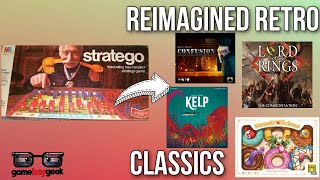
Lord of the Rings: The Confrontation stands as a beloved two-player duel that transforms Reiner Knizia's hidden-strength template into a thematic battle of wills set in Middle-earth. All You Can Board describes it as essentially an updated, themed version of Stratego, while Foster the Meeple champion it as a hard-to-find gem that rewards repeated play. Reviewers consistently report that the depth reveals itself slowly, with each session surfacing a new wrinkle in how the asymmetric sides clash.
Core Mechanics That Define Lord of the Rings: The Confrontation
Hidden Identities and Strength
The game hinges on an asymmetric design where one player guides the Fellowship toward Mordor while the other commands Sauron's forces in pursuit. Designed by Reiner Knizia and published by Fantasy Flight Games, it keeps each character's strength value and special ability hidden until two pieces meet. When that happens, both players reveal their characters, compare strength, and play a combat card to swing the result. All You Can Board frames it as an updated Stratego where every piece has a different level of strength and a unique ability, so position and memory matter as much as raw power.
Hidden Movement and Card Combat
Movement generally pushes forward, forcing players to commit to a route for Frodo or a defensive screen of Sauron's minions. Foster the Meeple emphasize that the pieces are hidden from each other, facing their owner rather than the opponent, so you advance and then resolve battles by revealing. A small hand of combat cards adds tactical texture without overwhelming the puzzle, letting a clever card turn an apparently doomed clash. This blend of hidden information and light card play ensures that every placement matters and no two games unfold the same way.
The Lord of the Rings: The Confrontation Experience
Mastery Through Repeated Play
Reviewers note that the first game teaches the mechanics while later games unlock the strategy. All You Can Board recount that after a couple of plays they were unsure where the game would land for them, but playing it many times across a few weeks revealed new layers each session, a fresh way to use a character or a new line of attack. This escalating depth keeps the game feeling alive long after the rules are learned, rewarding pattern recognition without becoming rote.
Tight, Punishing Duels
The experience is intensely confrontational, and both sides must execute carefully, since a single misplaced character or mistimed card can cascade into defeat. Foster the Meeple describe it as a game that punishes players who go in without a concept of how to win, and the asymmetric goals mean the Light player must thread a gauntlet while the Dark player builds an effective barrier. Each victory feels earned because the margins are so thin.
What Makes Lord of the Rings: The Confrontation Stand Out
Elegant Simplicity Hiding Complexity
The base ruleset is remarkably simple to teach: move forward, compare strength in combat, play a card. Yet the strategy space expands as players learn positioning, optimal piece arrangement, and card economy. This tight design mirrors Knizia's best work, extracting maximum gameplay from minimum mechanics, which is exactly why reviewers keep returning to it despite how little there is to explain.
Thematic Asymmetry That Serves Play
The Fellowship and Sauron win through completely different conditions, reaching Mordor versus stopping the bearer, which forces fundamentally different approaches. The Light player navigates and hides; the Dark player hunts and blocks. This thematic mismatch generates asymmetrical tension that feels built into Tolkien's world rather than bolted onto a generic system, and reviewers point to it as the reason the game resonates so strongly with Lord of the Rings fans.
Potential Drawbacks
A Demanding Curve for New Players
The learning curve is steep in practice. Setup patterns, positioning theory, and card timing take several plays to internalize, and a newcomer facing an experienced opponent may feel overwhelmed by depth they cannot yet access. The game tends to ask new players to lose a few times before the enjoyment fully clicks, which not every pair of players will have the patience for.
Availability and Scarcity
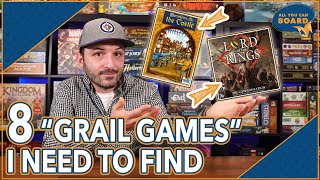
The game has been hard to find for years. Foster the Meeple are candid that it is very difficult to find because it is out of print, and they consider themselves lucky to have tracked down a copy. That scarcity has made it something of a grail title, with secondhand copies commanding premium prices, which is a real barrier for anyone who wants to try it today.
If You Enjoy Lord of the Rings: The Confrontation
Reviewers reach first for Stratego, the classic of hidden-strength deduction that Knizia so cleverly rethemed. For asymmetric two-player combat with greater scale and narrative, Star Wars: Rebellion delivers thematic warfare with a hunt at its core. Those who love the tight, mean two-player duel might also enjoy Santorini for abstract elegance with optional asymmetric powers, or Jaipur for a quick, sharp head-to-head that rewards reading your opponent.
What Reviewers Are Saying
"It's basically an updated version of Stratego where each character has a different level of strength and unique abilities. The last few plays have just shown me another level of depth and complexity; every time I play, there's something new being revealed, a different way you can use a character, a different strategy you can try."
— All You Can Board
"Confrontation is a hidden movement game where one side is playing as Sauron trying to find Frodo. The pieces are hidden from each other, facing you and not your opponent, so you're going to move and you're going to battle by revealing them."
— Foster the Meeple
"This is a fantastic game. It is very hard to find because it is out of print, however we have found a copy. If you're a Lord of the Rings fan I highly recommend it. It is extremely easy to learn, easy to play, you can be as strategic as you want to be, but ultimately you don't know what's coming at you from the other side."
— Foster the Meeple