/pic1451000.jpg)
/pic1810896.jpg)
/pic1451000.jpg)












Malifaux Deep Dive
What the Community Thinks About Malifaux
Reviewers across multiple wargaming channels consistently highlight Malifaux as a standout skirmish game that offers compelling mechanics, gorgeous miniatures, and accessible entry costs. The game has earned particular respect among hobbyists who value tactical gameplay, unique visual aesthetics, and the ability to build multiple competitive crews without the massive financial commitment required by larger army-based systems. Players praise it as a gateway into competitive tabletop wargaming while seasoned veterans appreciate the depth it offers beneath its accessible surface.
Core Mechanics That Define Malifaux
The Fate Deck Resolution System
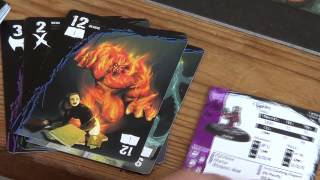
Perhaps Malifaux's most distinctive feature is its use of a card-based resolution system instead of dice. The Fate Deck drives all skill checks, damage rolls, and critical moments, creating a fundamentally different tactical experience than dice-dependent games. Players must manage deck resources strategically, deciding when to "cheat" by replacing cards with higher values from hand, adding a layer of push-your-luck decision-making to every action. This mechanic transforms uncertainty into manageable risk and creates memorable moments where tense card flips determine the battle's outcome.
Alternating Activation and Crew Building
Malifaux uses alternating activation, where players take turns activating individual models or small groups, creating intense back-and-forth gameplay. The crew-building system emphasizes leadership and synergy rather than point accumulation. A typical Malifaux crew consists of five to seven models, making it a truly skirmish-scale experience where every model matters and positioning becomes critical. This scale allows players to invest time in painting and characterizing each figure while keeping game complexity manageable.
The Malifaux Experience
Tactical Positioning and Resource Management
Malifaux demands careful resource management both in deck composition and during play. The smaller crew size means that losing a single model significantly impacts your combat effectiveness, unlike larger games where individual losses are absorbed by unit redundancy. Reviewers emphasize the importance of understanding terrain, because cover and elevation matter in a way that creates engaging risk-versus-reward decisions. Do you advance your powerful model across open ground to secure an objective, or take the safer route and arrive late? These choices define Malifaux's appeal.
Narrative Depth and Aesthetic Variety
The city of Malifaux itself serves as a character in the game's narrative. It exists as a fusion of multiple eras and architectural traditions from different dimensions, a design choice that directly benefits hobbyists. This narrative justification means players can use virtually any terrain piece they own without it feeling out of place. Japanese architecture, Egyptian ruins, steampunk structures, and fantasy elements all coexist naturally within the game's lore, reducing the pressure to purchase a specific terrain line and encouraging creative table setups.
What Makes Malifaux Stand Out
Affordable Competitive Entry Point
Reviewers consistently praise Malifaux's cost-to-competitive-viability ratio. A complete starter package including a rulebook, a full crew of miniatures, and the Fate Deck costs approximately $100 to $120 at retail, less than many competing hobbies and significantly cheaper than assembling a competitive Warhammer force. This accessibility opens the game to players who might be priced out of larger systems, while the "buffet" approach of collecting multiple crews appeals to hobbyists who like variety without massive financial exposure. You can paint five different crews and still spend less than building a single large army.
Model Quality and Creative Flexibility
Reviewers note that Malifaux miniatures rival Games Workshop's plastic kits in terms of sculpt quality and aesthetic appeal. The models carry distinctive personality, making them engaging to paint. The game's horror-steampunk setting supports wildly diverse visual styles, encouraging hobbyists to experiment with paint schemes and basing while staying true to the game world. Whether you envision a crew as grim Victorian industrial or vibrant gothic carnival performers, the lore supports your interpretation.
Potential Drawbacks
Game Length and Mechanical Complexity
Malifaux games regularly extend beyond two hours, sometimes reaching three hours or more for players learning the system or exploring complex interactions. The card-based resolution and numerous special abilities require careful bookkeeping. While reviewers appreciate this depth, it creates a barrier for players seeking quick tactical games. The learning curve is steeper than games like Kill Team or Warcry, though reviewers confirm it becomes intuitive after a few games. The Fate Deck mechanic itself is elegant, but the total number of rules interactions can feel overwhelming initially.
Niche Player Community
Malifaux occupies a middle ground in the wargaming ecosystem. It is not as widely supported as Warhammer 40,000, nor as casual as some newer skirmish entries. Finding an active local community may require extra effort depending on your region. However, reviewers note that players attracted to Malifaux tend to be enthusiastic and engaged, creating tight-knit communities worth seeking out through conventions and online forums.
If You Enjoy Malifaux
If Malifaux captures your interest, you may also appreciate Infinity for its sci-fi tactical depth and metal miniatures, Kill Team for a more approachable skirmish experience with Games Workshop models, Warcry for accessible age-of-sigmar-scale skirmishing, or Song of Blades and Heroes for rules-light narrative gaming. The Other Side, made by Malifaux's publisher Wyrd Games, explores the same universe at a larger scale. Existing Malifaux players often complement their crews by collecting for Flames of War, Gaslands, or other "buffet-style" systems that reward building multiple small forces.
What Reviewers Are Saying
Malifaux is a great game with models that in my opinion are any bit as good as Games Workshops plastics. They're amazing looking models. You can buy a starter book, the little one, for 15 bucks, you can buy a crew, which is usually between six and eight figures for 40 to 50 dollars, and then you can buy a deck of cards, the fate deck, for like 12 bucks. You've got an entire game, printed rules of book, a core crew to work with, and the cards you need for the game, and that's less than a hundred bucks.
— Tabletop Minions
Malifaux is excellent. I really love the card mechanic. That's one of my favorite parts of that game.
— Tabletop Minions
Malifaux is my favorite miniature game. This is the game that I just always have a blast painting and playing. I love that the models are so kooky and crazy. Even though it takes a long time, usually like a three-hour game whenever I play, but I love it. I love it so much.
— Tabletop Turtle