/pic814011.jpg)
/pic3118622.jpg)
/pic814011.jpg)















































Mansions of Madness Deep Dive
What the Community Thinks About Mansions of Madness
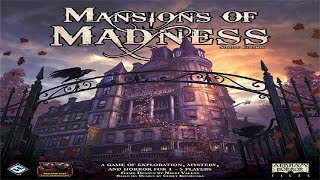
Mansions of Madness stands as one of the most immersive horror experiences in modern board gaming. Community reviewers consistently praise its ability to transport players into an Arkham-adjacent nightmare where investigation and terror intertwine. The second edition, powered by a companion app, has revitalized the franchise and redefined what cooperative horror gaming can achieve. Reviewers highlight how the game strikes a balance between accessibility and complexity, making it memorable for both newcomers and seasoned players seeking atmospheric depth.
Core Mechanics That Define Mansions of Madness
App-Assisted Storytelling
The digital companion app serves as the game's beating heart, functioning as an intelligent dungeon master that guides investigators through branching scenarios. The app manages hidden information, controls creature movements, delivers atmospheric narration complete with eerie sound design, and dynamically adjusts the narrative based on player choices. This mechanic frees players from complex bookkeeping and allows them to focus entirely on the mystery unfolding before them. Each scenario ranges from one to six hours depending on the chosen investigation, and the app handles everything from puzzle mechanics to the timing of horrific encounters, creating an experience that feels like guided storytelling rather than traditional board game mechanics.
Cooperative Deduction with Sanity Mechanics
Players work together as investigators uncovering arcane mysteries in haunted locations, but they must manage their own sanity as they encounter eldritch horrors and impossible truths. This resource management element creates tension not just from external threats but from internal psychological deterioration. Investigators track both mental and physical health, and witnessing supernatural phenomena forces sanity checks that can push characters toward madness. When investigators go insane, they receive secret victory conditions that may conflict with the group's goals, creating a delightful betrayal dynamic where previously cooperative players suddenly have competing agendas—all while the rest scramble to solve the mystery before everything falls apart.
The Mansions of Madness Experience
Immersive Thematic Atmosphere
The production quality elevates every aspect of play. Detailed miniatures of investigators and creatures, evocatively illustrated room tiles with spectacular detail, and the app's atmospheric sound design conspire to create an experience less like a board game and more like an interactive horror film. Players consistently report that despite scenarios running several hours, clock-watching never occurs because the gameplay maintains relentless engagement. The visual presentation transforms what could be dry mechanical actions into visceral moments—exploring a corridor feels genuinely tense, discovering a room filled with supernatural artifacts creates palpable dread, and encountering eldritch beasts carries visual weight. The game fully commits to its Lovecraftian premise, making players feel like they have genuinely stepped into the streets and mansions of Arkham.
Discovery-Driven Exploration
The modular board construction means players never know what lies beyond the next doorway. Investigators explore haunted settings progressively, revealing new tiles and secrets as the mystery deepens. This element of discovery ensures that replay value remains high despite the scripted narrative—player routing decisions, item acquisition order, and which clues they prioritize create genuinely different experiences. The game rewards careful investigation and conversation, with clues piecing together like a jigsaw puzzle toward multiple possible conclusions. Finding hidden rooms, uncovering the truth about supernatural rituals, and piecing together exactly what happened in these cursed locations drives players forward even when the stakes of individual encounters matter less than the larger mystery.
What Makes Mansions of Madness Stand Out
Narrative-Driven Design with Multiple Scenarios
While the core game includes four distinct scenarios in the second edition, each tells a complete self-contained story with unique victory conditions, enemy types, and puzzle solutions. The app ensures that solutions aren't memorizable across plays—what works in one scenario becomes useless in another. Players remember games of Mansions of Madness as stories rather than sequences of mechanics, discussing the eerie mansion they explored or the terrible secret they uncovered rather than specific rules interactions. This narrative-first approach distinguishes it from more mechanics-heavy cooperative games and creates lasting memories that persist long after the investigation concludes.
Customizable Difficulty and Accessibility
The game welcomes both fresh players and experienced gamers, with the app handling rules complexity and guiding newcomers naturally through each scenario's flow. The rulebooks exist primarily for reference rather than mandatory reading. Meanwhile, veteran players find depth in optimizing routes, anticipating creature behavior, and managing sanity strategically. This design philosophy makes the game an excellent introduction to thematic cooperative gaming while offering enough mechanical meat for enthusiasts seeking meaningful decisions. The fact that nearly anyone can jump in without extensive rules explanation, yet still experience the full atmospheric weight and strategic challenge, represents significant design achievement.
Potential Drawbacks
High Barrier to Entry and Investment Required
Mansions of Madness carries a substantial price tag, making it an expensive hobby investment. The game also demands a smartphone or tablet with the app installed, adding a technological requirement that not every group can meet. For players without access to the required device or those uncomfortable with digital integration into their tabletop experiences, this represents a genuine obstacle. Additionally, the sheer quantity of components, rules references, and material to absorb can feel overwhelming on a first reading, though the app mitigates much of this burden during actual play.
Limited Replayability Per Scenario
Each scenario functions as a one-time experience—once players solve the mystery, they know the solution and cannot approach it fresh again. While sharing the game with friends lets them experience it new, a single player group exhausts the base box's content after four plays. The expensive purchase price means some groups will face the hard truth that their investment yields only a handful of unique experiences before the game becomes spent. This structure differs fundamentally from traditional board games offering unlimited replays, though many players find the intensity and memorability of each investigation justifies the cost despite limited plays.
If You Enjoy Mansions of Madness
Players drawn to Mansions of Madness should explore Arkham Horror: The Card Game for a deeper mechanical dive into Lovecraftian investigation, though with solo or pairs focus rather than group play. Eldritch Horror offers broader cosmic horror themes with a more traditional cooperative structure, though sacrificing the immersive app-driven storytelling. Descent: Legends of the Dark follows a similar app-assisted dungeon crawling formula with fantasy rather than horror theming, making it ideal for groups seeking comparable immersion without the Lovecraft license. For mystery-loving groups seeking non-horror alternatives, Whitehall Mystery and Deception: Murder in Hong Kong provide deduction-focused experiences, while Betrayal at House on the Hill captures the haunted location atmosphere through traditional mechanics alone.
What Reviewers Are Saying
"If you're looking for the ultimate immersive haunted adventure this halloween and you aren't afraid to mess around and actually summon cthulhu or something, then might i suggest mansions of madness—it's one of the most thematic and immersive games that I've ever played. It really pushes the genre to the limits and challenges what it means to be a board game."
— Might I Suggest A Game
"The best part of this game is how immersive it is—it feels less like a game to be played and more like an experience to be had, with each scenario getting more intense and more challenging than the last. Even though each game can run several hours, you're so invested in the gameplay that there's very little clock watching because there's always something going on."
— Might I Suggest A Game
"Mansions of Madness is one of my favorite games of all time. I think it's absolutely perfect for a spooky game day. You need an app for this, which provides some of that ambiance, those sounds and everything, and it's just one of my favorite gaming experiences overall."
— Foster the Meeple