
Game Info
Year
2023
Players
2-6
Age
8+
Playtime
15 min
Collection
Ratings
Creator Score
Mechanic profile
Not enough video data yet
Vibe profile
Not enough video data yet
Description
Will the players put their cards in the discard pile or their own collection? This choice decides whether they will gain points, pressure the others into the direction you want, or impede their rival players’ strategy.
Featured Videos

Ask a Rules Question
Images
GID0204208.jpg

GID0204208_thumb.jpg
All mentions
Browse transcript mentions, sentiments, pros/cons, mechanics, topics, quotes, and references.
Total mentions: 10
This page: 10
Sentiment:
pos 8 ·
mix 1 ·
neu 1 ·
neg 0
Showing 1–10 of 10
Video daNhC-7_Akg
Meeple University Review at 0:28 sentiment: mixed
video_pk 90459 · mention_pk 241740
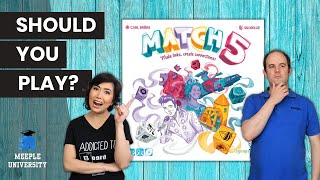
Click to watch at 0:28 · YouTube ↗
Overall sentiment (raw)
mixed
Pros
- easy to learn and play; quick icebreaker
- great for meetups and icebreakers
- replayability due to two sides and multiple boards
- customizable board categories
- scalable to many players (up to eight)
Cons
- there are better word games
- time pressure can be stressful
- forces you to play safe sometimes
- the game doesn't distinguish itself in a huge way
- subjectivity of concepts depending on players
Thematic elements
Comparison games
- Cross Clues
- Code Names
Mechanics (from transcript analysis)
- board creation & customization — players can create own board categories
- Compound Scoring — 2 points for a match with another player; 1 point for valid but unmatched; 0 if majority rejects
- concept writing — each player writes 10 linking concepts within a time limit
- dice-driven category alignment — roll colored dice and insert into matching slots to align with categories on boards
- one concept per entry — cannot use more than one concept per attempt; multiple concepts per board are not allowed to be paired together
- player count flexibility — supports up to eight players; no fixed lower bound stated
- scoring by matching with others — 2 points for a match with another player; 1 point for valid but unmatched; 0 if majority rejects
- two-round play with replayable boards — gameplay spans two rounds; boards have two sides for replayability
- Variable Set-Up: Player — supports up to eight players; no fixed lower bound stated
Video topics + discussion points
No key topics recorded for this video.
Quotes (from this video)
- it's a perfectly fine game
- it's an easy party game
- it's a good sort of icebreaker at a meet-up
- there's a lot of variety
- two sides ... extra replayability
- you get two points if you match with another player
- you get no points if the majority doesn't think you've come up with something sensible
References (from this video)
No references stored for this video.
Video Y1vCyXi4AqM
The Dice Tower Discussion at 12:40 sentiment: positive
video_pk 82208 · mention_pk 206460
Click to watch at 12:40 · YouTube ↗
Overall sentiment (raw)
positive
Pros
- Fun mechanic
- Fast-paced
- Unique presentation
Cons
- Violent nature may not appeal to all
Thematic elements
- Battle game
Comparison games
- Potion Explosion
Mechanics (from transcript analysis)
- cooperative play — It also says solo and co-op mode so
- marble drafting — that uses a marble matching mechanism where you have these three, you can see there uh, the the dropper device, the tower, which has it's shaped like an arcade cabinet.
- Player Progression — special abilities abound. If you like games like potion explosion and finding those combinations and are looking for something more in your face.
- Set Collection — but you're finding combinations of colored marbles on your side and the middle column of this dropper device and finding those combinations taking them and then triggering abilities.
- solo mode — It also says solo and co-op mode so
- special abilities — triggering stuff and doing damage to your opponent. Eventually breaking their buttons because there's like health bars for the yellow red and blue and you can break the buttons which causes them to short out and changes the mechanisms
Video topics + discussion points
No key topics recorded for this video.
Quotes (from this video)
- This is Food Chain Magnate.
- Eric, your clue is Sanguin Anger.
- That's Blood Rage.
- Holy Knights from the Occidental Domain.
- Paladins of the West Kingdom.
- Stratosphere Squad.
- Sky Team.
- The Big One with the giant lion on the front.
- Twilight Imperium four. Fourth edition.
- Maritime Metropolis
- Underwater Cities.
- Fraudster Doctor
- Quacks. Quacks of Quedlinburg
- Art Curator
- The Gallerist
- Blue.
- Azul.
- Battles of Suns, Monarchical Violence.
- Imperial Assault.
- The Bleached Fortress.
- White Castle.
- Sand Bank Sovereignty.
- Dune Dune Imperium.
- This is the seeding round.
- So, much like the famous game title recall, Oh. right? The this is the seeding round.
- This game is broken. You win this game every time if you lose all your battles. Winning battles is the worst thing you can do, apparently.
- One star review, Royalty free clip art, complete absence of graphic design, lowest possible grade components, and then priced above most ultra premium titles.
- That is Food Chain Magnet.
- No ducks, false advertising.
- 70 collector's box plus crown expansion, first Kickstarter promo.
- Watching paint dry or play this game about watching paint dry. Tough decision.
- I love this one. I'm here to berate the designer of the game. I haven't even played the game, and it's already driving me to tears and make me want to flip the table. Who designed the pieces? Who? Zero stars for that junk.
- This is like Sudoku, but worse and colorful.
- Azul is way better than those.
- The deck building is dull, the resource conversion is dull. It's just a mishmash of stuff.
- Too old. Don't believe anyone who says that it's still relevant.
- El Grande.
- When I buy a core box, I expect to be able to play the game by itself and don't have to buy an expansion for it to be actually playable.
- It's mostly about brewing coffee for rerolls.
- It's a blowout.
- Reading one star reviews is Oh. It's It's kind of a guilty pleasure, isn't it?
- Remember to check out dicetower east.com if you want to register to play games with us
References (from this video)
No references stored for this video.
Video ehv76_gV76M
The Dice Tower News at 1:04:12 sentiment: positive
video_pk 82204 · mention_pk 206450
Click to watch at 1:04:12 · YouTube ↗
Overall sentiment (raw)
Very positive
Pros
- Combines marble dropping and tag team mechanics
- Interesting puzzle fighter aspect
- Asymmetric characters
- Unique combination of mechanics
Cons
- Aesthetic could be different (mentioned by Mike)
Thematic elements
- Puzzle fighter, tag team
Comparison games
none
Mechanics (from transcript analysis)
- asymmetric characters — Mentions 'Asymmetric characters'.
- Marble dropping — Likes 'anything that has like the marbles falling through there'.
- Puzzle — Described as a 'puzzle fighter board game'.
- tag team — Likes 'tag team, you know you get those combos and you're battling somebody'.
Video topics + discussion points
No key topics recorded for this video.
Quotes (from this video)
- I want to like this so bad.
- But I hate that board so much.
- You just completely lose me on the visuals. Like it kills it almost kills any excitement I have for this game.
- This board 100% looks like a prototype. It does not look finished.
- The name 'Heroes of the Shire: Light and Shadow' is confusing and evokes Lord of the Rings, which the game is not.
- I'm not seeing how this one is standing out from all that bloat that's already out there or on the way.
- The Old Ones El Dorado feels when I say it, it's very reminds me very much of The Quest for El Dorado.
- And after all of that, I'm like, I have no idea how to play this game.
- This is a Mindclash game through and through. It is the kind of game I will avoid at all costs.
- And it's a stunning looking game.
- I have zero I have less than zero interest in this
- This game is reading its own press.
- Botany came out some time ago.
- For all of their games, they have a super deluxe wooden box version.
- This is making almost a million dollars.
- I think that their games look fantastic.
- What they're going for, and they nail that that vibe, right? That look.
- I'm intrigued by that but it's an undertaking I don't think I'm at a point to undertake
- My pick is the same one that we started the episode with and that is the Old King's Crown.
- This looks great. This looks great.
- This is swinging for the fences. It might not pay off but I'm liking the way it looks and that they are taking that big risk.
- It is the kind of game I will avoid at all costs.
- It's a stunning looking game.
- I have zero I have less than zero interest in this.
- My pick of the day is Rematch, the I guess puzzle fighter board game.
- And I'm going to go with uh the Old Ones of El Dorado here.
- What is Hamtel? Is that Is that a compound word?
- I love that they're like this really took a left turn and they're like okay, you can use this thing.
- Look at this guys. This is uh
- This is Because you're going to pick up that kid and you're going to you're going to curl them, okay?
- Children love being flung about the room.
- My stretch goals are for $50,000 website, inventory, and marketing.
- He also needs for a vehicle. 150 Gs. He needs a vehicle.
References (from this video)
No references stored for this video.
Video TrwkNt9rwMw
Watch It Played Live Chat at 57:05 sentiment: neutral
video_pk 68670 · mention_pk 248049
Click to watch at 57:05 · YouTube ↗
Overall sentiment (raw)
Neutral
Pros
none
Cons
none
Thematic elements
Comparison games
none
Mechanics (from transcript analysis)
Mechanics unknown.
Video topics + discussion points
No key topics recorded for this video.
Quotes (from this video)
- if you haven't watched the gameplay yet and you plan to then stop watching
- we won just at the last minute on the last thing we couldn't have anything else go wrong
- Steve we're on you yeah we're on you Steve
- who cares if a tiny Kingdom get it's just tin one tiny Kingdom what's the who cares if it burns
- I don't like to use my platform to share opinions of games
- you want to just stick a GoPro on my forehead I'll do whatever
- I did promise that I would do Arkham Horror eventually
- I don't review things Tom can do that he can say whatever he wants about whatever game he wants because it's his opinion
- I don't think you want to send your family we have not attended the Asylum as a family and we are not going to play Arkham horror probably as a family either
- I only do games I like at least somewhat I don't have to love the game I have to like it somewhat
- my mom always said don't talk to strangers
- people don't just get an accent though like you just got an accent well I mean maybe I'm normally hiding it
- you're really about it's about sort of betting do I have what I think I have
- Watch It Played has eaten my life and I love it I love that it has eaten my life this is what I want to be doing
- I don't want to make supporting our show be similar to your electric bill
- I hope it still exists not to beat this drum too loudly or too often but I mean it will come down to the fundraisers honestly
- my my what I want to do is I want the show to be something that I retain control of I get to play the games I want to play work with the Publishers I want to work with
- I would love to have a dedicated Studio I'm in my basement right now it's unfinished it's pretty good I'm pretty happy with where it is now but I I I could be happier
- Pep should get his own segment on watch it play Pep's Pep's play period make it happy Rodney you're holy back
- this is what I want to be doing I find the work people sometimes say oh you must have so much fun when I'm staring down the barrel of 15 hours of shooting an instructional video I'm not sitting there going wow this is fun but is intensely satisfying
References (from this video)
No references stored for this video.
Video weDcShuzPXE
Unknown Channel Promotion at 2:40 sentiment: positive
video_pk 67370 · mention_pk 163473

Click to watch at 2:40 · YouTube ↗
Overall sentiment (raw)
positive
Pros
- solo option adds flexibility
- challenge level described as thinky
Cons
- may be too thinky for some family groups
Thematic elements
- Pattern matching
- Pattern-building puzzle with solo option
- contemplative
Comparison games
none
Mechanics (from transcript analysis)
- Pattern Building — Move pieces to create patterns, one at a time.
- solo mode — Includes a solo play option.
Video topics + discussion points
No key topics recorded for this video.
Quotes (from this video)
- I love to that all of these games have a QR code on them.
- Winners will be announced on August 10th.
- Three three places to enter, three entries you can win, and one of you will be the lucky winner.
- They are all card-based, and they are all a good time.
References (from this video)
No references stored for this video.
Video 0Ze0ZbZ1x0I
Shelfside Review at 0:08 sentiment: positive
video_pk 60565 · mention_pk 152955

Click to watch at 0:08 · YouTube ↗
Overall sentiment (raw)
positive
Pros
- Very, very well produced components and strong production value
- Accessible setup and learning curve
- Six distinct asymmetric characters with clear flavor
- Fan mechanic adds extra depth and decision points
- Strong counterplay and plan-ahead opportunities
- Easy to rematch; quick setup for multiple sessions
Cons
- No rulebook yet (prototype stage)
- Potential readability issues on larger tables without aids
- Arcade machine can occasionally stick and require adjustment
- Glass marbles can be heavier and slightly fiddly
- AP risk due to marble patterning and multiple interaction layers
Thematic elements
- Array
- arcade machine
- character-driven asymmetrical dueling
Comparison games
- Dice Throne
- Soccer Arms
- Guilty Gear Drive
Mechanics (from transcript analysis)
- Arcade machine central board — A central arcade-like tray dominates the middle, with 3D standees and organized components enhancing theme.
- asymmetric character abilities — Six characters provide unique components and abilities that affect marble interactions and timing.
- Asymmetric Player Powers — Six characters provide unique components and abilities that affect marble interactions and timing.
- Button health and breaking — Each color is tied to a button with a health dial; when it hits zero the button breaks and you must pay to continue; broken colors are less usable until repaired.
- Character accessibility and visualization — Character boxes show complexity and backstory; players read their character's complexity to pick a vibe.
- End Game Bonuses — Win by forcing the opponent to lose all credits; damage and button loss translates to credits.
- Endgame win condition via credits — Win by forcing the opponent to lose all credits; damage and button loss translates to credits.
- Fan mechanic — Three colors of fans can attach to a side, granting bonus effects; fans move between sides via gameplay events.
- Marble take actions — On a turn, players take 1, 2, or 4 marbles of a color to perform an action; marbles are returned to the tray and new marbles drop down.
- Pattern/shape-based marble layout — Marbles form rows and shapes; there is no backtracking and diagonals are disallowed; Tetris-like constraints guide valid moves.
- Short-circuiting marbles — Clearing certain marbles enables short-circuiting of colors to bridge gaps and heal; each marble used restores HP.
Video topics + discussion points
No key topics recorded for this video.
Quotes (from this video)
- Rematch is very, very well produced.
- To win the game, you must force your opponent to lose all their credits.
- Rematch is easy to rematch.
- Excellently done.
- This marble gimmick is not just a silly party trick. It actually serves the tabletop medium quite well.
- I would basically always want to play this game if given the opportunity.
- There's no rule book yet (prototype).
- The game balance feels balanced with new patch notes, but we're not sure unless we play each character 10 times.
References (from this video)
No references stored for this video.
Video ACfoDmjQksQ
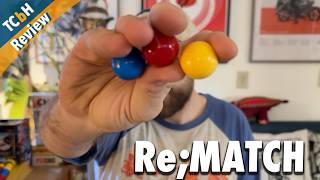
The Cardboard Herald Review at 0:45 sentiment: positive
video_pk 40357 · mention_pk 122185
Click to watch at 0:45 · YouTube ↗
Overall sentiment (raw)
positive
Pros
- Energetic and smart system
- Tangible puzzle with marble mechanics
- Nostalgic fighters with distinct playstyles
- Accessible playtime, short and snappy
Cons
- Potential marble tray jams and storage concerns
- Balance tuning required across fighters
- Storage and box design may be challenging in final version
Thematic elements
- Nostalgia for 1990s arcade fighters and puzzle-tinged combat
- Two-player dueler inspired by classic Japanese fighting games, with marble-based mechanics
- Character-driven fighting game vibe with modular fighters
Comparison games
- Puzzle Fighter 2 Turbo
- Bubble Bobble
- Rival Schools
- Tekken
- Gloomhaven
Mechanics (from transcript analysis)
- Arcade token/dial life system — Each fighter has a three-colored dial; when damaged, its dial flips to a damage side and tokens are lost.
- Catch-Up — Damaged color marbles can be used as connectors to recover and restore health by reconfiguring remaining colors.
- Catch-up via short-circuiting damage color — Damaged color marbles can be used as connectors to recover and restore health by reconfiguring remaining colors.
- Color-based power activation — Marbles correspond to colors that trigger specific abilities for fighters.
- End condition via tokens — When a player runs out of arcade tokens, they lose.
- Marble pool drafting — On a turn, a player pulls 1, 2, or 4 connected marbles from the two columns closest to them to activate powers.
- Turn-based back-and-forth with risk of opening to counterplay — Flipping the dial back to healthy side offers opportunity but can leave you exposed.
Video topics + discussion points
No key topics recorded for this video.
Quotes (from this video)
- This is such a simple system, but it feels so energetic and smart.
- The marbles are really great, and I love the size and feel of them as designed.
- One of the best, most energetic, and most clever adaptations of a fighting video game that I've ever played.
- Short, sweet, snappy, and clever game.
References (from this video)
No references stored for this video.
Video SMb40H-Nhis
The Board Game Garden Discussion at 27:49 sentiment: positive
video_pk 38972 · mention_pk 212666
Click to watch at 27:49 · YouTube ↗
Overall sentiment (raw)
positive
Pros
- Cool, unique take from Stefan Feld
- Engaging decision space and resource tension
Cons
- Name is difficult to pronounce and remember; long duration may deter some players
Thematic elements
- Strategic card acquisition and placement
- Worker-placement with card-driven tableau
- Thinky, classic Feld-style
Comparison games
- Lyran
- Lrronha
Mechanics (from transcript analysis)
- Resource acquisition and card-driven costs — Cards provide resources and ongoing effects.
- Resource Management — Cards provide resources and ongoing effects.
- Worker Placement — Place workers above cards to gain access and control cost.
- Worker placement with bidding-like line status — Place workers above cards to gain access and control cost.
Video topics + discussion points
No key topics recorded for this video.
Quotes (from this video)
- Oh my goodness, this game. I need to get my hands on a copy of this one because I really enjoy it.
- I love this part of the game. My only thing is I feel like there's this specific thing with whatever tea you have in your teap that is going to be used for all of your witches.
- Shallow Sea... definitely get your hands on a copy of Shallow Sea because it is so good.
- Federation needs more love. This game is so fantastic.
- Endeavor Deep Sea is my number one for September.
References (from this video)
No references stored for this video.
Video Xt3eoEaLuYc
Chairman of the Board Discussion at 6:29 sentiment: positive
video_pk 13178 · mention_pk 112619
Click to watch at 6:29 · YouTube ↗
Overall sentiment (raw)
positive
Pros
- High-quality production by the publisher
- Compact two-player/shielded format for quick play
Cons
none
Thematic elements
- Card shedding and pile-building
- Push-your-luck/hand management style
- Fast, tense, quick rounds
Comparison games
- The Seals of Cthulu
Mechanics (from transcript analysis)
- shedding/card piling — Players shed cards to a central pile to score
Video topics + discussion points
No key topics recorded for this video.
Quotes (from this video)
- Evergreen is actually I suppose a spiritual successor to the famous photosynthesis board game.
- this one has more focus on the light points and the way you actually take your actions is different as well because it does use this drafting system
- this game was like gold dust for a long long time
- the production of these games is absolutely stellar
- these Magi 7 dice are absolutely gorgeous
References (from this video)
No references stored for this video.
Video d4C2pzhuzOM
Board Games With B7 Discussion at 6:16 sentiment: positive
video_pk 6711 · mention_pk 123461
Click to watch at 6:16 · YouTube ↗
Overall sentiment (raw)
positive
Pros
- compact deck yields deep strategic depth
- artwork by TJ Lebrono enhances experience
Cons
- two-player only; limited player count may deter some groups
Thematic elements
- ceremony and precision
- islands of Japan; tea ceremony tradition
- calm, contemplative strategy with depth
Comparison games
none
Mechanics (from transcript analysis)
- bluffing — secret intentions and card play influence outcomes
- hand_management — manage a small deck to optimize choices
- set_collection — collect utensils needed for the tea ceremony
Video topics + discussion points
No key topics recorded for this video.
Quotes (from this video)
- For a quick two-player game, it really packs a punch.
- I'm thrilled to see Baron make a comeback with a new addition, allowing even more players to experience this fantastic and elegant game.
- Linko remains one of my favorite card shedding games, and I continue to enjoy it often.
References (from this video)
No references stored for this video.
Transcript Navigation
Showing 1–10 of 10