/pic3389098.jpg)
/pic1248466.jpg)
Similar to Streetcar, Tsuro, Tantrix and Spaghetti Junction, this game has players putting square tiles onto the board to form rail lines. The major difference in this game, however, is that players are not striving to make short, direct routes like those sought in Streetcar. Instead, the object of the game is to make the rail lines as long as possible. Players start with a number of trains ringing the board. Whenever a tile placement connects a train to a station (either on the edge or the center of the board), that train is removed and the player scores one point for each tile that the route crosses, which can cause one tile to score multiple times if the track loops around. However, players score double for city connections, which are the stations in the center of the board.
For those interested in graph theory, a key part of the Metro game design is that the routes will always connect a starting subway train station with an empty destination station, rather than routing to another starting subway train station. The tiles implement a design principle which allows any tile to be placed on any open grid space, subject to rules for alignment with existing tile edges. If correctly placed per the rules, the routing will allow for all trains to score, albeit not necessarily for the high run value the owner would like to attain.
The game was originally issued as Iron Horse (not to be confused with Iron Horse).
Re-implemented by:
Cable Car
/pic3389098.jpg)
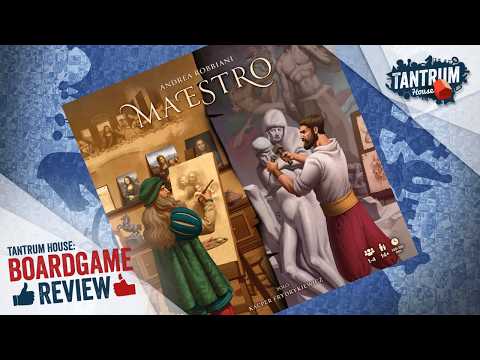



- Fun light game (referring to Metro)
- Metro
Mechanics (from transcript analysis)
- Route Building — The host likes Metro, which is about connecting stations and trying to make the longest route.
Video topics + discussion points
Quotes (from this video)
- So, because of that, I actually never got a copy of it um and haven't played it.
- Um so, you drive cars around and shoot at each other. That's basically the game.
- Looks like Carcassonne with Islands. That looks pretty good.
- Do we need a card game version of it? And the answer to that is we really don't. Just play Camel Up.
- This is a war game from Don Greenwood, Avalon Hill.
- But if you like choose your own adventures type games, that's what this is.
- It is a tile laying game that is about as exciting as it looks in this picture here.
- So if you like Klask, um which is a fantastic two-player game, this is just a version for four.
- I really like awkward guests, so why didn't I play the second one?
- He gave it Seal of Approval. A seven out of 10. Well, there you go.
- I think I'm going to have to go with the Bottom of it. It is a fantastic three-player trick-taking game that I like very much and think you definitely should check out.
- If you really like what we're doing here at the Dice Tower, then there are different ways to support the Dice Tower. One of those ways is through Patreon.
References (from this video)

- Received as a free game at BGG Con.
Mechanics (from transcript analysis)
Video topics + discussion points
Quotes (from this video)
- it was me Matt Marty and I forget the other gentleman's name it's bugging me that I'm forgetting his name he was fantastic he he was uh he worked with FFG and we played learned and played Great Western tra together Marty knew how to play and he taught us he did a fantastic job teaching the game
- so yeah so that that was another game I was really glad to have gotten a plan of anything else you want to mention before we move on from BG
- I love Jenga so of course I'm going to love what is wony what okay so it's uh it's just the these squares those little medium big squares but they're not quite squares the cubes are a little bit wonky you could say cuz they're like shaved on edges and so you can't really stack them properly you have to angle them
- that reminds me cuz the game came up uh Tada someone some asked about games that make make you laugh sure recently especially uh tadada and hex casters were great for making people laugh like the whole yes you know when you have to roll dice with your elbows on the table especially when someone had already played something on you and you have to have your elbows on your table and while you're doing something else yeah well you have the head on your table too and it's just impossible yeah that game's about being ridiculous super ridiculous yeah
- it's basically just looking around and seeing if there's vacant looks on everyone's faces like they don't understand what's going on especially if while I'm reading at the same time I'm not fully understanding the rules like if it's my first time reading through the rules trying to teach the game and I'm not quite fully understanding it so there's Factor number one if you as the teacher are like I'm not getting this working that's a great reason to box it up
- I actually enjoy these live shows a lot more than than doing the table talks enjoy them more you know what I mean they're a different kind of work like this we sit down I prepare stuff in advance takes time to set up but then when it's done it's done with table talk it's like we shot it for a couple of hours now we need to go edit that then we I likeed having the viewers be a part of it so then getting in their stuff and editing their content and it all is kind of time consuming not in a bad way but it's like you have to create time for that though if you're going to do it
- yes my hope is that we'll be able to have those uh available in the future as well
- I just played with Luke overcooked it's a couch only Co-op game and boy did we have a lot of fun our first play of it we were just cackling while playing that game
References (from this video)
- enjoys route-building games
Mechanics (from transcript analysis)
- plausible stock market module — stock market module mentioned in newer/alternative versions
- Route Building — crazy route building style game with tiles to extend routes
Video topics + discussion points
Quotes (from this video)
- it's a relatively lightweight card game
- looks very pleasant
- i would love to try at some point
- aesthetically pleasing vibe
- i'm genuinely curious to learn more about this
References (from this video)

- Fantastic
- Challenging black deck was beaten
Mechanics (from transcript analysis)
- jokers — The game features Jokers, specifically mentioning a '+1 Joker with -1 hand per round' mechanic that adds difficulty.
Video topics + discussion points
Quotes (from this video)
- I never I still haven't gotten my shipment well so that's weird man
- the Catalyst games Peterson games like uh buyou like fell through and nobody knows exactly what happened it's just it's a big giant um C fuffle that
- the path to us for finally completing and delivering the gods War I is coming into view in the next few weeks we are going to have a major announcement on this thank you for your continued patience in t that we realize it's been a frustrating journey
- hyperspace is you know we'll get to it eventually
- I think I got my highest score ever on H Gaia project the other day 100 and something
- when people go silent like completely silent and they don't say anything for months it's because they have no interest zero interest zero interest of actually completing what they're doing
- I hate forgetting [ ] I hate it I hate you st lits you're getting old I know but I hate it
- you know they they say if you're afraid of homosexuals that means that deep down inside you're homosexual and that worries me because I'm afraid of dogs
- Growing up I never would have believed that one day i' need a computer just to masturbate
- he did that so he'd have something if you're one of those people that complains that their CVS receipts are too long oh man you're gonna [ ] hate books
- it's good it's a perfect movie
References (from this video)

- addictive and quick sessions
- accessible on Nintendo Switch
- simple controls with immediate feedback
- short playtime per run
- limited depth beyond high-score chasing
- fast-paced, score-chasing arcade action
- digital/arcade-style handheld/console play
- short, pickup-and-play, arcade scoring
Mechanics (from transcript analysis)
- fast-paced platforming — rapid movement and platforming actions with a focus on speed and quick reflexes
- score-based progression — session-based play where players try to achieve high scores with quick runs
Video topics + discussion points
Quotes (from this video)
- I am just super grateful for the Board Gaming Community who I have great conversations with
- I've been enjoying batro a ton lately
- I love the fact that I could just enjoy the game all by myself cuz normally when you're playing Super Smash Brothers you're playing with a group of people
References (from this video)
- Fun
- Getting a larger campsite
- Road protects from train company bulldozing
- Road will be flatter, have less bugs, and better drainage
- Host is excited about it
- Has to be renamed
- Requires more time for development
- No deadline for the project
- May not be published depending on the board game world's future
- Host has to move campers unless the road is built
- Exploration, quest, and combat
- Ruined Imperial city of Metpat
Mechanics (from transcript analysis)
- Area Control — Players engage in area control.
- Hex Crawl — Players explore hexes.
- Leveling up — Players level up their characters.
Video topics + discussion points
Quotes (from this video)
- And then and then um you know, could I get some bacon? And she's like, of course you can get some bacon now. But I'm I with the bacon, if you could if you could make it really rare, like really rare, like very I mean like raw if possible, if that's possible, if I get get that. And she's looking at him like, 'What do you'
- It is the greatest game. Every single group of people that I've introduced that game to that I've seen people immediately take out their phone and buy it.
- He's like, 'It's raining outside. this this this guy standing next to me with a with a Viking sweatshirt on and and he's with with with Crocs with Ver Crocs and and uh and and gym shorts screaming at me that I yelled at this kid a couple of You know what? I'm just going to throw my cigarette away and get back on my bus and drive away.
- I'll fight it and send it to you.
- And the thing is like she's got like 20,000 subscribers and it's just she just doesn't care. She's just like yeah I'm going to do this. This is this is what I'm going to do. I'm just going to talk about every episode of Columbbo and I just god bless her heart you know.
References (from this video)
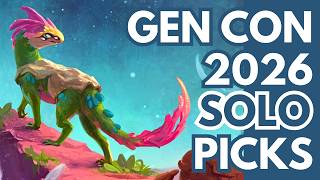
- Compelling and unique concept
- Team game with asymmetrical workshops
- Solo play might not be the best player count
- Depends on how streamlined the solo opponent is
- Master artists Leonardo da Vinci and Michelangelo vie for fame and prestige.
- Italian Peninsula in the early 1500s
Mechanics (from transcript analysis)
- Asymmetrical asymmetry — the twist is the two workshops are asymmetrical and they score points in different ways.
- Card-driven actions — you're going to be using cards in order to take actions
- solo opponent — I assume that in a solo game, you know, you take one of the two workshops and then the solo opponent will take the other.
- team play — This is actually a team game with basically just two teams, team Leonardo and team Michelangelo.
Video topics + discussion points
Quotes (from this video)
- 2026 is shaping up to be a disappointing year for new solo games, and really games in general, but that's a topic for another video.
- There simply weren't enough games that were clearly marked for sale that I was interested in in order to complete a top 10 list.
- I have to say light to medium-weight tile-laying games have become a really crowded genre.
- I'll be honest, I just do not care about this theme at all. This game would be so much higher on this list if it had a fun and engaging theme.
- I simply just cannot wait to get this one to the table.
- This is a Eurogame that both sounds and looks like a ton of fun. That's pretty unusual.
- And with a track record of these designers, I'm confident that this one is going to be one of the best games of the year.
References (from this video)
- Host is having fun with it.
- Superhero (Marvel)
Mechanics (from transcript analysis)
Video topics + discussion points
Quotes (from this video)
- I have tons of Google Chrome accounts because you know Google accounts because we have several work ones and we have my personal and something else.
- It's such a frustration. There's so many not any of them are great.
- This is so much stuff. Holy cow.
- I really do wish I had more of I do have another gray. As a matter of fact, let me just get it out of the package.
- I really don't need more paints.
- So, yeah, this is before they moved or moved their operations to Arizona. They might have already been in Arizona. I don't know.
- Don't buy more paints than you need.
- Wow, this is pretty great. Just scoops it right out of the palette here.
- It sounds like it's in there.
- You know what? I am just going to get these out of here. They do not need to be in the box. I will use them more out.
- It sounds more fluid maybe just this the stuff settled.
- This is another reason to not have too many paints.
- I always say I creep up on the color intensity I want.
- The contrast paints are meant and speed paints are generally meant to just be a single coat over a like white or gray undercoating.
- It's really not that hard. I don't know what I did there. I think that's a hair that stuck there which is bad.
- It is a problem if you're trying to match, right?
- I have 20some airbrushes. I don't need that many airbrushes.
- So, yeah, you can see here this is a standard uh this is a Anthem.
- I really don't like when I do that.
- I like it in the sense number one I've used it forever, but additionally I like it because um it's less bulky.
- I have many that are still kind of unused.
- This is not dry enough, which I won't do because if I paint here, it'll tear this paint and then it'll have a light spot.
- You really want to leave the paint alone once you got on because you start to tear the and I'm fiddling with it.
- It is one of the things I love about it is they are not terribly expensive.
- I have a lot of air bulbs.
- I don't know what that color is. It could be this.
- The contrast paints are thinner than standard acrylics.
- I really like the idea of doing multiple sets at different stages.
- I really do hope they get the um DC Superheroes United together.
- It's a bummer. There's like a whole quick filters.
- People don't use um, you know, mostly art is done on the computer now and you can replicate.
- I have to have two different I have to have this quick disconnect adapter.
- I've done undercoating like this before for standard paint jobs where you get the idea of the shading, but I did not make the connection to contrast paints until 2020.
- The only thing is they don't close. They do, but if you overtighten it, snaps and it it it doesn't.
- Well, we're going to get this semiflowing and then I'm going to show you what the real stuff looks like.
- Well, that pretty much will do it on those.
References (from this video)
- Pretty components
- Interesting theme
- Competing artist workshops (DaVinci vs. Michelangelo)
Mechanics (from transcript analysis)
- Area Majority — Mostly, we're going around and uh creating beautiful works or, you know, schmoozing people so that they invest in us or they try to sell our works or they're interested in buying it, you know, all that kind of stuff.
Video topics + discussion points
Quotes (from this video)
- This is Food Chain Magnate.
- Eric, your clue is Sanguin Anger.
- That's Blood Rage.
- Holy Knights from the Occidental Domain.
- Paladins of the West Kingdom.
- Stratosphere Squad.
- Sky Team.
- The Big One with the giant lion on the front.
- Twilight Imperium four. Fourth edition.
- Maritime Metropolis
- Underwater Cities.
- Fraudster Doctor
- Quacks. Quacks of Quedlinburg
- Art Curator
- The Gallerist
- Blue.
- Azul.
- Battles of Suns, Monarchical Violence.
- Imperial Assault.
- The Bleached Fortress.
- White Castle.
- Sand Bank Sovereignty.
- Dune Dune Imperium.
- This is the seeding round.
- So, much like the famous game title recall, Oh. right? The this is the seeding round.
- This game is broken. You win this game every time if you lose all your battles. Winning battles is the worst thing you can do, apparently.
- One star review, Royalty free clip art, complete absence of graphic design, lowest possible grade components, and then priced above most ultra premium titles.
- That is Food Chain Magnet.
- No ducks, false advertising.
- 70 collector's box plus crown expansion, first Kickstarter promo.
- Watching paint dry or play this game about watching paint dry. Tough decision.
- I love this one. I'm here to berate the designer of the game. I haven't even played the game, and it's already driving me to tears and make me want to flip the table. Who designed the pieces? Who? Zero stars for that junk.
- This is like Sudoku, but worse and colorful.
- Azul is way better than those.
- The deck building is dull, the resource conversion is dull. It's just a mishmash of stuff.
- Too old. Don't believe anyone who says that it's still relevant.
- El Grande.
- When I buy a core box, I expect to be able to play the game by itself and don't have to buy an expansion for it to be actually playable.
- It's mostly about brewing coffee for rerolls.
- It's a blowout.
- Reading one star reviews is Oh. It's It's kind of a guilty pleasure, isn't it?
- Remember to check out dicetower east.com if you want to register to play games with us
References (from this video)
- excited about Maestro; new two or four-player team game from Board & Dice
Mechanics (from transcript analysis)
Video topics + discussion points
Quotes (from this video)
- I love Voidfall. I think it's a great game.
- The Gang works brilliantly.
- The digital version of Talisman fifth edition actually has more content than the physical version.
- This is not any kind of criticism on the game itself. It's just my expectations going into it based on the artwork.
- Horror on the Orient Express has a lot going on, but the experience is special.
References (from this video)

- Publisher Board & Dice tends to make games in their wheelhouse (heavier Eurogames).
- Interesting concept of playing as Michelangelo's or Leonardo da Vinci's workshop.
- The board looks extremely Euro.
- Has a map of Italy.
- The idea of dueling workshops is interesting.
- Likes dry Euros and art distribution in the Renaissance.
- Dueling workshops of Michelangelo and Leonardo da Vinci, making and showcasing art
- Renaissance Italy
Mechanics (from transcript analysis)
- Art Creation — In this game you're making the art and I believe you're like showcasing the art.
- Team Game — In higher player counts, it's a team game (1v1 in a two-player game).
Video topics + discussion points
Quotes (from this video)
- The Op for their new waterfall spilling card game called Frenzy Falls.
- Root is one of my favorite games of all time.
- It's like a word association party game I would say. Yeah. Deduction. Deduction style. style game with Dr. Seuss theme. Yes. Ridiculous.
- The Crew has become a very, very popular system of sorts because it does it really, really well.
- The original Bunny Kingdom, it's a drafting game through and through.
- The box art looks amazing. So, like instantly got me in there. Any Any game that has Prague, by the way, on it instantly gets me to play like what what what what is it? Like Really?
- You know I like my dry Euros and like art distribution in the Renaissance. I mean, come on.
- I really do enjoy the games of the three different designers that are part of this.
- It's really interesting that a lot of games are being made about these people in history Yeah. in different fields, right? It's like they're doing the scientific method can be considered boring, but playing the game about the scientific method could be fun.
- Scythe is Was it my number We're not going to spoil it. It's one of my favorite games of all time.
- This is a game that is going to be published by Stonemaier Games later on in the year. And it is a Scythe versus Expeditions dueling game.
References (from this video)
- Intrigued to dive in
- Unique theme as an artist
- Playtime might be longer than expected for accessibility.
- Creating masterpieces and gaining favor
- Renaissance workshop
Mechanics (from transcript analysis)
- Deck Building — Build your own deck of cards to unlock stronger actions.
- Dueling — A dueling game.
- Variable player powers — Players embody Michelangelo or Da Vinci, each with unique skills.
Video topics + discussion points
Quotes (from this video)
- Gosh darn, it feels good to be filming a video in my studio.
- Any games I picked up at UKGE were going to be traveling on five planes to get back to where I need and you can't just check a bag because it would have reduced the amount of trips from five down to three cuz you have to transfer your check bags when you're entering the US anyway.
- So, that's just way too much to justify bringing home a lot of things.
- This was an easy one to pick up because I love four shuffle.
- I liked the game, but I don't keep print and plays in my collection.
- I have basically everything Dice Throne to date, I believe.
- It's the game I'm most excited about.
- The guy's like, 'No, it's a prototype. We can't sell it to you.' He's like, 'I don't care. There's a misprint here.'
- So, I got my hands on some Bunny Kingdom.
- And they were like, 'No.' They're like, 'No, it has not sold well enough to justify another expansion.'
- Oh. Oh. Oh, I'm excited for this one.
References (from this video)
- Unique concept of playing two different games simultaneously
- Strong potential for two-player and team play
- Euro-style look and feel
- Possibility of two-player co-op play
- Co-op mode is untested and may not work well
- Artistic creation
- Renaissance
Mechanics (from transcript analysis)
- Asymmetric gameplay — you have completely different components... because you they were different people, you know, they didn't they didn't do exactly the same thing... it's like you're doing all these different things, but you're kind of playing two different games.
- Board and Dice — And again, any kind of big board and dice game, I'm already like peak interest for.
- team play — You're playing on teams. It's basically one of you is playing as Michelangelo uh the turtle. Uh the other one is playing as uh Leonardo da Vinci the turtle.
Video topics + discussion points
Quotes (from this video)
- The last game I ever expected to exist, uh, Mountain Ghost Legacy, and now I really want it.
- Maestro is an interesting game where it's like a two I think maybe you can play it three, but it's like basically a two to four player game.
- I love Operation Barlay. So anything by Salt and Pepper that's like in their two-player line. I'm immediately like I want it. I want to try it.
- They they're CGE games are very often our number one game of the year. Yeah, they are just so consistently good. Like they just do such a good job.
- This game is a rondelle game where you are going to be uh moving around the circular board taking actions to essentially thematically like we're in a simulation.
- I really enjoy these kind of like god simulator games I think it's an interesting thematic space to play in where you're like ah you're like just making stuff and seeing what happens and it's just it's a cool kind of place to be in and so like I I really really enjoy it.
References (from this video)
- Unique asymmetry between the two workshops.
- Thematic integration with the artistic period.
- Engaging tension and strategic decision-making.
- Engine building potential, especially with Da Vinci.
- Detailed components like character sculpts.
- Satisfying progression of getting better cards.
- Gallery scoring with consequences (artwork removal, downgrades).
- Consolation prizes for not winning majorities.
- The transition from immediate benefits to endgame scoring cards is well-liked.
- Player interaction and card play are positive aspects.
- Rules can be heavy and some things may be missed on the first play.
- Asymmetry means one player might not understand the other's actions.
- The planning phase, where teammates strategize, can be too restrictive (only allowed before drawing cards) and potentially long.
- The 'gossip turns' in the first two rounds, where cards are played face down for majority scoring, feel like a loss of actions and benefits.
- Some wooden resource tokens have shapes that detract from the theme.
- Action overlay tiles can slide around, making them a bit fiddly.
- Area majority and influence are not the reviewer's favorite mechanics.
- Some reviewers would choose other Board and Dice games over this one.
- Competition between Michelangelo and Da Vinci for prestige and influence
- Italian citystates
- Nucleium
- Barcelona
- Terracotta Army
- Tletum
- Entropy
Mechanics (from transcript analysis)
- action selection — Players choose cards from their hand and place them on action areas, determining the strength of their action based on the 'red effort banner'.
- area influence / majority — The exhibition phase involves scoring majorities in regions based on artwork, and determining publicity majorities for cards in action zones. There are also area majority mechanics for cards and regions.
- asymmetrical player powers — The two workshops, Da Vinci and Michelangelo, have 'two different workshop rules' and unique actions, creating distinct gameplay for each side.
- Card Drafting (limited) — During the preparation phase, players draw five cards and keep three, influencing their available actions.
- Set Collection — Da Vinci team uses resources to make specific patterns to unlock powers and score points.
- Worker placement (implied) — Collectors are moved to different sections at the 'collector's lodge,' influencing scoring tracks.
Video topics + discussion points
Quotes (from this video)
- Maestro is an action selection area influence game for one to four players.
- The planning stage... this is the only time you and your teammate can actually talk strategy.
- It felt to me like I was hurting myself cuz I like these are good cards. I just really wanted to play them because you're not playing them for the actions.
- Maestro was fun. The uniqueness of it was was was fun.
References (from this video)
- Game becomes stronger as Leonardo invents things.
- Balanced gameplay noted after multiple plays.
- Mechanic where resources go to teammates reduces chaining combos.
- Potential for strategic depth with workshop upgrades.
- Iconography on prototype cards was confusing.
- Some rules were unclear due to prototype nature.
- Potential for imbalance if Michelangelo players start with an advantage (though this evens out).
- The rivalry between Michelangelo and Leonardo da Vinci trying to create great works of art and transport them to galleries for points.
- Florence, Italy
Mechanics (from transcript analysis)
- Action Card Play — Players use action cards that have a publicity value, effort value, and often a bonus action to perform various actions in the game.
- Area Majority — Players compete for majority control in different regions (galleries) to score points based on the region's popularity.
- Card Drafting — Players draw cards each round and choose a subset to keep, influencing their strategy.
- Set Collection — Players collect resources and artworks to fulfill patterns and score points.
- Worker placement (implied) — The 'collectors' move around the board to influence gallery popularity, suggesting a form of worker placement.
Video topics + discussion points
Quotes (from this video)
- And we're going to be doing a full play through. It's going to be a tutorial as well, so we're going to be explaining the rules as we go along.
- So, if you only play the game for like two rounds and think, 'Oh, the game's broken. Michelangelo's easily going to win.' Yeah, it it seems to be fairly balanced from the one game that we had this afternoon and the one practice game that I had beforehand.
- So, whenever you do this action, you now get points equal to the action points that you gained for this action.
References (from this video)

- Highly thematic gameplay
- Deep strategic elements
- Rewarding experience after learning
- Appreciated history behind the game
- Long setup and learning time
- High complexity
- Historical
Mechanics (from transcript analysis)
- Resource Management — Players engage in resource management where actions have thematic meaning.
- Set Collection — Collecting sets of resources or items to achieve goals.
- Worker Placement — Described as a 'heavy worker placement game' with strategizing elements.
Video topics + discussion points
Quotes (from this video)
- i adore this game it's just so much fun to play
- it's actually one of the few games i feel like i can not stop playing like i always feel like i can play this game
- it looks very cozy it looks very fun and relaxing it's not it's a little bit stressful
- tyler keeps taking all your pieces like he does in every other game
- it is paladins of the west kingdom
- i really really just i just love this game
- every time we have people over or we play games tyler asks if we can play paladins
- it's not exactly easy to teach
- there's a lot of depth to the game so you have to be willing to put in the time to really learn it
References (from this video)
- Encourages players to extend routes for longer scores
- Central station bonuses add strategic depth and planning toward hub connections
- Endgame scoring ensures ongoing value for all routes
- Rules and balance are not fully defined in the transcript, potential for unclear edge cases
- Balance and scalability may require refinement during development
- Railway expansion and route optimization with focal connections to central hubs
- Urban rail network development in an arena-style puzzle context that emphasizes expansion and connectivity
- Abstract/strategic planning briefing with forward-looking railway development
- Streetcar
Mechanics (from transcript analysis)
- Central station bonus — Connecting to central stations yields double points, creating strategic focus on hub connections.
- Compound Scoring — Points are awarded based on the total length of controlled routes, incentivizing longer lines.
- Endgame universal scoring — In the final scoring, all trains contribute to the tally, keeping late-formed routes valuable.
- Length-based scoring — Points are awarded based on the total length of controlled routes, incentivizing longer lines.
- Network/Route Building — Players form rail lines across a map to maximize the length and interconnectedness of their routes.
- route-building — Players form rail lines across a map to maximize the length and interconnectedness of their routes.
Video topics + discussion points
Quotes (from this video)
- Metro is in development on board game
- arena similar to games like street car
- and suro this tiing game involves
- forming Rail lines but instead of aiming for short direct routes players strive to create the longest routes possible
- earning double points for connecting to Central stations
- all trains eventually score
References (from this video)
- Cute artwork and animal-focused front on the box
- Easy to learn; good family-weight game
- Visually appealing and approachable
- Light on strategic depth
- Theme may feel lightweight for some players
- artful depiction of animals and environment
- Animal-themed tableau-building
- family-friendly, light competition
Mechanics (from transcript analysis)
- Card Drafting — select cards from a market-like pool to add to your tableau
- scoring — points are earned via card effects and tableau bonuses
- Set Collection — collect animals/cards for scoring and combos
- Tableau Building — players build a tableau of environment cards and animals
Video topics + discussion points
Quotes (from this video)
- Splendor duel really is a great game and I love that it's really its own entity
- it's not hard to learn to play, you don't have to know how to play Splendor to play this
- it's a fun game and we played it four times
- thematic, very thematic on how you shift your gears and that determines the number of cards you can get
- No Thanks is the top one with 15 plays
- Ticket to Ride on SNL is crazy and mainstream now
References (from this video)
- Historical award mentioned adds prestige context
- Not deeply reviewed in this excerpt
- Squaring Circleville
- Age of Steam
Mechanics (from transcript analysis)
- tile/route placement — Players lay tiles and plan routes that connect a growing metro network.
Video topics + discussion points
Quotes (from this video)
- i don't really want to make the playing with friends videos anymore
- these videos took way longer to make than i expected
- being self-employed is so strange
- i've become a little bit obsessed with coding projects
- it's fun to lean into the collaboration around Friendly Ties
- i'm not going to commit to that [full playthroughs on Tabletop Simulator]