/pic8159131.jpg)


Mindbug: Battlefruit Kingdom is a stand-alone game of Mindbug about a Kingdom of Pineapple Paladins fighting the mighty Lychee King. Plant your fruit and vegetable creatures, protect them from your opponent, and Harvest their crazy abilities. Being a stand-alone game, Mindbug: Battlefruit Kingdom can be played on its own, or mixed with any other Mindbug sets.
This new set introduces the Harvest mechanic allowing you to trigger extremely powerful abilities a few turns after a creature is played. It also introduces the new FAST keyword allowing some creatures to attack the same turn it's played. Pressure your opponent and protect your creatures to harvest their rewards.
In Mindbug, you summon hybrid creatures and send them to battle against your opponent. But be careful: your opponent may use one of their Mindbugs to take control of it. Outwit your opponent in a fascinating tactical duel in which having the best cards and playing them at the wrong time can be deadly for yourself.
Mindbug combines the accessibility and fairness of a simple card game with the strategic depth of a complex Strategy Card Game. The result is a skill-based dueling card game that feels utterly different from all the other card games you have played before.
This page includes videos and mentions from the whole Mindbug family. Drill into a specific game below.
/pic8159131.jpg)



- rules take about 3 minutes to explain
- no resources to manage
- no complicated timing windows
- depth is entirely in the timing and the bluffing
- feel like a tiny, vicious little duel
- want to flip the cards and go again immediately
- replay value is ridiculous
- decisions stay interesting even after multiple plays
- gives the game far more personality than its size suggests
- risk getting stolen
- opponent doesn't force your hand with an attack
- hybrid creatures
Mechanics (from transcript analysis)
- bluffing — The depth is entirely in the timing and the bluffing.
- Deck Building — Each of you gets a small personal deck of weird hybrid creatures.
- Hand Management — Do you play your strongest card now and risk it getting stolen? Or do you hold it and hope your opponent doesn't force your hand with an attack?
- Take That — The special sauce is the Mindbug cards that let you steal your opponent's creature the exact moment they play it.
Video topics + discussion points
Quotes (from this video)
- Low complexity rules, but high strategic depth. Easy to teach, hard to master.
- I need games I can actually put in front of casuals and complete beginner non-gamers without watching their eyes glaze over 5 minutes in.
- invest in games that have proper replayability, the kind you can keep pulling out months later and still find new little decisions and combinations that feel fresh.
- That combination is rarer than it sounds.
- You finish a game and immediately want to try a different approach with the same cards. That's the kind of replayability I actually use, not the kind that just sits on a shelf looking clever.
- It feels like a tiny, vicious little duel.
- It has that chess-like feeling that every placement matters, but the bag randomness keeps it from becoming pure calculation.
- It's one of the best examples I know of low rules overhead with massive strategic range.
- All of these games share the same quality that I keep looking for.
- These are the games that earn their place because they deliver both accessibility and lasting interest.
References (from this video)
- Highly strategic with bluffing and deception
- Simple rules allow for quick and casual play
- Surprising and powerful card effects
- Excellent for two players
- Expansions may not work well when combined into one giant deck
- New expansions are Kickstarter-dependent
- Sci-fi creature combat
- Magic: The Gathering
- King of Tokyo
Mechanics (from transcript analysis)
- bluffing — A key mechanic is using the 'mind bug' ability to steal an opponent's creature, requiring players to bait their opponent into using their mind bug.
- Combat — Creatures have power and abilities that are used to attack the opponent or defend.
- Dueling Card Game — It's a two-player game where players aim to reduce their opponent's health points to zero.
- Hand Management — Players start with a hand of 5 cards and draw from a deck.
Video topics + discussion points
Quotes (from this video)
- If Skulking never hits the table at a convention, I'm upset.
- It's like he's skulking the best trick taking card game in the world?
- The question I ask myself, and I've said this at the tables, and you could fact check me on this one, is, that was fun. Was it as fun as ticket to ride?
- Just the bass game ticket ride is dare I say the 2nd best game ever made?
- Best game ever made.
- The best game of all time.
- What makes this game fantastic is, again, it's a game where you can't really avoid being a little bit mean. You can't avoid it.
- It's just brilliant. It's just another tense, like just the moment you're like, I need this.
References (from this video)
- small game
- comes with 250 cards and four standalone expansions
- fits in the size of a Calllex box
- really like Mindbug
- box comes with 250 cards
- no longer need it to be Magic the Gathering
Mechanics (from transcript analysis)
- small deck building — Streamlined small deck building game, like Magic the Gathering but tiny.
Video topics + discussion points
Quotes (from this video)
- "Goodest Good mornings to you all."
- "If you didn't back our game found, you get a a passing hello."
- "Good luck, Tom."
- "They're ending on a high note. They're going out with a bang or an explosion or"
- "Apparently taking the world out with them."
- "This is the Deutsche Spiel Price."
- "Wow. Really? That is that is getting such love. I do not get it."
- "I think it must be a bigger deal in Germany, right, than it is."
- "Welcome to the Shire."
- "No, I want welcome to Mordor."
- "We just made everything up about that. We do not know what they're doing with it. That's just us guessing."
- "I JUST WANTED TO CLICK SOMETHING."
- "In other news, I GOT FIVE PENS."
- "Um I don't like this also because you get one of those and you're like, 'What does this do again?'"
- "Yeah, I have to say the my favorite weird one I've ever seen released was a Kickstarter from some publisher, I forget who did it was the pendants."
- "Fantastic."
- "This is the size of a Calllex. Not a Call Cube. A Call."
- "Stop doing this stuff and get me more Final Titan."
- "You are the only one that played the Greek."
- "Did you know what I mean?"
- "This is very much in their wheelhouse right now. Bring this back."
- "2016 is one of the best years of gaming for for sure."
- "I wrote yours down so we can"
- "I have a kneeling bench. Any I kind of I don't need anymore, man."
References (from this video)

- Unique mind-bug mechanic that enables direct interaction and control play.
- outwitting an opponent by summoning creatures and using mind bugs to take control
- world of mind bugs and hybrids
Mechanics (from transcript analysis)
- mind bugs steal control — Opponents can use mind bugs to take control of summoned creatures.
- shared draw deck — Draw from a shared deck with no resource ramp-up.
- summon creatures — Summoning hybrid creatures to battle the opponent.
Video topics + discussion points
Quotes (from this video)
- There’s a lot of anticipation surrounding the edges of the galaxy
- Mind Bug you'll be summoning hybrid creatures and then sending them out to battle against your opponent
- there's going to be a jurassic park themed legacy game in the future
- the deck building juggernaut Dominion
References (from this video)
- provocative mind-control mechanic with a tight, small-card package
- designed by notable designer with a history of approachable games
- mind control and direct conflict
- two-player head-to-head card dueling
- Magic: The Gathering
- KeyForge
Mechanics (from transcript analysis)
- mind bugs to steal/capture opponent cards — Mind bugs allow taking control of opponents' creatures
- single-deck hand management — Each player has a small deck; play and fight over control of opponents' creatures
Video topics + discussion points
Quotes (from this video)
- I can't wait to get my hands on this
- it's one of the most exciting things I've seen
- this looks stunning on the table
References (from this video)
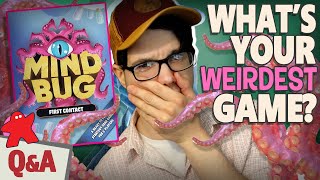
- intriguing mind-control mechanic
- distinctive and offbeat flavor
- Magic: The Gathering
Mechanics (from transcript analysis)
- play a card, opponent plays a card — Players alternate playing cards; mind bugs allow control of an opponent's card.
Video topics + discussion points
Quotes (from this video)
- I love it but what are the weirdest games that you own let me know because I'll probably buy them the next question
- Fields of Green I I absolutely love the game and I think that for people who love stardew get the stardew valley soundtrack going in the background while you're playing Fields of Green
- board games offer an antidote to that step away from technology
References (from this video)
- Self-contained battle card game
- Interesting card stealing mechanism
- Designed by Richard Garfield (Magic the Gathering)
- Similar feeling to Magic the Gathering without the pressure to buy more cards
- Medium to advanced game
- Has expansions, though not like Magic: The Gathering
- Magic the Gathering
Mechanics (from transcript analysis)
- Battle Card Game — A battle card game with a TCG vibe, but self-contained.
- Card stealing — The other player can take two cards from you as you play them during the game.
- Set Collection — Get your random set of cards.
Video topics + discussion points
Quotes (from this video)
- so this is the ultimate board game Christmas gift guide 2024 for $20 and under that's US
- we ideally don't want to be like that right teren ideally not no don't want to end up with multiple copies of the same thing so hopefully that's why we are here
- It's a one and done game because you put stickers on the cards or rip cards up and yeah really you just tell that tell your own story.
- It's certainly a much better game at two players than the original.
- It plays kind of like a toy as well as a game.
- So in this trick taking adaptation is that you don't want to win the trick with the prince on it so I just like I don't want it I don't want to so so how you modify that it's just really fun game and each game is different as well.
- It's got that TCG battle card game Vibe but it's not a TCG it's self-contained.
- It has this really interesting mechanism where you get your random set of cards but the other player can take two of them from you as you play them during the game.
References (from this video)

- Accessible deck-based card game with strong tension
- Awkward Guests
Mechanics (from transcript analysis)
- play or steal mechanics — Players can spend mind bugs to possess or steal a card to use as their own.
- resource-based combat — Cards have health and monster abilities; players try to outplay each other.
- shared deck / hand management — Players draw from a shared pool of cards and manage actions with mind bugs as special resources.
Video topics + discussion points
Quotes (from this video)
- it's Dynamic it's phenomenal it's exciting
- one of the greatest games of all time one of my favorites
- distill tension and stress in the most lovely way into a two-player game
- Ticket to Ride is a great example
- the thrill of the hunt
- I own a fair amount of Ticket to Ride expansions
References (from this video)

- Card game of the year for the host
Mechanics (from transcript analysis)
Video topics + discussion points
Quotes (from this video)
- If there was a Mount Rushmore of game designers he'd be on it, Mr. Richard Garfield.
- Well, the uh the original inspiration I was walking uh around Portland and saw some birds uh seagulls jockeying for posts and uh I began to um fantasize that uh that the birds were choosing the better posts and uh acquiring them based on the pecking order because one would fly up and either be pushed off or manage to take the post they were trying to land on.
- And uh I thought it might be an interesting opportunity to make a game like Strateggo, but only one person showed uh showed their piece and the other one said who won, thereby keeping some of the the mystery in the game and uh that's what I applied to this idea of pecking order.
- You kind of like take something that's typically done and you completely turn it on its head.
- I try a lot and uh and uh many many don't make it past uh casual play.
- In my opinion, there's been some recent good examples of what to do with the reprint.
- I don't typically do a lot of negative reviews. That game got a negative review for me.
- I feel like publishers try to do too much. I feel like they don't listen to what the people actually want.
- Old games uh games in general when they reach a certain quality level just stand up to a lifetime of replay and they there's no logical reason why they should expire.
- It's not that I don't care about themes. I do. Um I I don't uh but but I I I want them to resonate with whatever the mechanics are.
- I totally approve of that as a as as a way to play. That's the way I play. I find it very enjoyable to have those deductions on the table rather than to have to memorize them.
- The game the game worked really well, but it was positioned as sort of a heavier game than it should have been. It came in a in a bigger box than it needed to.
- With uh Spyet, I actually presented they they said they wanted to uh with Shadow Blades, they wanted to change the flavor to being uh instead of spies sort of set in a modern context, they changed it to uh Asian warriors uh Korean Asian warriors. And I I actually redesigned the entire game based on that.
- With uh Vanguard Exiles? It's on Steam with uh as in early release, so there's a long way to go, but uh but you can play head-to-head.
- I've tried to make auto battlers myself. Uh and uh they always felt when when I was working on them, they always felt like uh I I I they always stalled at this point where I said, "Oh, this is kind of fun, but you know what? It would be better on computer."
- Recently I played uh zombie kids with uh with my seven-year-old twins. And and this worked this worked really well is getting a legacy experience which was a you know which which worked for that age was marvelous.
References (from this video)

Mechanics (from transcript analysis)
Video topics + discussion points
Quotes (from this video)
- nobody, including us, need this many games.
- This is Divan. Mhm. I don't know anything about this game. I bought it because it looks beautiful.
- This could have easily been a Reiner Knizia game I feel like.
- And I love a reason to play Lost Ruins of Arnak Lost Ruins of Arnak because I think it's a great game.
- We have to empty our unplayed game shelf from everything that's not 2025 releases and then we'll put it in there and the rest go on the floor until we manage to play them.
- And it's based on the problem called what is called again it's based on the seven bridges of somewhere.
- I feel kind of like bad about bringing a hundred games back home.
- I I usually they go in, they go out. And that's also the thing like if I haven't played a game in a month, I will not remember the rules most of the time.
- The longest line I saw was for coffee. In the morning before the whole office.
- What's more important for you for the channel? Playing the popular ones or the less known niche ones?
- My favorite animal beside the monkey which is my favorite animal. The capybara.
- We are basically very lucky because we share a lot of hobbies.
- The building thing Ah, it was too much building. I didn't like that too much.
- It's been super fun. It's so many people. It's been so long since we did a live.
- Thank you so much for watching. Like it. We wouldn't have done this if it wasn't for you.
References (from this video)
- King of Thieves
Mechanics (from transcript analysis)
Video topics + discussion points
Quotes (from this video)
- nobody, including us, need this many games.
- This is Divan. Mhm. I don't know anything about this game. I bought it because it looks beautiful.
- This could have easily been a Reiner Knizia game I feel like.
- And I love a reason to play Lost Ruins of Arnak Lost Ruins of Arnak because I think it's a great game.
- We have to empty our unplayed game shelf from everything that's not 2025 releases and then we'll put it in there and the rest go on the floor until we manage to play them.
- And it's based on the problem called what is called again it's based on the seven bridges of somewhere.
- I feel kind of like bad about bringing a hundred games back home.
- I I usually they go in, they go out. And that's also the thing like if I haven't played a game in a month, I will not remember the rules most of the time.
- The longest line I saw was for coffee. In the morning before the whole office.
- What's more important for you for the channel? Playing the popular ones or the less known niche ones?
- My favorite animal beside the monkey which is my favorite animal. The capybara.
- We are basically very lucky because we share a lot of hobbies.
- The building thing Ah, it was too much building. I didn't like that too much.
- It's been super fun. It's so many people. It's been so long since we did a live.
- Thank you so much for watching. Like it. We wouldn't have done this if it wasn't for you.
References (from this video)
- Tight, fast-paced dueling with a strong mind-bug mechanic that creates meaningful decisions
- The original Mindbug provides a clear, approachable entry point into the Mindbug system
- Duel feel with low setup and short playtime; good gateway to more complex card games
- Two mindbugs per player create interesting choice economies and bluffing opportunities
- The mechanic of stealing and counterplay is satisfying and highly interactive
- Potential for unbalanced card draw early in a match
- Some players may find the pacing varies more than in KoT-based variants
- Less depth for experienced players seeking heavier strategic conundrums
- control exchanges, quick bluffing, and tactical card manipulation
- head-to-head card duel with mind-control mechanics between two players
- tabletop duel with explicit outplaying of opponent via mind bugs and card powers
- Mindbug King of Tokyo
Mechanics (from transcript analysis)
- Attack and defense — When you attack, your card powers either resolve or are potentially stolen. The deciding factor is often what your opponent can counter with in their hand.
- Hand Management — Players start with a hand and draw more cards; the balance between playing a card now versus saving it for future turns creates frequent decisions.
- hand management and randomness — Players start with a hand and draw more cards; the balance between playing a card now versus saving it for future turns creates frequent decisions.
- life tracking — Each player has a set number of lives; hitting zero ends the game; life loss is a clear, high-stakes outcome.
- mindbug control and steal — Two mindbugs allow players to steal an opponent's played card; the timing of steals creates deep strategic layers and mental pressure.
- open information and risk assessment — Because you can see and anticipate the opponent's hand to some degree, decisions revolve around risk assessment and prediction of the other player's options.
Video topics + discussion points
Quotes (from this video)
- one of the biggest differences in Mindbug King of Tokyo is the power cards
- This is just like a simple closed system that is expandable by mushing together other games
- you can mix and match systems
- I think this does work really well as a gateway game for that kind of game
- This is a very mean game
References (from this video)

- Favorite two-player card game of all time
Mechanics (from transcript analysis)
- Hand Management — You are playing cards down to attack your opponent.
- Take That — Twice per game, you can use a Mindbug card to take control of the card they just played.
Video topics + discussion points
Quotes (from this video)
- I'm hosting a live comedy game show near San Francisco at Rooster Te Feathers Comedy Club this Wednesday, December 10th. It's going to be super fun. Come on out.
References (from this video)
- Unique and fun Mindbug mechanic
- Very quick gameplay
- Every card is powerful
- High player interaction
- Strategic depth despite quick playtime
- Mediocre without the Mindbug mechanic
- Relies on the Mindbug element to be truly fun
- Competitive card game with 'busted' cards
- Epic
- King of Tokyo
Mechanics (from transcript analysis)
- Combat — Attacking opponent's health directly with creature strengths.
- Hand Management — Managing a hand of powerful cards.
- Set Collection — Collecting cards for strategic advantage.
- Take That — Stealing opponent's cards using Mindbugs.
- Variable player powers — Each player starts with two Mindbug cards that can be used to steal cards.
Video topics + discussion points
Quotes (from this video)
- Yeah, dude. I was uh on on a side note, I was uh watching an old interview with the woman that did uh Who Wants to be a Bill a millionaire. Like there was Regis who did it, then the woman who took over after him. She was interviewing Tim Curry uh and was talking about how like he's very seductive about like with like his being a villain and stuff that it's like, man, if you were the devil and you were talking to me, it's like I I'd go with you. And I was listening to him talk and I was like, damn, he really does have a sexy voice.
- I I pretty much take what PubMed gives me and I'm like, well, that's the algorithm.
- Um, and the and the more of those citizens you have on top of each other, um, the more powerful their action gets.
- So, it has that follow mechanism. Okay. So, which I always like kind of because it keeps everybody engaged, right?
- This game's kind of an anomaly nowadays just because of the amount of content you get for the price you pay.
- This is a nonverbal cooperative uh game kind of like the crew but it's not tricktaking where you as a group are trying to diffuse wires um based off of the mission.
- This game is very very challenging. It is. Uh but it's so quick to play that once you lose, you're like, 'Okay, reset.'
- It's It's kind of an anomaly, but it's a really really good one. One to definitely break out during a game day.
References (from this video)
- Gushing about it recently.
- Expansions add more cards with minor rule tweaks that are easy to digest.
- More monsters is always a great thing.
- Loving Mindbug at the moment.
- The King of Tokyo expansion convolutes the system a little bit by adding an additional card row.
- King of Tokyo
Mechanics (from transcript analysis)
- Card game — A card game.
- Deck Building — Implied by the discussion of adding new cards and expansions.
- Hand Management — Playing cards from your hand.
Video topics + discussion points
Quotes (from this video)
- So, you're going to get some good bargains if you keep an eye on the website as they uh as they close their doors.
- So, just a brief spoiler. But it does certainly have a clean evergreen feel to it.
- Normally a bit of a um you know, two words that kind of butt head. You know, two players and area controls don't normally go well together.
- I no spoiler alert this game is fantastic. It's so good.
- Sometimes just a roll and move game can be a lot of fun.
- My only bug bear with this game is or this expansion is that it doesn't fit in the base box which is really frustrating.
- It's just more cards to play with with some extra little tweaks to the rules which are so easy to digest that they're not going to muddy the waters at all.
- I just thought, you know, why not say some good things about their really good products.
References (from this video)

- Really enjoyed playing it.
- Added a great decision space.
- Had so much fun.
- Most played game over the weekend.
- Two-player dueling game
Mechanics (from transcript analysis)
- Card Drafting — Players can use a 'mindbug' or token to take a card played by their opponent.
- Hand Management — Players play cards from their hand.
- Life Reduction — Players try to reduce their opponent's life to zero.
Video topics + discussion points
Quotes (from this video)
- One of Aaron's favorite games.
- Having Walter in a in a closed, secure place with familiar smells and items will help reduce stress during the move.
- maybe I'll move some of my clothes first so he can sit on them and and be near something that smells familiar to him uh during the move.
- And if you can, take a second, if you haven't already, look at the survey down in the description below.
- Three questions about games that you've already played.
- Only answer for games that you have already played and they will impact something that I showcase in April, what I'm currently calling the power rankings.
References (from this video)
- All components (base game, promo pack, extra monsters, two big box expansions) fit into one small box.
- Enough content to keep the host busy for a while.
Mechanics (from transcript analysis)
Video topics + discussion points
Quotes (from this video)
References (from this video)

- Agent Avenue
- Star Realms
Mechanics (from transcript analysis)
Video topics + discussion points
Quotes (from this video)
- This is the last live cast that will be with this background in my current condo.
- I'm backing Garden Club right now.
- For the amount of game that you get, Vantage is a steal.
- The no glare technology on Brass Pittsburgh is something I need to check out.
- Crowdfunding being used for really expensive games? And is that economy for the rich?
References (from this video)
Mechanics (from transcript analysis)
Video topics + discussion points
Quotes (from this video)
- Arkham Horror: The Card Game, which is Okay, this has been around for a decade, but recently the game has seemed to be on a campaign to reintroduce and revitalize itself with a revised core set, which introduces several quality-of-life improvements for ease of play, support for up to four players with just a single copy of the game instead of having to get multiple copies for four players, plus new player cards, new investigators and mechanisms, better organization for storage, and an improved rulebook while still remaining 100% compatible with all the game's previously published material, which there is a lot of.
- Mindbug is a two-player card battler where powerful creatures, replete with game-warping abilities, do battle, including the mindbugs themselves, which can be used to immediately take control of an opponent's creature.
- Nippon Zaibatsu is a fast-paced economic game that's full of challenging decisions for one to four players, set during a crucially important time in Japanese history when the empire sent emissaries to foreign nations to bring in technicians and scholars from the west to build and work on a network of railroads to power a rapid industrial revolution.
References (from this video)
- Quick to play
- Small box, easy to transport
- Subtle and strategic gameplay
- Inspired by Magic: The Gathering
- Potential for confusion with other Mindbug products
- The 'mind bug' mechanic can feel mean if not understood.
- Creature combat
Mechanics (from transcript analysis)
- Deck Construction (Implied) — Players use cards from the same deck, implying a shared pool of available creatures.
- Hand Management — Players manage their hand of creature cards.
- Set Collection — Players play creatures and attempt to win by meeting certain criteria.
- Variable player powers — Players have a limited number of 'mind bugs' that allow them to steal creatures played by the opponent.
Video topics + discussion points
Quotes (from this video)
- The problem with two-player games is there's so many of them.
- This is a great game. It really is.
- It feels more strategic than it is.
- It's a simple game, but it's beautiful.
- This is just absolute comfort food kind of a game that still has a lot of player interaction.
- You got to play to the middle to draw new cards. It's brilliant.
- It kind of feels like cornhole but for indoors.
References (from this video)

- Simplified and streamlined gameplay
- Intense mind games and bluffing
- Well-designed cards
- High replayability with multiple sets
- Limited uses of the 'Mindbug' ability
Mechanics (from transcript analysis)
- Hand Management — you're either playing a creature or you are attacking with one creature.
- Take That — two times per game, when you play a card, I can play one of my Mindbugs and I can take over that card and have it in my side of the table um as my own card as if I played it.
- Variable player powers — each color has a different power that you can do while placing a disc.
Video topics + discussion points
Quotes (from this video)
- the sense of mastery and experience in this game pursuing that path in the game is really satisfying.
- that is really, really satisfying in this game to have this mind game of what is my opponent going to play right now and what is best for me sometimes even like regardless of what my opponent does.
- this leads to so many interesting mind games in Mindbug because when you play a card, I'm deciding, 'Okay, is this the time early in the game, late in the game?' Based on the creature that you're playing, based on the game state, is this the time that I steal it that I take your card away and that I take it for myself?
- So, the great tension in the game even early on when if I push out a little bit ahead in combat or I push out a little bit ahead in the ring, suddenly I'm putting a lot of tension on the other player to either outrace me in one of the other categories or try to pull back.
- I love the Star Wars the Deck Building game, and I highly recommend it if you love head-to-head dueling games.
References (from this video)
- Streamlined and quick playtime
- Clever core concept
- Strategic depth in card play order
Mechanics (from transcript analysis)
- Card Play — The cards don't have cost. So right off the bat if I have a really really powerful creature um, and they're all good in some ways. But if I have one that I think is really powerful, I could play it right at the beginning of the game and have it in play.
- Dueling — Um the twist in this game is the Mindbug itself. Whenever you play a card, I have two options during the game to take control of that card and have it as my my own.
- Hand Management — And the order in which you play your cards leads to that decision. Like it is do I do I want to mind bug right away? Am I hoping you'll mind bug right away? I know at some point it's going to happen.
Video topics + discussion points
Quotes (from this video)
- I'm literally filming this at the midway mark of 2026. It's June 30th, 2026 right now, and I'm going to talk about my favorite games...
- These are the games that I played for the first time in the first half of this year, and these are my favorites.
- At number six, spoiled it in advance a little bit. This is Flip Tunes.
- This is such a clever clever concept. It's what drew me to the game.
- And so you're kind of you have this built-in timer for the game of will the game spell priorities before the players do.
- I love that you're scoring based on what other cards are played are played by other players and you're scoring based on what you actually drafted. Such a clever system.
- This is my number one game of 2026 so far.
References (from this video)

- Clever mechanism where opponents have a limited number of 'Mind Bug' cards to steal opponent's cards.
- Creates a strategic game of baiting and timing.
- Previously misstated Richard Garfield as the sole designer; he is involved but not the primary designer.
- Dueling
Mechanics (from transcript analysis)
- Hand Management — Players must carefully manage their hand and decide when to play valuable cards versus baiting the opponent.
- Take That — Players can use one of their two 'Mind Bug' cards to steal a card played by the opponent.
Video topics + discussion points
Quotes (from this video)
- I think it's really neat that a game like this has progression.
- So, it gives you this feeling that I think is so brilliant in a push your luck game, where you have a chance, even if you have not rolled well throughout most of the game, that you can come down to the wire in that last turn, and you have a chance to win, even if you have two points over the course of the game. Someone else has 50. You can still win if you roll seven bells.
- And I thought that was a really clever mechanism to put in the game, where previous to this, you always just wanted the force to be with you.
- I really like the game that the game presents this fairly organic timer to you.
- But I thought this was really really clever that you're scoring these special abilities based on the current trick as well.
- But I just love that without any shuffling.
- And I think that's such a clever twist that I really want to use it in the game where you are kind of crafting a deck but you're inserting cards in specific places in that deck and how that matters.
- So, there's this nice, slight catch-up mechanism.
- And so, uh I just like that. I like positive player interaction, but I also like close games, and I think this does it in a really nice way.
- I think what this does is that lets players be themselves.
- And I think that is so cool that these cards give you that flexibility.
- I think that is so clever that you have a few chances to take over your opponent's cards.
- I really appreciate when games do this, especially fairly complex games like Sanctuary.
- And uh yeah, I think this this short-term goal system um of things to pursue, I think, is really really helpful in Sanctuary.
- There's this shared trauma in this game cuz when this robot comes up, it hurts everybody.
- I think it's such a clean system.
- I really love the variability that adds and how it kind of can shape the decisions that you make on any given game. It's such a clever system.
References (from this video)

Mechanics (from transcript analysis)
Video topics + discussion points
Quotes (from this video)
- Beyond this planet our evolution is imminent time for mindbox duo
- The game plays two players with mechanics such as hand management take that and combat the game itself easy to medium complexity
- Mindblock is a dual battle game where in each game 10 cards are dealt to each player from the same deck those 10 cards are pretty much the card for the whole game
- you start with three lives each goal is to reduce opponent's life to zero to win
- On your turn your hand has five cards then you can either play a card or attack
- Defender can choose one of their play card to block or reduce their life by one
- The mind-boggling thing about mind Bob each player has two mindbuck cards means that each has two opportunities to steal other players cut in the game as they are about to play it
- basically wait till you see the best combo that you can do for your cards or stop opponents from doing the great combo
- well those are just some of the new fun stuff happening in Beyond Evolution pack
- Mindblock is truly an easy to learn how to master game
- think Richard Garfield's Magic the Gathering light shorter version of the game
- makes all the combos actions resolutions really fast making it a blessing fast game that you can play almost anywhere makes it very efficient
References (from this video)
Mechanics (from transcript analysis)
Video topics + discussion points
Quotes (from this video)
- you'll be playing creatures from your hand using them to try to attack your opponent in order to reduce their life total to zero
- the rules here will set you up to learn all of these other Standalone fully compatible mind bug sets
- so no matter which set you have join me at the table and let's learn how to play
- this game can be mixed with other sets to create new combinations
References (from this video)
Mechanics (from transcript analysis)
Video topics + discussion points
Quotes (from this video)
- you'll be playing creatures from your hand using them to try to attack your opponent in order to reduce their life total to zero
- the rules here will set you up to learn all of these other Standalone fully compatible mind bug sets
- so no matter which set you have join me at the table and let's learn how to play
- this game can be mixed with other sets to create new combinations
References (from this video)

- Simple yet elegant twist on card games
- Deep strategy involving tricking and baiting opponents
- Quick playtime (10-15 minutes)
- Multiple versions available for increased replayability
- Awesome artwork
- Insectoid combat
Mechanics (from transcript analysis)
- card combat — Players deploy characters with strength and abilities to attack and block.
- Hand Management — Managing cards in hand and anticipating opponent's plays.
- Unique Card Power — Features 'Mindbug' cards that allow players to steal an opponent's played card twice per game.
Video topics + discussion points
Quotes (from this video)
- This process has shown me why I haven't done this before because I've been so stressed out.
- I have lost sleep over the last couple nights thinking about this top 10 video, you know, because you're constantly like, 'Well, how do I leave that game out? I love that game, but I got to leave that game out.'
- So, these are my top 10 uh two-player games of all time.
- And then my number one two-player game of all time is sort of a slash pick because it is Lord of the Rings Duel for Middle-Earth slash Seven Wonders Duel.
- I still have 7 Wonders Duel in my collection and it will never leave.
- I would love to hear uh what you love in the comments and stuff.
- What What are your favorite two-player games of all time?
- Next month will be my top 10 cooperative games of all time.
References (from this video)
Mechanics (from transcript analysis)
Video topics + discussion points
Quotes (from this video)
- It's just going to be the winner of this tournament because we've done some randomization here with some of the games that we've matched up.
- kind of a popularity contest each time.
- there I don't think there is a single pairing where to me it's just an obvious choice. These are all going to be tough choices.
- Again, they're all two player games, so we won't belabor it by telling you that every single time.
- I don't mind stepping my foot on the scales as much as I possibly can, as much as you even care, but come on, Quarto.
- I do love Crokinole, but It would have been too easy he thinks if Crokinole was on the list. Clear winner.
- Maybe my favorite two player game. So, I mean, I it is my probably my favorite
- It is addictive. Once I started playing it, I just kept playing it.
- It's so good.
- It is like one of the greatest two-player game experiences.
- If you don't know what Zenith is, give Zenith a try.
- This is a toss-up. This is going to be a jump ball for sure.
- If there's a game that I think more unanimously will get uh votes other than War of the Ring, it might be Star Wars Rebellion.
- Boop is so well loved that I think Pagan might have a uphill battle, but Pagan is a little newer.
- Splendor Duel is worth trying for sure.
- It is such a great two-player game.
- Fugitive is probably uh even more so than Pagan my pick for like two-player deduction
- Twilight Struggle I think was number one for for years. Like you forever. Like for a very very long time.
- Lost Cities. People that have been in the hobby long enough at this point.
- Make sure everyone has fun at the table
- We are going to do a bracketed tournament for two player games culminating in not what I would say, it's not going to be the best two player game necessarily. It could be. It might be, but it's just going to be the winner of this tournament because we've done some randomization here with some of the games that we've matched up
- You can fill out your own brackets, but you are also going to be picking the winners cuz we're going to be running polls on our Discord for each and every match up so that it's I mean, for lack of a better way of putting it, kind of a popularity contest each time.
- I think Twilight Struggle was the game that popularized the two-player experience, at least as far as I'm concerned.
- Oh, for a long time. Forever.
- it is what a lot of people think of when you say when you say, 'Name a two-player game.' Lost Cities.
- These These do have the the downside of being a little older games.
- go to our Discord cuz as you're watching this right now, you can go to our Discord and go to the two-player March Madness channel on Discord. You'll be able to download the brackets. You'll be able to participate in all the polls that we're doing there.
References (from this video)
- Fast, high-stakes combat with meaningful card interactions
- Harvest mechanic can create dramatic, board-clearing turns
- Mind bugs introduce dynamic player interaction
- Mind bugs are limited resources requiring careful timing
- Harvest can end games abruptly if tokens align poorly
- Some interactions depend on discard piles or specific token states, which can feel swingy
Mechanics (from transcript analysis)
- combat / attack and defend — Creatures have power values; players attack, defenders block with creatures, and keywords like fast, brutal, sneaky, poisonous, hunter, and tough modify outcomes.
- Combat: Damage Based — Players start with three health and can be reduced to zero through combat.
- harvest / token-triggered effects — Harvest triggers occur when Octonite tokens are removed, potentially defeating all enemy creatures.
- lives / health — Players start with three health and can be reduced to zero through combat.
- mind_bug / mind control — A Mindbug can be used to take control of an opponent's creature.
- token management — Tokens (Octonite) are placed on cards and counted down; removal triggers harvest effects.
Video topics + discussion points
Quotes (from this video)
- two-player only game Mindbug Battle Fruit Kingdom
- you win the game if you can bring your opponent's health down to zero or if your opponent cannot take a turn action on their turn
- This is a ticking time bomb of a mango
References (from this video)

- Introduces new characters and interactions tied to Mind Bug mechanics
- Brings Mind Bug concepts into King of Tokyo for thematic novelty
- Disrupts tempo and flow of the base game
- Can hijack turns and erode balance
- Adds complexity that undermines the original simplicity and elegance
- Power Up
Mechanics (from transcript analysis)
- consumable Mind Bug cards — Some Mind Bug cards are one-time-use consumables with special effects when discarded
- deck integration and Mind Bug tokens — Mind Bug cards are added to the deck and interact with the Mind Bug tokens, potentially altering turn order and outcomes
- Deck Manipulation — Mind Bug cards are added to the deck and interact with the Mind Bug tokens, potentially altering turn order and outcomes
- Mind Bug token disruption — At the start of a turn, players may mind-bug you; upon activation, you discard the Mind Bug token and the other player takes your dice for a turn
Video topics + discussion points
Quotes (from this video)
- I love King of Tokyo
- my heart still remains with the OG King of Tokyo
- Power Up was one of the originally celebrated modern iterations of board game expansions
- This right here was viewed as one of those expansions that dramatically changes a game for the better such that it is kind of viewed as a mandatory inclusion
- I absolutely love and recommend this game
- I think it's fascinating to compare what I think is one of the best expansions ever made with one of the worst expansions that I've played for a game
- easily the worst expansion that I've checked out during expansion month
- it's extremely slight expansion
- It's terrible. Not only is there this disruption on your turn, but it can persist because everyone at the table has the opportunity to mind bug your turn after a roll
- I don't like this Mind Bug business
- That was a good roll for me
- The Mind Bug cards have a different back, so you can see what's on deck, but, you know, whatever, it's a communal deck
References (from this video)
- Intense psychological play and dramatic steals
- Elegant, compact rules with hard-hitting decisions
- The randomness of draws can swing games unpredictably
- For some, theft mechanic can feel unfair or exploitative
- Direct combat with theft and deception via 'mindbug' mechanic.
- Fantasy battlefield where monsters clash with mind-control mechanics.
- Brutal, fast-paced, psychological warfare.
Mechanics (from transcript analysis)
- Betting and Bluffing — Players bluff and read intentions due to hidden mindbug threats; 'mindbug paralysis' can affect decisions.
- Bluff and mind game — Players bluff and read intentions due to hidden mindbug threats; 'mindbug paralysis' can affect decisions.
- Hidden Victory Points — Reduce opponent's life from 3 to 0.
- Life total and victory — Reduce opponent's life from 3 to 0.
- Mindbug steal — At any moment when your opponent plays a creature, you can steal it with a mindbug, gaining its abilities.
- Play a card from hand — On your turn you simply play a card from your hand; highest power wins in the exchange.
Video topics + discussion points
Quotes (from this video)
- It's passive aggressive warfare disguised as a bakery.
- We call that mindbug paralysis.
- Oh god, the counting.
- The finale was the worst. We reached the end and we had to choose our final destiny. I realized to win I had to break up with you.
- Fog of Love forces you to operationalize selfishness.
References (from this video)
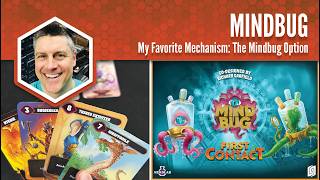
- Clever mind-control twist that balances power and disruption
- Snappy playtime (~10 minutes per duel)
- Elegant balance that creates meaningful head-to-head mind games
- Early or abrupt mind-control plays could frustrate some players
- Balance depends on timing and card mix; may feel swingy in some matchups
- Mind control and direct confrontation between opposing creatures in a fast-paced duel
- Two-player card duel with a shared pool, where players draw from a common deck and form a small personal deck to duel.
- Array
- Magic: The Gathering
Mechanics (from transcript analysis)
- Combat: Deck/Hand — Players draw from a common pool and form a 10-card deck before play.
- Deck Manipulation — Discard mindbug cards to steal a creature already in play.
- Discard to mind control — Discard mindbug cards to steal a creature already in play.
- Player Elimination — Each player starts with 3 life; damage reduces life until 0 is reached.
- Tie Resolution — If powers are equal, both cards are defeated and discarded.
- Two-player dueling with shared deck — Players draw from a common pool and form a 10-card deck before play.
- Victory by life loss — Each player starts with 3 life; damage reduces life until 0 is reached.
Video topics + discussion points
Quotes (from this video)
- "This is the name of the game. This is the core hook."
- "This is such a clever mechanism in this game"
- "it's like you have you have gotten into their brain and you've taken control of them instead of me."
- "Mindbug. Yeah, that really really cool mechanism here."
References (from this video)
- snappy, quick duels
- interesting mind-control twist
- great for porch or on-camera play tests
- dueling-card, real-time-ish take-that mechanics with mind-control twist
Mechanics (from transcript analysis)
- Combat: Deck/Hand — each player has a hand of cards drawn from a shared deck; on your turn you play or activate cards to affect the opponent; a rare ability allows you to take control of an opponent's card twice per game
- duel-based card play — each player has a hand of cards drawn from a shared deck; on your turn you play or activate cards to affect the opponent; a rare ability allows you to take control of an opponent's card twice per game
- hidden-information and bluffing — players reveal intent through card play; timing of mind-control actions creates strategic ambiguity
Video topics + discussion points
Quotes (from this video)
- There are so many possibilities, Jamie, even if you took it and decided to make it a campaign-based game where you took scenarios from the actual show, took the characters from the show and decided to, okay, you can play any of these characters, here's the scenario, solve the scenario with the people that you have.
- Deck builders are a good way to tell stories well. I think they tell stories well.
- There are so many subtleties that could happen.
- Paradise has been something that I have enjoyed actually.
- It's a wonderful distraction, wonderful information, wonderful source of joy when you're doing other things that require like a lot of physical attention and it's a stress reliever.
- There are so many tricks and twists you can do with the two universes; the campaign could progress season by season with an evolving core game.
References (from this video)
- Fast, light-hearted, yet clever and tactical
- No pay-to-play fatigue due to shared deck
- Mind bugs create tense mind-game shifts
- Strong thematic simplicity with elegant mechanics
- Expandable with expansions
- Potentially chaotic for new players not used to direct head-to-head duels
- Some cards may feel overpowered if not balanced in expansion sets
- Mind-control dueling with creature combat and strategic hand management.
- Two-player head-to-head card duel using a shared deck, focused on timely decisions and counterplay.
- Array
- Magic: The Gathering
Mechanics (from transcript analysis)
- Attacking and blocking — Players attack with creatures and the opponent can block with their creatures; power is compared to determine casualties.
- Combat: Damage Based — Some cards can bypass defenses and damage the opponent directly.
- Direct damage to player — Some cards can bypass defenses and damage the opponent directly.
- End-game tempo — A limited 10-card hand and no mana create pressure to finish the game and avoid stalemates.
- Keywords — Cards feature simple keywords (frenzy, hunter, poisonous, sneaky, tough) that add predictable interactions.
- Mind Bugs — A resource to steal an opponent's card at two points during the game.
- No mana system — Any card can be played at any time; cards have counterplay and timing.
- Shared deck draw — Both players draw from the same deck, with 10 cards drawn per player each game.
- Tags — Cards feature simple keywords (frenzy, hunter, poisonous, sneaky, tough) that add predictable interactions.
Video topics + discussion points
Quotes (from this video)
- I could not recommend a game more than Mindbug.
- this is the quintessential example of kind of extracting every bit of bloat and everything or everything unnecessary from Magic the Gathering into a similar almost identical system, but it turns up the fun, the volume of the fun dramatically from a game like Magic the Gathering.
- If you want a super fast, light-hearted, fun, but clever, tactical, but with a thread of strategy, bombastic card game, then I could not recommend a game more than Mindbug.
References (from this video)
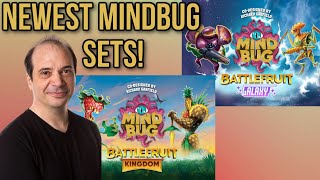
- Highly streamlined gameplay with no resource management burden
- The Mind Bug mechanic creates a tense, twist-heavy arc of play
- Simple deck and hand sizes (deck 10, hand 5) enable quick games and fast feedback
- Some interactions may require clarifications; the video notes an FAQ exists for questions
- Mind-bug manipulation, aggressive creatures, and fast, streamlined combat.
- A whimsical realm where fruit-themed creatures clash and mind-control is the central mechanic.
- Playful and breezy with cute, characterful cards and a fast-paced duel feel.
- Mindbug First Contact
- Mindbug Beyond Evolution
- Mindbug Beyond Eternity
- King of Tokyo
Mechanics (from transcript analysis)
- Combat: Deck/Hand — Each player starts with three life; attacking and defending shifts life totals toward zero to win.
- Direct card play with no resource costs — On a turn, a player can play a card from hand without spending resources; power and effects drive the turn.
- Engine Building: Triggered/Cascading — Keywords like Fast affect when effects trigger, influencing combat order and survivability.
- Keywords and trigger timing — Keywords like Fast affect when effects trigger, influencing combat order and survivability.
- Life-based duel — Each player starts with three life; attacking and defending shifts life totals toward zero to win.
- Mind Bug disruption — When a card is played, the opponent may spend a mind bug to copy that card and play it as if they played it themselves.
- Octonite harvest — A new resource that sits on cards; at the start of turns it harvests and enables powerful, turn-delayed effects.
Video topics + discussion points
Quotes (from this video)
- Mindbug is one of the most amazing card games ever.
- The mechanisms are so streamlined and I love this.
- You only have five cards in your hand and there’s five other cards that you might draw.
- There’s a whole new resource and it’s powerful with harvest abilities.
- This completely changes the game with split harvests and activation order.
References (from this video)

- accessible to non-TCG players
- familial and approachable
- the power cards can feel chaotic to new players
- mind games / brainy combat
- dueling creature battles with mind-based manipulation
- light fantasy conflict
- King of Tokyo
- Mindgames
Mechanics (from transcript analysis)
- mind-control/creature stealing — Players draft and use power cards to influence battles; combination with King of Tokyo adds power cards
Video topics + discussion points
Quotes (from this video)
- Higher the number, the more points it's worth, but the harder the question.
- It's just such a great little two-player abstract strategy game.
- Pack of Games are a perfect stocking stuffer.
- Mindbug, King of Tokyo. Who knew such a wonder could exist in this world?
- This is a booklet full of lots of little strategy puzzles and word games.
References (from this video)
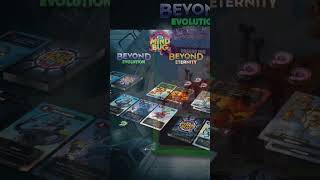
- Co-design by Richard Garfield
- Extensive expansion content (Beyond and Eternity, 104 new cards)
- Strong two-player dueling core
- Exciting card reveals (Dragon in it's tough)
- Cards can be very situational
- Expansion heavy may complicate entry for new players
- Mind manipulation and direct duel combat; psychic warfare.
- Two-player fantasy duel arena where players clash using mind-control and combat cards.
- Modular card-driven skirmish with episodic reveals; emphasis on quick rounds and situational cards.
Mechanics (from transcript analysis)
- cards are situational — A large portion of cards have situational conditions that affect play.
- Combat: Deck/Hand — Two players face off in a head-to-head card battle.
- expansion integration — New cards via Beyond and Eternity expansions (104 new cards total).
- hit twice to defeat key threats — Powerful cards may require hitting them twice to eliminate them.
- life loss based on presence — If you control fewer creatures than your opponent, they lose a life.
- Multi-Use Cards — A large portion of cards have situational conditions that affect play.
- team play option — Two-player team variant option mentioned in promo.
- Two-player duel — Two players face off in a head-to-head card battle.
Video topics + discussion points
Quotes (from this video)
- last year mindbug was my card game of the year
- I think this is his best game ever
- it's co-designed by Richard Garfield of Magic the Gathering Fame
References (from this video)

- strong two-player appeal
- effective localization into Japanese market
- translation nuances can affect balance perception
- mind-control and dueling
- two-player card combat
- abstract, card-driven confrontation
Mechanics (from transcript analysis)
- card_driven_actions — cards grant actions; strategic play hinges on anticipating opponent moves
- direct_duel — head-to-head interaction with opposing plays and mind-control elements
- Hand Management — players manage a hand of cards to optimize actions and threats
- hand_management — players manage a hand of cards to optimize actions and threats
Video topics + discussion points
Quotes (from this video)
- Game design is an iterative process and it's important to start small and build upwards.
- A fresh pair of eyes will usually lead to innovative solutions and improvements.
- Iconography, player reference cards, they sell games.
- The game physically brings players together and naturally fosters a collaborative spirit with smiles and laughter that never quite gets old.
References (from this video)

- tight two-player head-to-head with meaningful tension
- twists on standard dueling card games via mind-control mechanic
- scaling beyond two players is less clear
- theme and flavor might not land for non-fantasy players
- mind control in duel
- fantasy duels; mutated creatures
- light, humorous
Mechanics (from transcript analysis)
- Combat: Deck/Hand — One-vs-one card clashes with creatures; players attack with cards and manage resources to deplete health.
- dueling card combat — One-vs-one card clashes with creatures; players attack with cards and manage resources to deplete health.
- mind control via mind bugs — Opponent can seize control of a creature twice in the game using mind bugs.
Video topics + discussion points
Quotes (from this video)
- this is our top 10 board games of 2025
- it's a trick-taking style game where you predict exactly how many tricks you will win
- the Mindbugs can take control of that creature twice during the game
- it's a semi co-op element in Kidfire Council
- it's a cat-and-mouse hidden movement game
- it's an efficiency engine through and through that has a nice nature-based theme
- this is based off of the Pandemic system
- Speak Easy is by far the heaviest
References (from this video)

- unique twist on dueling
- short, fast-paced
- accessible to new players
- mind control duel
- competitive head-to-head
Mechanics (from transcript analysis)
- Combat: Deck/Hand — one-on-one card-based confrontation
- Deck Manipulation — cards grant control over opponents' plays or alter outcomes
- duel-style play — one-on-one card-based confrontation
- life/attack economy — manage attacks and defenses to win life-point battles
- mind control — cards grant control over opponents' plays or alter outcomes
Video topics + discussion points
Quotes (from this video)
- it's a small card game
- it's easy to explain
- you can start playing without explaining the rules
- one of those cards is like the person you need to find
- you can mix and match these sets as well
- it's a cooperative trick taking game
- mind bug well that's freshy this is a really freshy