

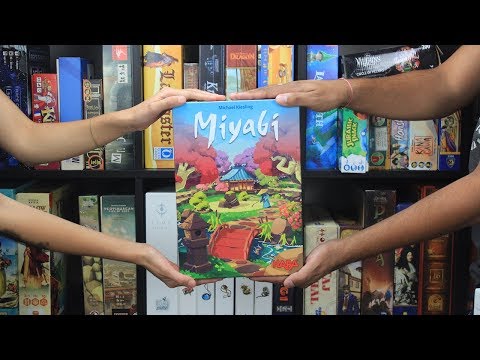




























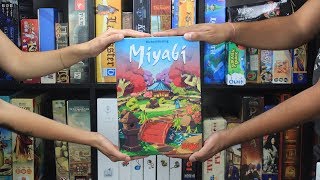
Miyabi Deep Dive
What the Community Thinks About Miyabi
Miyabi consistently earns praise from board game reviewers who appreciate its elegant design and surprising depth. Reviewers unanimously highlight it as a standout achievement by designer Michael Kiesling, often ranking it among his best work. Multiple critics note that the game deserves significantly more recognition than it receives, describing it as underrated despite its exceptional quality. The consensus is that Miyabi offers a rare combination of accessibility and strategic substance that appeals to both casual players and hobby gamers.
Core Mechanics That Define Miyabi
Tile Placement with Vertical Stacking
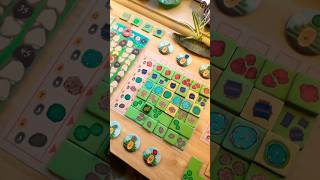
Miyabi's most distinctive mechanical feature is its vertical dimension. Players draft polyomino tiles and place them on their personal boards, but they can build upward in layers, creating a 3D garden. Each tile placed on a higher level multiplies the points: a tile on level two is worth twice its base value, level three triples it, level four quadruples it, and so on. This stacking system creates immediate, tactile satisfaction as players watch their zen gardens grow taller. The mechanic elegantly combines spatial puzzling with point optimization, forcing meaningful decisions about whether to take a smaller immediate score or build a foundation for higher multipliers later.
Row and Column Restriction System
Miyabi's restriction system is often cited as its most innovative element. Each symbol type (trees, pagodas, stones, bushes, flowers, and koi ponds) must be placed in its designated row. When a player places a symbol in a column, they place a marker that blocks that entire column from further placements of that symbol type for the rest of the round. This creates increasingly constrained placement options as the round progresses, forcing players to plan ahead and think about how their choices will affect both their own options and their opponents' opportunities. The system is elegant in its simplicity yet generates surprising strategic depth, preventing the game from feeling like a puzzle with a single optimal solution.
The Miyabi Experience
Serene, Meditative Puzzle-Solving
Players describe Miyabi as deeply satisfying in its zen-like quality. The theme of designing a Japanese garden permeates the experience without overwhelming it. The watercolor-style artwork and peaceful aesthetic create a calm, contemplative atmosphere that sets it apart from more aggressive competition-focused games. Yet this serenity masks substantial decision-making weight. Each placement matters, and the puzzle nature means players spend turns carefully considering their options, studying their board to identify where tiles might fit and how placements cascade across multiple rounds. Reviewers note that despite being thinky and demanding focused attention, Miyabi never feels stressful or overwhelming.
Rewarding Strategic Mastery Through Iteration
Miyabi rewards repeated play and improved understanding. Early games feel like exploration as players learn how the restrictions, multipliers, and end-game scoring interact. But experienced players discover rich tactical decisions and long-term strategic planning. The game offers enough variability through tile order and expansion modules that it doesn't become repetitive. Players who engage with the game multiple times develop an appreciation for how each piece contributes to the whole, finding new layers of interaction and optimization opportunities on each playthrough.
What Makes Miyabi Stand Out
Tailorable Complexity Through Modular Expansions
The base game presents clean, elegant rules that teach in minutes, yet Miyabi includes five optional modules that layer on additional scoring opportunities. Players can choose to score based on connected clusters of matching symbols, empty garden spaces, symbols filling entire rows or columns, placed zen garden tokens that score when surrounded, or a frog that jumps up levels for points. Remarkably, the game scales beautifully whether players use none, some, or all these modules. No single configuration feels broken or optimal; the modules genuinely offer different games rather than simply "harder" versions. This design philosophy ensures Miyabi works for families, casual gamers, and strategy enthusiasts without requiring different versions.
Table Presence and Component Quality
Miyabi commands attention when displayed. The vertical construction of player boards creates immediate visual interest, and watching gardens grow across multiple levels provides ongoing engagement even during other players' turns. The tiles themselves are chunky and satisfying to handle. While one reviewer noted that player boards are thinner cardboard than ideal, the overall production quality from Haba Games is strong. The bright, clear design makes symbols immediately recognizable, and the physical act of placing tiles on increasingly elaborate layers creates genuine satisfaction that purely digital games cannot replicate.
Potential Drawbacks
Perceived Age Rating May Deter Adult Gamers
Because Miyabi is published by Haba Games, known for children's games, and carries an age rating of 8 and up, some adult gamers dismiss it without trying it. Reviewers note this unfortunate perception gap: the game possesses genuine strategic depth comparable to much heavier games, yet potential players see the Haba box and young age rating and assume it's too light. This marketing hurdle is entirely external to the game's actual quality, but it represents a real barrier to the audience who would most enjoy it. The irony is that many games marketed as 14 and up avoid regulatory testing and use inflated age ratings as marketing, while Miyabi's accurate rating based on cognitive skill development actually undersells its complexity.
Increasing Constraint Complexity Can Create Analysis Paralysis
While most players embrace the decision-making, the restriction system combined with multiple scoring avenues occasionally leads to extended turns, particularly when all five modules are in play. New players confronted with simultaneously planning around row and column restrictions, building toward a foundation for higher levels, tracking opponent positions, and managing multiple end-game scoring conditions may feel overwhelmed. However, reviewers emphasize this is a feature rather than a bug for players who enjoy thinky games. The 45-minute playtime remains brisk, and experienced players resolve turns quickly once they understand the system.
If You Enjoy Miyabi
Players who love Miyabi should explore Azul, Kiesling's earlier masterpiece about elegant tile placement, which shares similar design principles but with a different puzzle structure. Number Nine offers comparable stacking and multiplier systems, though reviewers consistently prefer Miyabi's greater depth and replayability. For polyomino enthusiasts, Calico provides satisfying tile-placement puzzle-solving with a different spatial constraint structure. Stone Age and Lords of Waterdeep satisfy players seeking engaging mid-weight games with clean rules, though neither offers Miyabi's vertical dimension. Those drawn to the meditative, zen-garden theme might explore other abstract strategy games that prioritize serene presentation alongside meaningful decisions.
What Reviewers Are Saying
Miyabi is probably actually the most successful game out of these ones but despite that this game should be 100 times more successful. This game is unbelievably good it has so many things that people like, it has polyominos, it has stacking, it has drafting, and it has some really cool restrictions as well to make it unique.
— Chairman of the Board
Miyabi is a very interesting polyomino game because you are drafting these polyomino tiles and each of them are going to be creating a zen garden. The more that you layer them the more multiplying of the victory points you are going to get, so if I layered a three tile on the third level it would be three times three so I would gain nine victory points.
— The Board Game Garden
The thing that I like the most about this game is the different layers of strategy. It is so rich like you are trying to take the tile that scores the most points but do you want to specialize, maybe I only want to specialize in the top two objects because at the end of the game they are going to score me the most points majorities, but I also want to make sure that I get to that fifth level at least one of these objects.
— Before You Play