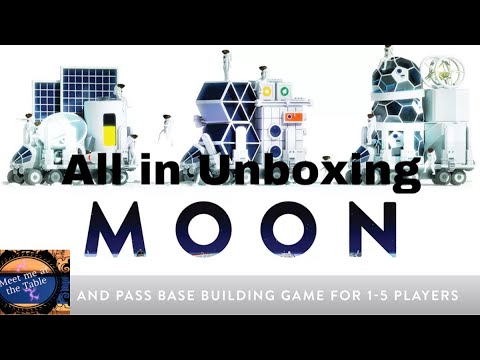
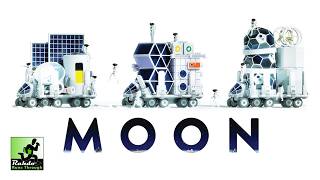
Moon depicts an almost plausible rush to construct lunar bases that are attractive places to live and work for the people of Earth. The most prestigious base will become the new lunar capital!
The game employs the familiar "pick & pass" or "hand drafting" mechanism for players to select a new structure cards to add to their base. Each hand of cards represents a convoy of experts and equipment travelling between the players' outposts, giving the player the choice of one new construction each turn. In a new twist on the genre, each hand always contains one of a number of "Expedition" cards that grant a special free action every turn before passing on to the next player.
Wooden lunar rover tokens are a neutral resource that add a worker placement element to the game. They are also used to break ties and so must be used with care.
Over the three distinct eras of the game, players compete for majority in 5 aspects of their bases: housing, transportation, science, industry, and food production. At the end of each era, the leader in each of these areas as determined by flag icons on their constructed buildings, collects bonus victory points.
Each game also features a number of randomly selected "Reputation" cards which provide one-time or ongoing bonuses for the player who meets the requirement and claims the card.
Moon is the third game of a loose trilogy, preceeded by Villagers and Streets.
—description from the publisher
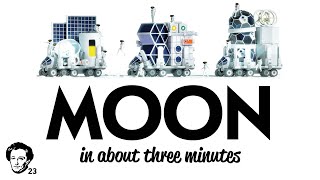
Moon in about 3 minutes
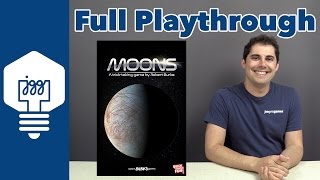
Moon Full Solo Playthough
Moon Full Kickstarter Unboxing
- Easy to learn and quick to play
- Good for up to eight players
- Lightweight and family-friendly
- Fast rounds and good flow
- Feels high in luck and low in player agency
- Often obvious plays reduce meaningful choices
- Some players may feel the game decides the outcome rather than skill
- low-stakes card shedding with color-based scoring
- Casual, family-friendly card game night
- explanatory, conversational
Mechanics (from transcript analysis)

- climbing shedding — Players try to get rid of as many cards as possible each turn, aiming for the lowest total score.
- Compound Scoring — If you have the Mojo card in front of you, you add zero to your score.
- end game condition — The game ends at the end of a round when a player exceeds 50 points; the lowest score wins.
- End-of-round trigger — When a player has three or fewer cards (two-player variant: two or fewer), they place cards face-down and play continues until the round ends.
- Higher than top costs a draw — Playing a card higher than the top requires you to draw a card and ends your turn.
- Lower than top ends turn — Playing a card lower than the top ends your turn but still removes one card.
- Matching — If you play a card that matches the top card value, you may continue playing on the same turn.
- Matching to continue chain — If you play a card that matches the top card value, you may continue playing on the same turn.
- Mojo card scoring — If you have the Mojo card in front of you, you add zero to your score.
- No reshuffle between rounds — Reshuffling is avoided between rounds; players proceed with the top of the deck for the next round.
- round rotation and dealing — After scoring, a new eight-card hand is dealt and play direction may shift for the next round.
- Scoring by color tops — Score is the sum of the top card value for each color in front of you.
- Turn Order: Progressive — After scoring, a new eight-card hand is dealt and play direction may shift for the next round.
- Turn-based card shedding — Players try to get rid of as many cards as possible each turn, aiming for the lowest total score.
Video topics + discussion points
Quotes (from this video)
- This is a super simple card game
- I felt like I had zero control the entire time I was playing
- There's a great flow to the game
- This would be a great choice for you
- This is a pass for me
- It's a lightweight game you can play with family while chatting
References (from this video)
- Fast, fun filler that plays in about 30 minutes
- Simple core mechanism with a tension-filled endgame (Mojo time)
- Replayable with light, accessible design
- Good for bringing groaning anticipation around the table
- For the Win!
Mechanics (from transcript analysis)
- Card value and negative scoring — Higher numbered cards carry negative points; the goal is to minimize total points.
- Color/value distribution and strategic discarding — The deck uses colored groups with distinct values; players balance discarding high-point cards with maintaining a low total.
- Draw when allowed or required — If you cannot or choose not to play a card that matches top, or you play a higher card than the top, you draw from the deck.
- End-of-round calculation — At the end of a round, players count remaining card values in hand with the rule that only the highest card of each color counts among multiples; lower totals are better.
- Matching — If a played card matches the face-up card on the discard pile, the player goes again.
- Matching discard mechanic — If a played card matches the face-up card on the discard pile, the player goes again.
- Mojo time — When a round nears its end, players flip over hidden cards (Mojo phase) to determine final scoring emphasis and potential end-of-round.
Video topics + discussion points
Quotes (from this video)
- Mojo time and now players really have to kick it into high gear.
- This is going to be the Mojo card uh that hopefully you get zero points for because again low is good
- Mojo it is a clever fun fast game
- it's light it's silly don't take it too seriously
- tons of fun replayable
- there's nothing more fun than having that one person at the table who just groans every time it's their turn
References (from this video)
- Accessible solo mode with a clear, fast-paced turn structure
- Engaging closed drafting and tableau-building loop
- Themewise strong, with a modular lunar base feel and cute rover aesthetics
- Solo logic is concise and easy to grasp for a IMO approachable experience
- End-of-era scoring can be intricate and require careful tracking
- Tallies across many flags can feel fiddly if you don’t stay organized
- Some cards require specific flags or combinations, which can slow early setup
- space exploration, base development, resource management
- Lunar base on the Moon during a colonization-era scenario
- abstract, strategy-forward with lightweight thematic cues
- Wingspan
- Streets
- Villagers
- It's a Wonderful World
- Terraforming Mars: The Dice Game
- Sushi Go
- Seven Wonders
Mechanics (from transcript analysis)
- card drafting — The four decks represent other players; each turn you pick one card and pass the rest to simulate drafting against opponents.
- Closed drafting / pick-and-pass — The four decks represent other players; each turn you pick one card and pass the rest to simulate drafting against opponents.
- End-game scoring via hearts and reputation — Hearts on structures and reputation cards contribute to final scoring, with various cards amplifying these effects.
- Majority and flag-based scoring — End-of-era scoring awards victory points to the player with the most of each flag type.
- Resource management — Blue/gray/yellow cards produce different resources and flags; players manage them to build cards and fuel actions.
- Resource production and management — Blue/gray/yellow cards produce different resources and flags; players manage them to build cards and fuel actions.
- Rover/vehicle interaction — Rovers can park on cards to gain resources or influence outcomes; solo mode uses a scripted AI to simulate competition.
- tableau building — Players assemble a tableau of structure cards that generate resources, flags, or end-game scoring bonuses.
Video topics + discussion points
Quotes (from this video)
- Moon is a pick and pass game
- Moon is very easy
- I am a huge fan of closed drafting pick and pass
- this is Moon and Moon is a pick and pass game so these four decks here are kind of representing the other players at the table
- Moon is a pick and pass game so these four decks here are kind of representing the other players at the table
References (from this video)
- Unknown
- Unknown
- Unknown
Mechanics (from transcript analysis)
- unknown — No mechanics discussed in transcript
Video topics + discussion points
Quotes (from this video)
- congratulation this is yours going to be on your way very soon Chia cha cha
References (from this video)
- high interactivity and meaningful player interaction
- thematic integration with lunar base-building and rover dynamics
- strong replayability due to card variety and reputation/achievements
- deluxe edition offers meaningful quality-of-life improvements
- not the simplest game to learn; rules are approachable but the first play can be slow
- retail components can have minor quality issues (point counters can flip unintentionally)
- table presence and pacing can be slow at four players; more dynamic at three
- sci-fi base-building, resource competition
- Moon base building on the lunar surface
- emergent, card-driven synergy and interaction
- Sushi Go
- Seven Wonders
- Wingspan
Mechanics (from transcript analysis)
- area majority — collect flags for points and as tiebreakers to influence scoring.
- card drafting — players start with a hand of cards, pick one, and pass the rest each round across three eras.
- end game bonuses — achievements confer ongoing effects and end-game scoring bonuses.
- engine building — develop a base with cards that enable future actions; rover resources shift across players.
- engine-building — develop a base with cards that enable future actions; rover resources shift across players.
- Expedition cards — round-long abilities that persist through a round and influence strategy.
- flags / area majority — collect flags for points and as tiebreakers to influence scoring.
- hand management — three eras with a passing mechanic that creates tension and flexibility.
- hand management / passing — three eras with a passing mechanic that creates tension and flexibility.
- interactive play — cards and rover actions can affect other players' boards and plans.
- reputation / achievement cards — achievements confer ongoing effects and end-game scoring bonuses.
- Resource management — gather and spend resources to deploy cards and advance your base.
- set collection — build combos across cards to generate resources and points.
- Set collection / combos — build combos across cards to generate resources and points.
Video topics + discussion points
Quotes (from this video)
- Moon is a sci-fi twist on the pick and pass card drafting game.
- not multiplayer solitaire; you're constantly engaged during every player's turn.
- Replayability is really really high.
- The deluxe edition will have better quality of life.
- Three is the sweet spot; four can slow things down.
References (from this video)
- Lots of game in a small box
- Minimalist art style that works well
- Great presentation overall
- Interesting expedition card mechanic with passed bonuses
- Social interaction through rover placement on opponent boards
- Adorable rover components
- Good for experienced gamers
- Solo mode available
- Three-era structure with escalating scoring opportunities
- Cannot use simultaneous player actions due to rover and reputation card mechanics
- Painfully slow pacing
- Takes twice as long to play as it should
- Can overwhelm inexperienced players with drafting and engine building complexity
- moon colonization
- city building
- space exploration
- competition for lunar capital
Mechanics (from transcript analysis)
Video topics + discussion points
Quotes (from this video)
References (from this video)
- Space theme
- Compact, travel-friendly box
- Cute aesthetic
- space colony building
- Lunar bases and space exploration
- hand drafting with pick-and-pass mechanic
Mechanics (from transcript analysis)
- hand drafting — Draft cards to build lunar bases.
Video topics + discussion points
Quotes (from this video)
- it's a sequel to a game we've never played, metropolis
- the artwork is amazing
- bidding in space
- we are canadian i'm excited for trick shot second edition
- it's the main objective of the game is simple defeat the tyrant
References (from this video)
- Engaging solo mode that captures competitive feel against an AI opponent
- Rich card variety with expedition and pink cards adding strategic depth
- Era-based scoring provides evolving goals and tension to the end
- Rover mechanics create tactical resource flow and board interaction
- Rule complexity can be steep for new players
- Late-game competition for roads/flags can become punishing
- Solo mode balancing and AI scoring can feel unforgiving in some runs
- Base-building, resource management, and exploration on the Moon
- Lunar base building over three eras
- Array
- Competitive with AI-driven adversary (Gerps), large endgame scoring via era-based rewards
- Villagers
- Streets
Mechanics (from transcript analysis)
- Card assimilation and discard-pile interaction — Flip and assimilate cards from discard, or gain resources from the discard when paying costs.
- Expedition card utilization — Expedition cards provide optional bonuses and can be used to influence scoring and actions.
- Pink card activation — Pink cards offer activatable abilities when flipped, affecting scoring or production.
- Production phase refresh — During production, players produce resources from their bases; in solo mode, the AI does not produce resources itself.
- Reputation-based bonuses — Bronze, silver, and gold reputation cards act as long-term scoring objectives throughout eras.
- Rover-based resource cycling — Move a Rover to a base to gain required resources or tags, limited to one Rover action per turn.
- Tag-based majority scoring — At scoring rounds, players compare tag counts to determine Hearts and points.
Video topics + discussion points
Quotes (from this video)
- Moon is a pick and pass Base building game on the moon
- this is normally a competitive game where you're going to try to be building the best base that you can
- I'm going to be showing you the solo mode
- this game is by Sinister Fish
- it's a super cool game I love the fact this came down to the wire
- you don't know you're gaining all these cards with points on them but you don't add them up till the end
References (from this video)
- fast play for 3 eras
- high interactivity of engine-building
- clear path to scoring Hearts
- potentially opaque for new players without setup experience
- resource engine building
- engine-building on a planetary/colony theme
- compact, interconnected engine-building
- Villagers
- Streets of Villagers
Mechanics (from transcript analysis)
- card combo chaining — cards enable combos that unlock future actions and scoring opportunities
- engine-building — build an engine by chaining card effects to generate resources and scoring opportunities
Video topics + discussion points
Quotes (from this video)
- this is a perfect convention game
- Moon is by far my favorite of the three
- She-Hulk is very fun to play
- Spider-Man ended up winning
- this is a push your luck game
References (from this video)
- Thematic progression through three distinct eras keeps the experience fresh and aspirational.
- High interactivity with opponent settlements adds tension and strategic depth.
- Vibrant, colorful presentation is appealing and helps immersion.
- Each game in the trilogy (Villagers, Streets, Moon) feels mechanically distinct rather than a simple reskin.
- Competitive, potentially zero-sum gameplay may not appeal to players seeking cooperative or lighter experiences.
- Interaction and disruption can be frustrating if players prefer a gentler pacing or less direct disruption.
- space-based colonization, territorial development, and reputation-driven competition
- Moon colonization across three eras representing the first century of lunar settlement
- era progression with strategic card drafting, resource management, and rivalry between settlements
- Villagers
- Streets
- Suburbia
- Castles of Mad King
Mechanics (from transcript analysis)
- card drafting — Players draft and pass cards to shape their settlement capabilities and actions.
- era-based rounds — Three distinct eras structure the game flow, with production, construction, and scoring phases per era.
- Resource management — Gather resources, rovers, and hearts to develop structures and influence scoring.
- rover movement / area interaction — Move rovers to opponents' settlements to obtain resources or trigger effects, creating competition.
- scoring via hearts / reputation — Hearts indicate popularity and drive end-game scoring; reputation bonuses can shape mid- and late-game decisions.
Video topics + discussion points
Quotes (from this video)
- it's so thematic and the gameplay is so strategic
- Moon is an interesting game interesting it's so thematic and the gameplay is so strategic
- you gotta check it out
- check it out now family
References (from this video)
- ambitious concept with a novel mechanic
- interrupts slow drafting rhythm
- felt slow and grindy; not fun
- It's a Wonderful World
Mechanics (from transcript analysis)
- drafting with interrupt actions — Draft cards with actions between steps that slow momentum and extend play.
Video topics + discussion points
Quotes (from this video)
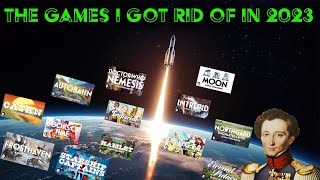
- This is the list of games that I got rid of this year.
- I try to view one to two games a week, logically about 80 games come in every year and games going out this year I think is in the 40s.
- Frost Haven is Gloomhaven on steroids; it is a serious commitment.
- Moon breaks drafting momentum with interrupt mechanics that slow the game down.
- Marvel Dagger is a photocopy of a photocopy of Arkham Horror Second Edition.
- I prefer Legendary Encounters and I prefer the IPS of The Matrix and Aliens as well.
- Stroganov is a ginormous pain in the butt to teach as well; utterly nightmarish to tell people how to play.
References (from this video)
- High-quality packaging and sturdy components (wood tokens, dividers, and separators).
- Rich variety of scoring options and multiple paths to victory (flags, end-game cards, bronze/silver/gold cards).
- Solid solo mode included with its own deck for solo play.
- Expansion content (Valkyrie) adds depth and new strategic avenues.
- Good box organization and sleeve compatibility; cards can be stored neatly.
- Rules can be dense; learning curve may be steep for new players.
- Expansion content increases complexity and may require more setup and teaching time.
- Early game may hinge on acquiring the right tags and resources, which can slow initial progress.
- space exploration, base-building, and resource management
- Moon base, lunar resource production and trade
- futuristic, resource-driven strategy with drafting and expansion options
- Villagers
- Streets
Mechanics (from transcript analysis)
- assimilation — Unused cards can be assimilated to gain resources or bonuses.
- building with tags — Cards require matching tags to be buildable, guiding strategic choices.
- card drafting — Players draft cards (eight dealt per round) and select one to play, cycling through the deck.
- end game bonuses — Expedition cards provide bonus actions; eras end with scoring determined by flags and cards.
- end-game and expansion content — End-game scoring via gray (production) cards and bronze/silver/gold card batches; expansions add more scoring and mechanics.
- expedition and end-of-era scoring — Expedition cards provide bonus actions; eras end with scoring determined by flags and cards.
- Multi-use cards — Unused cards can be assimilated to gain resources or bonuses.
- Resource management — Tokens (energy, water, metal, bio) are produced and spent to acquire and play cards.
- rover interactions — Lunar rovers can be sent to other players' bases to gain resources or bonuses, creating interaction.
- solo mode — A dedicated solo mode (GURPS-style) with its own deck.
Video topics + discussion points
Quotes (from this video)
- I'm a huge fan of sinister fish's game titles.
- this is their third game called Moon I'm super excited to dig into this
- this is my Kickstarter copy that I backed for the game
- there's a solo mode that is going to be this right here it is a gurps solo mode
- cardboard separators for the Box I've really always dug the box
- I love the fact that they actually are just the back of the card they're not clear card sleeves they're the actual cards
References (from this video)
- Satirical exploration of political influence and election mechanics as metaphor
- Abstract, non-specific; a segment that uses a sci-fi/micropurposed 'Moon' motif rather than a literal setting
- satirical commentary with repetitive, looping dialogue
Mechanics (from transcript analysis)
Video topics + discussion points
Quotes (from this video)
- there's an election it didn't take
- us long to work out the best racket is
- the political racket so you're going to
- put money to become one of the
- candidates the benefit of getting
- elected is you can pull some strings at
- City Hall make sure no one's going to be
- bugging your properties you get a five
- turn Immunity on that what was happening
- over here well I put in 800s
- $800 I really wanted to win so you
- you're a moon too IM Moon you're a moon
- you're in a
- moon you're a don't disrespect me you're
- a moon you're get back into space you Moon
- you're a moon you dirty Moon I hope I'm
- a moon cuz my gums must be the size of
- you're definitely not aood to
- Mom I'm slightly worried that my face is
- going to look like this for at least a
- week watch the full video on YouTube