/pic3719954.jpg)


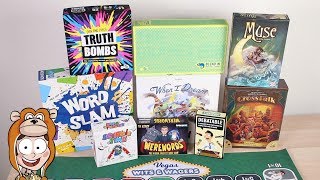


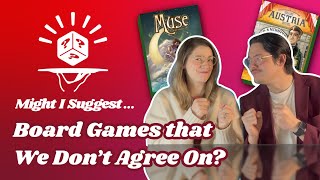


Muse Deep Dive
What the Community Thinks About Muse
Muse consistently earns praise for its beautiful art and clever approach to collaborative party gaming. Actualol calls it a brilliant game and ranks it among their top party games, while Might I Suggest a Game loves how gorgeous and sensory it feels at the table. The consensus places Muse comfortably in the party-game landscape, even as reviewers weigh its specific strengths against earlier titles in the same creative-clue space. The appeal is immediate: striking artwork, structured creativity, and a low barrier to laughter.
Core Mechanics That Define Muse
Structured Clue-Giving Through Inspiration Cards
At the heart of Muse lies a deceptively simple but elegant mechanic. Instead of inventing free-form clues, the clue-giver is constrained by inspiration cards that dictate how to communicate. Might I Suggest a Game explains it well: rather than using a single word as you would in Codenames, you are prompted by these inspiration cards to use anything from the title of a book related to the target art card to a sound effect or a facial expression that represents it. This structure converts clue-giving from an open-ended challenge into a directed creative task, lowering the cognitive load and keeping the game accessible and fast.
Image-Based Communication and Interpretation
Muse centers on evocative art cards that teams must read collaboratively. Reviewers emphasize how the visuals create a focal point for interpretation, with the abstract imagery anchoring the prompted clues. Success hinges on how well teammates can connect a constrained clue, whether a reference, a sound, or an expression, to the right card among a wide spread. Grounding the party experience in concrete imagery helps newer players grasp what a clue is reaching for more readily than purely verbal games allow.
The Muse Experience
Sensory-Rich and Lighthearted Play
Muse delivers what Might I Suggest a Game describe as a far more sensory experience than word-only party games. The mix of sound effects, physical expressions, and visual art keeps players engaged even when they are not actively guessing. The same reviewer highlights that, unlike games where you pull a clue out of thin air, Muse hands you a specific prompt, which makes thinking of a clue far more manageable. That structure removes the intimidation some players feel in open-ended party games, and the lighthearted tone keeps the atmosphere breezy and collaborative, where laughter and surprise outweigh competition.
Flexibility in Scoring and Replayability
Muse works equally well as a casual social experience or a scored contest. Might I Suggest a Game note that while there is technically a way to keep score, it feels like you could play for hours without scoring and still have a great time. This lets groups emphasize whatever they want, tracking points carefully or simply enjoying the creative challenge round after round. The replayability flows not from complex rules but from the endless variety of creative responses and shifting team dynamics, making Muse a strong palate cleanser between heavier games or an evening's entertainment on its own.
What Makes Muse Stand Out
A Sweet Spot Between Structure and Creativity
Muse occupies a distinctive middle ground, offering enough structure to feel manageable but enough freedom to feel genuinely creative. The inspiration cards that constrain clues set it apart from purely improvisational games, while the variety of prompt types keeps the creative space broad. Reviewers appreciate this balance, with Actualol returning to how the rules, like describing a card via a famous building or an animal, shake up the usual party formula and keep the game fresh.
Beautiful Presentation and Art Direction
The visual presentation of Muse is intentional and polished. Actualol and others keep coming back to the artwork, praising the distinctive, striking style of the cards. This quality is more than cosmetic: the bold visual design makes guessing more engaging and helps anchor abstract clues to concrete imagery. For groups that value production quality and visual appeal, Muse delivers on both fronts and earns a lasting place in many party-game collections.
Potential Drawbacks
Comparison to Established Alternatives
Some reviewers wrestle with where Muse sits relative to Dixit and Mysterium, the earlier giants of abstract-art clue-giving. One notes that Muse may not add enough beyond those games, viewing Dixit as a purer execution of wordless deduction and Mysterium as offering a richer murder-mystery theme. The concern is less that Muse is weak and more that it occupies middle ground, so players who already own a predecessor may not find its innovations essential. It lands best for groups new to the subgenre or those wanting a lighter alternative to Mysterium's heavier narrative.
Limited Interaction Between Teams
A recurring criticism centers on player interaction and downtime. While Muse can seat a large group, reviewers note that not everyone has a strong reason to stay engaged during every turn, and they wish opposing teams had more influence over a guess, such as adding a card to make it harder. The complaint is not that the game is boring but that idle stretches could be tighter and team competition could carry more sting. For party games built on group energy, even brief lulls can dent the momentum.
If You Enjoy Muse
Players who love Muse often gravitate toward other games in the abstract-art clue-giving family. Dixit remains the gold standard for wordless image interpretation, offering a purer guessing experience. Mysterium elevates the formula with a ghostly murder-mystery theme and asymmetric roles for deeper immersion. Codenames delivers similar team-based clue-giving through purely verbal communication, and Just One strips the concept to its cooperative essence while keeping the accessibility and charm that make Muse such an easy game to bring to the table.
What Reviewers Are Saying
"Muse is a party game; it was in my top 10 party games of last year. A great game with striking art cards where you're working on teams trying to communicate the right card to your team, but there are certain rules, like you have to describe it by a famous building or a type of animal. Brilliant game, absolutely brilliant; definitely keeping this one for a long time."
— Actualol
"I love the art, it's just beautiful. If you've ever played something like Dixit or Mysterium, it's very similar to that. And if you know me, you know I love a game you don't really have to keep score for; this is definitely one of those games where there's technically a way to score it, but it feels like you could just keep playing for hours and not keep score and it would still be really fun."
— Might I Suggest a Game
"Instead of using a word to get your team to guess the card like you would in Codenames, you're prompted by these inspiration cards to use anything from the title of a book that relates to the art card, or to make a sound effect or a facial expression that represents the card. To me that's so fun; I love that it can get a little bit silly."
— Might I Suggest a Game