/pic5581038.jpg)
/pic8625343.jpg)
/pic2601636.jpg)

/pic5581038.jpg)



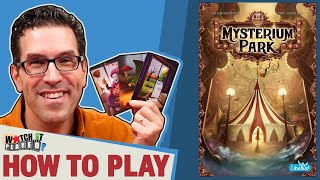


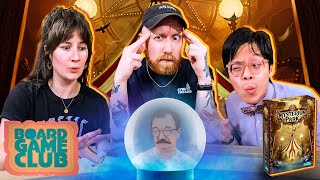

Mysterium Park Deep Dive
What the Community Thinks About Mysterium Park
Mysterium Park has earned widespread praise from the board gaming community as the definitive version of the ghost-guessing experience. Reviewers consistently highlight it as the superior choice compared to the original Mysterium, praising it for being more streamlined, faster to play, and more accessible without sacrificing the unique appeal of the game. The game strikes a balance between being easy to learn and genuinely entertaining for experienced gamers, making it a standout deduction title that works across different player skill levels.
Core Mechanics That Define Mysterium Park
Image Deciphering and Abstract Communication
The heart of Mysterium Park lies in one player serving as a ghost who cannot speak or gesture, communicating only through abstract, dreamlike vision cards. The ghost examines a secret plot card showing which suspects or locations belong to which psychic, then selects vision cards from their hand that they hope will guide each player to their correct target. These vision cards feature evocative, often surreal artwork that players must interpret to form connections. The challenge intensifies because the same image might suggest multiple different answers. A card showing musical instruments might represent one suspect because they play music, or another because their character design includes musical elements. Reviewers note that this mechanic creates both the game's greatest strength and most frequent source of comedy, as the abstract nature of the communication frequently leads to hilarious misinterpretations. One player received a vision of cats and thought it referred to multiple different characters before realizing the ghost was simply emphasizing a single obvious detail.
Multi-Round Deduction with Escalating Pressure
Mysterium Park is structured across three phases: first players eliminate suspects, then locations, and finally make one high-stakes final guess about both the perpetrator and location. Players only have a limited number of rounds to solve the mystery. If players fail to identify all their assigned suspects by the end of round six, the game ends in failure. This structure creates escalating tension as rounds progress. Players who guess correctly early move into a helping role, offering suggestions to teammates still struggling with their own visions. Those who haven't solved their portion yet accumulate more cards from the ghost, building a larger library of clues to work from. The ghost also has three special tokens they can spend throughout the entire game to mulligan their hand of cards if the current options feel unhelpful.
The Mysterium Park Experience
Cooperative Comedy Through Collaborative Struggle
Reviewers emphasize that Mysterium Park creates a uniquely entertaining cooperative experience where the struggle to communicate is itself the fun. Unlike deduction games where solving the puzzle is the primary reward, Mysterium Park generates entertainment through the process of collectively trying to decode abstract art. The ghost's silence transforms them into an almost comedic figure, unable to clarify their intentions even as the psychics venture down increasingly absurd interpretive paths. When one reviewer gave a vision containing a giant cat in a bucket full of waste because the card's artistic composition reminded them of cats, the resulting confusion and debate among the psychics created the memorable moment of the session. The game thrives on these moments where logical reasoning breaks down and players are left trusting their intuition or pattern recognition. Players frequently find themselves laughing at the absolute confusion a ghostly vision creates, or celebrating when they suddenly understand an obscure connection the ghost was trying to make.
Narrative Unfolding in a Carnival Setting
The 1950s American fairground setting provides thematic flavor throughout play. Rather than a traditional mansion, players investigate suspects like fire-eaters, acrobats, snake charmers, and strongmen within carnival locations such as the fun house, candy shop, ghost train, and ticket booth. This carnival theme permeates the components and production, with reviewers noting the gorgeous artwork and beautiful card designs. The haunted fairground setting creates a nostalgic, slightly spooky aesthetic that sets Mysterium Park apart from other deduction games. This theming isn't merely window dressing; it contextualizes why a ghost is communicating through visions and why players are investigating a mysterious death. The theme makes the abstract vision cards feel more appropriate to the experience than they might in a different context.
What Makes Mysterium Park Stand Out
The Streamlined Format Superior to Its Predecessor
Multiple reviewers specifically noted that Mysterium Park improves upon the original Mysterium by being more accessible, cheaper, and faster without sacrificing quality. The game is "cheaper than Mysterium, more streamlined, easier to set up, shorter and way more portable." The smaller box size and reduced component count don't feel like corners cut; instead, the game feels deliberately refined. Players noted that if they already own the original Mysterium, they can use those cards with Mysterium Park's rules for even more replayability. This backwards compatibility, combined with the game's superior streamlining, positions Mysterium Park as the clear entry point for new players and the preferred version for experienced ones. One reviewer described it as "the best possible version of the game."
Scalability and Accessibility Across Skill Levels
Mysterium Park works remarkably well from two players up to six, and the rules explicitly support modified variants for smaller groups where players can take on multiple roles. The game is described as "very easy to learn, very easy to jump into, relatively quick to play, and super fun." This accessibility extends to players of different experience levels. Newcomers find the rules straightforward enough to grasp in their first play, while the abstract challenge of the vision cards prevents the game from becoming trivial for veterans. The cooperative nature means that groups self-regulate difficulty; a ghost playing carefully can give clearer clues while still maintaining the challenge, or they can make the vision cards intentionally cryptic for a harder experience.
Potential Drawbacks
Abstract Vision Cards Can Obscure Rather Than Clarify
While reviewers love the abstract art style, they acknowledge it creates a genuine accessibility issue. The vision cards are intentionally surreal and non-literal, which means that sometimes a clue genuinely doesn't connect to its intended target in any obvious way. One reviewer mentioned struggling with a location vision where the ghost had given three cards featuring mirrors and reflections to guide players toward a location that included a large mirror, yet players completely missed the connection. Another session featured a vision card that one player couldn't parse at all. This isn't a flaw in the game design but rather an inherent characteristic of the mechanic that occasionally results in frustration. For players who struggle with abstract visual interpretation or lateral thinking, some visions may feel random rather than clever. The game's difficulty cannot be made easier once a ghost reveals their hand, creating potential for unbalanced rounds.
Downtime for Spectators in Single-Ghost Formats
While the game is cooperative and exciting for the ghost player, when played with more players in some variants where only one person is giving clues, other players must wait for the ghost to distribute visions to each psychic. The simultaneous interpretation phase mitigates this by allowing all psychics to examine their cards at once, but the ghost's turn can still involve multiple decisions about which cards to present and whether to spend mulligan tokens. For larger groups seeking maximum engagement, players may want to consider adding a timer or encouraging the ghost to make quicker decisions.
If You Enjoy Mysterium Park
Reviewers recommend exploring related titles in the deduction and cooperative family game space. Clue and its variants offer traditional suspect-weapon-location mysteries with simpler mechanics. Treasure Island reverses the roles, with one player hiding something on a map while others deduce its location through clues and questions. Dixit offers abstract visual interpretation without the deduction layer. For those wanting more complex deduction, titles like Awkward Guests advance the Clue formula with negotiation and trading mechanics, or Cryptid offers pure deduction puzzle-solving. The core audience likely overlaps with fans of cooperative games that emphasize communication and negotiation.
What Reviewers Are Saying
"Cheaper than Mysterium, more streamlined, easier to set up, shorter and way more portable. If you've never tried either game this is the one to get."
— No Rolls Barred
"Very easy to learn, very easy to jump into, relatively quick to play, and it's super fun."
— Foster the Meeple
"The ghost is going to give you these vision cards and you have to try and figure out who the character is or the place based on the cards that they give you."
— Foster the Meeple