/pic5083225.jpg)
"How well do you know your friends?"
Pick someone you think you know well. Randomly pick a card from the deck and read it aloud (doesn't matter who). From the choices on the card, write down your choice under the "Me" column and write down what you think your teammate wrote down under the "Not Me" column. Repeat for all 8 question cards in the round. Once you're done with the round, compare answers question-by-question, team-by-team. If you and your teammate pick correctly for each other (you get theirs right and they get yours right), you get 1 team point. Anything else is 0 points. The team with the total number of team points after all 3 rounds wins the game.
There are two main additional ways to play: Party Mode and 1-on-1. For Party Mode, one person reads each question out loud and people shout out what they would choose. Then everyone argues about why they're right and everyone else is wrong. For 1-on-1, you and that someone you think you know well are the only team playing. Which one of you knows the other person better?
—description from the designer

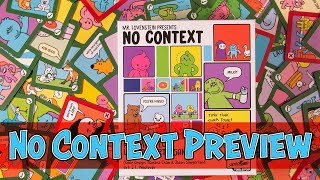
- fast-paced and engaging
- great for groups and social interaction
- humor from clues and relatable art
- two-player variant adds replay value
- depends on players' clue quality; misdirection can dampen flow
- may require a few plays to learn optimal clueing and guessing
- some players may crave more thematic depth beyond the visual cards
- interpretation, inference, humor in everyday life
- Tabletop party setting, informal social gathering
- playful, humorous, anecdotal
Mechanics (from transcript analysis)
- Betting and Bluffing — Players place a bet card face down to guess the target card; correct bets score points
- betting and guessing — Players place a bet card face down to guess the target card; correct bets score points
- Card Drafting — Players draft image cards from the comparison row and place them in their section of the board
- Cooperative Game — A cooperative two-player variant exists, presenting a different scoring dynamic and objective
- explanation of thought process — After each round, players explain their clues and thought processes to the group
- placement and similarity/dissimilarity signaling — Drafted cards are placed to indicate whether they are similar or dissimilar to the clue being described using yes/no sides
- round-based play with replenishment — Three rounds per game with card refills and shifting targets between rounds
- two-player variant — A cooperative two-player variant exists, presenting a different scoring dynamic and objective
Video topics + discussion points
Quotes (from this video)
- this game engages players from the beginning to the end because of the speed Factor
- the art in this game and the little Comics are simply outstanding
- you can point at one picture and be like yeah that's me on a Sunday