/pic8708203.png)








No Loose Ends Deep Dive
What the Community Thinks About No Loose Ends
No Loose Ends has emerged as one of 2025's standout trick-taking games, earning immediate recognition from prominent board game reviewers. The game's elegant design has resonated with players who appreciate both accessibility and strategic depth, with reviewers highlighting how its core mechanic elevates the trick-taking genre beyond traditional offerings. The bidding system at the heart of No Loose Ends creates what reviewers describe as a distinctly cerebral experience, rewarding careful planning and prediction.
Core Mechanics That Define No Loose Ends
Predictive Bidding
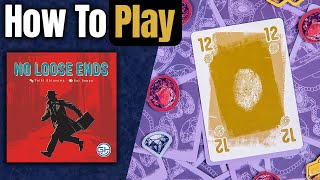
The bidding phase is where No Loose Ends separates itself from conventional trick-taking games. Rather than simply predicting how many tricks you will win, you announce specifically which tricks you plan to claim. Players lay cards face up from their hand to establish their bids, publicly communicating their intentions to all opponents. You might lay down a blue suit card to indicate you will win a trick with a blue card, and a nine to show you will also win with a nine value card. This specificity creates intense strategic tension, as opponents can observe your building strategy and prepare accordingly. The heady nature of these decisions generates a meta-game layer that traditional trick-taking games lack.
Trick-Taking with Coverage Mechanics
Once bidding concludes, the trick-taking phase proceeds with familiar trick-taking patterns: one player leads with any card, others must follow the led suit if possible, and the highest card wins. The innovation lies in how winning tricks interact with your bids. When you win a trick, you may cover a bid card if the winning card matches the bid by suit, number, or the led suit. Tricks that cannot cover any bid card become loose ends, evidence left behind at a crime scene that costs you points. The game rewards precision and careful planning, as winning extra tricks that do not align with your bids becomes a liability rather than a blessing.
The No Loose Ends Experience
Cerebral and Intense
Players encounter immediate intellectual engagement from turn one. The bidding phase demands you evaluate your hand, read opponents' intentions, and commit to specific predictions. Reviewers emphasize how the game stays mentally engaging throughout, as the bidding mechanic transforms the entire experience into a heady puzzle. The intensity derives from the need to balance ambition with realism, knowing that greed will be punished by loose ends accumulating at round's end.
Accessible Yet Rewarding
Despite its strategic complexity, No Loose Ends plays smoothly and welcomes new players. The core concept is simple: bid for tricks, win the ones you bid for, and avoid extras. This straightforward premise belies the nuanced decisions that unfold during play. Reviewers consistently praise the elegant design that makes the game teachable to newcomers while offering the depth that engages experienced players across multiple plays.
What Makes No Loose Ends Stand Out
A Meta-Game Built Into Trick-Taking
Traditional trick-taking games reward winning tricks; No Loose Ends turns this assumption sideways. By forcing players to declare their intentions before the action begins, the game creates a prediction meta-game layered on top of card play. Reviewers note this single element transforms the entire genre experience, making No Loose Ends feel innovative despite operating within familiar trick-taking conventions. The game demands you think not just about card play but about what your opponents can infer from your bids and what signals you inadvertently send.
The Perfect Crime Theme Matters
The heist theme is not merely window dressing. Each element of the game reinforces the crime narrative: your bids represent planning the heist, winning tricks with matching cards means covering evidence, and loose ends are trails you left behind. This thematic cohesion helps players internalize the mechanics and makes the strategic puzzle feel purposeful. The theme also elevates the aesthetic presentation, creating a game that commands table presence while maintaining accessibility.
Potential Drawbacks
The Bidding Phase Requires Full Attention
Because opponents observe each bid card you lay down, this phase can feel exposed if you prefer to play with hidden information. Players unfamiliar with trick-taking games or those who struggle with prediction-based mechanics may find the public nature of bidding intimidating. The game rewards players who can accurately evaluate their hand strength and predict outcomes, which can create asymmetric experiences between experienced and new players.
Limited Recovery From Poor Bids
Once the bidding phase ends, your fate is largely sealed. If you overbid and win extra tricks, those loose ends cost points and cannot be recovered. This can create moments where a player's round feels determined before trick-taking even begins, potentially reducing the agency players feel during the latter phases of play.
If You Enjoy No Loose Ends
Players drawn to No Loose Ends typically appreciate prediction-based mechanics and games that reward careful planning. If you enjoy trick-taking classics like Hearts or Spades but crave additional strategic layers, No Loose Ends delivers exactly that. The game also appeals to players who value thematic cohesion and appreciate heist narratives. Consider exploring other games that combine strong theming with elegant mechanics, or deepen your appreciation for trick-taking by exploring variants like the double cross option or getaway cards that add layers of complexity.
What Reviewers Are Saying
"The element of that beginning phase of kind of laying out which cards you think you're going to be able to win, it gets really heady and yeah, simple but very interesting because of that like that just that one element that makes it very like a meta game for a trick taking game which are already a meta game, right?"
— Before You Play
"It plays really really smooth. It's a simple trick taker. Um, there's this one Trump suit and three other suits. But the element of that beginning phase of kind of laying out which cards you think you're going to be able to win, uh, it gets really heady."
— Before You Play
"I love trick-taking games and I saw my friend Alex of Might I Suggest a Game talking about this game and how great he thinks it is. His praise made this an instant want for me. It sounds so fun and so engaging, and I want it. I want it. I want it."
— Paula Deming