No Loose Ends | How to Play | Learn to Play in 6 Minutes!
Games in This Video
1 game is featured in this video — it unlocks as you watch.
Transcript
Hello everybody. My name is Ilia
and my name is Tyler. Together we make up call a couple that loves to play board games.
And today we'll be teaching you how to play No Loose Ends.
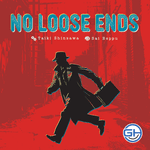
No Loose Ends is a two to five player game designed by Taiki Shenzawa. Its art is done by Saepu and it's published by Game Head who helps sponsor this video. Let's go to the table and let's learn how to play. You'll first create a pile of point tokens in the reach of all players. You'll then give each player five points to start with. Next, you'll prepare the deck. You'll return the gateway cards back to the box. These are only used in an optional variant, which we'll cover at the end of the video. If you're playing with two or three players, you'll prepare the deck by removing the 13, 14, and 15 of each suit. For a game with four or five players, you'll use all 60 suited cards. Once ready, you'll shuffle the deck and deal out cards corresponding to your player count. If there are any remaining undeelt cards, just set them off to the side. The player who most recently made a masterful plan will be the first player, or you can randomly choose a first player. and you're now ready to play. No Loose Ends is a trick- taking game in which you'll use cards from your hand to bid, essentially planning your heist and the evidence you'll be leaving behind. You'll want to win tricks with a matching suit or number to cover up the evidence in your bid, which ultimately will earn you points. Leave evidence unattended or collect too many tricks and you'll lose points as you've left behind loose ends. This game is played over three rounds. Each round has three phases: planning, trick taking, and scoring. Let's go over them. In the planning phase, you'll take turns either playing cards to increase your bid, or passing. To make or increase your bid, you'll select any card from your hand
and place it face up in front of you. You may only place one card at a time, and you may not exceed the maximum limit, which is set based on your player count. Now, instead of increasing your bid, you may pass. You'll usually do this when you're happy with your bid or can no longer increase it. Your goal in this game is to bid strategically so that you'll be able to use the remaining cards in your hand to only win tricks that will cover up your bid. How do you cover up the bids? Well, let's get to it by talking about the trick taking phase. This phase begins when everyone has passed in the planning phase. During the trick- taking phase, you'll play a number of tricks equal to the fewest cards held by any player. Now, for those who are not familiar, in a trick- taking game, each player will play one card to the table to form a trick. Then, one player's card, usually the highest card, will win the trick. That player will then collect all the cards and start a new trick. Here, the last player to pass in the planning phase, will lead the first trick by playing any card from their hand face up to the center of the table. In clockwise order, each other player must follow suit by playing a card that matches the lead suit, if possible. If you cannot play the matching suit, you may play any card from your hand instead. The blue cards represent key evidence and serve as a trump suit, meaning keys will win over other suits. But you won't always be able to play them as you must follow the lead suit if you can. Once everyone has played a card, you'll determine the winner of the trick. The highest trump card will take priority. If no trump
card has been played, the highest card of the lead suit will win the trick. The winner will now attempt to cover up evidence with the cards from the trick that they have won. A bid card can be covered in these three key scenarios. Number one, the winning card's number is the same. Number two, the winning card suit is the same. And number three, the lead suit from the trick is the same, even if the card you played isn't. You'll place all the cards from the trick one face down on top of the eligible bid card. If multiple bid cards can be placed on, you'll choose which to place on. If you cannot cover up a bid card, you'll place the one trick face up below your bid cards. This trick may never be covered up and will count as a loose end. The player who's won the trick will now lead the next trick by again playing any card from their hand.
You repeat this process until one player has no cards remaining. Then you'll move on to the scoring phase. Here you'll first score two points for every bit card you were able to cover. You'll lose one point for every bit card you were not able to cover and for every trick you won that did not cover a bid card. These are the loose ends you've left behind. Finally, if you've left no loose ends, you'll score an additional five points, a perfect crime bonus. Now, if a player bids no cards, they are attempting to snitch, hoping to avoid any tricks that round. If they are successful and win zero tricks, they'll score 10 points. If this happens, no players may score a perfect crime bonus, even if they've left behind no loose ends. And each loose end will lose each player two points instead of one.
However, if the snitching player does win at least one trick, every trick they win will be counted as a loose end, and all players will score normally. After scoring, you'll take points from the center to keep track of your score and proceed onto the next round. After three rounds have passed, you'll compare your scores, and the player with the most points wins. In case of a tie, the tied player who scored the most points in the last round wins. Now, let's talk about a couple of variants. The double cross variant allows the first player to pass to reverse their plans and snitch instead. They'll pick up all their bid cards and will be snitching this round instead, meaning they have bid zero. Only the first player who passes each round may double cross. Now, let's talk about the getaway cards. They'll help you avoid winning unwanted tricks. For this vary, you'll shuffle the four getaway cards into the deck. You may not use these to bid, but you may play them during trick taking to avoid winning a trick. You can play getaway cards at any point, even if you could otherwise follow suit. And if a player starts the trick with a getaway card, the lead suit will be determined by the first non-getaway card played. Now, in the rare case that all players play a getaway card, the first played card will win the trick. And there you have it, no loose ends.
Do you have any questions? Leave in the comments down below, and we'll get back to you as soon as we can.
And of course, if you found this video helpful, make sure you hit that thumbs up button, hit that subscribe button if you're new here, cuz we love talking and chatting board games. And hit that little bell because you know when our next video comes out, and that way we can both partake in the joy of board gaming. Now for a question of the day. What is your favorite trick taking game? Oh, let us know in the comments down below. Until next time though, we will see you later. Bye.